
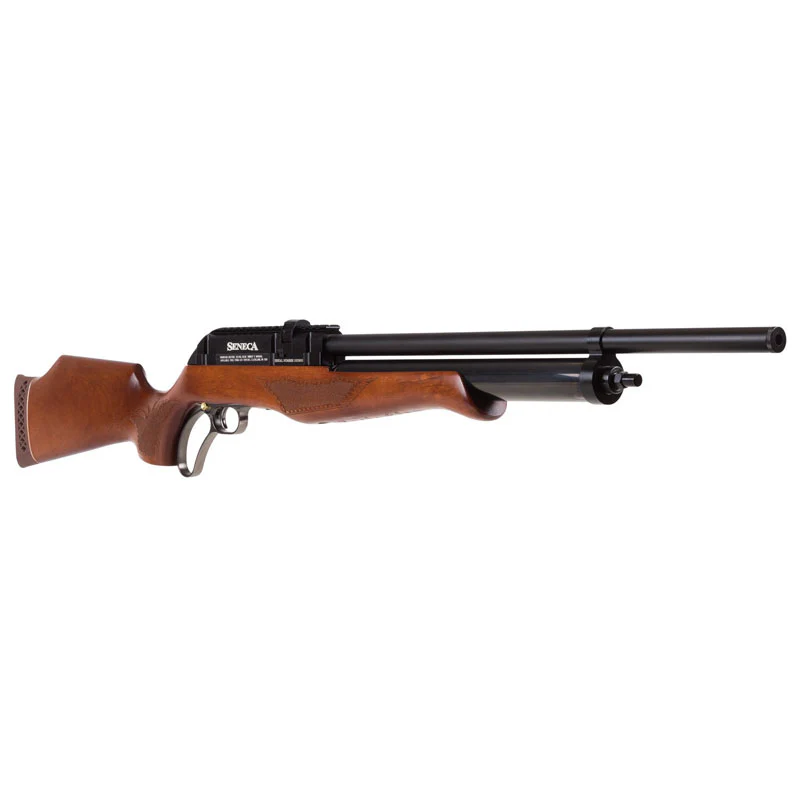
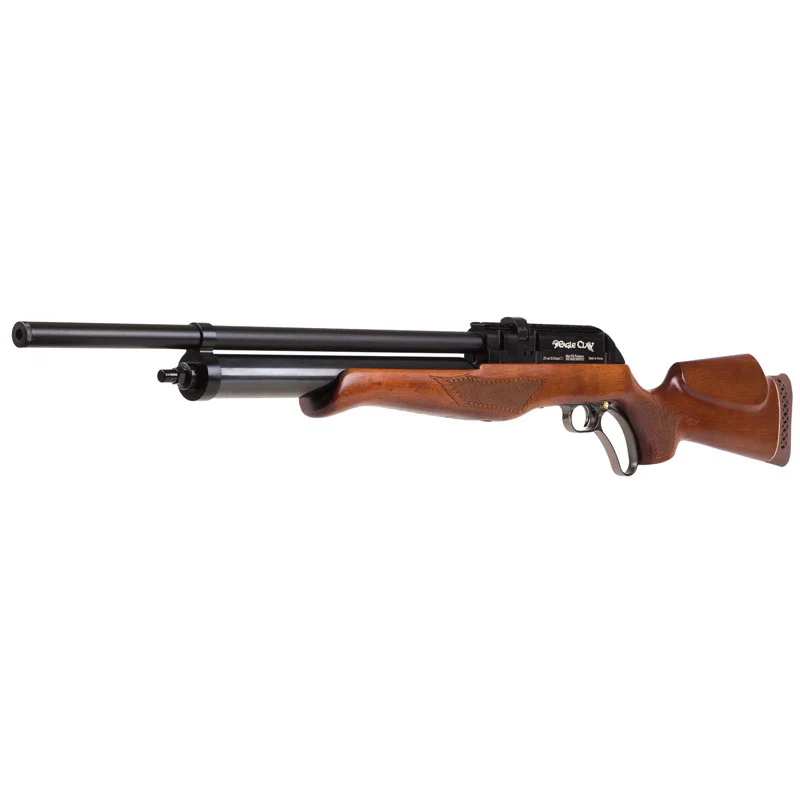
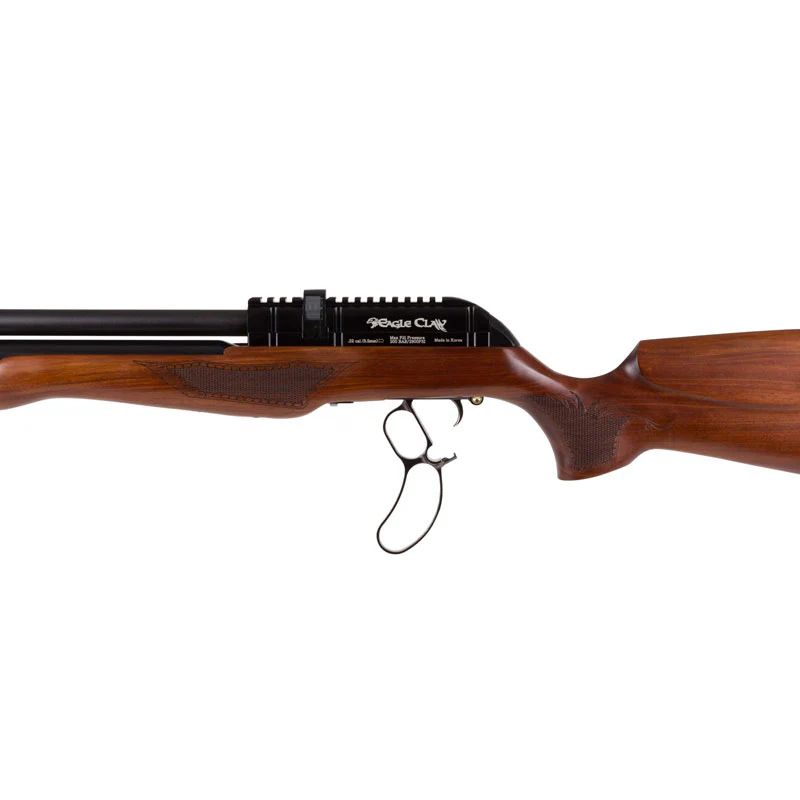
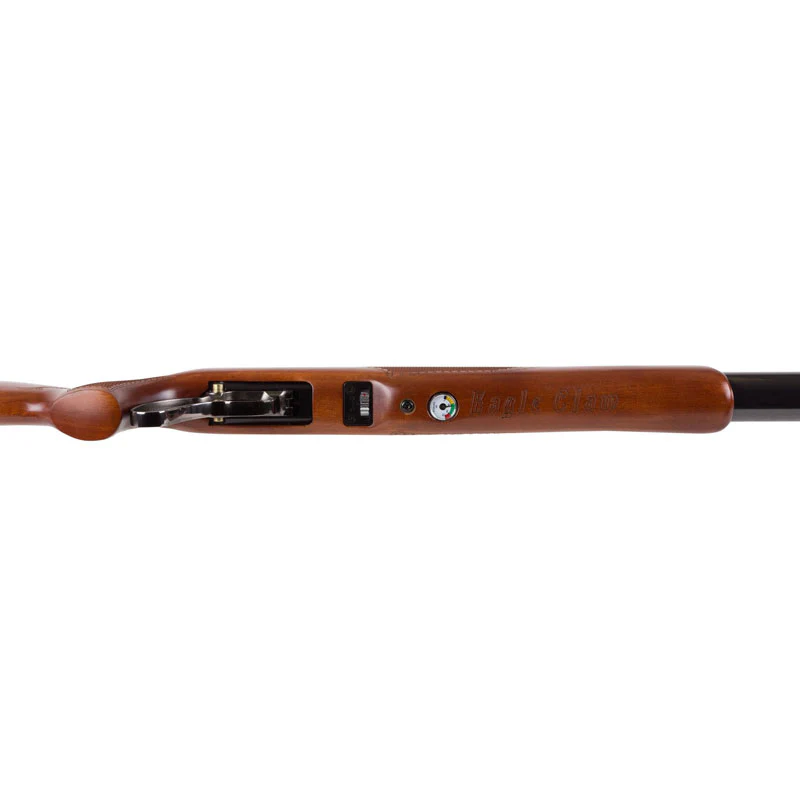
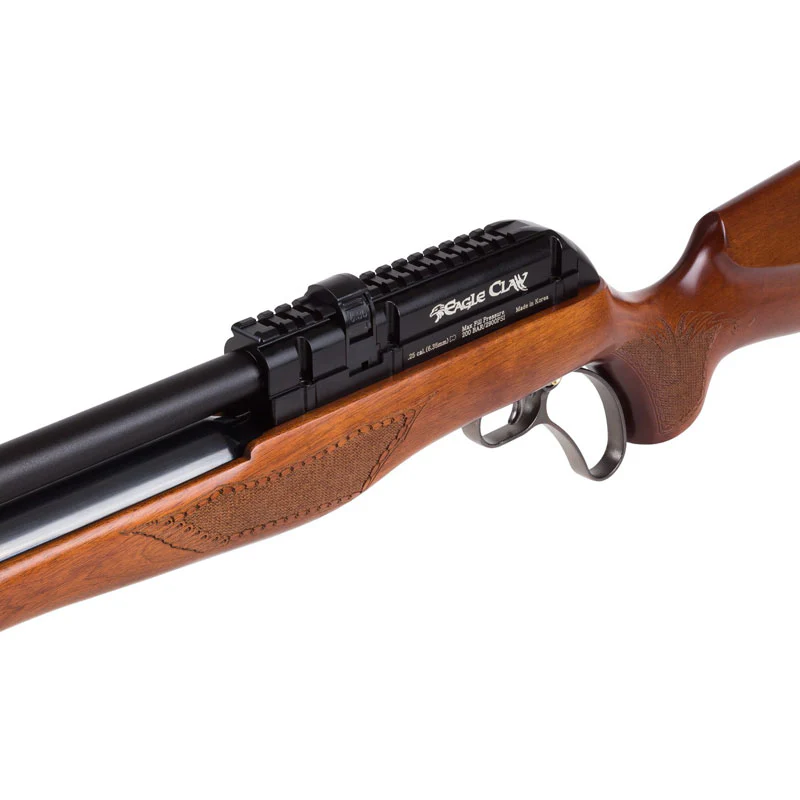
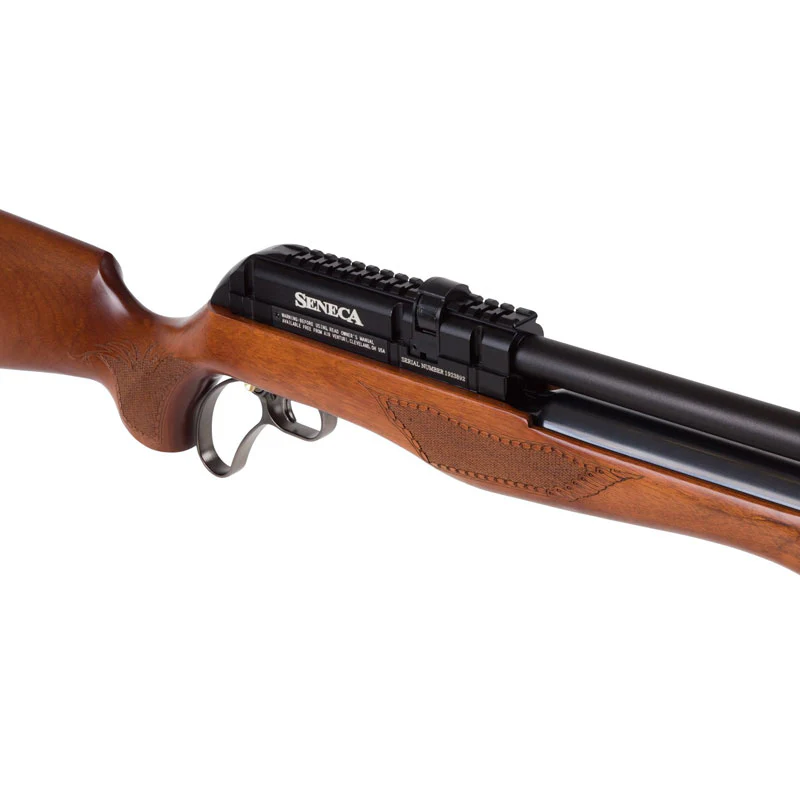
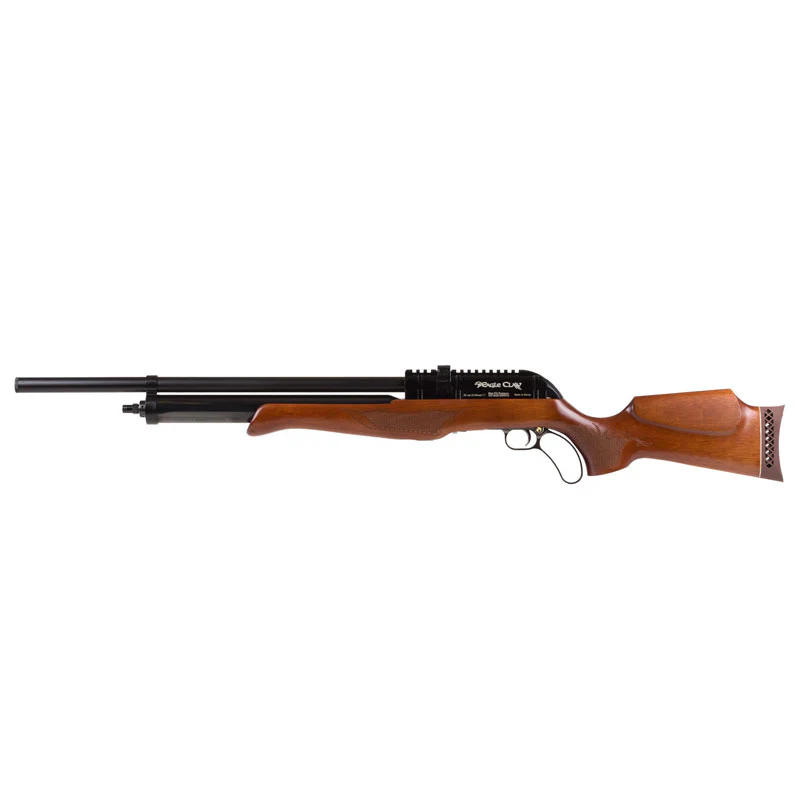
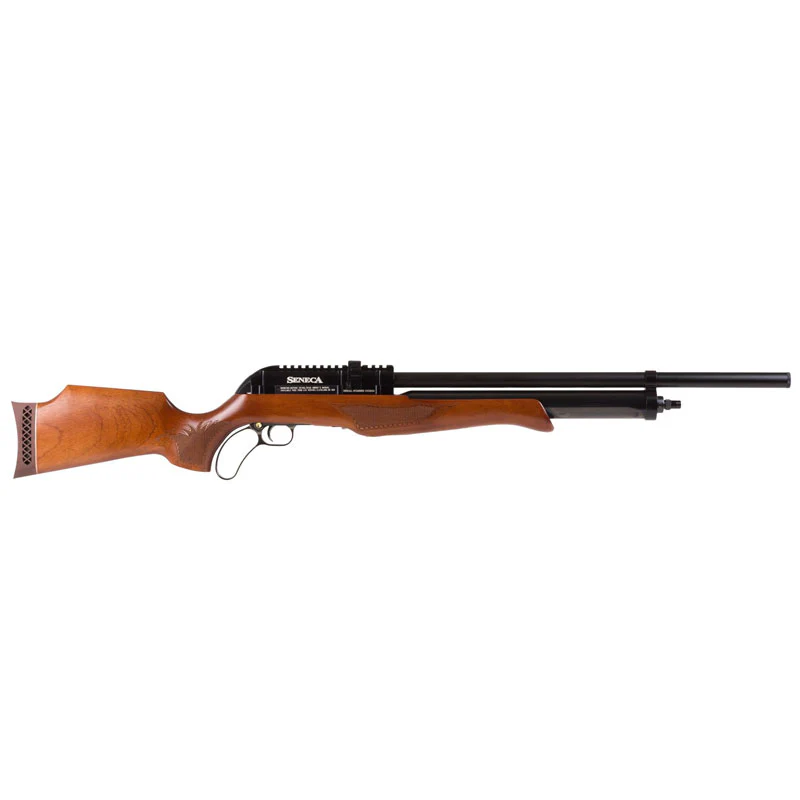
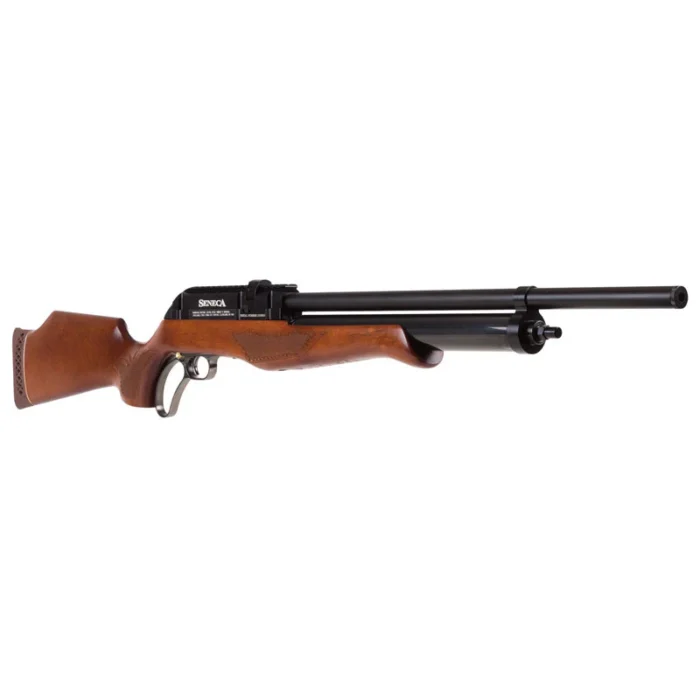
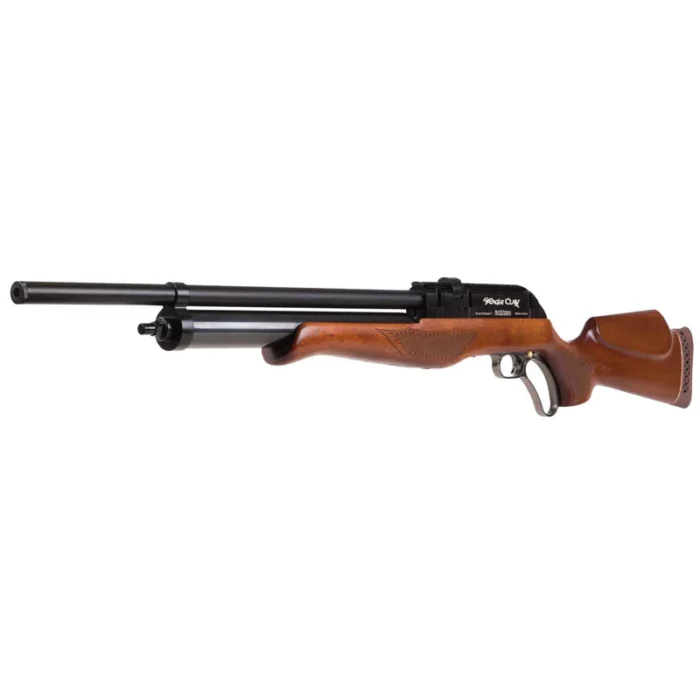
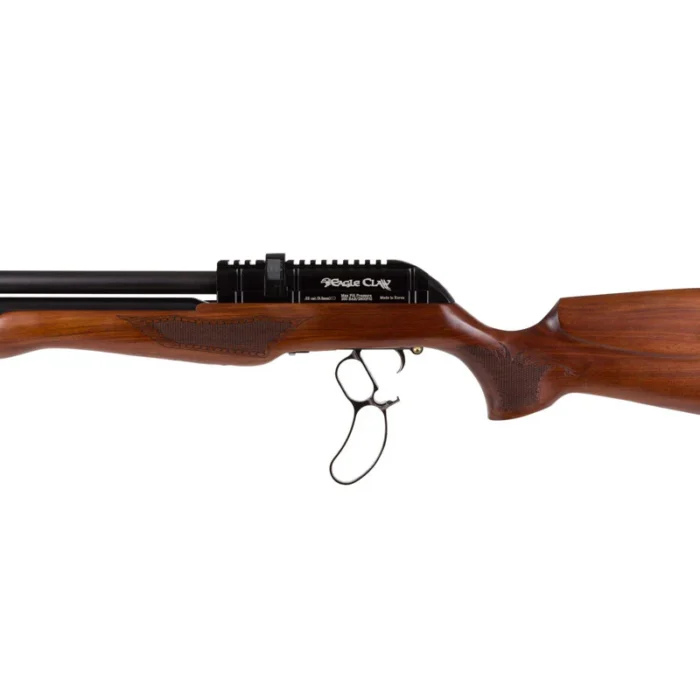
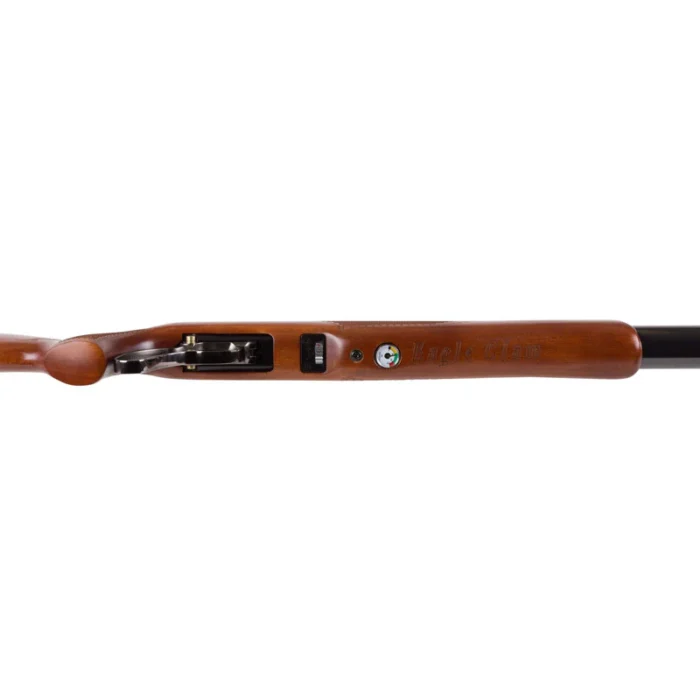
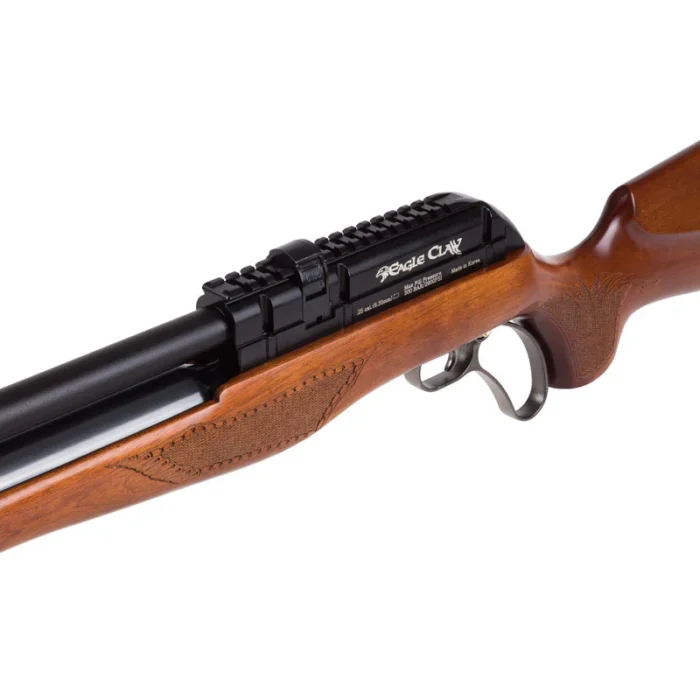
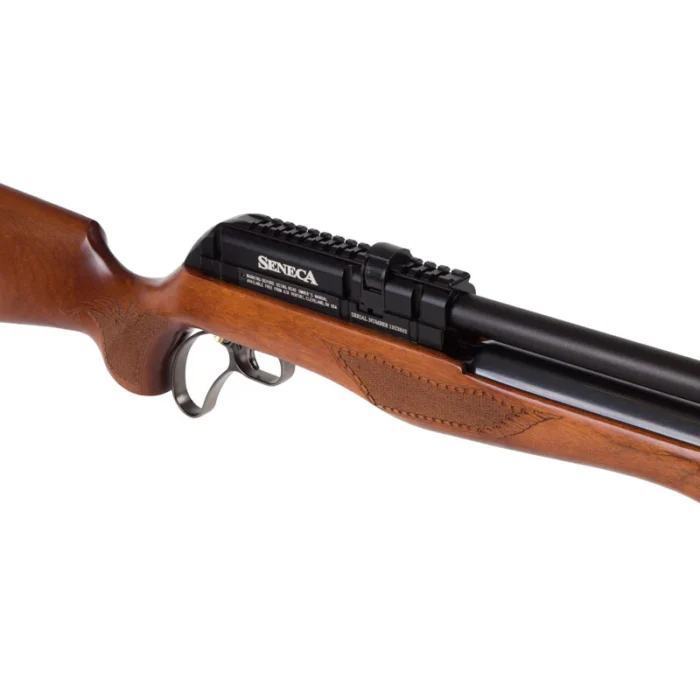
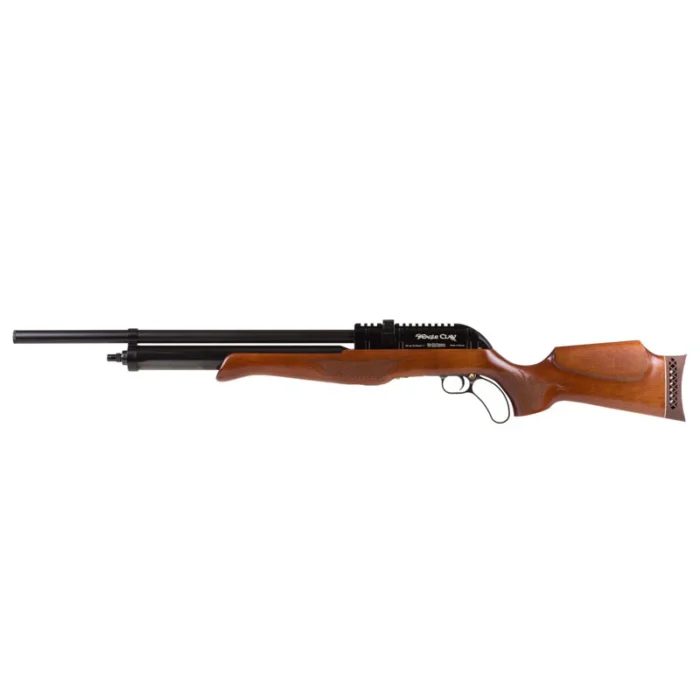
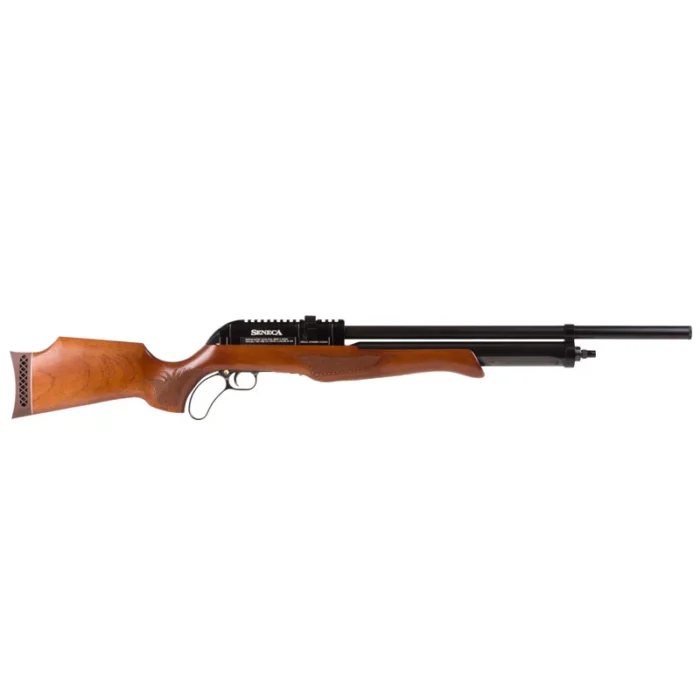
Seneca Eagle Claw Carbine, Lever Action PCP
€450.00
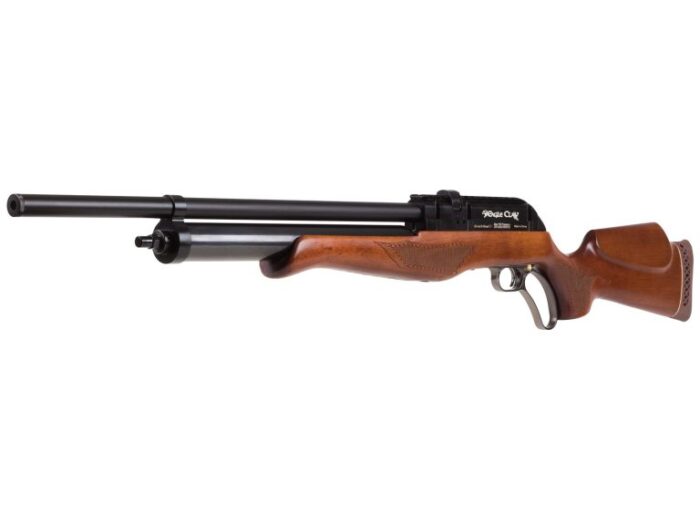
The Seneca Eagle Claw Carbine brings classic lever-action style to a powerful, smooth-cocking PCP platform built for small game, pest control, and plinking. With adjustable power, a backyard-friendly shrouded barrel, and your choice of .22 or .25 caliber, it’s as versatile as it is fun to shoot. Lightweight, compact, and full of old-school charm—this is your go-anywhere hunting companion.
| Brand | Seneca |
|---|---|
| Caliber | .25 Cal |
| Max Velocity | 920 FPS |
| Muzzle Energy | 64 ft/lbs |
| Suggested for | Small game hunting / target practice |
| Powerplant | Pre-charged pneumatic |
| Loudness | 3-Medium |
| Weight | 7.85 lbs |
| Function | Repeater |
| Max Shots per Fill | 20 |
| Cylinder Size | 380 cc |
| Action | Lever-action |
| Fixed/adj. power | Multiple settings |
| Shrouded | Yes |
| Scopeable | Weaver / Picatinny |
| Front Sights | None |
| Rear Sights | None |
| Safety | Manual |
| Trigger | Two-stage adjustable |
| Barrel | Rifled |
| Barrel Length | 17.0″ |
| Overall Length | 41.5″ |
| Capacity | 8 round(s) |
| Body Type | Rifle |
| Stock | Hardwood |
| Buttplate | Rubber |
| Grip | Right |
| Color | Brown |
| Operating Pressure | 3000 PSI / 206 BAR |
| Regulated | No |
Seneca Eagle Claw Carbine Lever Action PCP – Classic Handling, Adjustable Power and Modern Airgun Performance
Seneca Eagle Claw Carbine, Lever Action PCP Overview
Classic Lever-Action Design Meets Modern PCP Power
The Seneca Eagle Claw Carbine, Lever Action PCP combines traditional western-style handling with the smooth firing characteristics of modern pcp airguns. Instead of using cartridges, springs or disposable gas capsules, the rifle stores compressed air inside an onboard reservoir. Operating the lever prepares the action and chambers the next pellet, giving the shooter a distinctive loading experience with practical multi-shot convenience.
Air Venturi currently offers the carbine in .22 and .25 calibre configurations. The manufacturer highlights its adjustable power, compact dimensions, shrouded barrel and smooth-cocking lever system for lawful target shooting, plinking, pest management and small-game applications.
Unlike many full-length pcp air rifles, the Eagle Claw Carbine is intended to remain manoeuvrable. Therefore, it suits shooters who appreciate traditional styling but still want modern pneumatic performance, controlled recoil and repeatable accuracy.
Seneca Air Rifles and the Eagle Claw Platform
seneca air rifles include compact sporting models, large-bore platforms and specialised hunting equipment. Within that collection, the Eagle Claw Carbine stands apart because of its lever-operated action and classic stock profile.
The rifle’s adjustable output allows the shooter to select an appropriate level for the lawful task and available distance. Lower settings may support economical practice, while higher settings can provide greater energy where local rules permit.
Its shrouded barrel also helps moderate the report. However, actual sound depends on calibre, power setting, pellet weight and surroundings.
Air Venturi and the Seneca Product Family
air venturi distributes a broad collection of pneumatic rifles, filling equipment, tanks and accessories. The spelling variation airventuri and search phrase venturi air generally refer to the same company and product ecosystem.
Buyers researching the Eagle Claw may also encounter terms such as air rifle and air pistol, because the company supplies both categories. However, this model is a shoulder-fired carbine rather than a pistol.
The product should be purchased through an authorised source so that calibre, warranty coverage, included accessories and local power specifications can be confirmed.
Air Venturi Alpha PCP Rifle Comparisons
The Air Venturi Alpha, Air Venturi Alpha PCP Rifle and Air Venturi Alpha Air Rifle represent a more contemporary entry-level PCP platform. Air Venturi describes the Alpha as a regulated rifle with a shrouded barrel, integrated moderation and an adjustable two-stage trigger.
The Air Venturi Alpha Hunting Rifle, Air Venturi Alpha Tactical PCP, Air Venturi Alpha Regulated PCP, Air Venturi Alpha Multi Shot Rifle and Air Venturi Alpha Precision Air Rifle phrases emphasise features that appeal to practical shooters. Nevertheless, the Alpha and Eagle Claw offer very different experiences.
The Alpha uses a conventional modern action, while the Eagle Claw provides lever-operated cycling and traditional styling. Therefore, the Eagle Claw may suit buyers who value character and handling experience as much as technical performance.
Air Venturi Avenger and Related Search Terms
The air venturi avenger is another regulated PCP platform known for adjustment and value. Common searches also include air venturi avenge, air ventur avenge and a second spelling of air venturi avenger.
The air venturi avenger 25 refers to the .25 calibre version, while avenger price searches usually come from buyers comparing affordability, regulation, adjustment and shot count.
Although both platforms use compressed air, the Eagle Claw prioritises smooth lever operation and traditional form. The Avenger focuses more heavily on external adjustability and a conventional bolt-operated format.
Air Venturi MicroStrike and Air Venturi Omnistorm
The air venturi microstrike is positioned as a compact regulated sporting platform, while the air venturi omnistorm belongs to a different rifle category with its own powerplant and handling characteristics.
Neither model should be treated as mechanically identical to the Eagle Claw. Buyers should compare calibre, action type, filling pressure, magazine capacity, weight and intended use before making a decision.
Air Venturi Compressor and Filling Equipment
Every PCP platform requires a source of clean, dry compressed air. An air venturi compressor, air venturi air compressor, air venturi pcp compressor, ventur air compressor or general air rifle compressor can charge the onboard reservoir when compatible with the rifle’s pressure requirements.
The air venturi rovair and air venturi rovair 4500 portable compressor are designed as portable filling solutions for PCP equipment. The RovAir can operate from household power or a 12-volt vehicle battery and is intended to fill onboard rifle reservoirs rather than large storage cylinders.
The fill port and hose connection should remain free from moisture, dust and oil. Filling must occur gradually while the pressure gauge is monitored.
Air Venturi Tank and Portable Air Storage
An air venturi tank or air venturi air tank can provide another practical charging method. A certified high-pressure cylinder allows several refills without requiring electrical power at the shooting location.
However, the tank must remain within its inspection period and should use compatible fittings, gauges and bleed valves. Oxygen, workshop air and unsuitable gases must never be introduced into a PCP reservoir.
Seneca Dragon Claw and Large-Bore Comparisons
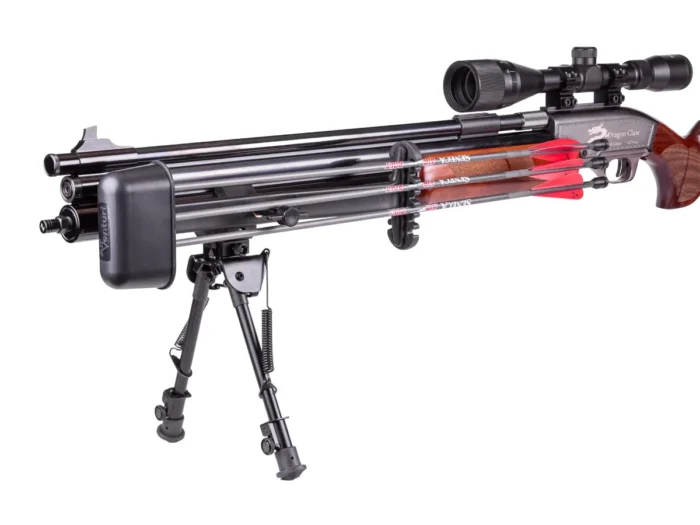
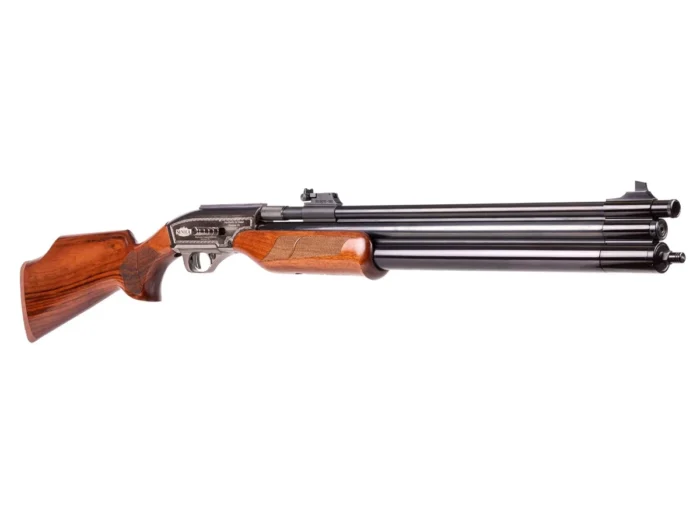
The seneca dragon claw, dragon claw, 50 caliber dragon and claw air gun phrases refer to a large-bore Seneca platform rather than the smaller Eagle Claw Carbine.
The current Dragon Claw II is a .50 calibre rifle capable of firing large projectiles and compatible air bolts. Air Venturi states that its tactical version uses dual 500cc reservoirs and can launch suitable air bolts at more than 600 feet per second.
Therefore, the Dragon Claw belongs to a specialised large-game category, while the Eagle Claw Carbine is better aligned with target shooting, plinking and appropriate small-game use.
Air Bolt Gun Applications
The phrase air bolt gun describes a pneumatic platform capable of launching specialised arrows or bolts. Some large-bore systems support this function, but the Eagle Claw Carbine is designed primarily for pellets.
A buyer should never assume that ammunition intended for another model is compatible. Projectile diameter, barrel design and manufacturer approval must always be checked.
Why Choose the Eagle Claw Carbine?
The strongest reason to choose this carbine is its combination of classic lever-action operation and modern pneumatic efficiency. It offers a distinctive experience that conventional bolt-action rifles cannot fully reproduce.
Furthermore, its adjustable power supports different lawful shooting situations, while the compact design improves manoeuvrability. The shrouded barrel, multi-shot operation and reduced recoil also support comfortable range use.
Precision depends on selecting the correct pellet, maintaining consistent reservoir pressure, installing a suitable optic and using disciplined trigger technique.
Where and When It Should Be Used
The carbine should be used only at an authorised range or on private land where airgun shooting is lawful and a secure backstop is available.
It is well suited to recreational target practice, controlled plinking and legally permitted pest or small-game applications. However, local calibre, energy and hunting rules must be checked before field use.
The entire area around and behind the target must remain clear before every shot.
Overall Performance Assessment
The Seneca Eagle Claw Carbine provides a rare blend of traditional styling, smooth lever cycling and PCP performance. Its compact construction makes it easier to handle than many full-length rifles, while adjustable output gives the shooter useful flexibility.
For buyers comparing pcp airguns and pcp air rifles, it offers something genuinely different: a modern pneumatic platform built around the engaging feel of a lever-operated carbine.
With correct filling equipment, compatible pellets, regular maintenance and responsible use, the Eagle Claw can deliver accurate, enjoyable and dependable performance across a wide range of lawful sporting applications.
Design, Performance, Handling and Practical Ownership
Traditional Lever-Action Operation
The lever-operated mechanism gives this carbine a distinctive shooting character. Instead of cycling a conventional bolt, the shooter moves the lever through its full arc to cock the action and prepare the next pellet.
This movement creates a smooth and deliberate rhythm. It also allows the shooter to maintain a comfortable shoulder position while preparing for the next shot.
The lever should always be operated fully and carefully. Partial movement may prevent proper cocking or feeding, while excessive force can damage the mechanism.
If unusual resistance appears, the shooter should stop and inspect the magazine and action rather than forcing the lever.
Compact Carbine Dimensions
The shorter configuration improves manoeuvrability without removing the stability of a shoulder-fired platform.
This design can be useful around shooting benches, field hides and confined practice areas where a full-length rifle may feel cumbersome.
The compact profile also simplifies transportation and storage. However, the muzzle must still remain controlled at all times.
A shorter platform can respond more quickly to body movement, so the shooter should use a relaxed grip and stable stance.
Balanced Stock Design
The stock supports a traditional shoulder position and helps distribute weight between both hands.
A balanced rifle feels easier to control than one that is excessively heavy at the front. The supporting hand should rest naturally beneath the fore-end without gripping too tightly.
The butt should contact the same area of the shoulder for every shot. Meanwhile, the cheek should settle consistently against the comb.
These repeated contact points help align the eye with the sights and reduce unexplained changes in impact.
Smooth Pneumatic Firing Cycle
The compressed-air system produces minimal mechanical recoil compared with many spring-powered platforms.
When the trigger releases, the firing valve sends a controlled volume of air behind the pellet. Because no heavy piston moves through the action, the sight picture remains relatively stable.
This smooth behaviour supports comfortable range practice and makes the platform suitable for mounted optics.
It also helps the shooter observe the target after discharge, which can improve follow-through and technique evaluation.
Adjustable Power Settings
The power adjustment allows the shooter to adapt performance to the intended lawful application.
A lower setting may conserve air and provide more shots during close-range target practice. A higher setting may increase pellet energy where additional performance is legally required.
The best setting is not always the maximum. Excessive power may reduce shot count, increase noise and make some pellets less stable.
The shooter should test each setting at a controlled range and record the resulting accuracy, sound and air consumption.
Air Reservoir Management
The onboard cylinder stores high-pressure air before the session begins.
It should be filled only with clean, dry compressed air using compatible equipment. Oxygen and other gases must never be used.
The filling port should be inspected before connection. Dust, moisture and damaged seals can cause leaks or internal contamination.
Air should be introduced gradually while the gauge is monitored. The maximum approved pressure must never be exceeded.
After filling, the hose should be depressurised before it is removed.
Understanding the Useful Pressure Range
The most consistent performance usually occurs within a specific portion of the reservoir’s pressure range.
The shooter should record the starting pressure, number of shots and pressure at which accuracy begins to decline.
After several sessions, this information can establish a reliable refill point.
Continuing to fire at very low pressure may produce unstable velocity and a changing point of impact.
A simple pressure log helps preserve consistency and prevents unnecessary valve stress.
Multi-Shot Magazine System
The rotary magazine reduces interruptions by holding several pellets at once.
Each pellet should be inspected before loading. Bent skirts, dirt and damaged heads may interfere with feeding or reduce accuracy.
The magazine must be inserted correctly and seated fully. If the lever becomes difficult to operate, the mechanism should not be forced.
The shooter should also count each shot. If there is uncertainty about whether the chamber contains a pellet, the platform should be checked safely before use continues.
Single-Shot Loading Considerations
Some shooters may prefer a single-shot tray for deliberate target practice if a compatible option is available.
Loading one pellet at a time encourages careful inspection and slows the shooting rhythm.
This method can be useful when testing different ammunition or concentrating on technique.
However, the tray must match the action correctly and should not be improvised.
Barrel Shroud and Sound Control
The surrounding barrel assembly helps reduce the report produced during firing.
Actual sound varies according to power level, pellet weight, environment and nearby surfaces.
An outdoor shot may appear quieter than one fired inside a building where sound reflects from walls.
The shroud should not be used as a carrying handle or support point. Impact near the muzzle can affect alignment and precision.
Hearing protection may still be appropriate at indoor facilities.
Barrel Quality and Precision Potential
The rifled barrel gives the pellet rotational stability during flight.
Accuracy depends on the condition of the bore, the quality of the ammunition and the consistency of the firing system.
Several pellet designs should be tested from a stable rest. Each type should be evaluated through repeated groups rather than a single result.
The best pellet is the one that feeds smoothly and produces dependable grouping across multiple sessions.
Selecting Suitable Pellet Weight
Lighter pellets generally travel faster, while heavier pellets may retain energy more effectively.
Neither choice is automatically superior. The barrel, power setting and shooting distance all influence performance.
A medium-weight domed pellet often provides a useful starting point for testing.
The shooter should avoid selecting ammunition based only on advertised speed. Consistency and accuracy are more important than maximum velocity.
Trigger Control
A predictable trigger helps the shooter release the shot without moving the muzzle.
The finger should contact the trigger at the same point each time. Pressure should then increase gradually and straight toward the rear.
The shooting hand should not tighten during release.
If adjustment is permitted, changes should remain within the manufacturer’s stated limits.
An excessively light trigger can create an unsafe condition and should be avoided.
Grip Pressure and Support-Hand Placement
The rear hand should maintain firm but relaxed control.
Excessive squeezing may shift the sights or introduce muscular tension.
The supporting hand should remain in the same location for every shot. Moving it forward or backward changes the balance and may alter the impact point.
A consistent hold produces better results than attempting to restrain the rifle rigidly.
Cheek Position and Shoulder Contact
The shooter should establish a repeatable cheek position before applying final trigger pressure.
A different head angle can change the apparent sight alignment, especially when an optic is installed.
The butt should also rest in the same area of the shoulder.
If the sight picture requires an uncomfortable head position, the optic height or stock setup may need adjustment.
Comfort and repeatability are essential for precision.
Optic Selection
A moderate-power optic is generally appropriate for this compact platform.
Large, heavy scopes may disturb the balance and reduce the handling advantages of the carbine design.
The optic should provide clear glass, suitable eye relief and reliable adjustments.
Ring height must allow sufficient clearance while preserving a natural cheek position.
The selected equipment should also withstand normal pneumatic recoil and field handling.
Scope Installation
The rail and ring surfaces should be clean before installation.
Mounts must be aligned and tightened evenly. Excessive torque can damage threads or distort the optic tube.
The scope should not interfere with magazine insertion or lever movement.
After installation, all screws should be inspected during the first several sessions.
Any movement must be corrected before further zeroing.
Zeroing Procedure
Zeroing should begin at a controlled range with a suitable backstop.
A large target should be used at a short distance so that the first impacts are easy to locate.
The shooter should fire a small group before making adjustments. A group provides more useful information than one isolated shot.
Once centred, the result should be confirmed at the normal shooting distance.
The zero must be checked again whenever the pellet, power setting or optic position changes.
Understanding Pellet Trajectory
A pellet begins dropping as soon as it leaves the barrel.
The sight line and pellet path may cross at more than one distance, depending on the optic height and selected zero.
The impact point should therefore be tested at several measured ranges.
A written trajectory card can help the shooter remember expected corrections.
Guessing without practical testing may produce inaccurate and unsafe results.
Bench-Rest Accuracy Testing
A bench rest is useful for comparing ammunition and evaluating mechanical performance.
The front of the stock should rest on a padded support rather than on the barrel or air cylinder.
The rear may also receive light support, although the rifle should not be clamped rigidly.
The same grip, shoulder contact and cheek position should be maintained for each shot.
Several groups should be fired before conclusions are made.
Standing Position
Standing offers mobility but provides less stability than supported positions.
The feet should remain comfortably apart, with weight distributed evenly.
The supporting elbow can be placed beneath the rifle to transfer weight through the body structure.
If the sights naturally settle beside the target, the feet should be adjusted.
Using arm strength to force the muzzle into position increases movement and fatigue.
Kneeling and Seated Positions
Kneeling provides a useful compromise between stability and mobility.
The supporting elbow should rest against a stable area of the leg rather than directly on the kneecap.
A seated position can offer even greater control when the arms receive support from the knees.
Both positions should remain comfortable. Pain and tension will reduce precision.
A mat can improve comfort during outdoor sessions.
Breathing Technique
Normal breathing moves the upper body and sight picture.
The shooter should inhale, exhale comfortably and release the shot during a brief natural pause.
Holding the breath for too long creates tension and visual disturbance.
If the sight picture does not settle, the shooter should lower the rifle, breathe normally and begin again.
Follow-Through
After the trigger releases, the shooter should maintain cheek contact, grip and shoulder position briefly.
Moving immediately can disturb the platform while the pellet is still travelling through the barrel.
Follow-through also helps the shooter observe reticle movement and identify technique errors.
This habit should be included in every shot rather than used only during formal practice.
Effects of Wind
Wind can move a pellet significantly at longer distances.
The shooter should observe flags, grass, leaves and dust before firing.
Wind direction may change between the firing position and the target.
Beginners should practise in calm conditions while learning the platform.
When conditions become difficult to judge, the responsible decision is to pause.
Temperature Effects
Compressed air responds to temperature changes.
Pressure may rise as the reservoir warms and fall as it cools.
The rifle should not be left in direct sunlight or inside a hot vehicle.
After cold-weather use, condensation may form when the platform enters a warm room.
The exterior should be dried fully before storage.
Magazine Maintenance
The magazine should remain clean, dry and protected from impact.
Dirt or damaged indexing parts may cause feeding problems.
A soft cloth or brush is normally sufficient for routine care.
Aggressive solvents may damage plastic components.
Spare magazines should be tested before they are relied upon during a long session.
Barrel Cleaning
The barrel does not require cleaning after every use.
Cleaning becomes appropriate when accuracy declines or contamination is visible.
A soft pull-through system is usually preferable to a rigid metal rod.
Only compatible cleaning materials should be used.
After cleaning, several settling shots may be required before normal accuracy returns.
Exterior Care
Metal and stock surfaces should be wiped after use.
Fingerprints, dust and moisture should not remain during storage.
Harsh chemicals may damage finishes, seals or synthetic components.
The lever, loading area and fill port should be inspected regularly.
Loose screws should be tightened carefully without excessive force.
Detecting Pressure Loss
A falling gauge reading may indicate a leak, although temperature changes can also affect pressure.
The starting pressure should be recorded and checked again under similar conditions.
A continued drop requires professional inspection.
The reservoir, valve and gauge should not be dismantled while pressurised.
A qualified technician should handle internal repairs.
Mechanical Warning Signs
Unusual sounds, rough lever movement, unstable velocity or difficulty filling can indicate a fault.
The rifle should not be used when its behaviour changes significantly.
Continuing to operate damaged equipment may worsen the problem.
Internal work requires suitable tools and knowledge of high-pressure systems.
Professional servicing is the safest response.
Safe Storage
The rifle should be stored unloaded in a locked cabinet or secure container.
The magazine should be removed, and ammunition should be controlled separately where required.
The storage location must remain dry and temperature-stable.
Children and unauthorised individuals must not have access to the rifle, pellets or charging equipment.
Transportation
Before transport, the rifle should be unloaded and placed in a padded case.
The optic, lever and fill connection must be protected from impact.
The case should support the stock and action without placing pressure on sensitive controls.
The rifle should remain out of public view.
Applicable transport and licensing rules must be checked before travel.
Suitable Shooting Locations
The rifle should be used only at an authorised range or on private property where shooting is lawful.
A dependable backstop must be positioned behind the target.
Glass, water, stone, thin timber and exposed metal are unsuitable because they can allow penetration or ricochet.
The entire area around and beyond the target must remain clear. pcp airguns
Who This Carbine Suits
This model suits shooters who appreciate traditional lever operation but also want the smooth performance of a modern pneumatic system.
It may appeal to recreational target shooters, collectors and experienced users seeking a distinctive compact platform.
New shooters can use it under direct supervision after receiving proper instruction.
Its adjustable power and manageable dimensions make it versatile, but responsible handling remains essential.
Long-Term Ownership Value
Long-term reliability depends on clean filling equipment, suitable pellets and regular inspection.
Original manuals, receipts and service records should be retained.
Unapproved internal modifications can reduce reliability, affect warranty coverage and alter legal classification.
Performance should be improved through ammunition testing, optic setup and technique rather than unsafe power alterations.
Overall Performance Assessment
The Seneca Eagle Claw Carbine combines traditional lever-action character with modern compressed-air efficiency.
Its compact dimensions support easy handling, while adjustable output gives the owner practical flexibility.
The smooth firing cycle, multi-shot magazine and shrouded barrel make it comfortable for controlled sporting use.
With correct pressure management, suitable ammunition and disciplined technique, it can provide dependable accuracy and an enjoyable ownership experience.
Be the first to review “Seneca Eagle Claw Carbine, Lever Action PCP”
Related products
Seneca Air Rifles
Seneca Air Rifles
Seneca Air Rifles
Seneca Air Rifles
Seneca Air Rifles
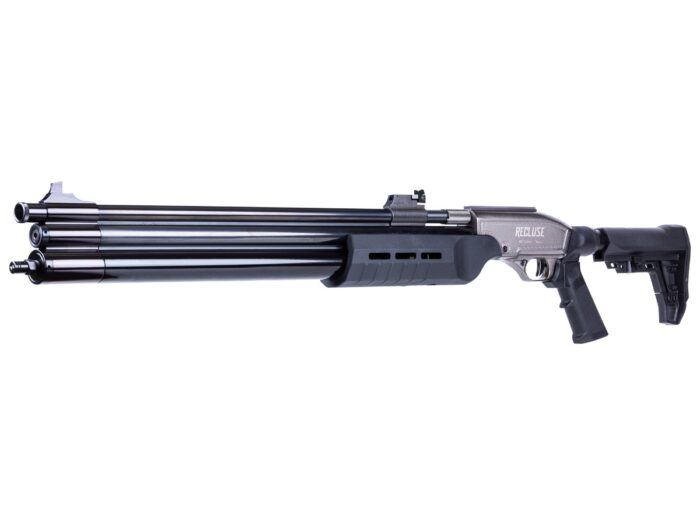
Seneca Air Rifles
Reviews
There are no reviews yet.