
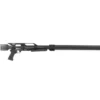
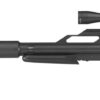
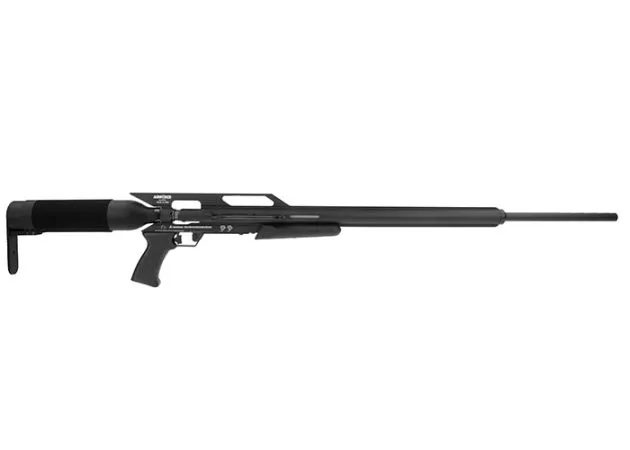
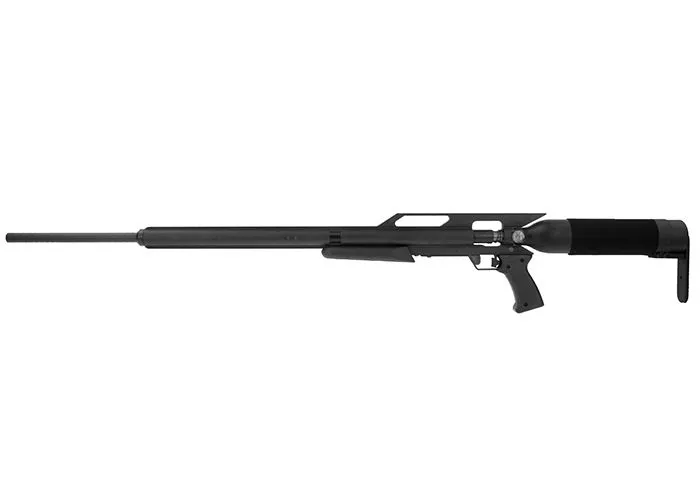
Airforce Texan Big Bore PCP Air Rifle
€850.00
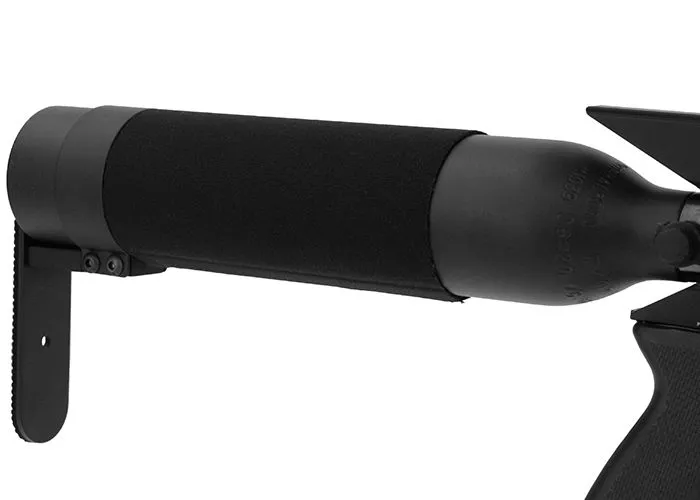
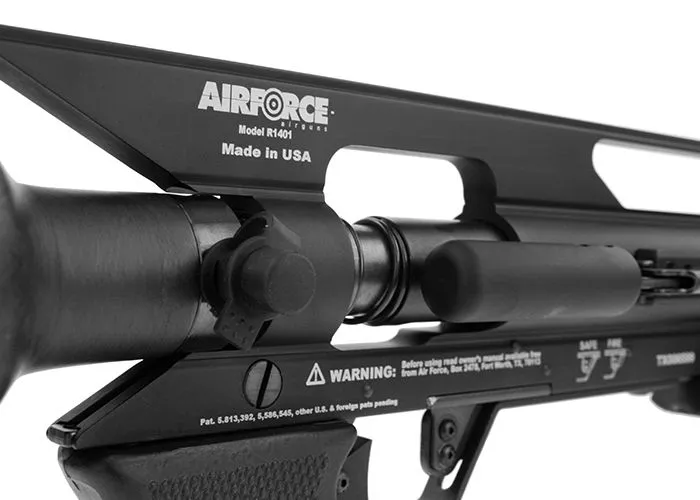
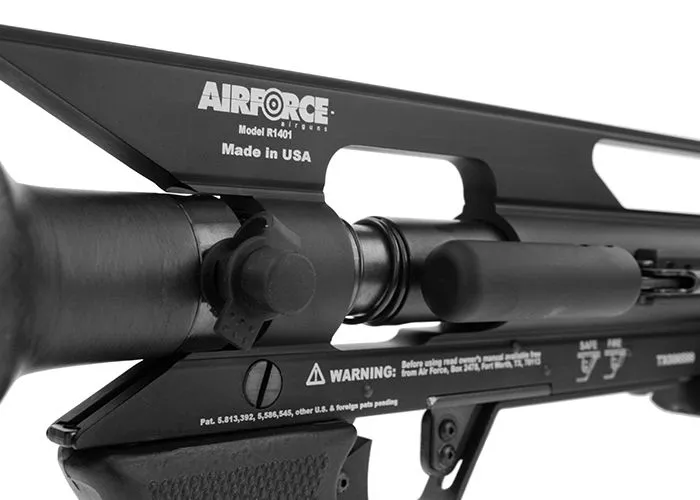
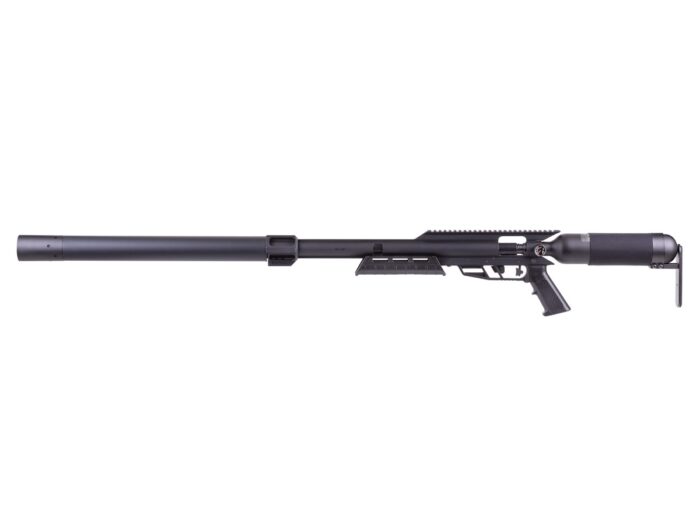
The AirForce Texan, made in the USA Big Bore Air Rifle with ultimate power. Featuring a high-quality Lothar Walther barrel, adjustable power, and a lightweight, durable design, it’s ideal for precision airgun hunting but also long range shooting.
The AirForce Texan LSS big bore air rifle with its adjustable power output! This makes the AirForce Texan one of the most powerful PCP air rifles in production.
Renowned for their unique design, Made in the USA with high-quality German Lothar Walther barrels to ensure unparalleled accuracy. The single-shot sidelever AirForce Texan features a two-stage adjustable trigger with a pull weight of approximately 2 pounds (900 grams). An 11 mm dovetail rail allows for the easy mounting of aiming devices such as rifle scopes or red dots.
The rifle’s lightweight frame, constructed from aircraft-grade aluminum, ensures durability without compromising on weight. The ergonomically designed stock provides a comfortable shooting experience, while the adjustable power wheel allows for fine-tuning of the rifle’s performance to suit various shooting scenarios.
Additionally, the Texan includes a precision rifled barrel made by Lothar Walther, further enhancing its accuracy and performance. The rifle also comes with a robust dovetail rail for versatile optics mounting, and its lightweight yet durable construction ensures long-lasting reliability. The rifle’s quick detach air tank system allows for easy refills and maintenance.
The AirForce Texan, also known as the Gunpower Texan in some markets, is designed to handle a variety of ammunition types. However, please note that the .50 variant requires .510 caliber airgun ammo, as standard .50 airgun ammo won’t fit.
Experience the pinnacle of power and precision with the AirForce Texan, designed for serious shooters who demand the best.
This item can only be sold to persons 18 years and older.
For this item we have to carry out an age check.
You can upload a copy/scan/photo of a legal identification document such as a passport, European ID or driver’s license in the order. Parts of the document may be made illegible or designated as a copy. However, your name, document number and place of issue must be legible. Your copy ID will only be used for verification purposes and will not be retained. If you are not able to upload it right now, we will contact you per email before shipping
We can ship these items only to the countries listed below:
Belgium Bulgaria Cyprus Czechia Denmark Estonia Finland France Germany Greece Hungary Ireland Italy Kroatia Latvia Lithuania Luxembourg Monaco Netherlands Poland Portugal Romania Slovakia Slovenia Spain Austria Sweden United States
Specifications
AirForce Texan Big Bore PCP Air Rifle | Extreme Power, Precision, and Hunting Performance
Power, Precision, Operation, Uses, and Essential Buying Information
Why Choose the AirForce Texan Big Bore PCP Air Rifle?
The principal reason to choose the airforce texan is its ability to launch heavy projectiles with substantially more energy than a conventional small-caliber pellet gun. It was created for experienced users who prioritize lawful hunting capability, long-range target performance, mechanical simplicity, and adjustable power.
Within the wider AirForce and airforce airguns catalog, the full-length Texan represents a specialized high-energy platform. Buyers searching for an airforce texan air rifle, texas air force rifle, airforcetexan, or AirForce big bore air rifle are generally looking for this established single-shot family.
However, this is not an ordinary recreational rifle. Its power, noise, range, air requirements, and projectile selection demand careful planning. Therefore, it is best suited to knowledgeable adults who understand safe backstops, compressed-air handling, trajectory management, and local hunting regulations.
How Does This Powerful PCP Rifle Work?
Anyone asking what is an air rifle should understand that this model uses stored compressed air rather than gunpowder or a spring-powered piston. Once the air reservoir has been filled, the valve releases a measured quantity of air behind the projectile when the trigger is operated.
The action is single-shot and sidelever-operated. Consequently, a projectile must be loaded manually for every shot. Although buyers may compare the mechanism with bolt action air rifles, the sidelever is cycled rearward and forward rather than lifted and rotated like a traditional bolt.
A compatible high-pressure charging source is essential. A manual air gun pump may technically suit some PCP applications, but filling a large reservoir to high operating pressure can be physically demanding. Therefore, many owners choose a certified compressor or charging cylinder rated for the rifle’s required pressure. Only clean, dry compressed air or nitrogen should be used.
How Good Is Its Power and Precision?
The rifle’s precision potential comes from its Lothar Walther barrel, stable frame, adjustable trigger, controllable power system, and direct single-loading arrangement. The full-length .457 model uses a 34-inch barrel and is officially rated above 600 foot-pounds, while the .510 version is rated above 800 foot-pounds. Each model can exceed 1,000 FPS with an appropriate projectile and setup.
Nevertheless, the phrase high powered air rifles 4000 fps does not describe this rifle accurately. It cannot produce 4,000 FPS, and such a figure should not be presented as a genuine specification. In big-bore shooting, projectile mass, muzzle energy, ballistic consistency, and correct barrel stabilization are more meaningful than an unrealistic velocity claim.
Accuracy also depends on selecting the correct projectile diameter and weight. Furthermore, owners must establish a reliable zero, monitor pressure, secure the optic properly, and learn the projectile’s trajectory at different distances.
Where and When Should It Be Used?
This rifle should be used only at an approved shooting facility, on suitable private land, or in a lawful hunting area with a substantial and dependable backstop. A search for airgun shooting range near me may help identify a facility, although the owner must confirm that big-bore pneumatic rifles are permitted before visiting.
It may also interest experienced shooters seeking air guns for target shooting, particularly for long-distance steel or paper-target work where high-energy pneumatic rifles are accepted. However, its power makes it excessive for casual backyard plinking in most environments.
A 50 caliber air rifle for deer hunting may be permitted in certain jurisdictions, but legality varies according to location, season, minimum caliber, minimum energy, licensing, and approved game species. Local regulations must be checked before hunting.
How Does It Compare with Other AirForce Models?
The air force texan lss adds an extended sound-reduction system while retaining full-length performance characteristics. Meanwhile, the airforce texan ss and airforce texanss use shorter shrouded barrel configurations that improve maneuverability and reduce report compared with the traditional full-length layout. The SS .457 carbon-fiber model is officially rated above 600 foot-pounds.
The airforce talon p and air force talon p are considerably more compact platforms intended for different calibers and applications. Similarly, airforce 25 commonly describes .25-caliber models elsewhere in the range. The merged search phrase airforce condorair force talon refers to separate Condor and Talon families rather than one rifle.
General phrases such as air force guns, air rifle and air pistol, and airforce airguns cover a broad selection of pneumatic products. Therefore, buyers should compare the exact model, caliber, barrel length, energy level, air capacity, and intended purpose.
Tex-Rex and Brush Gun Comparisons
The terms tex-rex, air force tex rex, and air force tex rex refer to a newer product family rather than another name for the traditional full-length model. Likewise, the Tex-Rex AirForce brush gun, Brush Gun, AirForce Tex-Rex PCP rifle, Tex-Rex Brush Gun air rifle, AirForce Tex-Rex air rifle, and AirForce Tex-Rex hunting rifle describe newer compact configurations.
The AirForce Texan Brush Gun, brush gun PCP air rifle, and AirForce brush gun search phrases generally indicate an interest in a shorter rifle for dense terrain and rapid handling. AirForce introduced Tex-Rex Brush Gun models in .457 and .510 calibers in January 2026, describing them as compact close-range hunting platforms producing more than 700 foot-pounds in suitable configurations.
By contrast, the full-length Texan emphasizes barrel length, high energy, and long-range potential. An AirForce big bore airgun buyer should therefore decide whether maximum full-length performance or compact AirForce brush gun handling matters more.
Caliber and Projectile Considerations
A .30 cal air rifle offers a different balance of projectile weight, trajectory, air consumption, and energy than a .457 or .510 model. The Texan family also includes .257, .308, and .357 configurations, giving buyers several performance levels to consider. AirForce identifies .257, .357, .457, and .510 options within the broader range, with energy increasing significantly in the larger calibers.
An airbolt rifle launches specialized arrow-like projectiles and should not be treated as equivalent to a slug-firing big-bore rifle. Compatibility must never be assumed. Only ammunition or projectiles specifically suited to the exact caliber, barrel, and manufacturer guidance should be used.
Important Reasons to Buy This Rifle
The strongest reasons to select this platform include its exceptional energy, proven barrel quality, adjustable power, straightforward single-shot action, large air reservoir, optics-ready frame, and suitability for serious precision work. Moreover, its simple loading system allows the shooter to inspect and seat each projectile carefully.
However, buyers must also consider its limited high-power shot count, considerable report, specialized filling requirements, long overall length, and need for a highly secure shooting environment. It is not designed as a lightweight casual plinker.
For the right experienced owner, the rifle offers an authoritative combination of power and precision. When it is matched with suitable ammunition, a dependable optic, a proper air source, and disciplined shooting technique, it can deliver controlled big-bore performance for lawful hunting and advanced target applications.
Advanced Engineering, Precision Performance, and Practical Shooting Experience
Designed for Consistent Performance
A high-quality pre-charged pneumatic rifle is engineered to deliver dependable performance under demanding conditions while maintaining reliability throughout years of regular use. Every major component works together to create a balanced shooting platform capable of producing smooth operation and repeatable accuracy. Rather than relying solely on raw power, the design focuses on efficiency, stability, and mechanical consistency.
This engineering philosophy benefits shooters who expect reliable performance during extended practice sessions as well as those who require confidence in changing outdoor environments. Consistency remains one of the most valuable characteristics of any precision shooting platform.
Why Mechanical Stability Matters
Mechanical stability directly influences practical accuracy. When the internal components operate smoothly and consistently, unnecessary vibration is reduced, allowing the projectile to leave the barrel under predictable conditions.
A rigid platform also helps maintain proper alignment between the barrel, action, and optic throughout the firing sequence. Consequently, shooters can expect improved repeatability when proper shooting fundamentals are applied.
Stable construction not only improves immediate performance but also contributes to long-term durability by reducing unnecessary mechanical stress.
Comfortable Ergonomics Support Better Accuracy
Comfort has a significant impact on shooting performance. A properly balanced rifle allows the shooter to remain relaxed while maintaining complete control throughout the aiming process.
The stock should provide a natural shoulder position while supporting consistent cheek placement behind the optic. Likewise, the grip should encourage relaxed hand positioning that promotes smooth trigger control without introducing unwanted movement.
As physical fatigue decreases, concentration improves, resulting in greater consistency during longer shooting sessions.
Precision Is Built Through Consistency
Accurate shooting depends on repeatable performance rather than occasional exceptional shots. Consistent air delivery, stable projectile flight, smooth trigger operation, and disciplined shooting technique all contribute to dependable results.
Rather than chasing maximum velocity, experienced shooters often focus on producing identical conditions before every shot. This repeatability simplifies sight adjustments while improving confidence across multiple shooting distances.
Consistency ultimately becomes the foundation upon which long-range precision is built.
Efficient Air Management
Compressed air serves as the energy source for every shot, making efficient pressure management an important aspect of overall performance. Maintaining appropriate operating pressure allows the rifle to function consistently while maximizing the number of effective shots available before refilling.
Using clean, dry compressed air also protects seals and internal precision components from moisture-related deterioration. Monitoring pressure throughout each shooting session helps maintain stable performance while avoiding unnecessary fluctuations caused by low reservoir pressure.
These simple habits contribute greatly to dependable long-term operation.
Developing Better Shooting Habits
Strong shooting habits develop through disciplined repetition rather than occasional success. Every practice session provides an opportunity to improve breathing control, body positioning, trigger discipline, and follow-through.
Experienced shooters establish a repeatable routine before every shot. They verify a stable shooting position, control their breathing, align the sights naturally, and apply smooth trigger pressure until the shot breaks without disturbing the rifle.
As these techniques become automatic, overall consistency improves while confidence continues to grow.
Understanding Projectile Flight
Every projectile begins responding to gravity and air resistance immediately after leaving the barrel. Understanding these forces helps shooters predict trajectory more accurately while making thoughtful adjustments at varying distances.
Learning how different projectiles behave under different conditions also improves holdover estimation and reduces unnecessary corrections during practical shooting situations.
Regular practice across multiple distances strengthens this understanding while increasing confidence in real-world applications.
Environmental Conditions Influence Accuracy
Outdoor shooting introduces constantly changing variables that affect projectile flight. Wind direction, wind speed, temperature, humidity, atmospheric pressure, and lighting conditions all influence performance to varying degrees.
Successful shooters carefully observe these environmental factors before every shot. Movement in grass, leaves, branches, and airborne particles often provides useful information regarding wind behavior.
Developing this environmental awareness allows more informed decisions while improving overall shooting consistency.
Routine Maintenance Protects Performance
Routine maintenance remains one of the most effective ways to preserve reliability and accuracy. Exterior surfaces should be cleaned after each shooting session to remove fingerprints, moisture, and accumulated debris that could eventually affect the finish.
Moving components should also receive periodic inspection to confirm smooth operation while identifying early signs of wear. Preventative maintenance requires little time yet significantly extends the useful service life of precision equipment.
Consistent care also helps maintain dependable performance across years of regular use.
Practical Performance Under Real Conditions
Real-world shooting rarely occurs under perfectly controlled circumstances. Uneven terrain, varying target distances, changing weather, and different shooting positions all require flexibility and careful preparation.
Experienced shooters adapt confidently by combining technical knowledge with disciplined shooting fundamentals. Rather than relying entirely on equipment, they evaluate each situation carefully before taking a shot.
This balanced approach consistently produces better practical results while supporting safe and responsible shooting practices.
Long-Term Ownership Benefits
A well-designed pre-charged pneumatic rifle continues delivering value long after its initial purchase. Reliable engineering, durable construction, comfortable ergonomics, and consistent mechanical performance create an ownership experience that improves as familiarity grows.
Owners who combine regular maintenance with disciplined practice often enjoy dependable operation, improved accuracy, and lasting confidence throughout many years of use. Ultimately, long-term satisfaction comes from pairing quality craftsmanship with responsible care, continuous learning, and consistent shooting habits that allow the rifle to perform at its highest potential whenever it is used.
Complete Ownership Guide, Maintenance, Practical Shooting Techniques, and Long-Term Reliability
Built for Years of Dependable Service
A well-engineered pre-charged pneumatic rifle is designed to deliver reliable performance throughout many years of responsible ownership. Although premium materials and precise manufacturing provide an excellent foundation, long-term reliability ultimately depends on proper care, regular maintenance, and disciplined handling.
Every shooting session contributes to a better understanding of the rifle’s unique characteristics. As familiarity increases, operation becomes smoother, confidence grows, and overall shooting performance continues to improve. This gradual progression creates an ownership experience that becomes increasingly rewarding with time.
Preparing Before Every Shooting Session
Preparation remains one of the most important aspects of successful shooting. Before each outing, the rifle should be inspected carefully to ensure everything is functioning correctly.
The barrel should be free from obstructions, all visible fasteners should remain secure, and the stock should be examined for signs of damage or excessive wear. The air reservoir should contain sufficient pressure for the planned session, while the optic should remain firmly mounted and properly aligned.
Performing these simple inspections helps prevent unnecessary interruptions while promoting dependable performance and safe operation.
Developing Proper Shooting Fundamentals
Strong fundamentals provide the foundation for consistent accuracy regardless of experience level. Every shot should begin with a stable shooting position that allows the body to remain relaxed while maintaining complete control of the rifle.
Breathing should remain calm and steady throughout the aiming process. Once the sight picture becomes stable, gradual trigger pressure should be applied until the shot breaks naturally. Maintaining follow-through after firing prevents unnecessary movement before the projectile exits the barrel.
Repeating these fundamentals during every practice session builds muscle memory that supports long-term improvement.
Practical Accuracy in Real-World Conditions
Practical accuracy extends far beyond producing tight groups under ideal range conditions. Real-world shooting introduces changing weather, varying terrain, different target distances, and numerous environmental factors that require careful observation and thoughtful adjustments.
Experienced shooters develop the ability to adapt while maintaining consistent shooting fundamentals. Rather than relying solely on equipment, they combine technical knowledge with disciplined technique to achieve dependable results across a variety of situations.
This adaptability becomes increasingly valuable as experience grows.
Understanding Environmental Influences
Environmental conditions constantly affect projectile flight. Wind speed, wind direction, temperature, humidity, atmospheric pressure, and lighting all contribute to changes that may influence accuracy, especially at longer distances.
Learning to observe natural indicators such as moving grass, tree branches, drifting leaves, and airborne particles helps estimate changing wind conditions before every shot. These observations allow shooters to make appropriate adjustments while reducing unnecessary corrections.
Developing environmental awareness remains an essential skill for consistent outdoor performance.
Routine Maintenance Preserves Reliability
Consistent maintenance protects both appearance and mechanical performance. After every shooting session, exterior surfaces should be cleaned to remove dust, fingerprints, moisture, and other contaminants that may gradually affect protective finishes.
Moving components should be inspected periodically to confirm smooth operation while identifying early signs of wear. Cleaning the barrel whenever accuracy begins to decline also helps maintain dependable projectile performance throughout extended use.
Routine maintenance requires little effort yet greatly extends long-term reliability.
Proper Storage Protects Your Investment
Correct storage conditions help preserve both functionality and appearance. The rifle should always be stored unloaded in a cool, dry location where excessive humidity, dust, and sudden temperature changes are minimized.
A protective storage case or secure cabinet reduces the possibility of accidental impacts while protecting the finish from scratches and environmental exposure. Responsible storage also limits unauthorized access, contributing to overall safety.
Simple storage habits often have a significant impact on long-term equipment condition.
Extending Mechanical Service Life
Preventative care remains the most effective method of preserving dependable operation. Regular inspection of seals, operating controls, and visible hardware allows owners to identify minor concerns before they develop into more significant mechanical problems.
Using clean, dry compressed air further protects internal components by reducing moisture-related wear. Keeping moving parts clean and operating smoothly minimizes unnecessary stress while supporting years of reliable service.
Small maintenance routines performed consistently often prevent costly repairs later.
Building Confidence Through Practice
Confidence develops gradually through repetition, patience, and continuous learning. Every practice session strengthens breathing control, body positioning, trigger discipline, and follow-through while improving familiarity with the rifle.
Rather than evaluating success only by group size, experienced shooters often focus on maintaining a consistent shooting process from beginning to end. Small improvements accumulated over many sessions eventually produce substantial gains in practical accuracy.
Regular practice also transforms proper technique into natural habit.
Adapting to Different Shooting Environments
Every shooting location presents unique challenges. Controlled ranges provide excellent opportunities to refine technique, while outdoor environments require greater awareness of changing weather, uneven terrain, and varying shooting positions.
Practicing from standing, kneeling, sitting, and prone positions prepares shooters to remain effective under different conditions. Learning to adapt confidently to these situations improves versatility while strengthening overall shooting ability.
Experience gained in diverse environments contributes significantly to long-term skill development.
Responsible Shooting Practices
Safe handling should remain the highest priority during every shooting activity. The muzzle should always remain pointed in a safe direction, and the trigger should not be touched until the sights are fully aligned with the intended target.
Every target must be positively identified before firing, while a secure backstop should always be present. Eye protection should be worn during every session, and additional protective equipment should be used whenever appropriate.
Responsible habits protect both the shooter and those nearby while promoting safe and ethical participation in shooting sports.
Long-Term Ownership Satisfaction
Owning a quality pre-charged pneumatic rifle becomes increasingly rewarding through regular use, careful maintenance, and continuous improvement. As familiarity grows, operation becomes smoother, accuracy improves, and confidence continues to increase.
Owners who invest time in preventative care, disciplined practice, and responsible handling often enjoy dependable performance for many years. Ultimately, lasting satisfaction comes from combining thoughtful maintenance, safe operation, consistent training, and ongoing learning, allowing the rifle to deliver reliable accuracy and dependable service throughout its entire lifespan.
Advanced Performance, Expert Shooting Skills, Safety, and Long-Term Ownership
Achieving Peak Shooting Performance
Outstanding shooting performance is achieved through a combination of quality engineering, disciplined technique, and continuous practice. While a well-designed rifle provides an excellent mechanical foundation, the shooter’s ability to apply consistent fundamentals ultimately determines practical accuracy.
Every successful shot follows the same sequence of preparation, stability, breathing, trigger control, and follow-through. Repeating this process allows the body to develop muscle memory, making every movement smoother and more consistent over time. As confidence grows, the shooter becomes better equipped to perform under a variety of conditions.
Creating a Consistent Shooting Routine
Consistency is one of the defining characteristics of skilled marksmen. Rather than changing techniques from shot to shot, experienced shooters establish a repeatable routine that minimizes unnecessary variation.
A comfortable position should be established before aiming begins. Once natural alignment with the target has been achieved, breathing should remain controlled while steady pressure is applied to the trigger. After the shot is released, maintaining the same position until the projectile exits the barrel helps preserve accuracy.
Repeating this routine throughout every practice session builds confidence while improving long-term consistency.
Understanding External Ballistics
Every projectile travels along a predictable path influenced by gravity, aerodynamic resistance, environmental conditions, and velocity. Learning how these factors interact allows shooters to make informed adjustments rather than relying on estimation.
As distances increase, projectile drop becomes progressively more noticeable. Understanding this behavior allows shooters to calculate holdover more accurately while maintaining consistent point-of-impact expectations across varying ranges.
Regular practice under different conditions strengthens this knowledge while improving practical shooting ability.
Reading the Environment
Outdoor shooting requires constant awareness of changing surroundings. Wind speed, wind direction, temperature, humidity, atmospheric pressure, and available light all influence projectile flight.
Successful shooters develop the habit of observing environmental indicators before every shot. Moving vegetation, drifting dust, and changes in airflow frequently provide valuable information that assists with aiming adjustments.
This ability to recognize subtle environmental changes often separates experienced shooters from beginners.
Importance of Stable Shooting Positions
Body stability plays a critical role in precision shooting. A comfortable and well-supported position reduces unnecessary movement while allowing smooth trigger control throughout the firing sequence.
Standing positions provide flexibility and mobility, while kneeling positions improve stability. Sitting positions reduce fatigue during longer sessions, and prone positions often provide the highest level of support whenever terrain permits.
Practicing from each of these positions prepares shooters for a broader variety of practical shooting situations.
Maintaining Mechanical Reliability
Reliable performance depends upon preventative maintenance performed on a regular basis. Exterior surfaces should remain clean and dry after every shooting session to protect finishes from environmental exposure.
Periodic inspection of moving components helps identify early signs of wear while ensuring smooth mechanical operation. Proper lubrication, careful cleaning, and responsible handling all contribute to dependable performance throughout years of regular use.
Consistent maintenance preserves both appearance and functionality while reducing the likelihood of unexpected mechanical issues.
Proper Storage and Transportation
Responsible ownership includes protecting equipment whenever it is not actively being used. The rifle should always be stored unloaded inside a secure, dry location that minimizes exposure to humidity, dust, and accidental impacts.
Using a protective storage case helps preserve exterior finishes while preventing unnecessary movement during transportation. Proper storage also reduces unauthorized access and supports safe handling practices at all times.
Simple storage habits contribute significantly to long-term durability.
Continuous Skill Development
Shooting proficiency improves gradually through consistent effort rather than occasional practice. Every training session presents an opportunity to strengthen breathing control, trigger discipline, body positioning, and environmental awareness.
Maintaining detailed practice records can also be beneficial. Recording distances, weather conditions, shooting positions, and overall results allows progress to be evaluated while identifying areas requiring additional attention.
This structured approach encourages continuous improvement throughout every stage of experience.
Responsible Decision-Making
Every shooting opportunity requires thoughtful judgment. Before firing, the shooter should confirm the target, evaluate surrounding conditions, and verify that a safe backstop is present.
If visibility becomes poor or environmental conditions introduce unnecessary uncertainty, delaying the shot often becomes the most responsible decision. Exercising patience demonstrates sound judgment while contributing to both safety and consistent performance.
Responsible decision-making remains one of the defining qualities of experienced shooters.
Adapting to Real-World Conditions
Practical shooting environments rarely remain constant. Weather changes, uneven terrain, varying target distances, and changing light conditions require flexibility and careful observation throughout every outing.
Developing the ability to adapt confidently under these circumstances improves both performance and safety. Experience gained through varied practice environments prepares shooters to respond effectively to changing situations while maintaining disciplined shooting fundamentals.
Adaptability becomes increasingly valuable as skill levels continue to develop.
Long-Term Value and Ownership Experience
A well-built pre-charged pneumatic rifle continues delivering dependable performance when paired with proper maintenance, responsible handling, and regular practice. As familiarity increases, operation becomes smoother, maintenance routines become more efficient, and confidence grows naturally through experience.
Owners who invest in preventative care and continuous skill development often enjoy reliable accuracy and dependable mechanical performance for many years. Combined with thoughtful storage, safe operation, and disciplined shooting habits, these qualities create lasting value that extends well beyond the initial purchase.
Ultimately, long-term satisfaction comes from combining quality engineering with responsible ownership, consistent maintenance, continuous learning, and safe shooting practices. Together, these principles ensure reliable performance, enjoyable shooting experiences, and dependable service throughout the rifle’s lifetime.
Be the first to review “Airforce Texan Big Bore PCP Air Rifle”
Related products
AirForce
Reviews
There are no reviews yet.