
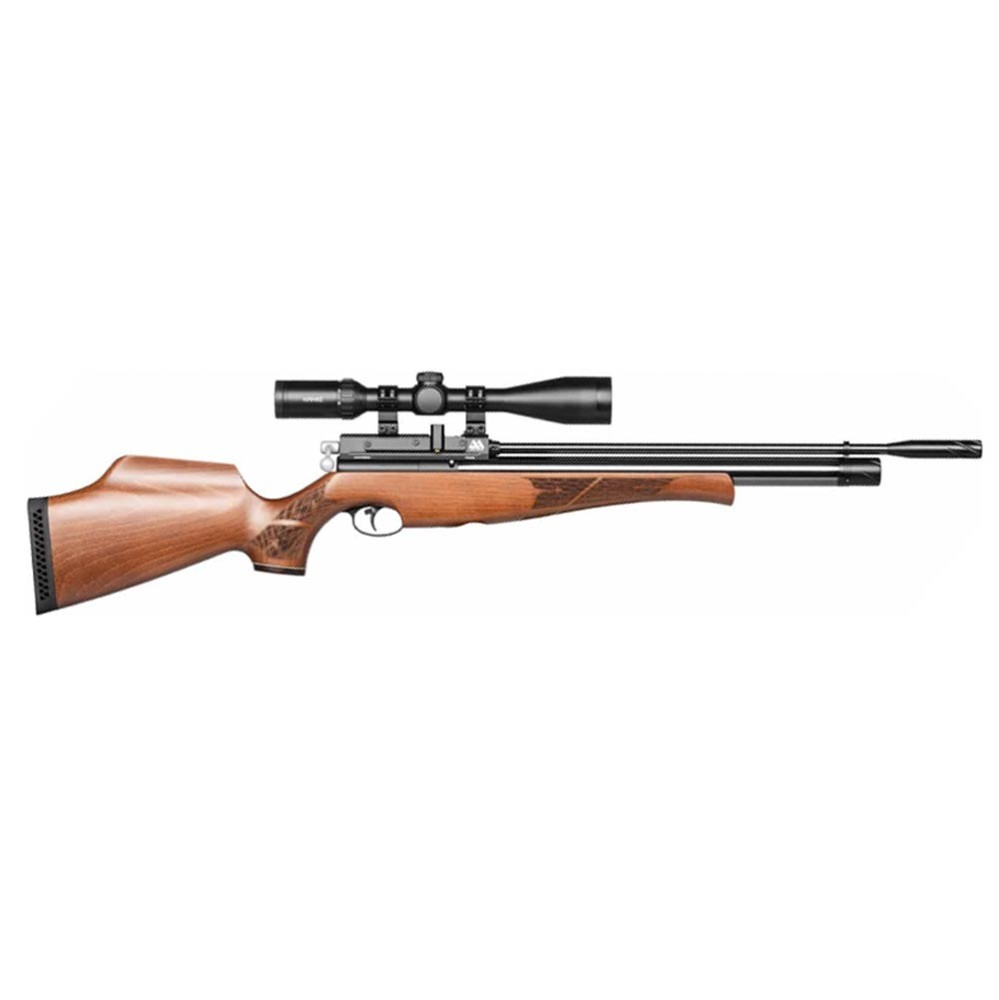
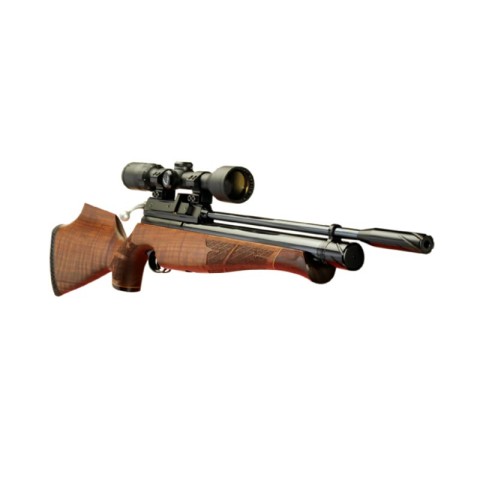
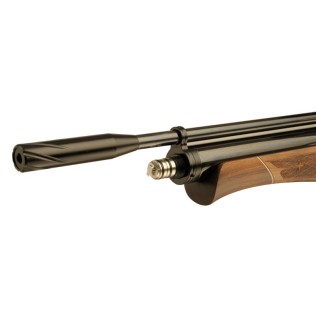
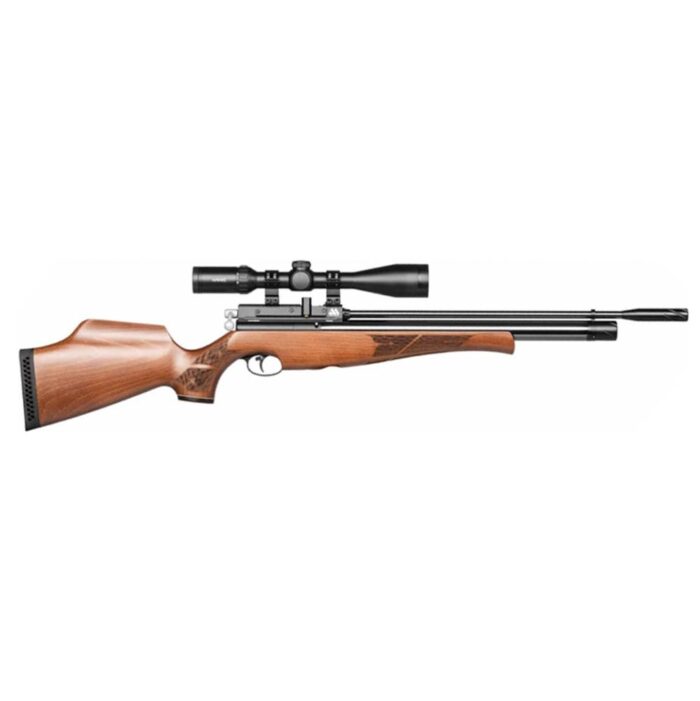
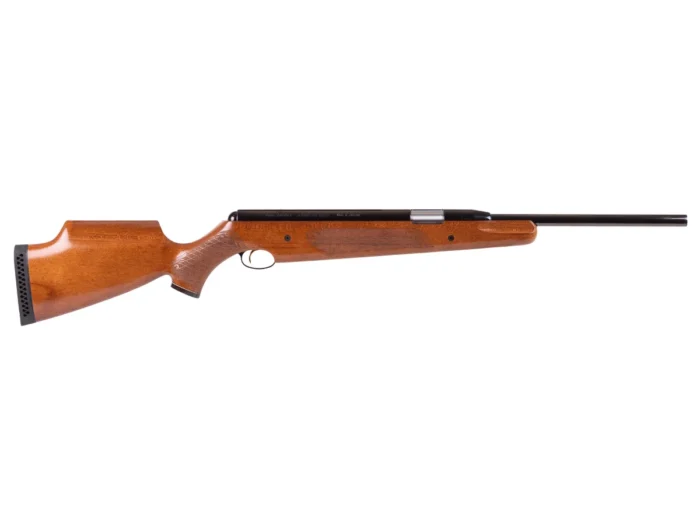
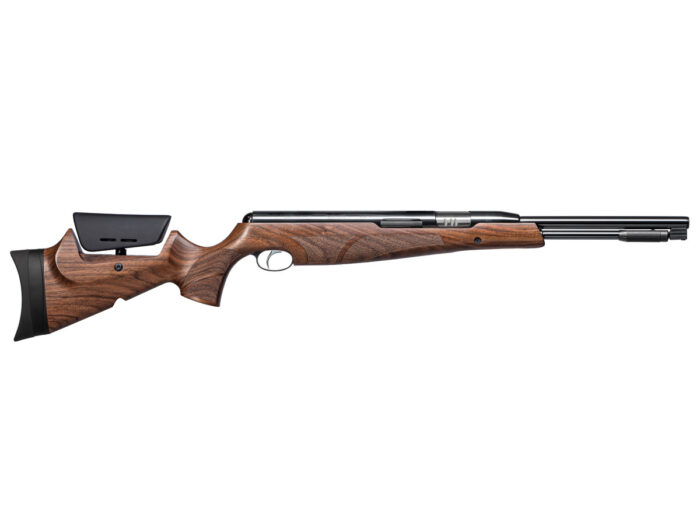
Air Arms S410 Classic Beech
€765.00
- Traditional bolt action
- Stainless steel filling connector with in-line 20 micron filter
- Optional moderator
- Trigger mounted safety
- Adjustable two stage trigger
- 10 shot magazine
- Built-in manometer
- Rifle and carbine length actions
Specifications
- Available in .177 & .22
- Shots per fill – 80 to 100
- Fill Pressure – 200 Bar
- Maximum Power – 11.5 ft/lbs /16J
- Overall Length – 1005mm
- Barrel Length – 493mm
- Weight 3.0kg
Air Arms S410 Classic Beech – Traditional PCP Precision, 10-Shot Bolt Action, Balanced Beech Stock, and Sporting Performance
Air Arms S410 Classic Beech Overview, Performance, Calibres, PCP Operation, and Buyer Information
What Is the Air Arms S410 Classic Beech?
The Air Arms S410 Classic Beech is a traditional multi-shot air rifle that combines a full-length sporter configuration with a durable beech stock and proven pre-charged pneumatic engineering. Within the wider air arms range, the air arms s410 remains an established sporting design because it combines a smooth bolt-action mechanism, 10-shot rotary magazine, balanced stock, and match-grade Lothar Walther barrel. Air Arms currently offers the S410 in beech or walnut, .177 and .22, with sub-12 ft-lb power and a typically unregulated action.
For buyers researching an air gun, air rifles, pellet guns, airguns, airgins, air riflery, or an Air Arms air rifle, this model represents a classic PCP platform rather than a spring-powered design.
The question what is an air rifle can be answered simply: it is a shoulder-fired platform that propels pellets using compressed air, gas, or a spring-powered mechanism rather than conventional firearm propellant.
How the PCP System Works
People frequently ask how do air guns work. In this platform, high-pressure air is stored inside an onboard cylinder and released in measured amounts when each shot is fired. The bolt handles loading and breech sealing rather than generating the power itself. Air Arms describes this as one of the fundamental differences between PCP bolt-action designs and spring-powered systems.
Therefore, the S410 is not a break barrel pellet gun. Anyone researching what is break barrel air rifle should understand that a break-barrel design uses a hinged barrel to cock its internal powerplant.
The phrase air compressor rifle is sometimes used informally for PCP equipment that requires an external high-pressure filling source. Depending on the approved filling arrangement, a suitable cylinder, compressor, or pcp hand pump may be used.
Bolt Action and 10-Shot Magazine
The S410 uses a smooth bolt-action mechanism paired with a 10-shot rotary magazine. This combination allows repeated shots without loading an individual pellet after every discharge. Air Arms specifically lists the bolt action and rotary magazine as defining S410 features.
The full-length Classic configuration also uses the longer barrel and air cylinder arrangement, which Air Arms associates with stability, predictable trajectories, and greater shot capacity than the shorter carbine configuration.
.177 and .22 Calibre Choices
Current S410 models are available in 177 caliber and .22.
A 177 air rifle uses cal .177 pellets, while a .22 air rifle uses the larger .22 projectile. Searches for 177 pellet vs.22 pellet and 177 caliber vs 22 usually involve differences in trajectory, pellet weight, retained energy, and intended application.
Understanding air rifle calibers remains important because only ammunition matching the calibre marked on the individual rifle should be used.
Beech Stock and Classic Handling
The beech sporter stock gives this configuration its traditional appearance and balanced feel. Air Arms describes its beech and walnut sporter stocks as classic options designed for durability, comfort, and natural handling.
The full-length design also provides greater stability than the shorter carbine variant, particularly from supported positions.
Comparing the S410 with the S510 Family
The Air Arms S510 XS Ultimate Sporter FAC, Air Arms S510 XS Ultimate Sporter FAC Walnut Stock, Air Arms S510 XS Ultimate Sporter, Air Arms S510 FAC, and Air Arms S510 XS FAC PCP Air Rifle are separate models.
Likewise, the phrases air arms s510 and air arms s510 ultimate sporter .177 sub 12 relate to newer side-lever platforms rather than the bolt-action S410. Air Arms currently positions the S510 and Ultimate Sporter families around side-lever operation and, depending on configuration, regulated systems.
Comparing Spring-Powered Models
The air arms tx200 and prosport air arms belong to Air Arms’ spring-powered category rather than its PCP family. The TX200, for example, uses an underlever spring-piston system instead of stored compressed air.
Similarly, air pisto generally refers to pistol-style equipment rather than a full-sized sporting rifle.
Accuracy and Target Applications
For target air rifle shooting, the S410’s Lothar Walther barrel, balanced stock, bolt action, and multi-shot system provide a strong foundation for consistent shooting. Air Arms emphasizes the model’s precision, comfort, and repeatable performance.
Anyone searching airgun shooting range near me should use an authorized shooting facility and follow the rules applying in their location.
Accuracy still depends on ammunition quality, pressure consistency, optic setup, environmental conditions, and shooter technique.
Cleaning, Filling, and Routine Care
An Air rifle cleaning kit suitable for PCP equipment can help maintain the bore and exterior surfaces. Air Arms recommends wiping the exterior after use, periodically cleaning the barrel with an appropriate pull-through system, monitoring magazine wear, and obtaining regular professional servicing.
Filling equipment must also be clean, compatible, and operated according to the manufacturer’s instructions.
Responsible Use and Home-Defence Searches
The phrase air guns for home defense appears frequently in online searches, but the S410 Classic Beech should be treated as sporting equipment rather than promoted as a defensive weapon.
Its appropriate applications include lawful recreational shooting, supervised training, target work, and sporting or pest-control use where permitted.
Why Choose the S410 Classic Beech?
The Air Arms S410 Classic Beech combines traditional sporter styling with proven PCP technology. Its full-length configuration emphasizes stability, while the beech stock provides a classic appearance and balanced handling. The 10-shot rotary magazine adds practical multi-shot convenience, and the bolt action maintains the straightforward mechanical character that helped establish the S410’s reputation.
For shooters who value British engineering, traditional styling, practical precision, and a proven multi-shot platform, the S410 Classic Beech remains a distinctive choice within the modern sporting market.
Accuracy, Balance, and Everyday Performance
Designed for Reliable Precision
Reliable precision is achieved through a combination of quality engineering, careful preparation, and consistent practice. Although excellent manufacturing standards provide a strong foundation, dependable results are usually developed through patience and experience.
As familiarity increases, many shooters become more comfortable with the equipment they use. Consequently, confidence grows while overall consistency improves.
Over time, small adjustments and improved techniques frequently produce significant results.
Why Balance Is Important
Balance plays an essential role in comfort, control, and overall efficiency. Equipment that feels properly balanced is often easier to position and maintain during extended periods of use.
Several factors contribute to effective balance:
- Weight distribution
- Body positioning
- Trigger control
- Shooting posture
- Environmental awareness
Together, these elements help create a more controlled and predictable experience.
Understanding the Importance of Accuracy
Accuracy depends upon numerous variables working together. Even minor changes in technique may influence the final result, particularly when greater distances are involved.
Several factors commonly influence precision:
- Consistent ammunition selection
- Stable positioning
- Controlled breathing
- Regular maintenance
- Proper sight alignment
- Thorough preparation
Paying close attention to these factors frequently leads to better long-term performance.
Adapting to Environmental Conditions
Environmental conditions rarely remain unchanged. Consequently, individuals who learn to recognize these changes often perform more consistently.
Several variables should always be considered:
- Wind speed
- Wind direction
- Temperature changes
- Humidity levels
- Atmospheric pressure
- Lighting conditions
Understanding these influences frequently allows shooters to make better decisions while improving consistency.
Developing Effective Shooting Habits
Strong habits are usually developed through continuous practice and careful observation. As experience grows, greater efficiency often follows naturally.
Several practices frequently contribute to improvement:
- Maintaining proper posture
- Following a structured routine
- Recording observations
- Practicing regularly
- Remaining patient and disciplined
These habits frequently strengthen confidence and encourage consistent performance.
Why Trigger Control Matters
Trigger control influences accuracy because unnecessary movement can affect alignment immediately before a shot is released.
Several recommendations frequently improve control:
- Maintain a comfortable grip.
- Apply steady pressure.
- Avoid abrupt movements.
- Remain focused throughout the process.
- Follow through after each shot.
These techniques often contribute to greater consistency.
Maintenance and Routine Care
Routine maintenance helps preserve reliability while protecting important components from unnecessary wear.
Several recommendations are commonly followed:
- Inspect visible surfaces regularly.
- Remove dust and debris carefully.
- Protect metal components from moisture.
- Confirm that fittings remain secure.
- Store equipment correctly after use.
These practices frequently help maintain dependable long-term performance.
Frequently Asked Questions
Why is balance important?
Proper balance improves comfort, increases control, and supports greater accuracy.
Why should environmental conditions be monitored?
Environmental changes frequently influence performance and overall consistency.
Why is trigger control so important?
Smooth and controlled trigger movement helps maintain proper alignment.
Why is regular maintenance recommended?
Routine maintenance helps preserve reliability and extend operational life.
Why does practice improve performance?
Practice strengthens confidence, improves concentration, and develops consistency.
Final Thoughts
Long-term success is often built upon preparation, discipline, patience, and continuous improvement. Shooters who remain committed to these principles frequently enjoy dependable performance, improved confidence, and a more rewarding experience over many years of use.
Reliability, Performance Optimization, and Shooting Techniques
Building Confidence Through Experience
Experience remains one of the most valuable factors in achieving dependable performance. Although modern engineering provides excellent mechanical consistency, long-term success is often developed through patience, preparation, and continuous practice.
As experience increases, individuals usually become more comfortable adjusting to changing conditions. Consequently, performance often becomes more predictable, and confidence naturally improves.
Steady progress frequently creates stronger habits and more reliable results.
Why Consistency Matters
Consistency forms the foundation of long-term performance because repeated practice allows techniques to become more natural and efficient.
Several factors frequently contribute to consistency:
- Controlled breathing
- Stable body positioning
- Proper preparation
- Careful observation
- Routine maintenance
- Consistent handling techniques
When these elements work together, dependable performance often becomes easier to achieve.
The Importance of Comfortable Handling
Comfort directly influences concentration and efficiency. Equipment that feels natural to handle frequently allows individuals to remain focused for longer periods without experiencing unnecessary fatigue.
Several factors contribute to improved handling:
- Balanced weight distribution
- Secure positioning
- Controlled movement
- Proper body posture
- Smooth operation
These characteristics often contribute to a more enjoyable shooting experience.
Understanding Environmental Conditions
Environmental conditions continuously change, which means adaptability remains extremely important. Individuals who recognize these changes frequently perform with greater confidence and consistency.
Several conditions should always be considered carefully:
- Wind direction
- Wind speed
- Temperature fluctuations
- Humidity levels
- Atmospheric pressure
- Available light
Understanding these variables frequently helps improve overall performance.
Developing Effective Practice Routines
Practice routines frequently strengthen concentration while improving efficiency and confidence. Furthermore, regular practice often reveals opportunities for improvement that may otherwise remain unnoticed.
Several habits commonly contribute to better results:
- Maintaining a structured schedule
- Reviewing previous performance
- Conducting routine inspections
- Practicing under different conditions
- Remaining disciplined and patient
These habits frequently lead to long-term improvement.
Why Maintenance Supports Reliability
Routine maintenance remains essential because preventative care helps reduce unnecessary wear while preserving dependable operation.
Several recommendations are widely followed:
- Remove dust and debris carefully.
- Inspect all external surfaces regularly.
- Protect components from excessive moisture.
- Verify that all fittings remain secure.
- Store equipment properly after use.
Following these procedures frequently contributes to improved reliability.
Common Mistakes to Avoid
Even experienced shooters occasionally encounter avoidable difficulties. Fortunately, many of these situations can be prevented through careful preparation and attention to detail.
Common examples include:
- Inconsistent maintenance schedules
- Improper storage conditions
- Excessive adjustments
- Limited environmental awareness
- Insufficient preparation
Recognizing these situations early frequently helps prevent larger complications from developing.
Frequently Asked Questions
Why is consistency important?
Consistency strengthens confidence while helping improve long-term performance.
Why should environmental conditions be monitored carefully?
Environmental changes frequently influence comfort, accuracy, and overall efficiency.
Why is comfortable handling beneficial?
Comfort improves control, reduces fatigue, and supports greater concentration.
Why is routine maintenance necessary?
Routine maintenance helps preserve reliable operation and extend the service life of important components.
Why does experience contribute to better results?
Experience strengthens awareness, improves decision-making, and supports more dependable performance.
Final Remarks
Long-term success is often achieved through discipline, preparation, patience, and continuous improvement. Individuals who remain committed to these principles frequently experience greater confidence, improved consistency, and dependable long-term results.
Long-Term Durability, Ownership Experience, and Practical Performance
Engineered for Dependable Operation
Long-term dependability is one of the most desirable qualities in any precision platform. While manufacturing quality establishes the foundation for reliable operation, regular care and proper handling often determine how effectively the equipment performs throughout years of use.
Individuals who follow organized maintenance procedures frequently experience fewer interruptions and greater confidence. As a result, performance often remains consistent even when environmental conditions change.
A disciplined approach to maintenance and operation frequently produces better results over time.
Why Material Quality Matters
Material selection directly influences reliability, structural strength, and overall longevity. Durable components help protect internal systems while preserving performance during extended use.
Several factors contribute to long-term durability:
- Resistance to wear
- Structural stability
- Protection from moisture
- Smooth mechanical operation
- Consistent performance
- Reliable component interaction
These characteristics frequently support dependable operation in a variety of conditions.
Understanding the Importance of Stability
Stability remains one of the foundations of accuracy and control. Even slight movements may influence performance, particularly when greater distances are involved.
Several factors commonly improve stability:
- Proper body positioning
- Consistent support techniques
- Controlled breathing
- Smooth movements
- Careful preparation
These habits often contribute to greater confidence and improved consistency.
Environmental Awareness and Adaptability
Environmental conditions constantly change, which makes adaptability an essential skill. Individuals who recognize changing circumstances frequently respond more effectively while maintaining greater control.
Several variables should always be observed carefully:
- Wind speed
- Wind direction
- Humidity levels
- Temperature variations
- Atmospheric pressure
- Available light
Understanding these factors frequently supports better decision-making.
The Value of Preventive Maintenance
Preventive maintenance helps preserve long-term reliability while reducing the possibility of avoidable problems. Consequently, regular inspections remain extremely important.
Several maintenance recommendations are commonly followed:
- Remove dust and debris carefully.
- Inspect visible components regularly.
- Protect exposed surfaces appropriately.
- Verify the condition of important fittings.
- Store equipment in a suitable environment.
These procedures frequently contribute to dependable operation.
Proper Storage Techniques
Storage conditions influence durability, appearance, and overall performance. Therefore, creating a clean and organized storage environment remains extremely beneficial.
Several recommendations are widely advised:
- Avoid excessive humidity.
- Protect surfaces from direct sunlight.
- Minimize exposure to dust and dirt.
- Prevent unnecessary impacts.
- Conduct periodic inspections.
These habits frequently help maintain long-term reliability.
Developing Better Habits Through Experience
Experience strengthens concentration, awareness, and adaptability. As familiarity increases, individuals frequently discover more effective techniques and develop greater confidence.
Several advantages often result from continuous practice:
- Improved concentration
- Increased confidence
- Better decision-making
- Greater efficiency
- Enhanced consistency
These improvements frequently contribute to long-term success.
Frequently Asked Questions
Why is durability important?
Durability supports reliable operation while protecting important components from unnecessary wear.
Why should preventive maintenance be performed regularly?
Preventive maintenance helps preserve dependable performance and reduce the likelihood of avoidable problems.
Why is stability important?
Stability supports accuracy while helping maintain greater control.
Why should environmental conditions be monitored?
Environmental changes frequently influence overall performance and consistency.
Why does experience improve results?
Experience strengthens confidence, improves awareness, and supports more effective decision-making.
Final Thoughts
Reliable performance is often achieved through patience, preparation, discipline, and continuous improvement. Individuals who remain committed to these principles frequently experience greater confidence, dependable operation, and long-term satisfaction.
Maintenance Procedures, Practical Advantages, and Long-Term Ownership
Establishing a Consistent Maintenance Routine
Regular maintenance plays a vital role in preserving reliability, accuracy, and long-term performance. Although modern engineering provides excellent durability, proper care remains essential for maintaining smooth operation throughout years of ownership.
Individuals who establish organized maintenance habits often discover that their equipment performs more consistently while requiring fewer repairs. In addition, routine inspections frequently reveal minor concerns before they develop into more significant problems.
Consistency, patience, and preparation frequently provide the foundation for dependable long-term performance.
Why Proper Cleaning Is Important
Cleaning procedures help preserve appearance while protecting important components from contamination and unnecessary wear.
Several recommendations are generally followed:
- Remove dust and dirt carefully.
- Protect exposed metal surfaces.
- Inspect moving components regularly.
- Avoid excessive moisture.
- Store equipment properly after cleaning.
These practices frequently contribute to improved reliability.
Understanding Pressure Management
Pressure management remains extremely important because consistent operation frequently depends upon maintaining appropriate internal pressure levels.
Several recommendations are commonly observed:
- Follow the manufacturer’s instructions carefully.
- Use compatible filling equipment.
- Inspect fittings before use.
- Avoid rapid filling procedures.
- Confirm pressure levels regularly.
These habits frequently contribute to improved consistency and reliability.
Why Comfortable Handling Matters
Comfort influences control, concentration, and confidence. Equipment that feels balanced and responsive often becomes easier to operate during longer sessions.
Several factors frequently improve handling characteristics:
- Balanced weight distribution
- Stable positioning
- Controlled movement
- Proper posture
- Smooth mechanical operation
These characteristics frequently contribute to a more enjoyable experience.
Environmental Conditions and Their Effects
Environmental conditions continually change, which is why adaptability remains essential. Individuals who understand these changes often respond more effectively and maintain greater consistency.
Several factors deserve careful consideration:
- Wind speed
- Wind direction
- Temperature fluctuations
- Humidity levels
- Atmospheric pressure
- Available light
Understanding these variables frequently contributes to improved results.
Protecting Equipment During Transportation
Transportation exposes equipment to movement, vibration, dust, and changing environmental conditions. Consequently, taking preventative measures remains extremely beneficial.
Several precautions are generally recommended:
- Secure equipment carefully before transportation.
- Protect external surfaces from unnecessary contact.
- Inspect important components after travel.
- Store accessories safely.
- Verify that all fittings remain secure.
These measures frequently help preserve long-term durability.
Common Mistakes That Should Be Avoided
Even experienced individuals occasionally encounter avoidable problems. Fortunately, many difficulties can be prevented through proper preparation and discipline.
Several examples include:
- Irregular maintenance schedules
- Improper storage conditions
- Excessive adjustments
- Insufficient preparation
- Reduced environmental awareness
Recognizing these situations early frequently helps prevent larger complications.
Frequently Asked Questions
Why is regular maintenance important?
Routine maintenance helps preserve reliability while extending the useful life of important components.
Why should pressure levels be monitored carefully?
Consistent pressure helps maintain dependable operation and supports more predictable performance.
Why is comfortable handling beneficial?
Comfortable handling improves control, reduces fatigue, and increases confidence.
Why should transportation precautions be followed?
Protective measures help reduce the possibility of accidental damage and unnecessary wear.
Why does experience improve performance?
Experience strengthens awareness, increases efficiency, and supports greater consistency.
Final Remarks
Long-term success is often achieved through patience, preparation, discipline, and continuous learning. Individuals who remain committed to these principles frequently experience dependable performance, increased confidence, and a rewarding ownership experience over many years.
Storage, Troubleshooting, Performance Improvement, and Long-Term Care
Creating a Reliable Long-Term Care Routine
Long-term reliability is rarely achieved by accident. Instead, it is usually the result of careful preparation, disciplined maintenance practices, and continuous attention to detail. Although quality engineering contributes significantly to durability, proper care frequently determines how well equipment performs after years of regular use.
Individuals who establish effective maintenance routines often experience greater confidence because their equipment remains clean, organized, and ready for use. Furthermore, regular inspections frequently reduce the likelihood of unexpected problems.
These habits frequently contribute to a more satisfying ownership experience.
Why Proper Storage Conditions Matter
Storage conditions have a direct influence on reliability, appearance, and long-term durability. Consequently, maintaining an appropriate environment remains extremely important.
Several recommendations are commonly followed:
- Store equipment in a clean and dry location.
- Protect exposed surfaces from excessive moisture.
- Minimize prolonged exposure to direct sunlight.
- Reduce unnecessary exposure to dust.
- Inspect important components regularly.
These practices frequently help preserve dependable performance.
Recognizing Common Performance Problems
Even well-maintained equipment occasionally develops problems that require attention. Fortunately, careful observation frequently allows minor concerns to be identified before they become more serious.
Several examples include:
- Reduced consistency
- Loose fittings
- Excessive contamination
- Irregular maintenance routines
- Improper storage conditions
Recognizing these situations early frequently helps maintain reliable operation.
Improving Consistency Through Better Habits
Good habits frequently create the foundation for improved long-term performance. As experience increases, individuals often develop routines that strengthen concentration and efficiency.
Several habits frequently contribute to better results:
- Maintaining organized procedures
- Recording observations regularly
- Practicing consistently
- Conducting routine inspections
- Remaining patient and disciplined
These habits frequently lead to greater confidence and stronger performance.
Why Environmental Awareness Remains Important
Environmental conditions constantly change, which means adaptability remains essential. Individuals who understand these changes often respond more effectively and maintain greater control over their performance.
Several environmental factors should always be considered:
- Wind speed
- Wind direction
- Humidity levels
- Temperature fluctuations
- Atmospheric pressure
- Available light
Awareness of these conditions frequently supports greater consistency.
Cleaning Procedures for Long-Term Reliability
Cleaning should always be approached carefully because delicate components may be affected by improper techniques.
Several recommendations are generally advised:
- Remove loose dust carefully.
- Inspect exposed surfaces thoroughly.
- Use appropriate cleaning materials.
- Protect components from unnecessary exposure to moisture.
- Return equipment to a suitable storage location.
Following these procedures frequently contributes to improved durability.
Transportation and Protective Measures
Transportation often exposes equipment to vibration, movement, dust, and changing environmental conditions. Therefore, protective measures remain extremely valuable.
Several precautions are commonly recommended:
- Secure equipment carefully before travel.
- Protect exposed surfaces from impacts.
- Inspect important components after transportation.
- Store accessories systematically.
- Confirm that all fittings remain secure.
These measures frequently help preserve long-term reliability.
Frequently Asked Questions
Why should storage conditions be monitored regularly?
Appropriate storage conditions help protect equipment from environmental damage and unnecessary wear.
Why are routine inspections important?
Routine inspections frequently help identify potential concerns before they become serious problems.
Why is environmental awareness important?
Environmental conditions influence comfort, efficiency, and overall consistency.
Why should cleaning procedures be performed carefully?
Proper cleaning helps preserve reliability while protecting delicate surfaces.
Why is long-term maintenance necessary?
Long-term maintenance supports dependable operation while extending the service life of important components.
Final Thoughts
Reliable performance is often achieved through patience, preparation, discipline, and continuous improvement. Individuals who remain committed to these principles frequently experience greater confidence, stronger consistency, and dependable long-term results throughout many years of ownership.
Be the first to review “Air Arms S410 Classic Beech”
Related products
Air Arms
Air Arms
Air Arms

Air Arms
Reviews
There are no reviews yet.