
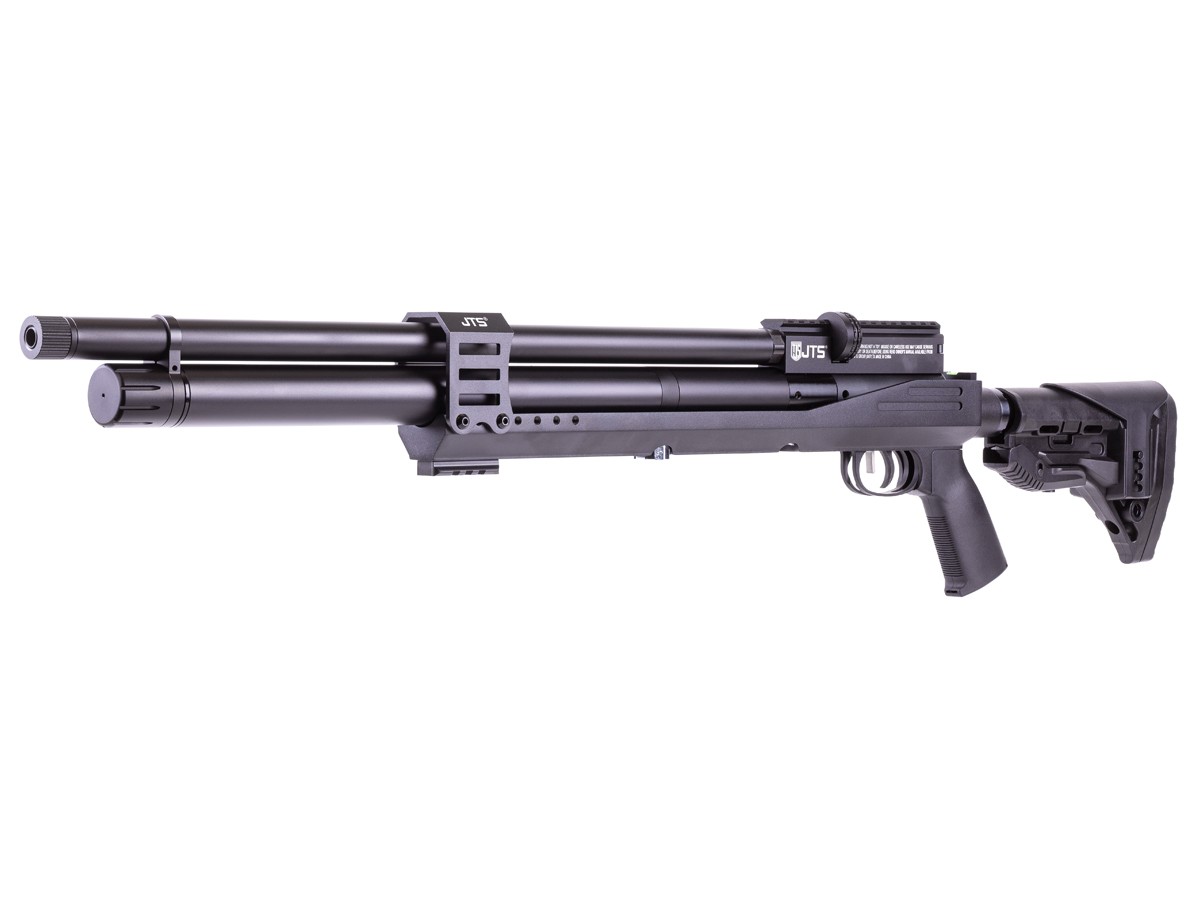
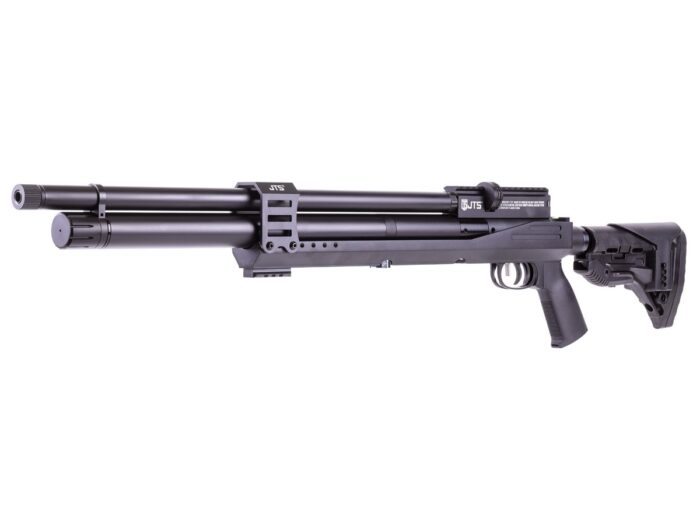
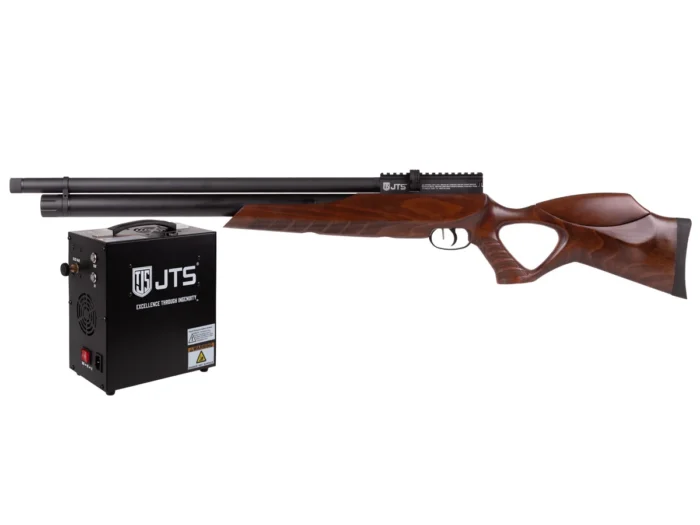
JTS Airacuda PRS Max PCP Air Rifle
Price range: €250.00 through €260.00
The JTS Airacuda PRS Max is a serious multi-caliber PCP that steps up to .30 caliber for shooters who want real hunting authority alongside the more common .22 and .25 options. Using JTS pellets, it produces 950 fps in .22, 920 fps in .25, and 860 fps in .30 — numbers that make it a legitimate small to medium game hunting platform across all three calibers.
We like the Airacuda PRS Max for shooters who want flexibility — one rifle that can cover plinking and pest control duty in .22 and step up to serious hunting work in .25 or .30.
- Calibers available: .22 at 950 fps, .25 at 920 fps, .30 at 860 fps
- PRS Max platform — competition-inspired ergonomics and adjustability
- Three-caliber lineup covers a wide range of shooting applications
- PCP powered for shot-to-shot consistency at hunting distances
Few PCPs in this class give you .30 caliber capability alongside .22 and .25 — the Airacuda PRS Max is worth a close look if you want one rifle that does it all.
| Caliber | .22 Caliber, Black, .22 Caliber, Silver, .22 Caliber, Red, .22 Caliber, Green, .25 Caliber, Black, .25 Caliber, Silver, .25 Caliber, Red, .25 Caliber, Green, .30 Caliber, Silver, .30 Caliber, Black, .30 Caliber, Red, .30 Caliber, Green |
|---|---|
| Brand | JTS Airguns |
JTS Airacuda PRS Max PCP Air Rifle – Technical Product Guide
PRS Max Engineering, Chassis Design, Regulated PCP Operation, Precision, and JTS Platform Context
JTS Airacuda PRS Max
The JTS Airacuda PRS Max is built around a custom aluminum-alloy chassis rather than the traditional wood-stock configuration used by other Airacuda models. JTS describes the chassis as ergonomically designed to improve access to the lever while supporting adjustable stocks, grips, and additional rails.
Aluminum-Alloy Chassis
The aluminum chassis is one of the defining engineering features of the platform.
A rigid chassis can help maintain a consistent relationship between the action, optics rail, stock, grip, and barrel-supporting structure. It also provides standardized mounting surfaces for compatible accessories.
However, structural rigidity does not eliminate the need for correct hardware installation and routine inspection.
Regulated PCP System
The rifle uses a regulated pre-charged pneumatic system.
A regulator helps manage the pressure supplied from the reservoir as stored air pressure changes during use.
This supports more consistent internal operating conditions across an appropriate portion of the fill.
Practical precision still depends on ammunition uniformity, barrel condition, sight stability, environmental factors, and mechanical maintenance.
220cc Air Cylinder
JTS specifies a 220cc cylinder for the PRS Max.
Its capacity supports the manufacturer-listed shot counts while contributing to the rifle’s overall balance.
Because the reservoir contains highly compressed air, dents, severe scratches, corrosion, or unexplained leakage should receive qualified attention.
21.1-Inch Rifled Barrel
The PRS Max uses a 21.1-inch rifled barrel.
Rifling stabilizes compatible projectiles through controlled rotation.
Barrel length contributes to the platform’s proportions, but precision also depends on crown integrity, alignment, pressure consistency, projectile quality, and optical stability.
Moderator-Ready Barrel
JTS describes the barrel as moderator-ready.
Any compatible muzzle device should remain within manufacturer specifications and applicable local law.
Unauthorized alterations to the barrel assembly should be avoided.
Side-Lever Action
The rifle uses a side-lever action.
This layout places the cycling control conveniently beside the action.
Movement should remain smooth and predictable.
Grinding, binding, or unexpected resistance should prompt inspection rather than additional force.
Adjustable Two-Stage Trigger
JTS lists an adjustable two-stage trigger.
The two-stage design provides an initial movement followed by a defined final release stage.
Any adjustment should remain within manufacturer-supported parameters.
Manual Safety
A manual safety is included in the current specification.
Mechanical safety devices should never replace basic handling discipline or controlled range procedures.
Upper Picatinny Rail
The upper rail provides a standardized mounting interface for compatible sighting equipment.
Mounting stability matters because loose rings or bases can produce apparent accuracy problems even when the pneumatic system is functioning correctly.
Lower Picatinny Rail
The lower front Picatinny rail provides additional mounting capability.
Additional equipment should be selected conservatively because unnecessary accessories increase weight and can affect balance.
Bubble Level
The integrated bubble level is intended to help identify lateral cant during controlled target use.
It serves as an alignment aid rather than a substitute for correct sight setup or consistent technique.
Single-Shot Tray
JTS includes a single-shot tray along with two metal magazines.
This allows the user to operate the platform without a magazine during appropriate controlled target sessions.
Custom Pressure-Gauge Placement
The PRS Max supports custom pressure-gauge placement options.
This allows the gauge to be positioned in a way that improves visibility within the chassis layout.
Any pressure gauge should remain secure and readable.
.22 Caliber Configuration
JTS lists the .22 version at up to approximately 950 fps, with a 10-round magazine and around 40 maximum shots per fill.
.25 Caliber Configuration
The .25 version is listed at up to approximately 920 fps, with a 10-round magazine and around 30 maximum shots per fill.
.30 Caliber Configuration
The .30 configuration is manufacturer-rated at up to approximately 860 fps, with a 7-round magazine and around 20 maximum shots per fill.
JTS Airguns
jts airguns currently lists the PRS Max alongside the Airacuda Standard, Airacuda Max, AirStryke, AirStryke Carbine, and Brawn. The manufacturer also offers compressors, hand pumps, magazines, adjustable stocks, grips, and ammunition.
JTS Airacuda
The jts airacuda Standard is a separate model using a more traditional sporting configuration.
It should not be treated as identical to the PRS Max because stock architecture, barrel configuration, and accessory layout differ.
Airacuda
The broader airacuda name refers to a product family rather than one exact specification.
Model-specific data should always be used when comparing dimensions, caliber options, magazines, or shot counts.
JTS Aircuda
Jts aircuda is a common spelling variation of Airacuda rather than a separate verified model.
Airacuda PCP
The phrase airacuda pcp describes the pre-charged pneumatic operating system used across the Airacuda family.
JTS publishes separate owner manuals for the PRS Max, Airacuda Max, and Standard versions, confirming that these are distinct technical configurations.
JTS Airacuda 25
The phrase jts airacuda 25 generally refers to a .25-caliber Airacuda configuration.
For the PRS Max specifically, the .25 model is listed at approximately 920 fps with 10-round capacity and around 30 shots per fill.
JTS Airacuda Max
The jts airacuda max is the regulated wood-stock member of the family.
JTS lists it with an 18-inch shrouded barrel, adjustable cheek riser, side-lever action, two-stage adjustable trigger, and .177, .22, .25, and .30 caliber configurations.
Airacuda Max
The airacuda max differs from the PRS Max in stock architecture, barrel length, overall configuration, and accessory layout.
The two should therefore not be treated as interchangeable model names.
JTS Airacuda Max 30
The jts airacuda max 30 refers to the .30-caliber wood-stock Max rather than the PRS Max.
JTS Airacuda Max 30 Cal
The phrase jts airacuda max 30 cal should likewise remain separate from the PRS Max .30 specification.
JTS AirStryke
The jts airstryke is another separate JTS PCP family.
JTS lists it independently from the Airacuda series.
JTS AirStryke Carbine
The JTS AirStryke Carbine is a compact .22-caliber platform with a 14.5-inch barrel, 85cc cylinder, 10-round magazine, regulated PCP system, 33-inch overall length, and listed weight of 5.51 lb.
JTS AirStryke Carbine PCP Air Rifle
The phrase JTS AirStryke Carbine PCP air rifle therefore refers to a separate model and should not be used to establish PRS Max specifications.
AirStryke Carbine Airgun
Likewise, AirStryke Carbine airgun concerns the compact AirStryke architecture rather than this aluminum-chassis platform.
JTS Brawn
The jts brawn is JTS’s separate bullpup PCP platform.
It should not be confused with the PRS Max because its stock geometry and overall architecture differ.
JTS PCP Air Rifle
The phrase JTS PCP air rifle applies broadly to several current products.
Exact model identification should therefore come before comparing technical specifications.
JTS Pellets
jts pellets refers to JTS’s ammunition catalog.
Current listings include multiple pellet and slug products in .22, .25, .30, and other calibers.
Only ammunition matching the exact caliber and manufacturer-supported specification should be used.
JTS Compressor
The term jts compressor refers to separate PCP charging equipment.
JTS currently lists the COMP100, COMP1, and high-pressure hand pumps among its accessories.
Charging equipment should remain compatible with the rifle’s pressure requirements.
Compressed Air Rifle
The PRS Max is accurately described as a compressed air rifle because its energy source is stored high-pressure air.
Reservoirs, fittings, gauges, hoses, and charging equipment should therefore be treated as pressure-system components.
Best Scope for PCP Air Rifle
The phrase best scope for PCP air rifle relates to accessory selection rather than a fixed PRS Max specification.
Optic suitability depends on intended lawful target use, eye relief, mounting height, magnification requirements, and compatibility with the upper rail.
Adjustable Buttstock
JTS separately lists an adjustable buttstock with tool-free micro-click cheek-riser adjustment, multiple stock positions, reinforced polymer construction, and an anti-slip buttpad. JTS states that the unit can be included with an Airacuda chassis configuration.
This illustrates the modular nature of the PRS-style chassis architecture.
JTS Airacuda PRS Grip
JTS also offers a dedicated PRS grip described as ergonomic, durable, lightweight, and polymer constructed.
177 Cal Pellet Gun
The phrase 177 cal pellet gun does not describe the current PRS Max specification retrieved here, which JTS lists in .22, .25, and .30.
177 Cartridge
The term 177 cartridge is technically inaccurate in this context because PCP air rifles use airgun projectiles rather than conventional firearm cartridges.
JTS Firearms
The phrase jts firearms is broader than the product discussed here.
The manufacturer identifies this product specifically as a PCP air rifle.
JTS Guns
Similarly, jts guns is a broad search phrase rather than a precise technical designation.
JTS Group
The phrase Jts group does not establish any specific engineering feature of the PRS Max.
Official JTS product pages and manuals remain the appropriate technical references.
Air Guns of Texas
The phrase air guns of texas is location- or retailer-oriented rather than a PRS Max engineering specification.
JTS currently lists its operation in Katy, Texas.
JTS Stealth Hawk
The phrase jts stealth hawk does not appear in the current official JTS product catalog reviewed here and should not be treated as a verified PRS Max feature.
Lindstradt Air Gun
The phrase lindstradt air gun does not correspond to a verified PRS Max feature in the official JTS sources reviewed.
Tom Air Gun
Likewise, tom air gun does not establish any verified specification for this platform.
Airgins
The term airgins appears to be a misspelling or unrelated search variation rather than authoritative product terminology.
JTS Shotgun Accessories
The phrase jts shotgun accessories concerns another equipment category and does not describe the PRS Max pneumatic or chassis system.
JTS Air Rifle for Hunting
The phrase JTS air rifle for hunting concerns intended use rather than engineering.
Whether any pneumatic rifle can legally or appropriately be used for hunting depends on jurisdiction, caliber, energy, species, and applicable regulations.
Commercial AirStryke Search Terms
The phrases buy JTS AirStryke Carbine online, JTS AirStryke Carbine for sale, and JTS AirStryke Carbine price concern purchasing another weapon platform, so I’m not providing seller recommendations, pricing guidance, or transaction assistance for those terms.
JTS AirStryke Carbine Review
The phrase JTS AirStryke Carbine review concerns evaluation of another JTS model and should not be treated as evidence about the PRS Max.
Practical Precision
The PRS Max combines a regulated pneumatic system, rigid aluminum chassis, 21.1-inch rifled barrel, adjustable two-stage trigger, bubble level, standardized mounting rails, and configurable stock and grip architecture. These features provide a technical foundation for controlled precision-oriented target use.
Practical precision still depends on ammunition consistency, pressure behavior, optical stability, barrel condition, environmental factors, and user technique.
Why the PRS Chassis Matters
The strongest engineering distinction is the chassis structure.
Compared with the wood-stock Airacuda Max, the PRS design provides a rigid aluminum frame, lower front rail, modular grip and stock options, adjustable length, bubble level, and a longer rifled barrel.
Warranty and Maintenance Context
JTS currently provides a three-year warranty to the original retail customer against defects in materials and workmanship. The company excludes damage caused by poor maintenance, misuse, negligence, barrel obstruction, and unauthorized adjustments, repairs, or modifications.
That makes correct maintenance and preservation of manufacturer-supported configuration particularly important.
Overall Technical Perspective
The JTS Airacuda PRS Max combines a regulated PCP system, 220cc cylinder, 21.1-inch rifled barrel, side-lever action, adjustable two-stage trigger, aluminum-alloy chassis, upper and lower Picatinny rails, bubble level, single-shot tray, configurable pressure-gauge placement, and two metal magazines. JTS currently lists approximately 950 fps in .22, 920 fps in .25, and 860 fps in .30, with shot counts of roughly 40, 30, and 20 per fill respectively.
For responsible ownership, the important considerations remain correct-caliber ammunition, compatible high-pressure charging equipment, adherence to manufacturer pressure limits, secure storage, appropriate eye protection, controlled recreational use, and qualified servicing whenever the pneumatic or mechanical system becomes uncertain.
Engineering Design, Handling Characteristics, Pressure Management, Accuracy Factors, and Practical Ownership
The engineering value of a precision-oriented pre-charged pneumatic platform comes from the way its major systems work together. The chassis, pressure reservoir, regulator, barrel, trigger, sight-mounting surface, stock geometry, and controls all influence consistency. Consequently, performance should not be judged from velocity alone. Repeatability, mechanical stability, comfortable positioning, ammunition consistency, and proper maintenance are equally important when evaluating the platform for lawful recreational target shooting.
Chassis Construction and Rigidity
A rigid chassis provides a stable structural foundation for the action and supporting components.
Compared with a conventional sporting stock, this type of construction can also provide greater flexibility for configuring compatible accessories and adjusting the shooting position.
However, rigidity alone cannot guarantee accuracy. Fasteners, mounting interfaces, sighting equipment, and other components must remain secure and correctly installed.
Overall Balance
Balance influences how naturally the rifle can be supported during a target session.
A front-heavy configuration may feel stable from a supported position but tiring when held for extended periods. Conversely, excessive rearward weight can change handling characteristics.
The preferred balance ultimately depends on the user’s physical proportions and shooting position.
Adjustable Length
An adjustable rear section allows the overall fit to accommodate different users and shooting positions.
Correct adjustment can help establish comfortable shoulder placement, eye position, and trigger reach.
The objective should be a natural position rather than forcing the body to accommodate an unsuitable setup.
Cheek Support
Consistent cheek placement contributes to repeatable sight alignment.
An adjustable cheek support can help the user establish a comfortable head position behind the optic.
Once an appropriate position has been established, unnecessary changes should be avoided because inconsistent head placement can affect the perceived point of aim.
Grip Geometry
Grip shape influences wrist position and access to the trigger.
A comfortable grip should allow the hand to remain relaxed while maintaining control.
Excessive gripping pressure can introduce unnecessary movement during precision-oriented target shooting.
Trigger Characteristics
A two-stage mechanism separates initial movement from the final release.
This arrangement can provide a predictable feel when properly maintained.
Any adjustment should remain within manufacturer-supported parameters, and unauthorized modification of internal components should be avoided.
Side-Lever Operation
A side-mounted operating lever provides convenient access to the action.
Movement should remain smooth and consistent.
Unexpected resistance, scraping, or binding should be investigated rather than overcome with excessive force.
Keeping the mechanism clean can help preserve reliable operation.
Magazine Function
A removable magazine provides repeated feeding without manually positioning each projectile.
For reliable operation, the magazine should remain clean, undamaged, and appropriate for the exact caliber.
Projectiles should also fit correctly rather than being forced into chambers or magazine openings.
Single-Loading Capability
A dedicated loading tray provides an alternative configuration for controlled range sessions.
It can be useful when a shooter wants to load one projectile at a time.
Regardless of loading method, the muzzle should remain directed toward a safe backstop and normal range procedures should be followed.
Barrel Construction
A rifled barrel provides rotational stabilization to compatible projectiles.
Its internal condition, crown integrity, cleanliness, alignment, and ammunition compatibility all influence practical grouping performance.
Aggressive cleaning methods can cause unnecessary damage, so maintenance should follow the manufacturer’s instructions.
Understanding Accuracy
Mechanical accuracy is only one part of practical performance.
Sight alignment, ammunition consistency, wind, range conditions, support stability, trigger technique, and user consistency all contribute.
Therefore, a poor group should not immediately be interpreted as evidence of a mechanical defect.
Ammunition Consistency
Projectile uniformity can significantly influence repeatability.
Differences in dimensions, weight, or physical condition can produce changes in performance.
Only the correct caliber and manufacturer-compatible ammunition should be used.
Damaged or visibly deformed projectiles should be discarded safely rather than forced into the system.
Regulated Pressure Delivery
A regulated pneumatic system is intended to provide more consistent operating pressure during an appropriate portion of the reservoir’s usable range.
This can support repeatable performance as stored pressure gradually decreases.
Nevertheless, regulator condition and overall pneumatic integrity remain important.
Unexpected changes should be professionally investigated.
Pressure Reservoir Condition
The high-pressure reservoir is a critical component.
Its exterior should remain protected from significant impact, corrosion, deep scratches, unauthorized drilling, heating, or modification.
A damaged pressure vessel should never be casually repaired or returned to service without qualified assessment.
Pressure Gauge Monitoring
A pressure gauge provides information about the air remaining in the reservoir.
The gauge should remain readable and undamaged.
A cracked lens, unexplained reading, persistent pressure loss, or other abnormal behavior deserves attention.
Safe Filling Practices
Charging should only be performed with compatible equipment and according to the manufacturer’s pressure specifications.
Connections should be clean and correctly seated.
The reservoir should never intentionally be filled beyond its approved pressure limit.
If a fitting, hose, gauge, or reservoir appears damaged, filling should stop until the equipment has been assessed.
Air Leakage
A noticeable pressure loss while the system is stored can indicate leakage.
Potential causes can range from sealing-component deterioration to fitting or valve problems.
Because the system contains high-pressure air, significant leaks should be addressed through appropriate servicing rather than improvised repair.
Sight-Mounting Stability
A stable sighting system is essential for evaluating mechanical consistency.
Loose mounts can create changing points of impact that resemble barrel or pressure-system problems.
Mounting hardware should therefore remain secure and compatible with the provided interface.
Leveling Aid
A built-in leveling reference can help identify unintended lateral tilt during controlled target shooting.
This becomes particularly useful when consistency is the objective.
However, it remains an alignment aid rather than a replacement for correct sight setup or sound shooting fundamentals.
Supported Target Use
The platform’s weight and chassis architecture make supported recreational target shooting a natural context for evaluating its consistency.
A stable bench or suitable range support can reduce unnecessary movement.
A secure backstop and appropriate range environment remain essential.
Environmental Effects
Wind can move lightweight projectiles noticeably.
Temperature and atmospheric conditions may also influence performance.
For meaningful accuracy comparisons, testing should therefore be performed under reasonably consistent conditions rather than comparing groups produced in dramatically different environments.
Heat and Storage
The rifle should not be stored for prolonged periods in extremely hot vehicles or similarly harsh environments.
High-pressure components, seals, optics, and other materials benefit from sensible storage conditions.
A dry, secure location is preferable.
Moisture Protection
Moisture can contribute to corrosion and deterioration.
After exposure to rain or humid conditions, exterior surfaces should be appropriately dried before storage.
Water should not be intentionally introduced into the action or pressure system.
Routine Exterior Care
Dust and surface contamination should be removed carefully.
Harsh solvents should not be applied indiscriminately because they may damage finishes, seals, polymers, or other components.
Manufacturer-supported cleaning products and procedures are preferable.
Fastener Inspection
Repeated use and transportation can occasionally affect external fasteners.
Visible components should remain secure.
If an important structural component repeatedly loosens, the underlying cause should be investigated rather than repeatedly tightening it without diagnosis.
Transport Considerations
During transportation, the rifle should be unloaded and secured in accordance with applicable law.
A suitable protective case can reduce impact, moisture exposure, and cosmetic damage.
Ammunition and compressed-air equipment should also be transported according to relevant regulations and manufacturer guidance.
Secure Storage
When not in use, the platform should be unloaded and stored securely so unauthorized users and children cannot access it.
Local regulations may impose additional storage requirements.
A dedicated locked storage arrangement provides a stronger safety baseline than simply leaving the equipment out of sight.
Pre-Use Inspection
Before a recreational range session, inspect the general condition of the rifle.
Check for obvious damage, loose external components, unusual pressure loss, damaged sighting equipment, or obstructions.
Any unexplained mechanical or pneumatic problem should be resolved before use.
Post-Use Inspection
After a session, check the platform again for damage or unusual changes.
Early identification of loose hardware, air leakage, or external damage can prevent a minor maintenance issue from becoming more serious.
Maintenance Records
Keeping basic maintenance records can be useful for long-term ownership.
Service dates, seal replacement, professional repairs, and significant changes in performance can be documented.
This creates a clearer history if troubleshooting is eventually required.
When Professional Servicing Is Appropriate
Persistent leakage, abnormal trigger behavior, damaged pressure components, unexplained mechanical resistance, or significant changes in performance warrant qualified servicing.
High-pressure pneumatic components should not be experimentally dismantled without appropriate technical knowledge.
Long-Term Reliability
Long-term reliability depends heavily on appropriate use and maintenance.
Clean storage, correct ammunition, manufacturer-compliant charging, careful transportation, and timely servicing all help preserve the system.
Unnecessary internal modification can introduce problems rather than improve performance.
Overall Practical Assessment
The strongest characteristics of a precision-oriented pneumatic platform come from integration rather than any single specification. A rigid structure, regulated pressure delivery, rifled barrel, predictable trigger, adjustable ergonomics, stable sight mounting, and convenient controls can collectively support consistent recreational target performance.
For responsible ownership, mechanical condition should be monitored alongside pneumatic integrity. Correct ammunition, approved charging equipment, secure storage, appropriate eye protection, a safe range environment, and qualified servicing remain fundamental. When these factors are managed properly, the platform can provide a stable and repeatable experience for lawful recreational target shooting.
Maintenance, Inspection, Storage, Pressure-System Care, and Long-Term Reliability
Long-term reliability depends on disciplined maintenance and careful handling rather than frequent internal modification. A pre-charged pneumatic platform combines a high-pressure reservoir, regulator, seals, barrel assembly, trigger, action, magazine system, gauges, stock, and mounting hardware. Because each part contributes to overall function, deterioration in one area can eventually affect the performance of the complete system. Preventive care should therefore focus on cleanliness, pressure-system integrity, storage conditions, careful transportation, and professional servicing whenever mechanical or pneumatic behavior becomes uncertain.
Routine Visual Inspection
A basic visual inspection should be completed regularly.
Look for loose screws, cracks, corrosion, dents, damaged fittings, contamination, or abnormal wear.
The reservoir, gauge, barrel, action, trigger housing, magazine area, stock, and sighting system should all be checked.
Becoming familiar with the normal appearance of the equipment makes developing problems easier to identify.
Reservoir Condition
The onboard air cylinder is a critical pressure-bearing component.
Its exterior should remain free from serious dents, deep scratches, severe corrosion, or visible deformation.
Damage to a high-pressure cylinder should never be dismissed as cosmetic.
If structural condition becomes uncertain, the equipment should remain out of service until it has been assessed by qualified personnel.
Pressure Retention
Unexpected pressure loss is an important warning sign.
If stored equipment begins losing air significantly faster than normal, a seal, fitting, valve, or other internal component may require attention.
Repeatedly restoring pressure without identifying the cause does not solve the problem.
Persistent leakage should be investigated before regular use continues.
Gauge Inspection
The pressure gauge should remain clear, readable, and securely mounted.
A cracked face, loose housing, corrosion, or unusual reading should be taken seriously.
If the gauge appears unreliable, it should be professionally checked or replaced with a suitable compatible component.
Accurate pressure information is essential for responsible system management.
Regulator Care
The internal regulator normally requires little routine owner intervention.
If performance becomes inconsistent, several causes are possible, including seal wear, temperature changes, contamination, or valve issues.
For that reason, unnecessary disassembly should be avoided.
Professional diagnosis is preferable when regulator problems are suspected.
Seal Condition
Seals naturally wear over time.
Heat, cold, contamination, storage environment, and repeated cycling can all affect their service life.
Possible deterioration may appear as gradual pressure loss or changes in operating consistency.
Replacement should use manufacturer-compatible components rather than improvised substitutes.
Fill Connection Maintenance
The filling connection should remain clean and protected.
Dust, grit, and moisture around a pressure fitting can interfere with sealing and accelerate wear.
Inspect the connection before attaching compatible charging equipment.
Protective covers should remain fitted when supplied.
Charging Equipment Inspection
External charging equipment deserves the same level of attention.
Hoses, fittings, connectors, gauges, and filters should be examined periodically for cracks, corrosion, damaged threads, or other deterioration.
Only pressure-rated equipment should remain in service.
Questionable components should be replaced rather than temporarily repaired.
Barrel Exterior Care
The barrel should remain clean and protected from substantial impact.
After exposure to moisture, accessible surfaces can be dried using an appropriate soft cloth.
Harsh abrasives and aggressive solvents should be avoided.
The crown area deserves particular protection because physical damage can influence consistency.
Bore Maintenance
Internal barrel cleaning should remain conservative.
Unnecessary aggressive cleaning can cause damage when unsuitable rods, brushes, or chemicals are used.
When cleaning becomes necessary, manufacturer-supported methods should be followed.
The objective is to preserve the internal surfaces rather than polish them excessively.
Side-Lever Inspection
The cycling mechanism should move smoothly and consistently.
Grinding, binding, unusual resistance, or excessive looseness can indicate contamination or mechanical wear.
Forcing the mechanism may worsen an existing problem.
If basic external inspection does not identify the cause, qualified servicing is appropriate.
Magazine Care
Magazines should remain clean and undamaged.
Dirt, deformation, or damaged indexing components can interfere with normal operation.
They should be stored separately from heavy tools or charging equipment.
A damaged magazine should be inspected or replaced rather than forced into continued use.
Single-Loading Component
If a single-loading tray is used, it should remain clean and properly aligned.
Damage or contamination can interfere with smooth operation.
The component should be stored carefully when not in use.
Trigger Condition
The trigger should retain predictable mechanical behavior.
Unexpected changes in resistance, movement, or engagement deserve attention.
Routine ownership should not involve unauthorized internal adjustment.
If abnormal behavior develops, professional servicing provides a safer and more reliable approach.
Chassis Inspection
The chassis should remain structurally sound.
Check for cracks, deformation, impact damage, loose mounting points, or unusual movement.
The chassis provides a foundation for several major components, so structural problems can affect the entire setup.
Stock and Cheek Support
Adjustable stock components should move through their intended range and lock securely.
The cheek support should remain stable once set.
Loose adjustment hardware can affect comfort and sight alignment.
If an adjustment repeatedly becomes loose, the underlying cause should be identified rather than corrected through excessive tightening.
Grip Condition
The grip should remain securely attached and free from cracks.
Mounting hardware should be inspected periodically.
Harsh chemicals should be avoided unless compatibility with the grip material is confirmed.
Optical Mounting Hardware
Scope mounts and rings should remain secure.
Loose hardware can create apparent precision problems even when the pneumatic system remains healthy.
Mounts should be checked periodically, especially after transportation.
Overtightening should also be avoided because threads can be damaged.
Rail Inspection
Accessory rails should remain straight and free from damage.
Installed equipment should not move under normal handling.
Unnecessary accessories can be removed to simplify inspection and reduce weight.
Bubble-Level Condition
If a leveling reference is installed, it should remain securely mounted and clearly visible.
Impact damage can affect its usefulness.
Any alignment-related component should be inspected after significant knocks.
Fastener Inspection
Visible screws and bolts should be checked periodically.
Loose fasteners can affect stability.
However, excessive tightening can damage threads.
A fastener that repeatedly loosens should be investigated rather than simply tightened harder each time.
Moisture Protection
Moisture can affect metal parts, optics, seals, and storage materials.
Wet equipment should not remain sealed in a case for long periods.
After exposure to rain or high humidity, accessible surfaces should be dried.
The case should also be allowed to dry fully.
Corrosion Prevention
A clean and dry environment offers the best protection against corrosion.
Salt, strong chemicals, and persistent humidity should be avoided.
Recessed metal areas deserve occasional inspection because corrosion can begin where it is not immediately visible.
Temperature Protection
Extreme heat should be avoided.
A closed vehicle in direct sunlight can become much hotter than the surrounding environment.
Heat can affect seals, optics, and other components.
Rapid movement from cold conditions into warm humid air can also create condensation.
Transportation
A padded case helps protect the equipment from impact and abrasion.
Heavy charging equipment should be stored separately so it cannot strike the reservoir, barrel, gauge, or sighting system.
The platform should remain unloaded and transported according to applicable laws.
Secure Storage
Storage should prevent unauthorized access.
The equipment should remain unloaded, dry, and protected from physical damage.
Children and unauthorized individuals should not be able to access it.
Local storage requirements should always take priority.
Maintenance Records
A simple service history can be useful over time.
Professional servicing, seal replacement, significant pressure loss, repairs, and major component changes can all be documented.
These records help identify recurring problems and make future servicing easier.
Overall Maintenance Perspective
Long-term durability depends on preventive care rather than constant adjustment. Pressure-bearing components, seals, barrel surfaces, moving controls, magazines, chassis hardware, optics, and charging equipment should all remain part of the maintenance routine.
The most important warning signs are significant air loss, damaged pressure components, severe corrosion, unusual mechanical resistance, or unexplained changes in behavior. When these appear, use should stop until the system has been properly assessed. Careful storage, correct charging practices, regular inspection, and qualified servicing provide the strongest foundation for dependable long-term recreational use.
Be the first to review “JTS Airacuda PRS Max PCP Air Rifle”
Related products
JTS Air Rifles
JTS Air Rifles
JTS Air Rifles
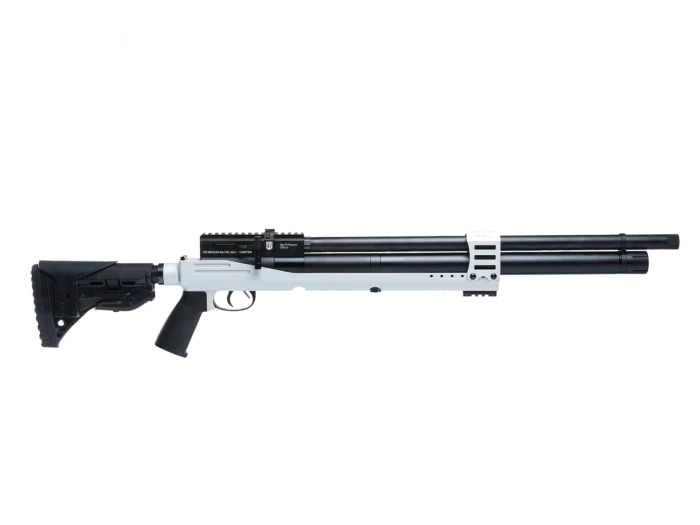
JTS Airacuda PRS MAX PCP Air Rifle, Aluminum Chassis- Silver
JTS Air Rifles
JTS Air Rifles
Reviews
There are no reviews yet.