
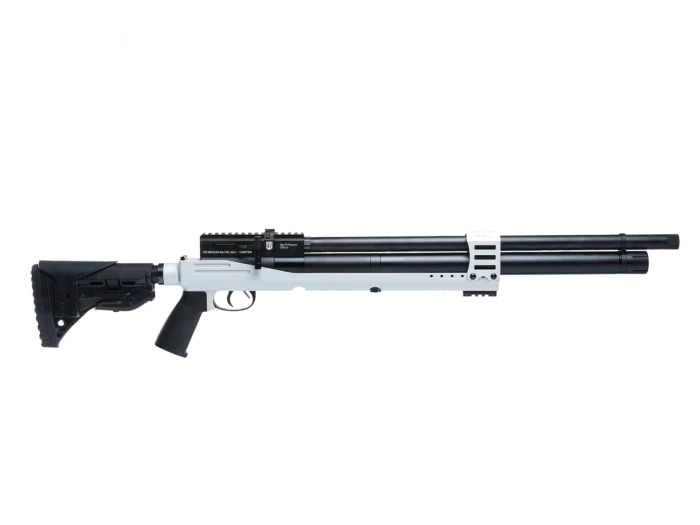
JTS Brawn Bullpup PCP Air Rifle
€265.00
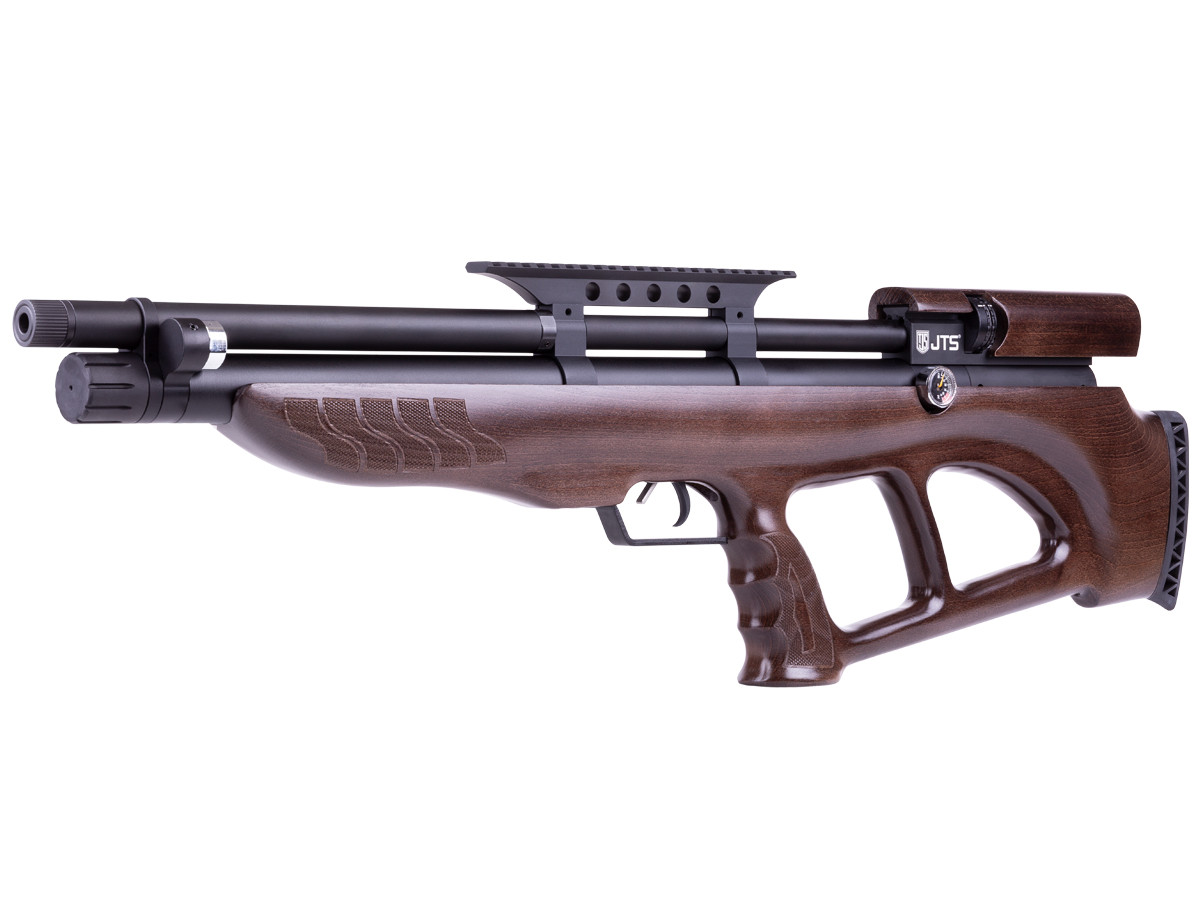
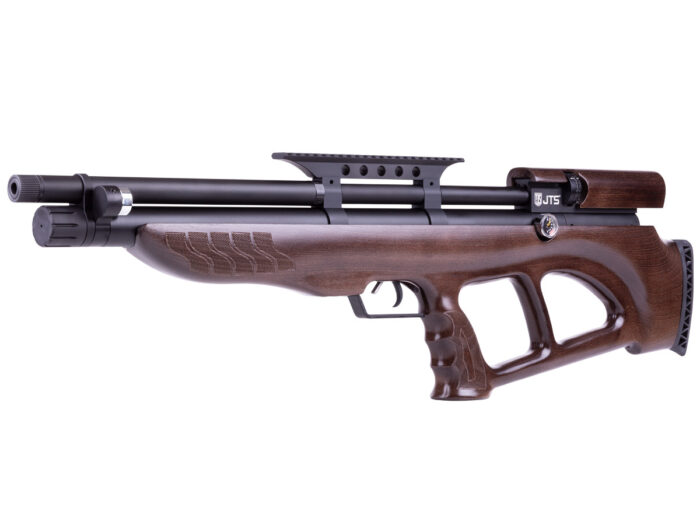
The JTS Brawn Bullpup is a multi-caliber PCP that stands out for its range of available calibers — .177, .22, .25, and .30 — giving hunters and field shooters real options to match the gun to the quarry. In a compact bullpup form factor, the Brawn is designed to be taken afield, not just shot at the bench.
- .177 Cal at 980 fps: Fast and flat for small pests and targets.
- .22 Cal at 900 fps: Versatile all-around hunting caliber.
- .25 Cal at 860 fps: More energy on impact for medium-sized game.
- .30 Cal at 830 fps: Serious hunting performance in a bullpup package.
- Bullpup chassis: Full barrel in a shorter overall length for easy carry.
Caliber .177 cal, .22 cal, .25 cal, .30 cal Brand JTS Airguns
JTS Brawn Bullpup PCP Air Rifle – Technical Product Guide
Bullpup Engineering, Regulated Pressure Management, Caliber Options, and JTS Platform Context
JTS Brawn
The jts brawn is distinguished primarily by its bullpup configuration. Moving much of the action toward the rear allows JTS to retain a 17.2-inch barrel while keeping overall length to approximately 33 inches.
JTS Airguns
jts airguns currently lists the Brawn alongside the Airacuda Standard, Airacuda Max, Airacuda PRS Max, AirStryke, and AirStryke Carbine. JTS also currently offers compressors, pumps, magazines, and ammunition within the same product catalog.
JTS PCP Air Rifle
The phrase JTS PCP air rifle covers several JTS platforms rather than one exact model. The Brawn specifically combines bullpup geometry, side-lever operation, regulation, multiple gauges, and multi-caliber support.
Compressed Air Rifle
A compressed air rifle of this type stores high-pressure air onboard before operation. Consequently, the reservoir, gauges, seals, fittings, and charging equipment should all be treated as pressure-system components and maintained in accordance with manufacturer instructions. JTS publishes owner manuals for its PCP products and filling equipment.
Fully Regulated Pneumatic System
The Brawn is manufacturer-listed as fully regulated. Regulation helps manage pressure delivered from the main reservoir as stored air decreases, supporting more controlled internal operating conditions across an appropriate portion of the fill.
17.2-Inch Barrel
JTS specifies a 17.2-inch barrel. Barrel length contributes to the compact architecture, although practical precision also depends on ammunition uniformity, pressure consistency, sight stability, barrel condition, environmental conditions, and user technique.
Bullpup Wood Thumbhole Stock
The stock combines bullpup packaging with natural wood construction and a thumbhole layout. JTS also lists a textured rubber buttpad and laser-engraved checkering on the grip and forearm.
Ergonomic Pistol Grip
The ergonomic pistol grip is part of the manufacturer specification. Its geometry contributes to the compact control layout while keeping the user’s firing hand positioned ahead of the rear-mounted action.
Pressure Gauges
JTS lists integrated reservoir and regulator pressure gauges, plus a reversible gauge designed to face the shooter. These gauges provide useful information about the pneumatic system and should remain readable, undamaged, and securely mounted.
.177 Configuration
The .177 version uses a 12-round magazine, is listed at up to 980 fps, and has a manufacturer-rated maximum of approximately 35 shots per fill.
177 Cal Pellet Gun
The phrase 177 cal pellet gun can therefore describe the smallest-caliber Brawn configuration, although the more precise designation is a regulated .177-caliber bullpup PCP air rifle.
177 Cartridge
The term 177 cartridge is technically inaccurate for this platform because it uses airgun projectiles rather than conventional firearm cartridges.
.22 Configuration
The .22 version uses a 10-round magazine, is manufacturer-rated up to approximately 900 fps, and is listed at about 35 maximum shots per fill.
.25 Configuration
The .25 model also uses a 10-round magazine, with a manufacturer-listed maximum velocity of approximately 860 fps and about 35 shots per fill.
.30 Configuration
The .30 version uses a 7-round magazine, reaches a manufacturer-listed maximum of approximately 830 fps, and is rated at around 15 maximum shots per fill.
JTS Pellets
jts pellets refers to JTS’s ammunition catalog, which currently includes multiple .177, .22, .25, and .30 caliber products. Exact caliber matching remains essential.
JTS Airacuda
The jts airacuda belongs to a separate JTS PCP family with a conventional full-length layout. It should not be treated as another name for the Brawn.
Airacuda
The airacuda name refers to a separate family of JTS products rather than a Brawn configuration.
JTS Aircuda
Jts aircuda is a common spelling variation of Airacuda rather than an official separate model.
Airacuda PCP
The phrase airacuda pcp describes JTS’s separate Airacuda pneumatic family. JTS provides dedicated owner manuals for the Airacuda Standard and Max configurations.
JTS Airacuda 25
The phrase jts airacuda 25 concerns a .25-caliber Airacuda configuration, not the Brawn .25. Model-specific specifications should therefore remain separate.
JTS Airacuda Max
The jts airacuda max is JTS’s separate regulated wood-stock Airacuda configuration. It is independently listed in the current product catalog.
Airacuda Max
The airacuda max should not be treated as interchangeable with the Brawn because stock geometry, overall dimensions, and handling architecture differ.
JTS Airacuda Max 30
The phrase jts airacuda max 30 refers to the .30-caliber Airacuda Max rather than the .30 Brawn.
JTS Airacuda Max 30 Cal
Similarly, jts airacuda max 30 cal should not be used to establish Brawn specifications.
JTS AirStryke
The jts airstryke is another current JTS PCP family and is listed independently from the Brawn.
JTS AirStryke Carbine
The JTS AirStryke Carbine is a separate compact PCP platform and should not be treated as a bullpup or as another Brawn designation.
JTS AirStryke Carbine PCP Air Rifle
The exact phrase JTS AirStryke Carbine PCP air rifle therefore describes another current JTS product rather than this bullpup.
AirStryke Carbine Airgun
Likewise, AirStryke Carbine airgun concerns the separate carbine architecture.
JTS Compressor
The phrase jts compressor refers to separate high-pressure PCP filling equipment. JTS currently lists both the COMP100 and COMP1, along with 4,500 psi hand pumps.
Best Scope for PCP Air Rifle
The phrase best scope for PCP air rifle concerns accessory selection rather than a fixed Brawn specification. Suitable optics depend on lawful recreational use, mounting compatibility, eye relief, magnification requirements, and user ergonomics.
JTS Stealth Hawk
The phrase jts stealth hawk does not appear in the current official JTS catalog reviewed here, so it should not be treated as a verified Brawn model or feature.
JTS Firearms
The phrase jts firearms is broader than the product discussed here. JTS officially lists the Brawn as a PCP air rifle.
JTS Guns
Likewise, jts guns is a generic search phrase rather than a precise model designation.
JTS Group
The phrase Jts group does not establish any specific technical characteristic of the Brawn.
Air Guns of Texas
The phrase air guns of texas is location- or retailer-oriented rather than an engineering specification.
Lindstradt Air Gun
The phrase lindstradt air gun does not correspond to any verified Brawn specification in the official manufacturer sources reviewed.
Tom Air Gun
Likewise, tom air gun does not identify a verified feature of the Brawn.
Airgins
The term airgins appears to be a misspelling or unrelated search variation rather than official terminology.
JTS Shotgun Accessories
The phrase jts shotgun accessories relates to another equipment category and does not describe the Brawn’s pneumatic, barrel, stock, or magazine system.
JTS Air Rifle for Hunting
The phrase JTS air rifle for hunting concerns intended use rather than an engineering specification. Whether any air rifle can legally or appropriately be used for hunting depends on jurisdiction, caliber, energy, species, and applicable regulations.
Buy JTS AirStryke Carbine Online
The phrase buy JTS AirStryke Carbine online concerns purchasing a separate weapon platform, so it is not used here to provide sellers, purchasing instructions, or transaction guidance.
JTS AirStryke Carbine for Sale
The phrase JTS AirStryke Carbine for sale is likewise a commercial search term for another weapon platform rather than a technical Brawn specification.
JTS AirStryke Carbine Price
The phrase JTS AirStryke Carbine price concerns retail pricing for a different product and does not establish any engineering characteristic of the Brawn.
JTS AirStryke Carbine Review
The phrase JTS AirStryke Carbine review concerns evaluation of another JTS model rather than this bullpup.
Practical Precision
The Brawn combines regulated pressure management, a 17.2-inch barrel, compact bullpup geometry, a wood thumbhole stock, multiple gauges, and multi-shot magazine operation. These features create a technical foundation for repeatable recreational target use.
However, practical precision still depends on ammunition uniformity, pressure behavior, barrel condition, environmental factors, sight stability, and user technique.
Why the Bullpup Architecture Matters
The principal engineering advantage is dimensional efficiency. A 17.2-inch barrel is packaged inside a platform measuring approximately 33 inches overall, producing a compact external profile while retaining substantial barrel length.
Maintenance and Warranty Context
JTS currently provides a three-year warranty to the original retail customer against defects in materials and workmanship. The manufacturer excludes damage caused by improper maintenance, improper ammunition, barrel obstruction, misuse, corrosion, and unauthorized adjustments or modifications.
Overall Technical Perspective
The JTS Brawn Bullpup PCP Air Rifle combines a fully regulated pneumatic system, side-lever repeating action, 17.2-inch barrel, 33-inch overall length, 9.3-pound weight, wood thumbhole stock, ergonomic grip, textured rubber buttpad, multiple pressure gauges, Foster quick-disconnect fill fitting, and caliber-specific all-metal magazines.
Current manufacturer specifications cover .177, .22, .25, and .30 caliber, with listed maximum velocities ranging from approximately 980 fps in .177 to 830 fps in .30 and magazine capacities ranging from 12 to 7 rounds.
For responsible ownership, the key considerations remain correct-caliber ammunition, compatible pressure-rated charging equipment, adherence to manufacturer pressure limits, secure storage, appropriate eye protection, controlled recreational use, regular inspection, and qualified servicing whenever pneumatic or mechanical condition becomes uncertain.
Engineering Design, Ergonomics, Pressure Management, Consistency, and Practical Performance
A well-designed bullpup pneumatic platform depends on much more than compact dimensions. Its usefulness comes from how effectively the pressure system, barrel, action, stock, trigger, controls, sighting arrangement, and supporting hardware work together. Consequently, evaluating overall quality requires attention to consistency, ergonomics, mechanical condition, and long-term reliability. For controlled recreational target use, these characteristics are particularly important because small inconsistencies in equipment setup can become noticeable on the target.
Compact Bullpup Architecture
The bullpup arrangement places significant mechanical components farther toward the rear than they would sit on a conventional full-length platform.
This allows substantial barrel length to be incorporated without creating an unnecessarily long overall package.
Consequently, handling can feel noticeably different from a traditional sporting configuration.
Balance and Weight Distribution
Rearward component placement changes the center of gravity.
Some users may appreciate the compact feeling, while others may need time to become comfortable with the different weight distribution.
A balanced setup can reduce unnecessary muscular effort during extended recreational target sessions.
Shoulder Position
Consistent shoulder placement contributes to repeatable positioning.
The rear pad should make comfortable contact without forcing the user into an unnatural posture.
Because body dimensions differ considerably, the same configuration may feel different to two users.
Comfort and repeatability should therefore be considered together.
Cheek Position
A stable cheek position helps establish consistent alignment with the sighting system.
Changing head position between shots can alter the apparent sight picture even when the equipment itself remains mechanically stable.
For that reason, a comfortable and repeatable head position is preferable to an awkward posture created simply to accommodate an incorrectly positioned optic.
Grip Ergonomics
Grip shape affects wrist angle, hand position, and access to the controls.
The hand should remain comfortable rather than being excessively tense.
Unnecessary gripping pressure can introduce movement, particularly during supported precision-oriented target sessions.
Trigger Characteristics
A predictable trigger contributes to consistency.
The mechanism should operate normally without unexpected resistance, looseness, or unusual changes in feel.
Unauthorized internal modification should be avoided.
If trigger behavior changes significantly, professional inspection is preferable to experimental adjustment.
Side-Lever Operation
The operating lever should move smoothly through its intended travel.
Normal cycling should not require excessive force.
Grinding, binding, scraping, or sudden changes in resistance can indicate contamination, alignment problems, or mechanical wear.
Forcing the mechanism can worsen an existing problem.
Magazine Reliability
A repeating system depends on the magazine remaining clean and mechanically sound.
Dirt, physical damage, or deformation can interfere with normal indexing.
The correct magazine should always be matched to the corresponding configuration.
Damaged components should be inspected rather than forced into continued operation.
Barrel Condition
The barrel plays an important role in mechanical consistency.
Its internal surfaces, crown, alignment, and overall physical condition can influence repeatability.
External impacts should therefore be avoided, particularly around the muzzle area.
Cleaning should remain conservative and follow manufacturer-approved procedures.
Understanding Practical Accuracy
Accuracy is not determined by one component.
Barrel condition, pressure consistency, projectile uniformity, sight stability, environmental conditions, support position, and user technique all contribute.
Therefore, an unexpected grouping result should be investigated systematically rather than immediately attributed to a single mechanical component.
Projectile Consistency
Uniform ammunition contributes to repeatable performance.
Visible deformation, incorrect dimensions, contamination, or inconsistent manufacturing can influence results.
Only the correct caliber and manufacturer-compatible ammunition should be used.
Damaged projectiles should never be forced through the mechanism.
Pressure Regulation
A regulated pneumatic system is designed to manage the pressure supplied from the reservoir.
As stored pressure decreases, regulation can help maintain more consistent operating conditions across an appropriate portion of the usable fill.
However, regulators contain components that can eventually require maintenance.
Unexpected performance changes deserve proper diagnosis.
Reservoir Integrity
The high-pressure reservoir is a critical structural component.
Dents, significant corrosion, deep scratches, deformation, or impact damage should never be dismissed simply because the system continues holding pressure.
A questionable reservoir should be professionally assessed before further use.
Pressure Gauge Condition
Gauges provide useful information about the pneumatic system.
They should remain readable, secure, and physically undamaged.
A cracked lens, loose housing, unexplained reading, or sudden change in pressure behavior should be investigated.
Multiple Gauge Monitoring
When several gauges are incorporated into a system, each provides information about a particular part of the pressure arrangement.
Owners should understand the manufacturer’s description of each gauge rather than assuming every dial displays identical information.
If readings appear abnormal, professional servicing may be necessary.
Filling Connection
The charging connection should remain clean and protected from contamination.
Dust, sand, moisture, and damaged seals can interfere with proper connection.
Before attaching compatible pressure-rated equipment, the fitting should be visually checked for obvious damage.
Responsible Pressure Management
High-pressure air deserves careful handling.
Only manufacturer-compatible charging equipment should be used, and specified pressure limits should never intentionally be exceeded.
Damaged hoses, gauges, connectors, or fittings should be removed from service rather than temporarily repaired.
Sight-Mounting Stability
Optical stability is essential when evaluating consistency.
Loose mounting hardware can produce changes in point of impact that resemble mechanical accuracy problems.
Therefore, mounting interfaces should remain secure and appropriate for the equipment.
Environmental Conditions
Wind can significantly influence lightweight projectiles.
Temperature and atmospheric conditions can also contribute to changing results.
Meaningful comparisons should therefore account for environmental differences rather than treating every change in impact as an equipment malfunction.
Supported Recreational Use
A stable support can make it easier to evaluate mechanical consistency during lawful recreational target shooting.
Reducing unnecessary movement allows equipment-related variables to be distinguished more easily from user movement.
A suitable range environment and secure backstop remain essential.
Exterior Inspection
Regular visual inspection can identify developing problems before they become serious.
Look for corrosion, cracks, damaged fittings, loose hardware, abnormal wear, and physical damage.
Learning the normal appearance of the equipment makes changes easier to recognize.
Moisture Management
Moisture should not remain trapped around metal components or inside a storage case.
After exposure to rain or high humidity, accessible surfaces should be dried appropriately.
A wet case should also be allowed to dry before long-term storage.
Temperature Protection
Extreme heat can be unfavorable for seals, optics, pressure-system components, and other materials.
Leaving equipment for extended periods inside a vehicle exposed to strong sunlight should therefore be avoided.
Stable indoor storage is preferable.
Transportation Protection
A padded case can protect the platform from impact, abrasion, moisture, and contamination.
Heavy charging equipment should be stored separately so it cannot strike the reservoir, barrel, gauge, or sighting system.
Transportation should always comply with applicable regulations.
Secure Storage
When not being used, the equipment should remain unloaded and secured against unauthorized access.
Children and unauthorized individuals should not be able to reach it.
Local legal storage requirements should always be followed.
Preventive Maintenance
Preventive maintenance is generally more effective than waiting for a major malfunction.
Routine inspection, appropriate cleaning, correct storage, and professional servicing when necessary can preserve reliability without unnecessary internal modification.
Warning Signs
Persistent air loss, unusual mechanical resistance, damaged pressure components, severe corrosion, abnormal trigger behavior, or sudden performance changes should not be ignored.
When a potentially significant defect appears, use should stop until the cause has been properly evaluated.
Long-Term Reliability
Mechanical longevity depends heavily on treatment.
Careful transportation, compatible ammunition, sensible cleaning, proper pressure management, dry storage, and timely professional maintenance can substantially influence service life.
Conversely, improper modifications and neglected damage can reduce reliability.
Overall Practical Assessment
A compact bullpup pneumatic design can provide a stable and manageable platform for lawful recreational target shooting when its major systems remain properly maintained. The rearward architecture offers compact dimensions, while regulated pressure delivery, a rifled barrel, repeating action, ergonomic controls, and stable sight mounting contribute to overall consistency.
Nevertheless, reliable performance should always be considered alongside responsible ownership. Pressure-system integrity, correct ammunition, safe handling, eye protection, secure storage, an appropriate backstop, regular inspection, and qualified servicing remain fundamental. When abnormal pressure loss, mechanical resistance, structural damage, or other unexplained changes appear, the equipment should be taken out of use until its condition has been properly assessed.
Maintenance, Inspection, Cleaning, Storage, Reliability, and Long-Term Ownership
A pre-charged pneumatic platform benefits from preventive maintenance throughout its service life. The pressure reservoir, regulator, seals, barrel, action, trigger assembly, gauges, stock, magazine system, external fasteners, and sighting equipment all contribute to reliable operation. Consequently, maintenance should focus on preserving mechanical integrity rather than making unnecessary modifications. Regular observation is particularly valuable because gradual deterioration can otherwise become difficult to notice. Whenever pressure-bearing or internal mechanical components appear questionable, qualified servicing should take priority over improvised repair.
Establishing a Maintenance Routine
A simple maintenance schedule makes long-term ownership easier.
Routine care should include visual inspection, exterior cleaning, monitoring pressure retention, checking accessible hardware, protecting the barrel, and maintaining appropriate storage conditions.
The manufacturer’s manual should remain the primary reference for service requirements.
Pre-Use Inspection
Before each recreational session, examine the general condition of the equipment.
Look for visible damage, loose components, corrosion, unusual pressure readings, or other changes from its normal condition.
If something appears significantly different, determine the cause before continuing.
Post-Use Inspection
A short inspection after use can identify developing problems early.
Check exposed surfaces, pressure-system components, controls, mounting hardware, and other accessible areas.
This is particularly worthwhile after transportation or use in dusty, humid, or wet environments.
High-Pressure Reservoir Care
The reservoir deserves careful protection because it contains compressed air at substantial pressure.
Serious dents, deep scratches, deformation, corrosion, or significant impact damage require professional evaluation.
A pressure vessel should never be drilled, heated, reshaped, or otherwise structurally modified.
Monitoring Pressure Retention
Pressure behavior can provide useful maintenance information.
If stored equipment begins losing pressure substantially faster than previously observed, an internal seal, fitting, valve, or another pneumatic component may require attention.
Repeatedly restoring pressure without investigating persistent leakage does not correct the underlying problem.
Gauge Condition
Pressure gauges should remain readable and physically secure.
Cracked lenses, damaged housings, corrosion, or obviously abnormal readings should be investigated.
Because gauges form part of a pressure-management system, questionable components should be professionally evaluated rather than casually dismantled.
Regulator Condition
A regulator generally performs its function without frequent owner intervention.
Changes in consistency can have several causes, so an apparent regulator problem should not automatically lead to internal adjustment.
Qualified diagnosis can distinguish pressure-system issues from ammunition, environmental, sighting, or mechanical variables.
Seal Maintenance
Seals naturally age and wear.
Temperature, contamination, storage conditions, repeated cycling, and time can influence their condition.
Gradual pressure loss can sometimes indicate deterioration.
When replacement becomes necessary, suitable manufacturer-compatible components and appropriate servicing procedures should be used.
Fill-Port Protection
The charging connection should remain clean.
Dust, grit, moisture, and other contamination around the fitting can interfere with sealing and contribute to premature wear.
Protective covers should remain installed when provided.
Inspect the connection before attaching compatible charging equipment.
Charging Equipment Condition
External filling equipment also requires inspection.
Hoses, connectors, gauges, fittings, and other pressure-rated components should remain free from visible deterioration.
Damaged pressure equipment should be removed from service rather than temporarily patched or improvised.
Barrel Exterior
The barrel should be protected against impact, corrosion, and excessive moisture.
After exposure to humid conditions, accessible surfaces should be dried appropriately.
Particular care should be taken around the muzzle because physical damage there can affect consistency.
Internal Barrel Care
Cleaning should remain conservative.
Aggressive cleaning can create unnecessary wear when unsuitable tools or chemicals are used.
Follow manufacturer-supported procedures and avoid introducing excessive oils, solvents, or abrasive materials into areas where they do not belong.
Action Inspection
The mechanical action should maintain its normal smoothness.
Unexpected grinding, scraping, binding, or substantial resistance can indicate contamination or wear.
Excessive force should not be used to overcome abnormal resistance.
Professional inspection is appropriate when the cause cannot be identified externally.
Magazine Maintenance
Removable magazines should remain clean and protected from physical damage.
Dirt and deformation can interfere with reliable operation.
They should not be stored underneath heavy equipment or loose tools.
Damaged magazines should be inspected or replaced rather than forced into continued service.
Trigger-System Monitoring
The trigger should retain predictable mechanical behavior.
A sudden change in movement, resistance, or engagement deserves attention.
Unauthorized internal modification should be avoided because apparently minor adjustments can affect mechanical relationships elsewhere in the system.
Stock Condition
Wooden components should be protected from prolonged moisture and extreme environmental conditions.
Check periodically for cracks, separation, or impact damage.
Surface care products should be compatible with the existing finish.
Grip Inspection
The grip should remain secure and free from significant cracking.
Mounting areas should be checked periodically for movement.
Loose structural components can influence both comfort and consistency.
Buttpad Condition
The rear pad should remain securely attached and free from severe deterioration.
Its purpose includes providing stable shoulder contact.
Damage that causes movement or poor positioning should be addressed appropriately.
External Fasteners
Accessible fasteners should remain secure.
However, excessive tightening can damage threads or mounting surfaces.
A component that repeatedly becomes loose may indicate an underlying problem that deserves investigation.
Sight-Mounting Hardware
Optical mounts can gradually loosen through handling and transportation.
A shifting sighting system can create apparent performance problems even when the pneumatic and barrel systems remain unchanged.
Therefore, sight-mounting stability should be checked during routine inspection.
Exterior Cleaning
Dust, fingerprints, and ordinary surface contamination can generally be removed conservatively.
Harsh solvents should not be applied indiscriminately because different finishes, seals, adhesives, plastics, and coatings may react differently.
Manufacturer-compatible cleaning methods are preferable.
Moisture Management
Equipment should not remain wet inside a closed case.
Trapped moisture can encourage corrosion and affect storage materials.
After exposure to rain or high humidity, accessible surfaces and the case itself should be allowed to dry appropriately before long-term storage.
Corrosion Prevention
A clean, dry environment provides strong protection against corrosion.
Metal surfaces should be inspected periodically, including recessed areas that may not be immediately visible.
Early surface deterioration is generally easier to address than advanced corrosion.
Temperature Management
Extreme temperatures should be avoided whenever practical.
Vehicles exposed to direct sunlight can become exceptionally hot, potentially affecting seals, optics, finishes, and other materials.
Stable indoor storage provides a more controlled environment.
Storage Position
The equipment should be stored where it will not be crushed or struck by heavy objects.
Charging equipment and tools should not rest against pressure-bearing components.
A suitable protective case can provide additional physical protection.
Secure Storage
When not in use, the equipment should remain unloaded and secured against unauthorized access.
Children and unauthorized individuals should not be able to reach it.
Any applicable local storage requirements should also be followed.
Transportation Care
During transportation, the equipment should be protected from impact, moisture, and unnecessary movement.
Heavy cylinders, pumps, or tools should be separated so they cannot strike the barrel, reservoir, gauges, or sighting equipment.
Applicable transportation laws should always be observed.
Maintenance Records
A basic service record can become valuable over time.
Dates of professional inspections, repairs, seal replacement, unusual pressure loss, and component changes can be documented.
These records make recurring issues easier to identify.
Avoiding Unnecessary Modification
Long-term reliability is often better served by preserving the manufacturer’s intended configuration.
Unauthorized alterations can introduce alignment, sealing, structural, or reliability problems.
When a component needs replacement, manufacturer-compatible parts and qualified servicing provide the more dependable approach.
Recognizing Warning Signs
Persistent pressure loss, significant corrosion, damaged pressure-bearing components, abnormal trigger behavior, unexplained mechanical resistance, or major changes in performance should trigger further inspection.
Continuing to use equipment with an unresolved defect can worsen the problem.
Professional Servicing
Some maintenance tasks belong with qualified technicians.
Pressure-system repairs, significant internal mechanical problems, damaged reservoirs, and unexplained malfunctions should not become opportunities for experimental disassembly.
Professional servicing can determine whether repair, replacement, or further inspection is appropriate.
Long-Term Reliability
Service life depends heavily on how equipment is treated.
Appropriate cleaning, dry storage, careful transportation, regular inspection, compatible consumables, and timely servicing can preserve dependable operation.
Neglect, contamination, physical damage, and unauthorized modification can shorten useful service life.
Overall Maintenance Perspective
Reliable long-term ownership depends on consistent preventive care. The pressure system, barrel, action, controls, magazines, stock, mounting hardware, and external surfaces should all be monitored rather than waiting for a major malfunction to develop.
Clean and secure storage, protection from moisture and extreme temperatures, conservative cleaning, careful transportation, accurate maintenance records, and qualified professional servicing provide a strong maintenance foundation. Most importantly, significant pressure loss, structural damage, severe corrosion, abnormal mechanical behavior, or another unexplained defect should result in the equipment being taken out of use until its condition has been properly assessed.
Practical Ownership, Build Quality, Comfort, Inspection, Durability, and Long-Term Care
A well-maintained pneumatic platform should provide predictable operation throughout its service life. Long-term quality is influenced by far more than appearance. Construction, storage conditions, pressure-system integrity, external hardware, environmental exposure, cleaning practices, transportation, and professional servicing all contribute to reliability. Therefore, owners should develop a consistent inspection routine rather than waiting for an obvious malfunction. Preventive care can reveal small problems early and help preserve the original mechanical condition of the equipment.
Overall Build Quality
Construction quality should be evaluated across the complete platform rather than through one component.
The stock, barrel assembly, action, pressure reservoir, controls, fasteners, gauges, and external fittings should feel securely integrated.
Unexpected movement, looseness, cracking, or deformation deserves investigation.
Compact Handling Characteristics
A compact configuration changes how weight is distributed around the user.
Rearward weight can produce a different handling sensation compared with a conventional full-length design.
Comfort ultimately depends on body dimensions, shoulder position, hand placement, and the amount of time the equipment is being supported.
Ergonomic Comfort
Good ergonomics help reduce unnecessary strain.
The shoulder, cheek, wrist, and supporting hand should settle into reasonably natural positions.
An uncomfortable setup can encourage inconsistent positioning, particularly during longer recreational target sessions.
Consistent Shoulder Placement
Repeatable shoulder contact contributes to stable positioning.
The rear section should sit securely without requiring excessive pressure.
Developing a consistent position can also make it easier to identify whether changes in performance originate from the equipment or from inconsistent user posture.
Comfortable Head Position
The sighting arrangement should permit a natural head position.
Repeatedly stretching or lowering the head excessively can create unnecessary fatigue.
A comfortable relationship between shoulder position, cheek contact, and sight height supports more repeatable recreational target use.
General Mechanical Inspection
Before use, examine the equipment for visible abnormalities.
Look for cracks, damaged external components, unusual corrosion, loose hardware, or anything that differs noticeably from its normal condition.
A short inspection can identify problems before they become more serious.
Pressure-System Condition
The high-pressure system deserves particular attention.
Pressure-bearing components should remain free from significant impact damage, severe corrosion, deep scratches, or visible deformation.
Damage in these areas should be treated conservatively because appearance alone cannot establish structural integrity.
Monitoring Pressure Retention
A gradual and unexplained loss of stored pressure can indicate deterioration somewhere within the pneumatic system.
When pressure retention changes noticeably, the cause should be investigated.
Repeatedly restoring pressure without addressing persistent leakage does not resolve the underlying issue.
Gauge Visibility
Pressure indicators should remain clean, readable, and physically undamaged.
Cracked lenses, loose housings, condensation, corrosion, or unexplained readings should not be ignored.
A questionable indicator should be professionally assessed before continued reliance is placed on its readings.
Seal Longevity
Sealing components naturally deteriorate over time.
Age, temperature, contamination, repeated operation, and storage environment can influence service life.
A developing leak does not necessarily indicate major structural damage, but it does require proper diagnosis.
Exterior Barrel Condition
The barrel should remain protected from impacts and corrosion.
Particular care should be taken during transportation because an otherwise minor knock can damage exposed components.
After moisture exposure, accessible metal surfaces should be appropriately dried before storage.
Internal Cleanliness
Internal cleaning should be performed only when necessary and according to suitable manufacturer guidance.
More cleaning is not automatically better.
Aggressive tools or inappropriate chemicals can create damage rather than prevent it.
Conservative maintenance is usually preferable.
Moving Components
External moving parts should retain their normal operating feel.
Unexpected resistance, scraping, binding, or looseness can indicate contamination or mechanical deterioration.
Abnormal resistance should never simply be overcome with greater force.
Removable Components
Detachable components should remain clean and protected from physical damage.
Dropping them onto hard surfaces or storing them underneath heavy equipment can cause deformation.
Small components should ideally have a designated storage location.
Stock Care
Natural materials can respond to moisture, temperature, and prolonged environmental exposure.
The stock should therefore be kept reasonably dry and protected from extreme heat.
Cracks or separation around structural mounting areas deserve particular attention.
Surface Finish
Minor cosmetic marks are normal on equipment that receives regular use.
However, damaged finish can expose underlying material to moisture.
Surface condition should therefore be monitored, especially around high-contact areas.
Fastener Condition
Visible fasteners should remain secure.
A fastener that repeatedly loosens may indicate a deeper problem.
Excessive tightening is not necessarily the correct solution because threads and mounting surfaces can be damaged.
Sight-System Stability
A stable sighting system is important for repeatable target performance.
Transportation, vibration, and accidental impacts can affect mounting hardware.
If point of impact changes unexpectedly, external mounting stability should be checked before assuming an internal mechanical problem.
Protection From Moisture
Moisture is one of the most common long-term storage concerns.
Wet equipment should not remain sealed inside a closed case.
The equipment and its storage case should be allowed to dry properly before being placed into long-term storage.
Humidity Management
Even without direct water exposure, consistently high humidity can encourage corrosion.
A dry storage environment is therefore preferable.
Periodic inspection is particularly important when equipment is stored in humid climates.
Avoiding Chemical Contamination
Fuel, solvents, household cleaners, battery chemicals, and aggressive cleaning agents should be kept away from the equipment.
Some substances can damage finishes, polymers, seals, or other materials.
Unknown contamination should be treated cautiously.
Temperature Protection
Extreme heat can affect seals, finishes, optics, adhesives, and other components.
Long-term storage inside a vehicle exposed to direct sunlight should be avoided.
A stable indoor environment generally provides better protection.
Protective Transportation
A suitable padded case can protect against impact, scratches, moisture, and contamination.
Heavy tools and pressure equipment should be transported separately so they cannot strike sensitive components.
The equipment should remain unloaded during transportation and be carried according to applicable regulations.
Secure Storage
Storage should prevent unauthorized access.
Children and other unauthorized individuals should not be able to reach the equipment.
A secure locked arrangement provides better protection against misuse, theft, and accidental handling.
Cleaning After Use
Routine cleaning does not need to be complicated.
Exterior dust and fingerprints can be removed using suitable materials.
Harsh chemicals should be avoided unless their compatibility with the equipment has been established.
Inspection After Transportation
Travel can expose equipment to vibration, impact, and changing environmental conditions.
After a long journey, inspect major external components before use.
This is especially important if the case has been dropped or handled roughly.
Maintaining Service Records
A simple written maintenance history can provide considerable long-term value.
Professional inspections, seal replacements, repairs, unusual pressure loss, and significant component changes can be recorded.
These records help establish patterns when troubleshooting becomes necessary.
Avoiding Improvised Repairs
Temporary fixes can create additional problems.
Pressure-bearing and critical mechanical components should not be repaired using improvised materials or unsuitable replacement parts.
When technical repair is required, compatible components and qualified servicing should be used.
Recognizing Developing Problems
Warning signs include persistent pressure loss, severe corrosion, damaged pressure-bearing components, unexpected mechanical resistance, abnormal control behavior, or significant changes in normal operation.
These signs should prompt investigation rather than continued use.
When Professional Inspection Is Appropriate
Not every problem can be diagnosed through exterior inspection.
Internal pressure-system faults, structural damage, unexplained mechanical problems, and recurring malfunctions may require professional evaluation.
Qualified servicing is especially important when safety-critical components are involved.
Preserving Long-Term Condition
Good ownership practices are primarily preventive.
Clean storage, protection from moisture, careful transportation, sensible maintenance, regular inspection, and timely professional servicing can help preserve mechanical condition.
Unnecessary modifications should be avoided because they can introduce additional reliability concerns.
Overall Ownership Perspective
Long-term reliability depends on treating the complete platform as an integrated mechanical and pneumatic system. External condition, pressure retention, moving components, structural surfaces, stock condition, mounting hardware, and storage environment should all be monitored consistently.
A straightforward maintenance philosophy works best: inspect regularly, keep the equipment clean and dry, protect it during transportation, prevent unauthorized access, document significant servicing, and investigate abnormalities promptly. When substantial pressure loss, structural damage, severe corrosion, or unexplained mechanical behavior develops, the equipment should remain out of use until its condition has been properly evaluated.
Be the first to review “JTS Brawn Bullpup PCP Air Rifle”
Related products
JTS Air Rifles
JTS Air Rifles
JTS Air Rifles
JTS Air Rifles
JTS Air Rifles
JTS Airacuda PRS MAX PCP Air Rifle, Aluminum Chassis- Silver
Reviews
There are no reviews yet.