






FX DRS MKII Walnut | Sniper 700
€700.00
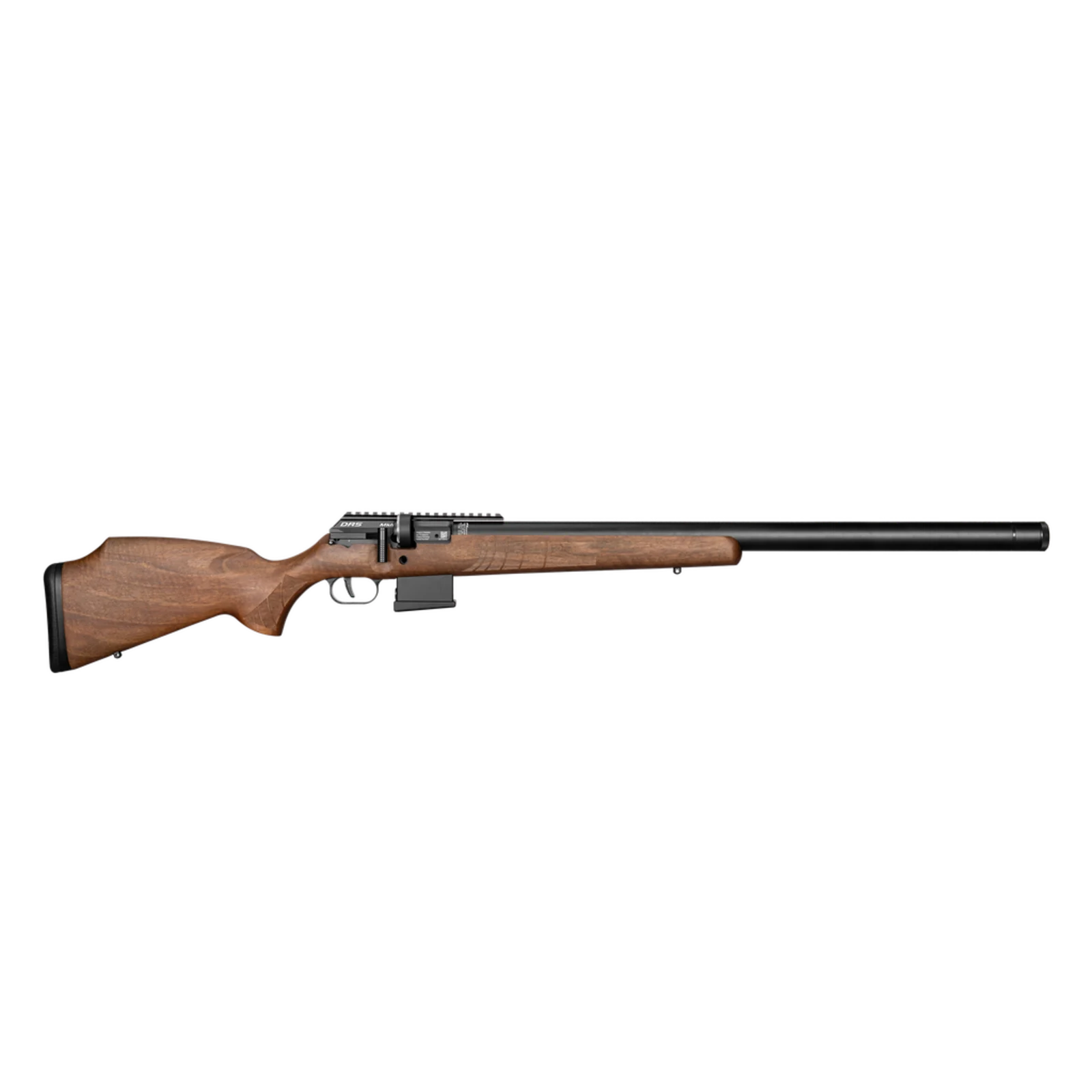
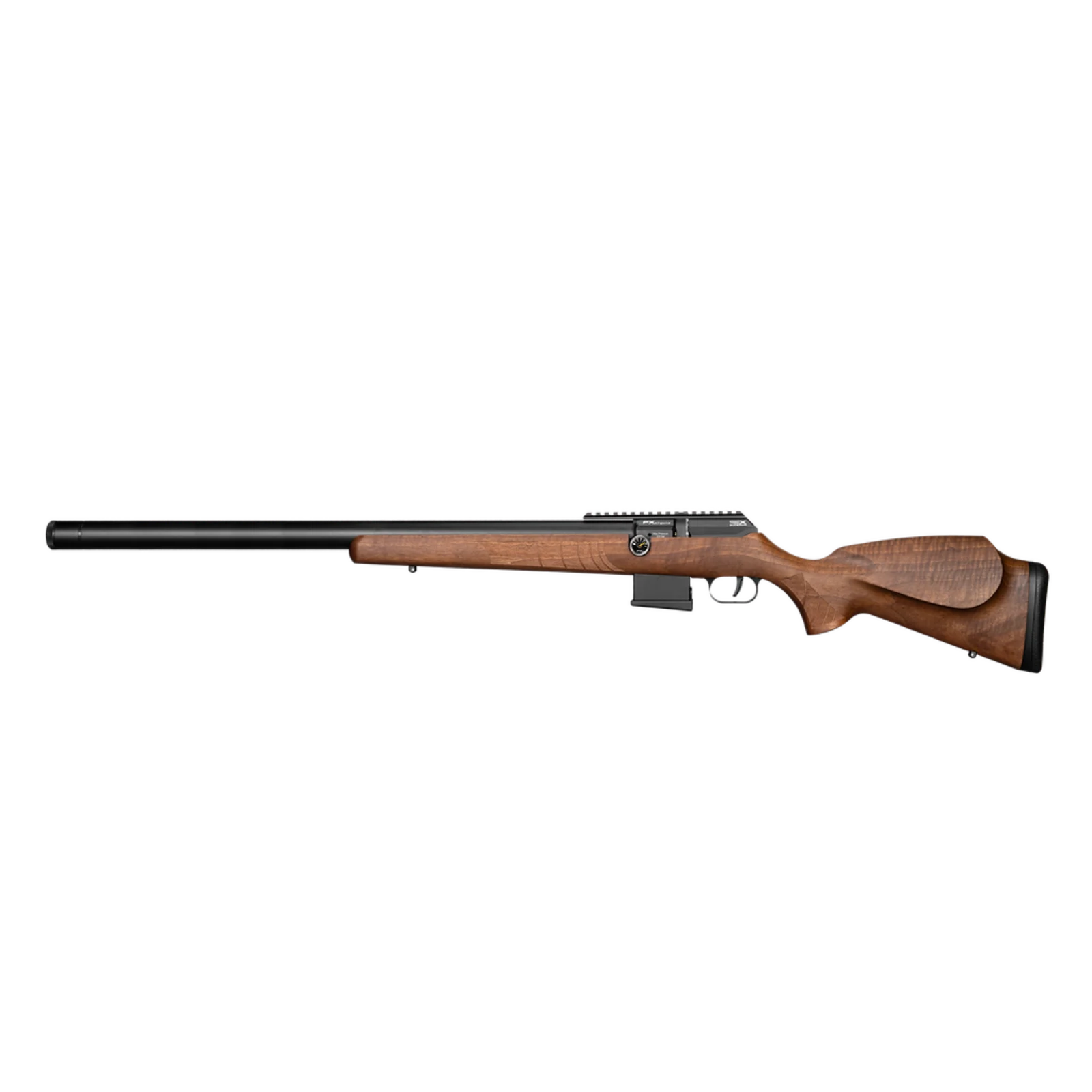
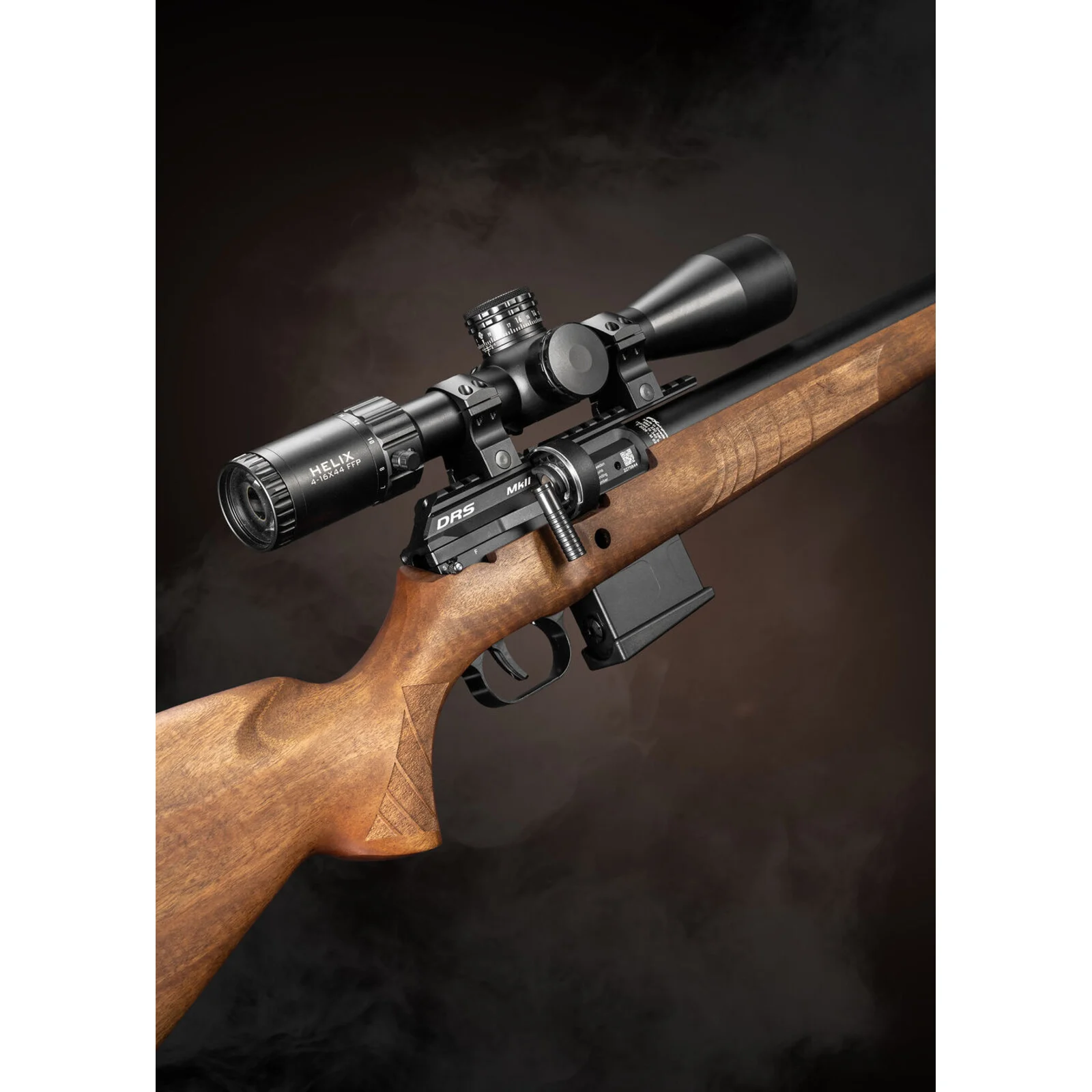
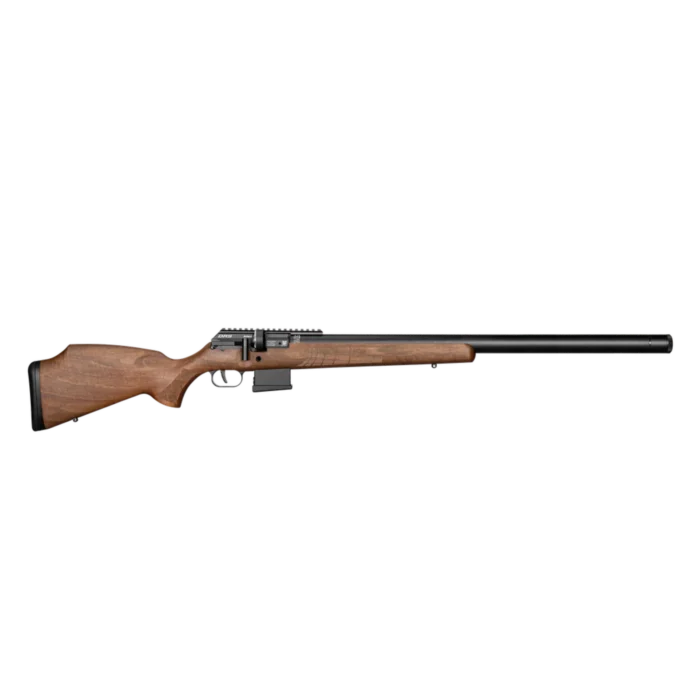
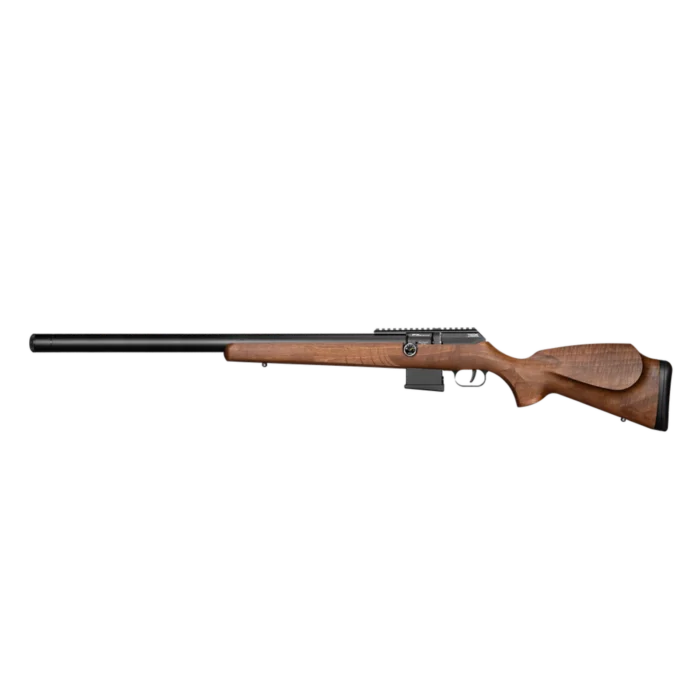
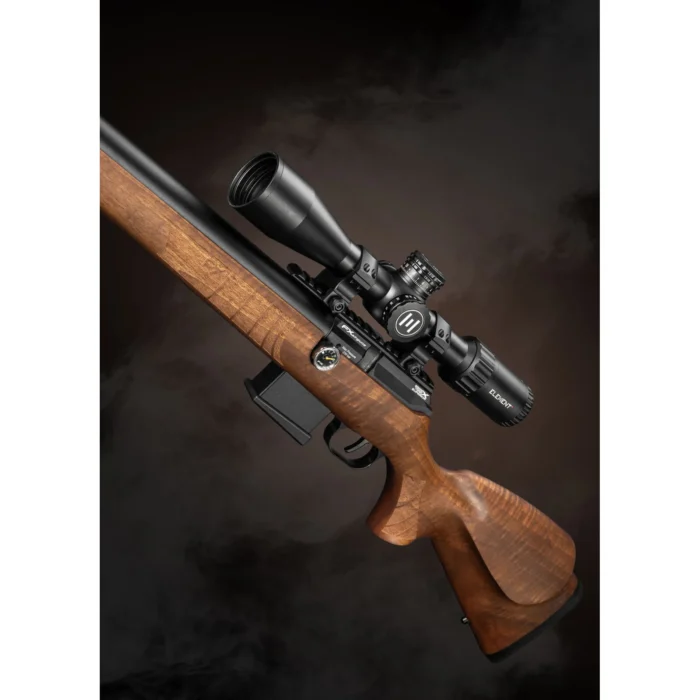
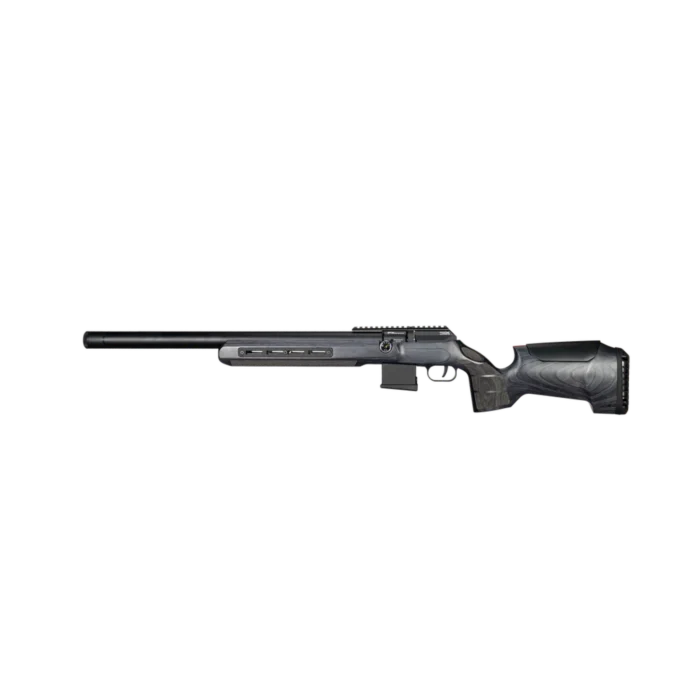
The FX DRS MKII Classic Walnut Compact is a modern PCP air rifle with a sleek and traditional design.
Despite its classic appearance, the FX DRS MKII Classic Walnut Compact is equipped with the latest technologies in pre-charged pneumatic airguns. It also offers extensive adjustability, allowing performance to be perfectly tailored to the shooter’s preferences.
This Sniper version of the FX DRS MKII is fitted with a 700mm barrel and a 310cc air cylinder.
With this barrel length and reservoir, this is the option with the highest power potential of the DRS Mk2 line.
Air Cylinder
One of the first things you’ll notice is the absence of a visible air reservoir. This gives the rifle an exceptionally slim and low-profile design.
FX Airguns achieved this by integrating the air reservoir around the barrel in the form of a barrel shroud.
This clever construction not only creates a minimalist appearance but also gives the rifle clean, elegant lines.
It improves shooting comfort while also making transport and storage easier.
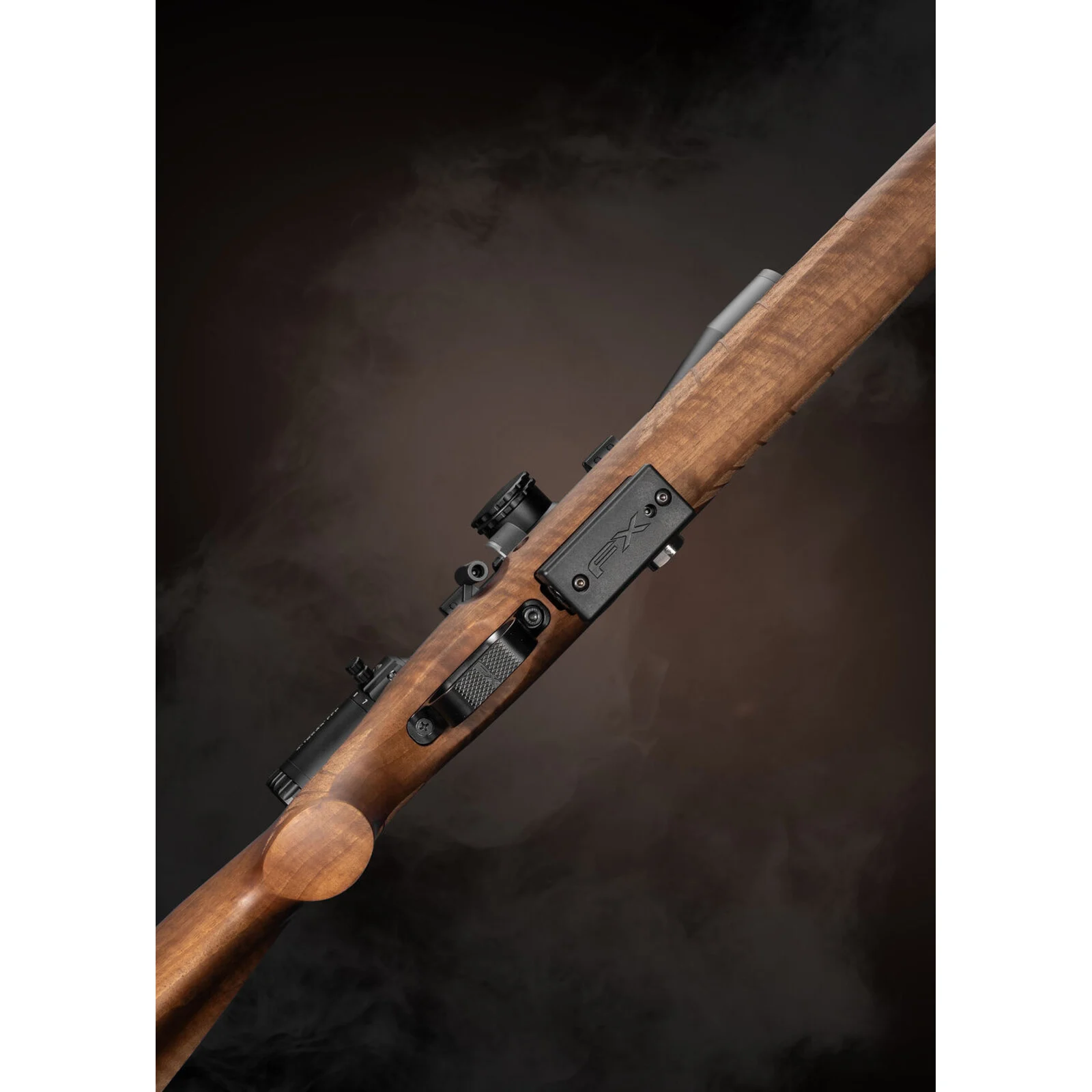
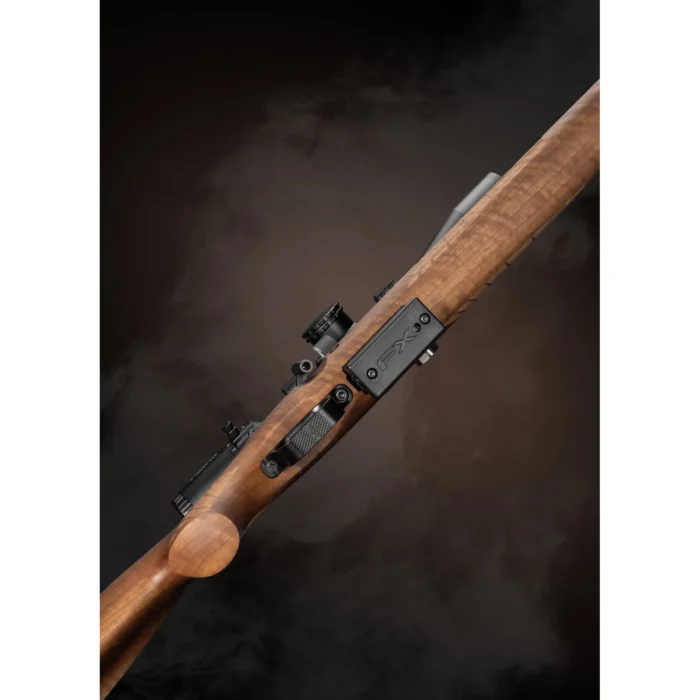
Filling the air reservoir is simple as well, thanks to the conveniently positioned fill port on the right side of the breech block.
Note: The DRS uses a fill probe with a foster quick-connection.
This means that your fill source needs a female foster quick connect.
High Power Plenum
The plenum is the chamber containing regulated air that is used for each shot.
Unlike the older MK1 DRS models which came with different plenum sizes, all DRS MKII models are equipped with the 25cc High Power plenum.
This plenum can optionally be replaced with the larger 63cc SHP plenum.
Adjustable Regulator & Hammer Spring
By removing the stock, both the regulator pressure and hammer spring tension can be adjusted.
The FX DRS is equipped with the AMP MKII regulator, ensuring every shot is fired with consistent air pressure.
The regulator is adjustable, making it easy to fine-tune the pressure for different pellets or slugs.
Adjusting the hammer spring allows the regulator pressure to be used optimally, enabling the FX DRS to be tuned precisely for maximum efficiency, power, and shot consistency.
Superior STX Barrel System
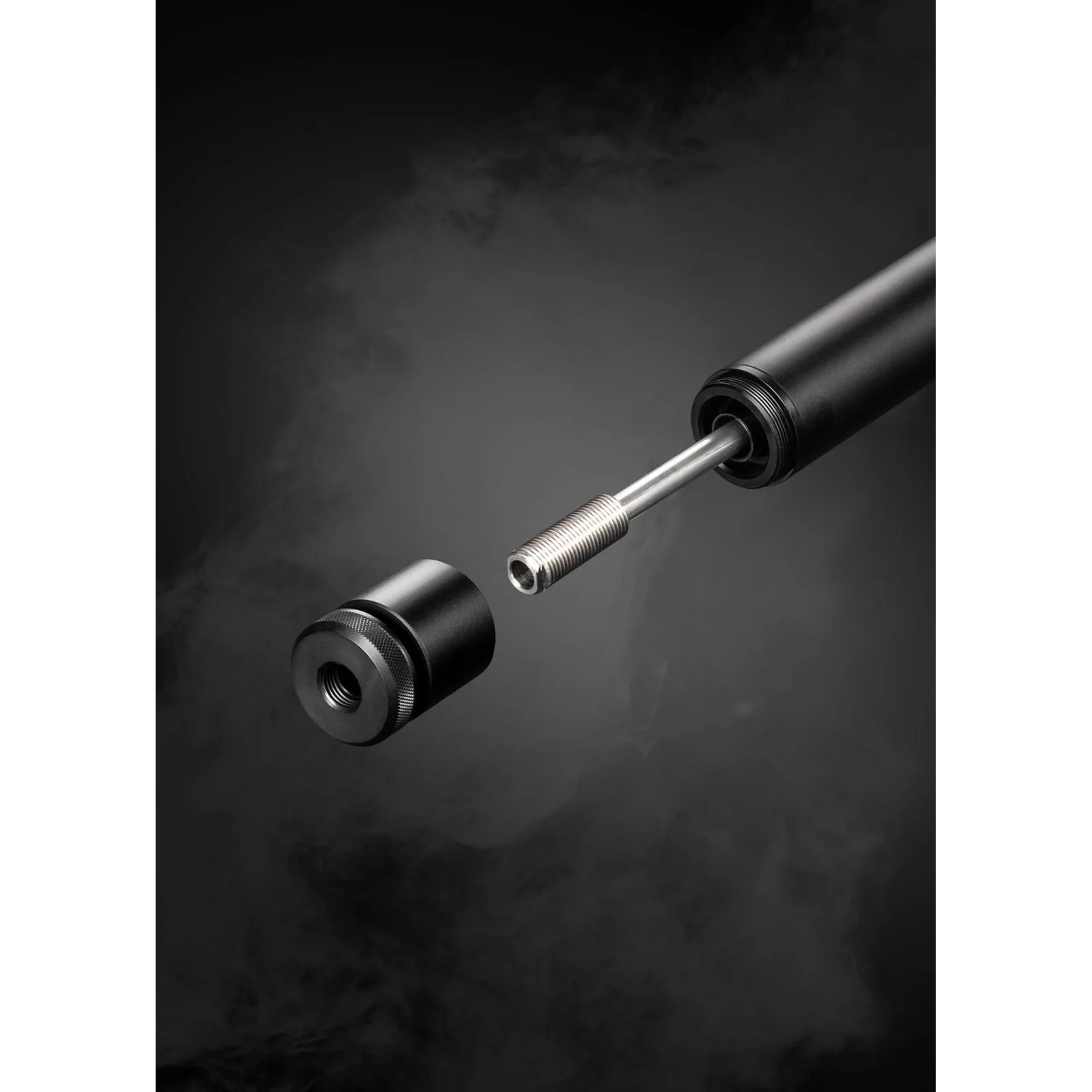
The FX DRS MKII is equipped with the Smooth Twist X barrel system.
This system uses the well-known FX liner system with interchangeable liners.
The standard liner is optimized for pellets and light slugs but can be replaced with a Heavy/Slug liner featuring a different twist rate and choke.
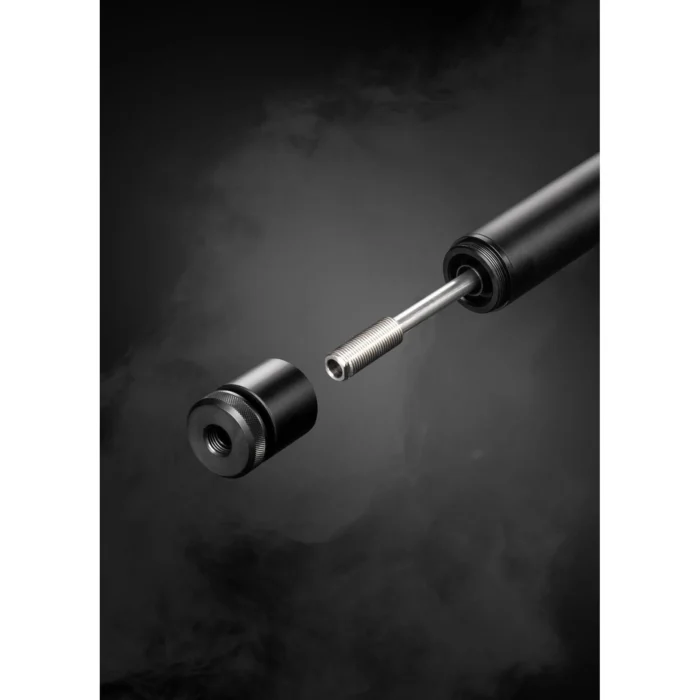
A new feature of the DRS MKII is that the liner can now be changed easily without unscrewing the air cylinder.
This may seem like a small improvement, but it makes maintenance and tuning significantly easier.
At the end of the system is a cap with a 1/2×20 UNF thread for mounting a suppressor, or other accessories.
Minelli Walnut Stock
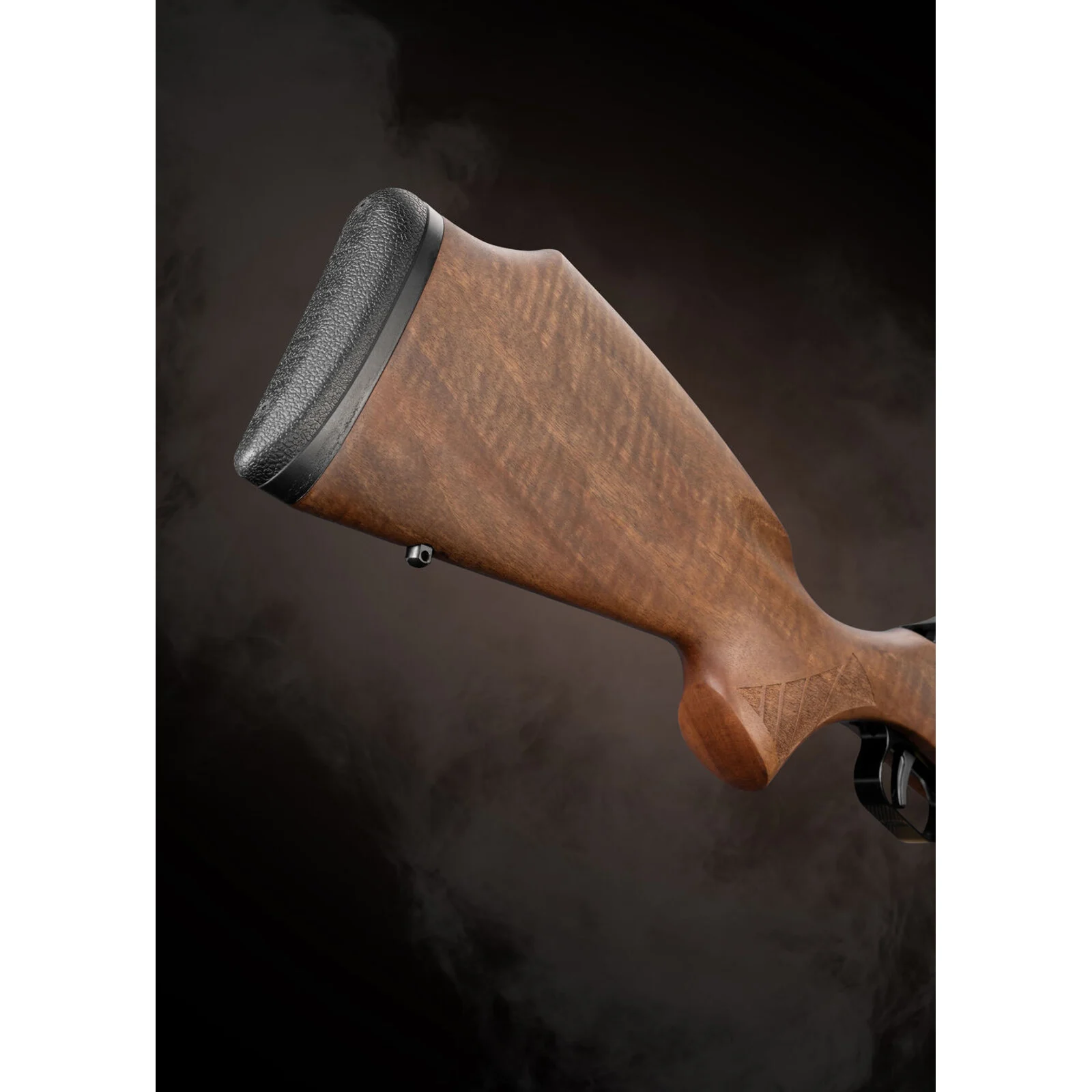
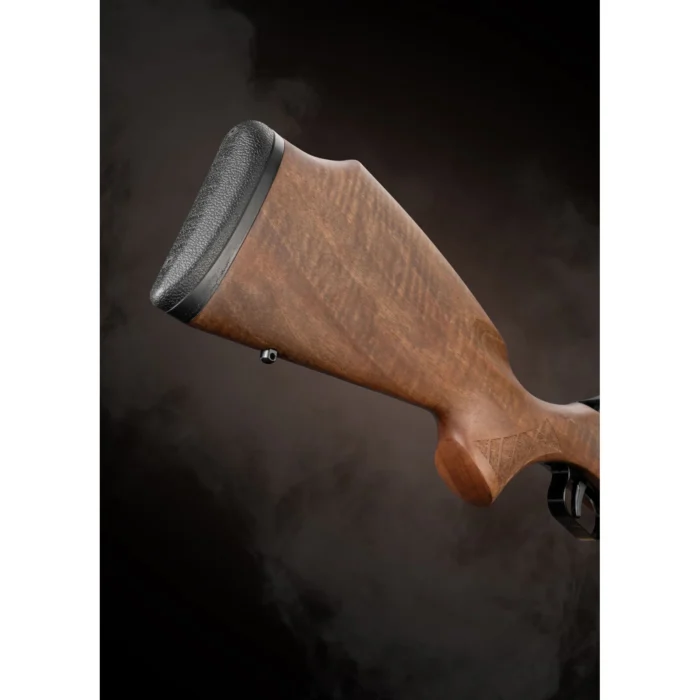
The DRS Classic is placed inside a beautiful Walnut stock made by Minelli in Italy.
These high quality stocks are known for their great finish and ergonomics.
With the walnut stock, the FX DRS has a beautiful classic look and feel.
Fully Adjustable Trigger
The FX DRS already comes with an excellent trigger straight out of the box.
For maximum control, however, the trigger is fully adjustable.
Both the first and second stages can be adjusted to your preferred settings.
Additionally, the trigger blade’s height, reach, and rotation are adjustable, allowing the ergonomics to be perfectly tailored to the shooter.
30 MOA Weaver/Picatinny Rail
Another upgrade on the MKII: the DRS MKII now comes standard with a Picatinny rail.
This provides a solid mounting platform for a wide range of scopes.
Thanks to the built-in 30 MOA incline, the rail allows the scope to retain more adjustment range when shooting at longer distances.
Our Opinion on the FX DRS MKII
The previous DRS was already a major success, and the MKII lineup is a truly impressive evolution of these rifles.
These air rifles are popular among nearly all types of shooters because they deliver outstanding performance using the latest technologies while remaining technically simple and easy to use.
This variant with the Walnut stock is especially popular due to the fantastic look & feel of the Minelli stock.
Whether you’re looking for a reliable all-round air rifle or want to start a tuning project with countless upgrade possibilities, the DRS is an incredibly versatile platform.
| Power source: | Pre compressed pneumatic (PCP) |
| Caliber: | 5.5mm (.22) | 6.35 (.25) | 7.62 (.30) |
| Muzzle energy: | 40 | 62 | 95 joule |
| Fill pressure: | 230 bar |
| Air capacity: | 210cc |
| Regulator: | Yes, adjustable |
| Operating system: | Side lever |
| Magazine: | 14 | 12 | 10 schots |
| Max. projectile length: | 11mm |
| Optic mounting: | Picatinny/weaver 30 MOA |
| Weight: | 2740 gram |
| Length: | 1162mm |
| Barrel length: | 700mm |
| Muzzle: | 1/2×20 UNF |
| Accessories: | Magazine, fill probe (foster quick connect) |
FX DRS MKII Walnut Sniper 700: Complete Technical Overview, Engineering Analysis & PCP Technology Guide
Introduction to the FX DRS MKII Walnut Sniper 700 and the Evolution of Modern FX Platforms
The FX DRS MKII Walnut Sniper 700 represents a contemporary example of PCP engineering, combining modern manufacturing techniques, advanced air-management concepts, and traditional walnut stock craftsmanship within a single platform. As part of the broader FX ecosystem, the DRS MKII reflects the company’s ongoing efforts to refine pneumatic technology through precision engineering, modular design, and continuous product development.
The history of fx airguns is closely linked to the evolution of modern PCP systems. The company, commonly associated with fx airguns sweden, fx airguns sverige, fx airguns usa, fx usa, and fxairguns, has developed numerous platforms that explore different approaches to airflow optimization, structural design, and manufacturing efficiency.
The FX DRS family exists within a larger product portfolio that includes platforms such as fx drs, fx drs air rifle, fx drs classic, fx drs tactical, and fx drs pro. These products illustrate how a common engineering foundation can support multiple configurations while maintaining similar design principles.
Within the same ecosystem, other well-known platforms have contributed to the development of modern PCP technology. Examples include F-X Panthera MkII, fx panthera, fxpanthera, fx impact, f x impact, fx impact m3, f x impact m3, fx impact m4, impact m4, fx m3, fx m4, f-x maverick, and fx wildcat. These products demonstrate different solutions to common engineering challenges involving airflow management, pressure regulation, ergonomics, and modularity.
Several variants frequently appear in technical discussions, including the fx impact m3 air rifle, fx impact m3 .22cal air rifle, fx impact m3 .22cal air rifle. 600mm barrel, impact m4 500mm, impact m4 air rifle, and studies relating to impact m4 ballistic coefficient. Such discussions typically focus on design architecture, engineering methodology, and manufacturing refinement rather than simple performance comparisons.
Another important branch of the FX product family includes the f-x crown, fx crown mk2, fx crown mkii, fx crown mkll, f-x king, f-x leopard, fx leopard airgun, and fx leopard air rifle platforms. These systems showcase how manufacturers continue exploring different structural layouts and air-management strategies while maintaining a commitment to precision engineering.
The FX ecosystem also includes platforms such as the fx dreamline, f-x dreamline classic, and other modular systems designed to illustrate the adaptability of modern PCP technology. Through modular design philosophies, engineers can develop multiple configurations while retaining a common technological foundation.
At the core of these developments is PCP technology. PCP systems store compressed air within an onboard reservoir and release it through a controlled valve assembly. This engineering approach separates energy storage from operation and has become a dominant design methodology within the modern airgun industry. As a result, PCP technology remains a major focus of ongoing research and development.
Technical innovation within the industry has also encouraged the development of support technologies. Products such as the fx chronograph and fx pocket chronograph highlight the increasing importance of measurement and data collection within modern engineering. These devices allow users and researchers to evaluate consistency and operational characteristics with greater precision.
The wider industry often references terms such as pcp air gun, pcp airguns, air rifle, air gun, air guns, pellet gun, luftgevær, high end air rifles, and fx pcp when discussing contemporary pneumatic platforms. The DRS MKII Walnut Sniper 700 exists within this broader category of precision-engineered compressed-air systems.
Another notable aspect of the FX ecosystem involves ammunition and accessory development. Discussions frequently reference products such as fx pellets and fx halo slugs, which illustrate the growing importance of projectile design and manufacturing consistency within the industry.
The company’s broader engineering philosophy is often associated with concepts such as fx dynamics, fx dynamic, fx outdoors, and the continual pursuit of improved airflow efficiency, manufacturing precision, and user-centered design. These principles have influenced the development of multiple generations of products and continue to shape future innovations.
From a structural perspective, the DRS MKII Walnut Sniper 700 combines traditional materials with contemporary engineering techniques. Walnut remains a respected stock material because it offers strength, durability, and visual appeal while allowing precise shaping for ergonomic purposes. The integration of traditional craftsmanship with modern manufacturing methods demonstrates how historical design concepts can coexist with contemporary engineering objectives.
Ultimately, the FX DRS MKII Walnut Sniper 700 represents a convergence of modern PCP technology, precision manufacturing, advanced materials engineering, and ergonomic design. By examining the platform within the context of the wider FX product family, it becomes possible to better understand the technological developments that continue to influence the evolution of contemporary pneumatic systems and the engineering principles that support them.
PCP Air System Architecture and Pressure Management
The effectiveness of a modern pneumatic platform depends largely on the design and integration of its air-management system. Every major component, from the reservoir to the valve assembly, must operate together efficiently to ensure consistent functionality, reliable operation, and long-term durability. Consequently, air-system architecture has become one of the most important areas of engineering development within contemporary compressed-air technology.
At the heart of the system is the air reservoir, which serves as the primary energy-storage component. This reservoir is engineered to contain compressed air under significant pressure while maintaining structural integrity throughout repeated filling and discharge cycles. Engineers devote considerable attention to reservoir construction because its design directly influences capacity, efficiency, safety, and overall system balance.
Material selection plays a crucial role in reservoir development. Modern pressure vessels typically utilize high-strength materials capable of withstanding repeated stress cycles while minimizing overall weight. Manufacturers must balance durability, portability, and structural performance to achieve a practical design suitable for long-term use.
Reservoir capacity influences how much compressed air can be stored before refilling becomes necessary. Larger reservoirs generally provide increased air availability; however, greater capacity may introduce additional weight and alter handling characteristics. Designers therefore evaluate system requirements carefully to achieve an appropriate compromise between storage volume and overall balance.
Pressure management represents another critical engineering challenge. Unlike systems that operate at a single fixed pressure, compressed-air platforms experience gradual pressure changes as stored air is consumed. Maintaining consistent behavior across a broad operating range requires careful coordination between multiple components.
The valve assembly serves as the central control mechanism responsible for regulating airflow. Although relatively compact, this component performs a highly demanding function. When activated, the valve releases a measured quantity of compressed air through a carefully engineered sequence. Precision in this process contributes significantly to overall consistency and efficiency.
Valve design involves numerous variables, including geometry, spring characteristics, sealing surfaces, and airflow pathways. Engineers continuously refine these parameters to improve repeatability and maximize efficient use of stored air. Even minor changes in valve configuration can influence overall system behavior.
Airflow optimization remains one of the most technically complex aspects of development. Once air leaves the reservoir, it travels through multiple internal pathways before completing its intended function. Engineers seek to reduce turbulence, minimize restrictions, and improve flow uniformity throughout this process.
Several factors influence airflow efficiency:
- Passage geometry
- Surface finish quality
- Internal component alignment
- Pressure characteristics
- Valve timing
- Structural consistency
Through careful refinement of these elements, manufacturers can improve overall efficiency while reducing energy losses.
Consistency is often considered one of the most desirable characteristics of a modern pneumatic system. Achieving repeatable operation requires precise interaction between the reservoir, valve assembly, airflow pathways, and structural components. Variations in any of these areas can influence system behavior.
Manufacturing precision therefore becomes essential. Advanced machining technologies allow engineers to produce components with exceptionally tight tolerances. Improved dimensional accuracy supports better fitment, smoother operation, and more reliable long-term performance.
Quality-control procedures verify that production standards are maintained throughout manufacturing. Dimensional inspections, material testing, and functional evaluations help ensure that critical components meet established engineering specifications before assembly.
Sealing systems play a vital role in preserving stored energy. O-rings and specialized sealing components prevent air leakage while maintaining pressure integrity throughout the system. Because compressed air serves as the primary energy source, preserving that energy is essential for efficient operation.
Modern sealing materials are selected based on several performance criteria:
- Pressure resistance
- Durability
- Elasticity
- Environmental stability
- Wear resistance
These properties contribute to long service life and reliable operation under varying conditions.
Environmental factors must also be considered during system development. Temperature changes, humidity, dust, and routine handling can all influence long-term durability. Engineers address these challenges through protective finishes, corrosion-resistant materials, and carefully selected manufacturing processes.
Structural integration further influences system performance. Every component must function as part of a cohesive design rather than as an isolated mechanism. Engineers evaluate component placement, mounting methods, and structural relationships to ensure that the entire platform operates efficiently.
Weight distribution is closely connected to structural architecture. The placement of major components affects handling characteristics, balance, and overall user comfort. Proper distribution of mass can improve stability while reducing fatigue during extended use.
Maintenance requirements are another important consideration. Well-designed systems typically allow for routine inspection and servicing without unnecessary complexity. Engineers often prioritize accessibility and simplicity where possible to support long-term ownership.
Advances in computational modeling continue to improve development processes. Engineers can now simulate airflow behavior, pressure changes, stress distribution, and component interaction before physical prototypes are produced. These tools accelerate innovation while improving design accuracy.
Future developments in compressed-air technology will likely focus on increasing efficiency, reducing weight, enhancing durability, and improving manufacturing precision. Emerging materials and advanced production techniques may create new opportunities for innovation across multiple engineering disciplines.
Ultimately, air-system architecture represents the foundation upon which modern pneumatic technology is built. Through the careful integration of pressure management, airflow optimization, structural engineering, manufacturing precision, and quality-control practices, engineers create systems capable of delivering reliable and consistent operation. Understanding these technical principles provides valuable insight into the sophisticated engineering processes that continue to shape the evolution of contemporary compressed-air platforms.
Premium Walnut Stock Construction and Ergonomic Design
One of the most distinctive aspects of a modern sporting platform is the stock, as it serves as the primary interface between the user and the mechanical system. While internal engineering often receives significant attention, the stock plays an equally important role in determining comfort, handling characteristics, structural stability, and overall user experience. For this reason, manufacturers dedicate considerable resources to developing stock designs that combine durability, aesthetics, and ergonomic efficiency.
Walnut has remained one of the most respected materials in sporting equipment manufacturing for generations. Its popularity stems from a unique combination of strength, stability, workability, and visual appeal. Unlike many synthetic materials, walnut offers natural grain patterns that create a distinctive appearance, making each stock visually unique while maintaining excellent structural performance.
Material selection is a critical stage in the manufacturing process. Engineers and craftsmen evaluate wood density, grain orientation, moisture content, and overall consistency before production begins. Proper selection helps ensure that the finished stock achieves the desired balance between durability and weight while maintaining dimensional stability over time.
The natural structure of walnut provides several engineering advantages. Its strength-to-weight ratio allows manufacturers to create robust stocks without introducing excessive mass. This characteristic contributes to comfortable handling while preserving structural integrity throughout years of use.
Another important advantage is vibration absorption. Natural wood possesses characteristics that can help dampen minor vibrations and reduce the transmission of certain mechanical forces through the stock. This property has contributed to walnut’s continued popularity even as advanced synthetic materials have become more common.
The manufacturing process typically begins with precision shaping. Modern production combines traditional craftsmanship with advanced machining technology to achieve consistent dimensions and refined contours. Computer-controlled equipment allows highly accurate shaping while preserving the natural beauty of the material.
Following initial shaping, the stock undergoes multiple finishing stages designed to enhance durability and appearance. Protective finishes help shield the wood from environmental exposure while highlighting its natural grain structure. These treatments also contribute to long-term preservation by reducing moisture absorption and surface wear.
Ergonomics represent a major focus throughout the design process. Human factors engineering examines how individuals interact with equipment and how design choices influence comfort and usability. A well-designed stock should promote natural positioning while minimizing fatigue during extended periods of use.
Grip geometry is one of the most influential ergonomic features. Designers carefully shape the grip area to support comfortable hand placement and proper wrist alignment. The contour, angle, and dimensions of the grip all contribute to overall control and user confidence.
Several ergonomic objectives guide stock development:
- Comfortable hand positioning
- Natural wrist alignment
- Reduced fatigue fx m3 airgun
- Improved balance
- Consistent user interaction
- Enhanced overall comfort
Achieving these goals requires extensive testing and evaluation throughout the development process.
The fore-end serves as another important ergonomic component. This section supports the non-dominant hand and influences overall handling characteristics. Engineers evaluate width, contour, and profile to ensure that the fore-end provides a stable and comfortable support surface.
Comb design is equally significant. The comb is the portion of the stock that supports the user’s cheek during operation. Proper comb geometry promotes comfortable head positioning and encourages repeatable alignment. Designers analyze height, contour, and length to achieve a balanced and natural fit.
Length of pull is another critical measurement that influences ergonomics. This dimension determines the distance between the trigger area and the rear of the stock. Appropriate proportions contribute to a comfortable operating posture and improve overall handling characteristics for a wide range of users.
Weight distribution plays a substantial role in user experience. Even small variations in component placement can influence how balanced a platform feels during handling. Engineers therefore evaluate the relationship between the stock, action, barrel assembly, and air-management components to achieve optimal balance fx impact m4 for sale.
A well-balanced platform generally offers several benefits:
- Improved maneuverability
- Reduced user fatigue
- Enhanced comfort fx air rifle
- Better handling characteristics
- Increased confidence during operation
These advantages contribute significantly to overall satisfaction and long-term usability.
Structural stability remains a primary engineering objective. The stock must support numerous components while maintaining dimensional accuracy throughout its service life. Engineers evaluate stress distribution and reinforcement requirements to ensure that the structure remains durable under routine use.
Environmental resistance is another important consideration. Although walnut is naturally durable, changing temperatures and humidity levels can influence wood over time. Protective finishing systems help mitigate these effects by reducing moisture absorption and enhancing surface durability FX Panthera MkII.
Routine maintenance helps preserve the appearance and longevity of walnut stocks. Fortunately, modern protective finishes significantly reduce maintenance requirements compared with traditional untreated wood. Periodic cleaning and inspection are typically sufficient to maintain the stock’s condition.
Aesthetic considerations also contribute to the appeal of walnut construction. Natural grain patterns create visual depth and character that many enthusiasts appreciate. No two pieces of walnut are identical, which adds a degree of individuality to each finished stock.
Manufacturing consistency remains essential despite the natural variation found in wood. Modern production methods combine precision machining with rigorous quality-control procedures to ensure that each stock meets established specifications. This approach helps maintain reliability while preserving the unique characteristics of natural materials fx air guns.
As manufacturing technologies continue to evolve, new techniques may further improve the integration of traditional materials with modern engineering principles. Enhanced finishing systems, improved machining processes, and advanced material analysis tools are expected to contribute to future developments in stock design.
Ultimately, walnut stock construction represents a successful combination of craftsmanship, engineering, and ergonomic design. Through careful material selection, precision manufacturing, and user-centered development, manufacturers create structures that offer durability, comfort, visual appeal, and long-term reliability. The continued use of walnut within modern sporting equipment demonstrates the enduring value of natural materials when combined with contemporary engineering techniques and advanced manufacturing standards.
Barrel Architecture, Precision Engineering, and Consistency Principles
The barrel is one of the most technically significant components within any modern pneumatic platform because it serves as the final pathway through which stored energy is transferred before the operating cycle is completed. Although reservoirs, valves, regulators, and structural components all contribute to overall system functionality, the barrel remains a critical element in determining consistency, efficiency, durability, and long-term reliability.
Modern barrel engineering involves a combination of materials science, precision machining, manufacturing control, and structural analysis. Engineers must balance numerous variables simultaneously to ensure that the final product meets demanding performance and durability requirements. Consequently, barrel development has become a specialized discipline requiring advanced manufacturing techniques and rigorous quality-control procedures.
The process begins with material selection. Engineers evaluate various properties before choosing a suitable material, including hardness, tensile strength, dimensional stability, corrosion resistance, and machinability fx dreamline classic. The chosen material must withstand repeated operational cycles while maintaining structural integrity throughout its service life fx maverick.
Consistency in raw materials is particularly important because manufacturing precision depends heavily upon uniform material characteristics. Variations in composition can affect machining quality, dimensional accuracy, and long-term durability. For this reason, manufacturers often implement strict material-control procedures before production begins fx king.
After material selection, precision machining becomes the primary focus. Modern manufacturing facilities employ advanced equipment capable of producing extremely accurate dimensions. High levels of precision are essential because even minor deviations may influence airflow behavior, component alignment, and overall system consistency fx wildcat mk3.
Dimensional accuracy is maintained through multiple stages of production. Engineers monitor critical measurements continuously to ensure compliance with design specifications. Advanced inspection systems allow manufacturers to identify and correct potential deviations before components progress through subsequent production stages.
Surface quality represents another important engineering consideration. Internal surface characteristics influence airflow efficiency, friction behavior, and long-term wear resistance fx impact air rifle. Therefore, manufacturers utilize specialized finishing processes designed to create smooth and consistent internal surfaces.
The quality of these surfaces contributes to several important objectives:
- Improved consistency
- Reduced friction
- Enhanced durability
- Better airflow characteristics
- Increased manufacturing repeatability
Collectively, these benefits support overall system reliability and operational stability.
Structural rigidity also plays a major role in barrel performance. Engineers must ensure that the barrel maintains alignment and dimensional stability under normal operating conditions. Excessive movement, vibration, or deformation could influence consistency and reduce overall system effectiveness.
To address these challenges, designers carefully evaluate wall thickness, support structures, and mounting methods. These factors help determine how effectively the barrel resists external forces while maintaining structural integrity.
Vibration management is another area of ongoing engineering research. Every mechanical system generates some level of vibration during operation. Although modern pneumatic platforms typically produce less vibration than many traditional systems, engineers continue to explore methods of minimizing unnecessary movement.
Improved vibration control can contribute to:
- Greater structural stability
- Enhanced durability
- Improved component longevity
- More predictable system behavior
- Reduced mechanical stress
As a result, vibration analysis remains an important aspect of contemporary product development.
Manufacturing tolerances influence nearly every aspect of barrel quality. Tight tolerances help ensure that components fit together correctly and function as intended. Advances in machining technology have allowed manufacturers to achieve levels of precision that were previously difficult to attain on a large scale.
Quality-control procedures are integrated throughout the manufacturing process. These procedures typically include dimensional verification, visual inspection, material testing, and functional evaluation. The goal is to ensure that each component satisfies established engineering standards before final assembly occurs fx wildcat mk3.
Be the first to review “FX DRS MKII Walnut | Sniper 700”
Related products
FX Air Gun
FX Air Gun
FX Air Gun
FX Air Gun
FX Air Gun

FX Air Gun
FX Air Gun
Reviews
There are no reviews yet.