

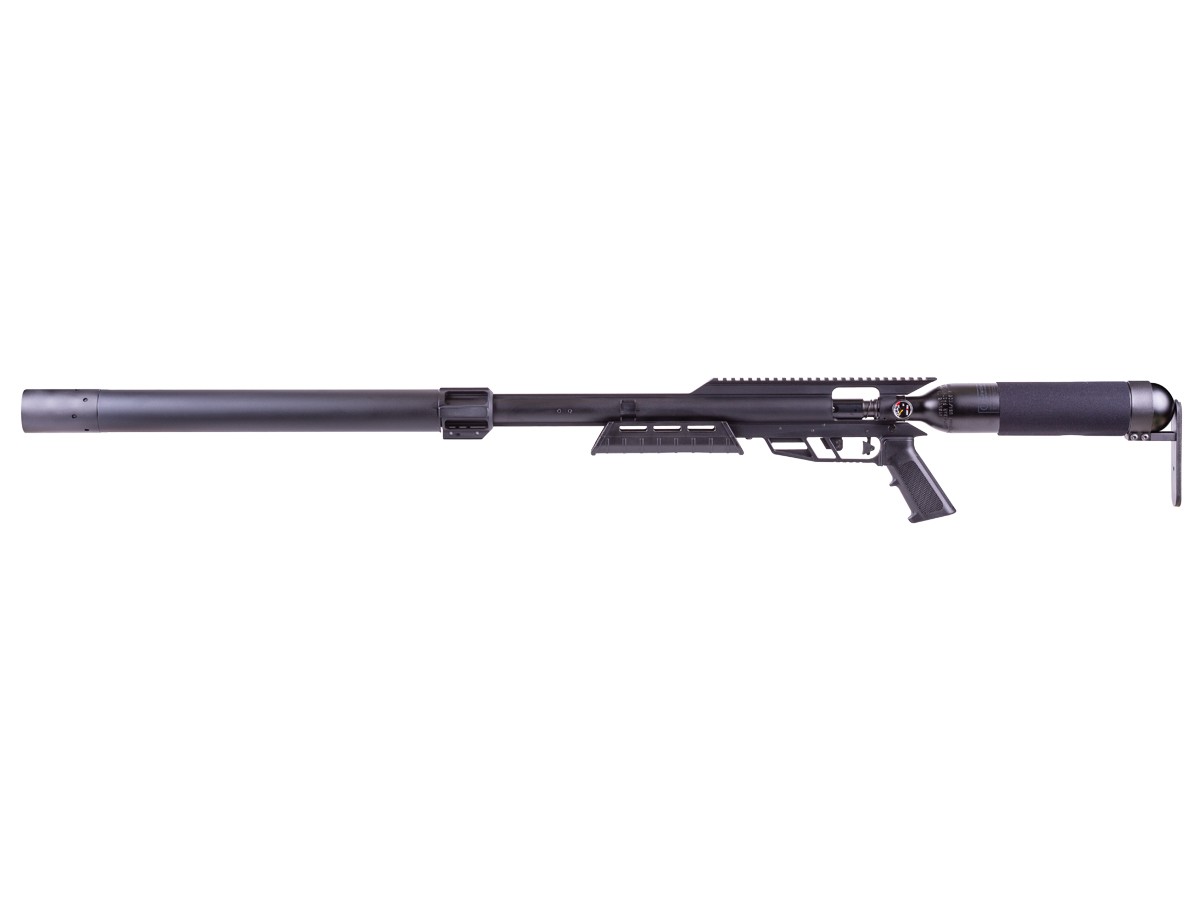
AirForce Texan LSS Moderated Big-bore PCP Air Rifle
Price range: €800.00 through €900.00
The AirForce Texan LSS is the big-bore PCP for hunters who want genuine stopping power with the added benefit of an integrated sound moderator. Available in five calibers — .257, .308, .357, .457, and .510 — this is a purpose-built hunting tool made right here in the USA. The Hunter Combo packages it with a Hawke Vantage 4-12×50 AO scope and UTG Leapers Premium 1″ high rings so you’re ready to get behind the trigger immediately.
- Five caliber options — 0.257″ at 960 fps, 0.308″ at 1,270 fps, 0.357″ at 1,100 fps, 0.457″ at 1,040 fps, and 0.510″ at 710 fps
- Integrated sound suppression (LSS) — quieter shooting without a separate suppressor
- Hunter Combo included — Hawke Vantage 4-12×50 AO scope and UTG Premium 1″ high rings
- Weaver/Picatinny optics rail — current production rifles ship with a Weaver/Picatinny rail
- American-made by AirForce Airguns — proven big-bore platform for serious hunters
Caliber AirForce Texan LSS .257 Caliber Big Bore PCP Air Rifle, Hunter Combo, AirForce Texan LSS .257Caliber Big Bore PCP Air Rifle, AirForce Texan LSS .30 Caliber Big Bore PCP Air Rifle, Hunter Combo, AirForce Texan LSS .308 Caliber Big Bore PCP Air Rifle, AirForce Texan LSS .357 Caliber Big Bore PCP Air Rifle, Hunter Combo, AirForce Texan LSS .357Caliber Big Bore PCP Air Rifle, AirForce Texan LSS .457 Caliber Big Bore PCP Air Rifle, Hunter Combo, AirForce Texan LSS .45 Caliber Big Bore PCP Air Rifle, AirForce Texan LSS .510 Caliber Big Bore PCP Air Rifle, Hunter Combo, AirForce Texan LSS .50 Caliber Big Bore PCP Air Rifle Brand AirForce
AirForce Texan LSS Moderated Big-Bore PCP Air Rifle – Technical Product Guide
Texan LSS Engineering, PCP Technology, Sound Moderation, Precision, and Related Airgun Context
AirForce Texan LSS Engineering
The long 34-inch barrel is central to the Texan LSS design. AirForce combines this full-length barrel with a shrouded Sound-Loc® system intended to reduce muzzle report while maintaining the characteristics associated with its long-barrel Texan platform. The .457 model uses a German-made Lothar Walther barrel, and AirForce specifically identifies these barrels as a major contributor to accuracy across its rifle range.
PCP Airguns and PCP Air Gun Technology
The Texan LSS belongs to the pcp airguns category. A pcp air gun stores compressed air inside an onboard reservoir before use instead of generating pressure through a spring piston during every cycle.
The current .457 model uses a 500cc reservoir filled to a maximum of 3,625 psi/250 bar. Because this is a high-pressure system, manufacturer-rated filling equipment and correct maintenance procedures are essential.
Air Rifle and Air Gun Design
As an air rifle and air gun, the Texan LSS differs substantially from conventional small-caliber recreational equipment. Its single-shot sidelever action, large reservoir, long barrel, and big-bore chambering place it in a specialized high-energy PCP category.
AirForce’s current big-bore range also includes Texan, Texan Carbine, Texan SS and Texan LSS configurations with different barrel lengths, sound-moderation arrangements, and energy levels.
High End Air Rifles
The phrase high end air rifles commonly includes advanced PCP systems with precision barrels, large reservoirs, adjustable components, sophisticated valve systems and high-pressure charging requirements.
The Texan LSS fits this technical category through its Lothar Walther barrel, large air reservoir, adjustable buttplate, adjustable trigger, integrated sound-moderation system and high-energy big-bore architecture.
Pellet Gun
The broad term pellet gun is often applied to many air-powered platforms, although the Texan LSS is more accurately described as a big-bore PCP rifle designed around large projectiles rather than ordinary small-caliber recreational pellets.
Exact projectile diameter and manufacturer recommendations should always correspond to the specific caliber.
FX Airguns, FX Airguns Sverige, FX Airguns Sweden, and FX Airguns USA
Terms such as fx airguns, fx airguns sverige, fx airguns sweden, fx airguns usa, fxairguns, fx usa, fx air guns, fx pcp, and fx refer to FX Airguns, a separate Swedish PCP manufacturer with headquarters in Mariestad, Sweden and a U.S. operation in California. They do not describe AirForce Texan LSS components or specifications.
FX Impact M4
The fx impact m4, impact m4, fx m4, f x impact, fx impact, impact m4 air rifle, and fx impact air rifle are separate FX platforms.
FX currently describes the Impact M4 as a modular PCP with an updated regulator, redesigned magazine, reinforced top plate and multiple caliber options. These features should not be transferred into Texan LSS specifications.
Impact M4 500mm and Impact M4 Ballistic Coefficient
The terms impact m4 500mm and impact m4 ballistic coefficient relate to FX configurations and projectile-performance discussions rather than AirForce specifications.
Ballistic coefficient is primarily a projectile property affected by projectile geometry and flight conditions, so it should not be treated as a fixed rifle specification.
FX Impact M4 for Sale
The phrase fx impact m4 for sale represents commercial search intent for a separate product.
It has no technical relationship with the Texan LSS and should not be presented as an alternative product name.
FX Impact M3, FX M3, and FX M3 Airgun
Terms including fx impact m3, f x impact m3, fx m3, fx m3 airgun, fx impact m3 air rifle, fx impact m3 .22cal air rifle, and fx impact m3 .22cal air rifle. 600mm barrel describe earlier FX Impact configurations.
They should remain separate from AirForce’s single-shot big-bore architecture.
FX Panthera and FX Panthera MkII
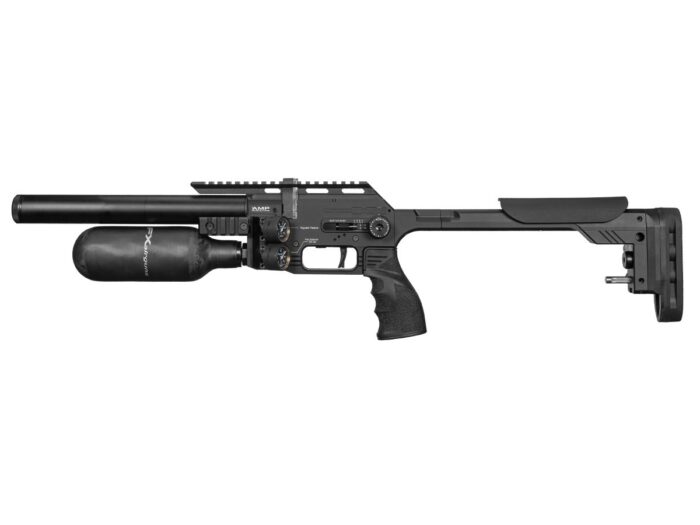
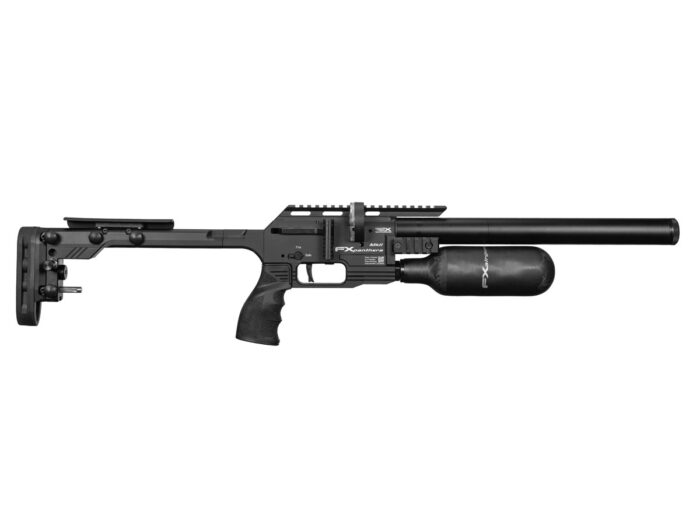
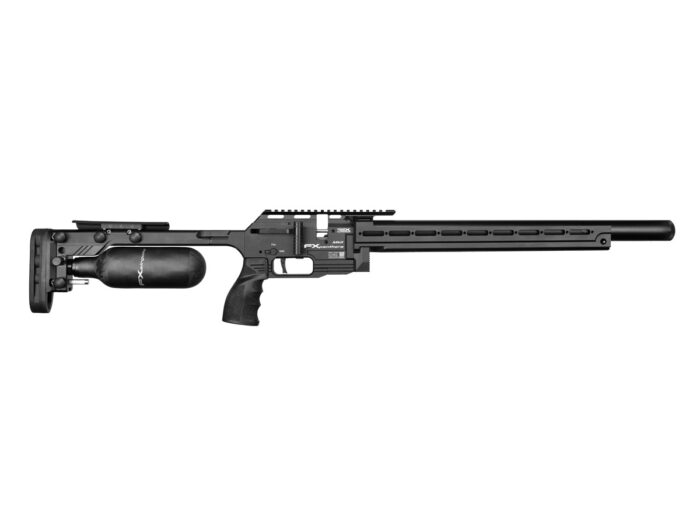
The fx panthera, fxpanthera, and FX Panthera MkII are separate competition-oriented FX PCP systems.
FX describes the original Panthera as a dedicated slug platform aimed at precision competition, while the newer MkII includes the company’s Quick-Set trigger architecture.
FX Leopard and FX Leopard Air Rifle
The fx leopard, fx leopard airgun, and fx leopard air rifle refer to FX’s compact bullpup platform rather than the Texan LSS.
FX describes the Leopard as a tactical bullpup combining features from several of its existing platforms.
FX DRS, DRS Tactical, DRS Classic, and DRS Pro
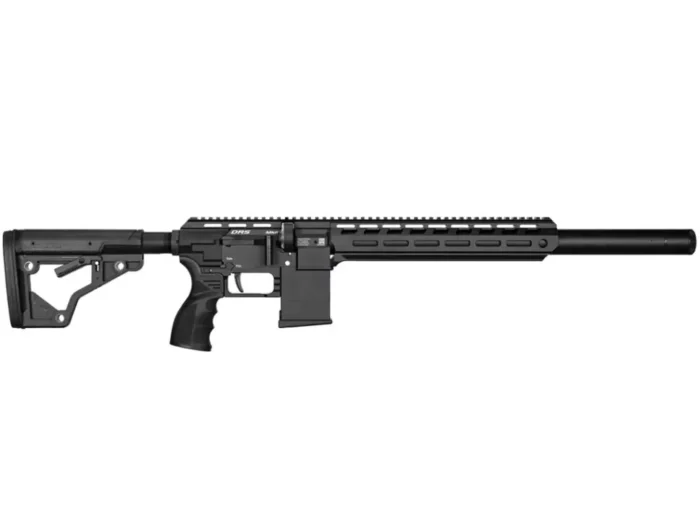
The terms fx drs, fx drs tactical, fx drs classic, fx drs pro, and fx drs air rifle belong to FX’s DRS family.
The DRS Tactical, for example, uses an AR-inspired tactical format, while the DRS Classic is a separate sporting configuration. These are unrelated to AirForce’s Texan chassis and should not be treated as shared specifications.
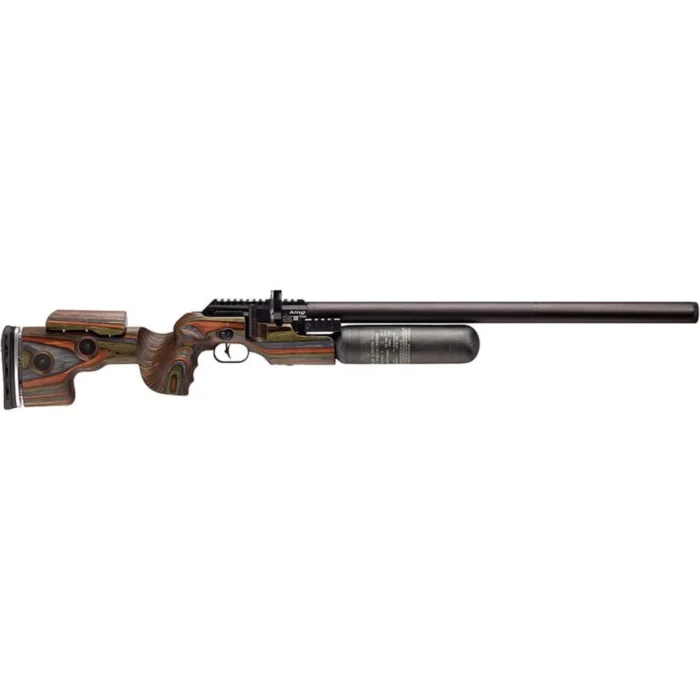
FX King
The fx king belongs to FX Airguns’ current rifle catalog and represents another independent PCP platform. FX lists the King alongside the Leopard and other premium models.
FX Wildcat and FX Wildcat Mk3
The fx wildcat and fx wildcat mk3 are compact FX PCP platforms.
They differ from the long, single-shot Texan LSS in layout, magazine architecture, reservoir arrangement and intended operating characteristics.
FX Dreamline and FX Dreamline Classic
The fx dreamline and fx dreamline classic belong to another FX family designed around modular PCP architecture.
Their components and specifications should not be blended into Texan LSS technical information.
FX Crown, Crown Mk2, Crown MkII, and Crown Mkll
The terms fx crown, fx crown mk2, fx crown mkii, and fx crown mkll refer to the FX Crown family.
Again, they are independent PCP designs and not variations of the AirForce Texan.
FX Maverick
The fx maverick is another FX PCP platform and should remain separate from AirForce specifications.
FX Dynamic and FX Dynamics
The fx dynamic, fx dynamics, and related search terms concern FX’s own product ecosystem rather than the Texan LSS.
FX Chronograph and FX Pocket Chronograph
The fx chronograph and fx pocket chronograph refer to velocity-measuring accessories.
FX’s current Pocket Chronograph D1 uses radar technology and measures projectile velocity up to 1,250 fps. It is an accessory rather than an AirForce rifle component.
FX Halo Slugs and FX Pellets
The terms fx halo slugs and fx pellets refer to FX projectile products.
Projectile compatibility with the Texan LSS should instead be determined from the exact AirForce caliber and manufacturer guidance rather than brand association alone.
FX Outdoors and Luftgevær
fx outdoors is a broad search phrase connected with FX equipment, while luftgevær is a Scandinavian term commonly used for air rifle.
Neither term establishes any Texan LSS technical specification.
Sound-Loc® Moderation System
One of the defining technical characteristics of the Texan LSS is AirForce’s Sound-Loc® system.
AirForce describes the LSS as combining the long-barreled Texan’s power characteristics with the quieter architecture of its SS models. The integrated shrouding is therefore intended to reduce muzzle report without fundamentally shortening the long-barrel configuration.
Precision and Lothar Walther Barrel
AirForce uses German-made Lothar Walther barrels and specifically states that these barrels are commonly used by target and benchrest shooters. The .457 LSS uses a 34-inch version.
Practical precision nevertheless depends on more than the barrel alone. Projectile uniformity, air-pressure consistency, optical alignment, environmental conditions and equipment condition all contribute.
Single-Shot Sidelever Action
The current .457 LSS uses a single-shot sidelever action rather than a magazine-fed system.
This arrangement keeps the feeding mechanism mechanically straightforward while accommodating large projectiles.
Adjustable Trigger and Buttplate
AirForce lists an adjustable two-stage trigger and adjustable buttplate on the .457 LSS.
These components allow ergonomic configuration while preserving the platform’s basic chassis architecture.
Overall Technical Perspective
The AirForce Texan LSS is a specialized big-bore PCP platform combining a 34-inch Lothar Walther barrel, 500cc high-pressure reservoir, 250-bar maximum fill pressure, single-shot sidelever action, integrated Sound-Loc® moderation, adjustable two-stage trigger, adjustable buttplate and approximately 51.5-inch overall length in the current .457 configuration.
Its principal engineering distinction is the combination of a full-length Texan barrel with integrated sound moderation. AirForce currently positions the LSS as the bridge between its long-barreled Texan and shorter moderated SS architecture.
For responsible ownership, the key technical considerations are exact caliber identification, manufacturer-rated fill pressure, appropriate high-pressure charging equipment, secure storage, regular reservoir and seal inspection, suitable projectiles, hearing and eye protection, dependable target containment, and compliance with applicable local regulations.
Engineering Quality, Precision, Handling, Performance, and Practical Design
This large-caliber pre-charged pneumatic platform is built around a combination of substantial air capacity, a long precision barrel, a straightforward single-shot action, and an integrated system intended to manage muzzle report. Rather than relying on complex electronic controls or a magazine-fed mechanism, the design emphasizes mechanical simplicity and a substantial high-pressure air system. Its overall performance should be understood through the interaction between barrel quality, pressure consistency, projectile compatibility, ergonomics, trigger characteristics, structural rigidity, and equipment condition. Consequently, maximum energy or velocity figures represent only part of the technical picture.
Engineering Philosophy
The platform follows an engineering approach centered on delivering substantial pneumatic performance through a relatively uncomplicated mechanical layout.
A long barrel provides additional internal space for compressed air to act on the projectile before it exits. Meanwhile, the large onboard reservoir provides the stored pneumatic energy required by the system.
The resulting architecture is physically substantial, yet the operating concept remains comparatively straightforward.
This simplicity can also make routine inspection easier because many important external components remain readily visible.
High-Pressure Air System
Compressed air stored within the onboard reservoir provides the energy for operation.
Because the system operates at very high pressure, the reservoir, valve, filling components, seals, and associated hardware should always be treated as pressure-bearing equipment.
Only appropriately rated filling equipment should be used.
Furthermore, pressure limits should never be exceeded.
Any reservoir showing significant damage, corrosion, abnormal deformation, or uncertain condition should receive qualified inspection before further use.
Reservoir Capacity
A large reservoir provides the air volume required by a high-energy platform.
However, reservoir size should not automatically be interpreted as meaning that every discharge will behave identically.
Pressure decreases as stored air is consumed, and changes within the pneumatic system can influence consistency.
For this reason, understanding normal pressure behavior is important for responsible ownership.
The pressure gauge should be treated as an important condition indicator rather than merely an accessory.
Long-Barrel Architecture
The extended barrel is a fundamental part of the design.
Its length provides additional distance over which expanding compressed air can transfer energy.
At the same time, barrel quality contributes significantly to repeatability.
Internal surface condition, crown integrity, alignment, and projectile compatibility can all influence practical results.
Therefore, the barrel should be protected from impacts and maintained according to manufacturer recommendations rather than subjected to unnecessary aggressive cleaning.
Precision Barrel Construction
A precision-manufactured barrel provides a strong foundation for repeatable recreational or sporting performance.
However, even a high-quality barrel cannot independently guarantee accuracy.
Projectile dimensions, weight consistency, environmental conditions, pressure behavior, sight alignment, and user technique all contribute.
Consequently, practical precision should be evaluated through repeatable grouping rather than relying solely on a manufacturer’s maximum velocity or energy specification.
Understanding Practical Precision
Precision is fundamentally about consistency.
When the mechanical system, projectile, pressure level, aiming system, and environmental conditions remain reasonably consistent, results should become more predictable.
A significant change in grouping can therefore indicate several possible causes.
Before assuming that the barrel itself is responsible, the condition of the optics, mounting hardware, pressure system, and ammunition should be considered.
A systematic inspection is generally more useful than immediately adjusting multiple components.
Single-Shot Architecture
The single-shot configuration keeps the feeding arrangement mechanically straightforward.
There is no multi-shot magazine cycling through the action, which reduces the number of feeding components involved.
This arrangement also encourages deliberate ammunition handling.
Only the correct projectile specification should be used.
Damaged, deformed, or incompatible projectiles should never be forced into position because doing so can affect consistency and potentially damage mechanical surfaces.
Sidelever Mechanism
The sidelever provides mechanical access to the action while maintaining the overall linear configuration of the platform.
Its movement should remain smooth and predictable.
Unexpected resistance should never simply be overcome with additional force.
Instead, contamination, mechanical wear, or another underlying problem should be investigated.
Routine inspection of accessible moving surfaces can help identify changes before they become significant.
Trigger Characteristics
A two-stage trigger allows the initial movement and final release stage to remain mechanically distinct.
For controlled target use, predictable trigger behavior can contribute to consistent handling because unnecessary disturbance immediately before discharge can be reduced.
However, trigger components should not be modified casually.
Any adjustment should remain within manufacturer-supported limits.
If the mechanism develops unusual resistance, inconsistent engagement, or another abnormal characteristic, qualified servicing is preferable.
Sound-Management Architecture
The integrated barrel-surrounding system is designed to reduce the perceived muzzle report compared with an equivalent unmoderated configuration.
Nevertheless, reduced sound does not mean silent operation.
Large-caliber pneumatic equipment can still generate substantial noise from several sources, including the muzzle, mechanical action, and projectile flight.
Appropriate hearing protection remains sensible wherever noise levels justify it.
Local regulations should also be checked because rules governing sound-reducing equipment vary between jurisdictions.
Structural Rigidity
Structural consistency is important for maintaining alignment between the barrel, action, reservoir, mounting system, and sighting equipment.
Loose hardware can introduce movement that appears to be an accuracy problem.
Consequently, visible mounting points should be inspected periodically.
Fasteners should remain correctly seated without being excessively tightened.
Repeated loosening may indicate an underlying issue that should be investigated rather than temporarily corrected.
Optics Mounting
A stable optical system is particularly important when evaluating practical precision.
The mounting surface, rings, optic, and hardware function together as one alignment system.
If any part moves, the apparent point of impact may change.
Therefore, unexpected shifts should prompt inspection of the complete mounting arrangement.
Optical equipment should also be protected from impacts during storage and transportation.
Ergonomics and Buttplate Adjustment
Adjustable ergonomic components can help accommodate differences in body dimensions and preferred shooting positions.
A comfortable shoulder position should support natural sight alignment without requiring excessive muscular tension.
However, adjustments should focus on stability and comfort rather than extreme configurations.
Once a comfortable arrangement has been established, maintaining consistent positioning can help support repeatable target performance.
Weight and Balance
A physically substantial platform naturally handles differently from a lightweight recreational model.
The long barrel and large reservoir distribute considerable mass along the length of the equipment.
This can provide a stable feel in supported conditions, although prolonged unsupported handling may be more demanding.
Users should therefore evaluate ergonomics according to the intended lawful sporting environment rather than assuming that heavier equipment is automatically more stable in every situation.
Projectile Consistency
Projectile quality has a significant influence on practical results.
Variations in weight, diameter, shape, and manufacturing tolerances can alter aerodynamic behavior.
For this reason, appropriate factory-produced ammunition should be selected according to manufacturer recommendations.
Visibly damaged projectiles should be discarded.
The objective should be repeatable compatibility rather than attempting to achieve performance through unsuitable or improvised ammunition.
Pressure and Performance Consistency
Pneumatic performance depends partly on pressure behavior.
As reservoir pressure changes, the valve system may behave differently across successive cycles.
Therefore, owners should become familiar with the normal operating characteristics specified by the manufacturer.
Unexpected changes in pressure retention, unusual air loss, or rapidly declining pressure should be investigated.
Leaks should never be ignored simply because the equipment continues to function.
Outdoor Conditions
Wind, temperature, humidity, and atmospheric conditions can influence real-world results.
Large projectiles may behave differently as environmental conditions change, while temperature can also influence equipment and pressure behavior.
Therefore, performance observed during one session should not automatically be expected under completely different conditions.
Controlled testing provides a more meaningful basis for evaluating mechanical consistency.
Target Environment
High-energy pneumatic equipment requires an appropriately controlled environment.
A suitable range and properly rated containment system are essential considerations.
Ordinary lightweight recreational targets may not provide adequate containment.
Users should follow range rules, manufacturer guidance, and applicable local regulations.
Eye and hearing protection should also form part of responsible sporting use.
Maintenance and Reliability
Mechanical reliability depends heavily on preventive maintenance.
The reservoir, seals, barrel, action, lever, trigger assembly, gauge, mounting surfaces, and visible fasteners should be inspected periodically.
Moisture and contamination should not be allowed to remain on the equipment during long-term storage.
Likewise, unexplained air loss or abnormal mechanical behavior should receive professional attention rather than being ignored.
Storage Considerations
Secure storage is particularly important for powerful pneumatic equipment.
The platform should remain unloaded and inaccessible to unauthorized individuals.
A dry location protected from excessive heat, moisture, corrosive chemicals, and physical impacts is preferable.
The high-pressure reservoir should also be maintained and stored according to manufacturer guidance.
Local requirements should always determine the final storage arrangement.
Overall Engineering Perspective
The platform’s technical character comes from combining a large high-pressure reservoir, long precision barrel, single-shot action, adjustable ergonomic components, and integrated sound-management architecture within a relatively straightforward mechanical system.
Its practical precision depends on far more than maximum power. Barrel condition, pressure consistency, projectile uniformity, optical stability, environmental conditions, equipment maintenance, and repeatable handling all contribute. Consequently, the strongest approach to long-term ownership is to preserve the original engineering configuration, follow manufacturer pressure limits, use appropriate ammunition, maintain secure storage, inspect pressure-bearing components regularly, and obtain qualified servicing whenever mechanical or pneumatic condition becomes uncertain.
Maintenance, Inspection, Durability, Storage, and Long-Term Care
Proper maintenance is particularly important for a large-caliber pre-charged pneumatic platform because its operation depends on both conventional mechanical components and a high-pressure air system. Long-term reliability is influenced by reservoir condition, seals, valve integrity, barrel condition, action movement, trigger behavior, pressure monitoring, mounting hardware, and storage conditions. Preventive care should focus on regular inspection rather than unnecessary disassembly. Furthermore, because pressure-bearing components can retain substantial stored energy, internal repairs should be handled by qualified technicians whenever specialized servicing is required.
Routine Inspection
A basic condition inspection should be completed periodically and whenever the equipment has experienced prolonged storage, unusual environmental exposure, or a significant impact.
Visible components should be examined for corrosion, cracking, deformation, loose hardware, damaged seals, or other abnormalities.
Particular attention should be given to pressure-bearing components.
If something suddenly appears or behaves differently from its established normal condition, the cause should be investigated before recreational use continues.
High-Pressure Reservoir Care
The air reservoir is one of the most important components to maintain correctly.
Its exterior should remain free from severe scratches, dents, corrosion, or other structural damage.
Because the reservoir stores compressed air at substantial pressure, questionable damage should never be treated as merely cosmetic.
Manufacturer inspection and service recommendations should be followed throughout its life.
A reservoir with uncertain structural condition should be professionally assessed.
Pressure Gauge Inspection
The pressure gauge provides useful information about the condition of the pneumatic system.
It should remain clearly readable and physically undamaged.
Unexpected pressure changes may indicate a leak or another problem.
If pressure falls significantly while the equipment is stored, the cause deserves investigation.
A damaged gauge should not simply be ignored because other components appear to function normally.
Pressure information remains an important part of responsible system management.
Seal Condition
Seals help contain compressed air throughout the pneumatic system.
Over time, seals can naturally age, dry, wear, or become damaged.
Gradual air loss may indicate deterioration somewhere within the system.
However, the location of a leak should be diagnosed properly rather than addressed through random component replacement.
Manufacturer-approved replacement parts and suitable professional servicing provide the most reliable approach when internal seals require attention.
Valve System Care
The internal valve controls the release of stored compressed air.
Because it is part of the pressure-bearing system, unnecessary disassembly should be avoided.
Changes in normal behavior, unexplained air consumption, unusual sounds, or significant inconsistency may justify professional inspection.
Owners should not attempt to modify internal valve components to change performance.
Such alterations can affect reliability, component stress, and safe operating characteristics.
Filling Equipment Inspection
Charging equipment should receive the same attention as the platform itself.
Hoses, connectors, fittings, gauges, and other pressure-rated components should be examined for visible deterioration before use.
Damaged high-pressure equipment should be replaced rather than temporarily repaired.
Only equipment rated for the required pressure should be used.
Manufacturer instructions should determine compatibility because ordinary low-pressure pneumatic fittings are not substitutes for specialized high-pressure components.
Preventing Moisture Contamination
Moisture can affect both exterior surfaces and pneumatic components.
Clean, dry air is preferable for filling because unnecessary moisture inside a high-pressure system may contribute to long-term deterioration.
External moisture should also be removed before storage.
After exposure to rain or high humidity, accessible surfaces should be appropriately dried.
The equipment should not be sealed inside an enclosed case while still damp.
Barrel Exterior Care
The barrel exterior should remain reasonably clean and protected from corrosion.
Fingerprints, moisture, and ordinary surface contamination can be removed using suitable materials.
Aggressive polishing should be avoided because it may damage protective finishes.
Likewise, strong household solvents should not be used without confirming compatibility.
Preventing corrosion is generally easier and more effective than attempting to restore a heavily affected surface later.
Bore Maintenance
Internal barrel cleaning should remain conservative.
A precision barrel does not necessarily require aggressive cleaning after every recreational session.
When cleaning is necessary, appropriate equipment and manufacturer-supported procedures should be followed.
Hard or abrasive objects should never be forced through the bore.
Particular care should be taken around the muzzle and crown because physical damage in this area can negatively affect repeatability.
Action Inspection
The action should operate smoothly and predictably.
Unexpected resistance, grinding, binding, or unusual looseness deserves investigation.
Applying additional force to overcome abnormal movement can potentially worsen an underlying problem.
Accessible areas should remain reasonably clean and free from contamination.
If normal operation cannot be restored through basic inspection and manufacturer-supported maintenance, qualified technical servicing provides the more appropriate solution.
Sidelever Care
The sidelever is a regularly moving mechanical component and should therefore be monitored for wear or abnormal movement.
Its pivot points and accessible surfaces should remain free from excessive contamination.
A sudden change in resistance may indicate a developing mechanical issue.
Owners should avoid bending or reshaping components in an attempt to alter the feel of the mechanism.
Mechanical problems should be diagnosed rather than disguised.
Trigger Inspection
The trigger mechanism should maintain predictable operation.
Unusual resistance, inconsistent engagement, excessive looseness, or other significant changes should receive attention.
Routine external inspection is appropriate, but unnecessary internal modification should be avoided.
Any adjustment should remain within manufacturer-supported parameters.
If the trigger behaves abnormally, professional servicing provides a safer and more reliable approach than experimental alteration of internal components.
Sound-Management System Care
The barrel-surrounding sound-management structure should remain free from significant damage, looseness, or contamination.
External openings should not be obstructed.
Likewise, components should not be modified in an attempt to change sound characteristics.
Any servicing should follow manufacturer guidance and applicable local regulations.
A change in sound can sometimes indicate another mechanical issue, so unusual behavior deserves appropriate inspection.
Optics and Mounting Hardware
Optical equipment and its mounting system should be inspected periodically.
Loose mounting hardware can produce apparent precision problems even when the pneumatic and barrel systems remain mechanically sound.
Mounts should remain correctly seated without excessive tightening.
The optic should also be protected from impacts during transportation.
If alignment changes unexpectedly, the complete mounting arrangement should be checked before repeated sight adjustments are made.
Accessory Rail Care
Mounting surfaces should remain clean and free from deformation.
Accessories that are not required can be removed to simplify inspection and storage.
If equipment remains attached, mounting hardware should be checked according to the accessory manufacturer’s instructions.
Excessive tightening should be avoided because damaged threads or mounting surfaces can create more serious problems than the original looseness.
Fastener Inspection
Visible fasteners should remain properly seated.
Repeated mechanical operation and transportation can occasionally contribute to gradual loosening.
However, repeatedly tightening a component without identifying why it moves is not a complete solution.
If a fastener continues to loosen, professional assessment may be appropriate.
Unapproved adhesives or locking compounds should not automatically be applied because they can complicate future servicing.
Corrosion Prevention
Metal components should be protected from prolonged moisture, salt, and corrosive chemicals.
After outdoor exposure, visible surfaces should be inspected and appropriately dried.
Storage cases should also remain clean and dry.
A case contaminated with moisture can repeatedly expose equipment even after the equipment itself has been cleaned.
Periodic inspection is especially useful in consistently humid environments where corrosion can develop gradually.
Temperature Management
Extreme temperatures should be avoided during storage.
Closed vehicles exposed to direct sunlight can become significantly hotter than the surrounding environment.
Prolonged heat may affect seals, synthetic components, adhesives, optical equipment, and other materials.
Likewise, moving cold equipment into a warm humid environment can create condensation.
Allowing gradual temperature stabilization before enclosed storage can reduce moisture accumulation.
Transportation Protection
A properly fitted protective case can reduce impacts, scratches, contamination, and unwanted movement.
Heavy objects should not be placed directly on pressure-bearing components or optical equipment.
Sharp tools, leaking liquids, and chemicals should be transported separately.
After a substantial impact, the reservoir, barrel, action, gauge, optics, and visible structural components should be inspected before recreational use resumes.
Secure Long-Term Storage
Storage should prioritize security as well as preservation.
The equipment should remain unloaded and inaccessible to unauthorized individuals in accordance with applicable regulations.
The storage environment should be dry and protected from extreme temperatures, corrosive substances, and physical impacts.
High-pressure components should be stored and maintained according to manufacturer guidance rather than assumptions based on conventional sporting equipment.
Avoiding Unauthorized Modifications
Internal alterations can affect pneumatic reliability, component stress, warranty coverage, and legal compliance.
Valve components, pressure systems, trigger assemblies, barrel structures, and other critical parts should remain within the manufacturer-supported configuration.
If performance changes, identifying the underlying cause is preferable to modifying unrelated components.
Repair should restore correct mechanical condition rather than create an experimental setup.
Professional Servicing
Qualified servicing becomes appropriate when significant leaks, reservoir damage, severe corrosion, abnormal valve behavior, persistent mechanical resistance, trigger problems, or structural damage develops.
Pressure-bearing equipment requires specialized knowledge.
Professional technicians can determine whether seals, valves, fittings, gauges, or other components require repair or replacement while minimizing unnecessary intervention elsewhere.
Maintenance Records
Keeping basic maintenance records can improve long-term ownership.
Inspection dates, professional servicing, seal replacements, reservoir assessments, repairs, and significant environmental incidents can all be documented.
Records make recurring problems easier to identify and provide technicians with useful background information.
A clear service history can also assist future condition assessment.
Long-Term Durability
Durability depends on the relationship between engineering quality and responsible care.
Clean, dry storage, conservative barrel maintenance, correct pressure management, regular inspection, protection from impacts, and timely professional servicing can reduce avoidable deterioration.
Mechanical and sealing components naturally age over time, but early identification of changes can prevent minor issues from becoming significant problems.fx air rifle
Overall Maintenance Perspective
Effective long-term maintenance should be systematic rather than excessive. Particular attention should remain focused on the high-pressure reservoir, seals, gauge, valve system, barrel, action, trigger, mounting hardware, and visible structural components.
Ultimately, regular inspection, manufacturer-supported maintenance, appropriate environmental protection, secure storage, and professional servicing when required provide the strongest foundation for preserving mechanical condition. Treating the pressure system with the same care as the precision and structural components helps maintain dependable recreational functionality while reducing unnecessary wear throughout the equipment’s service life.
Be the first to review “AirForce Texan LSS Moderated Big-bore PCP Air Rifle”
Related products
FX Air Gun
FX Air Gun
FX Air Gun
FX Air Gun
FX Air Gun
FX Air Gun
FX Air Gun
FX Air Gun
Reviews
There are no reviews yet.