

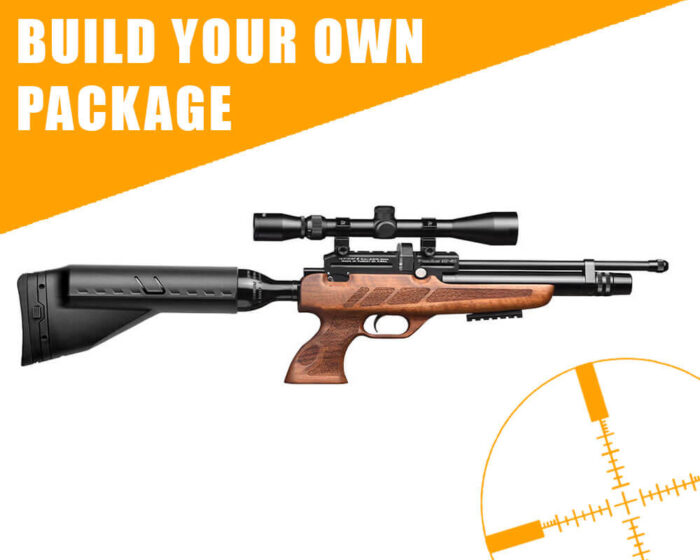
Kral Arms Puncher Shadow PCP Air Rifle
€400.00
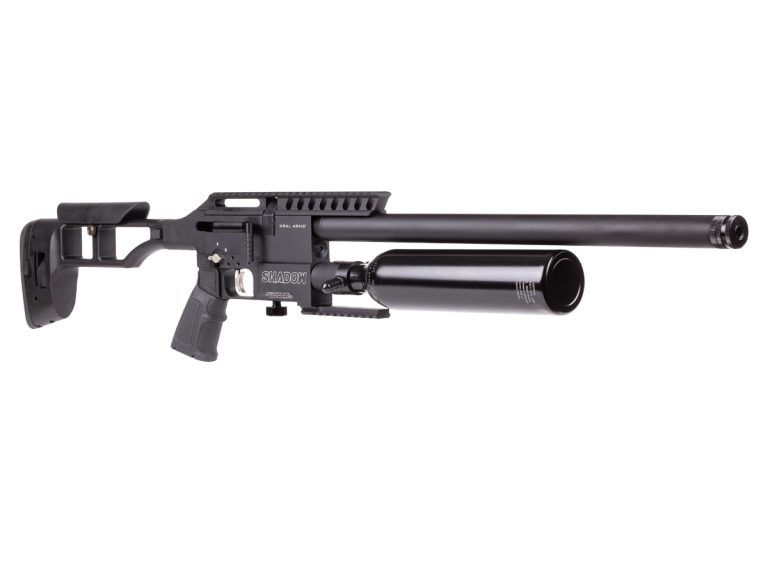
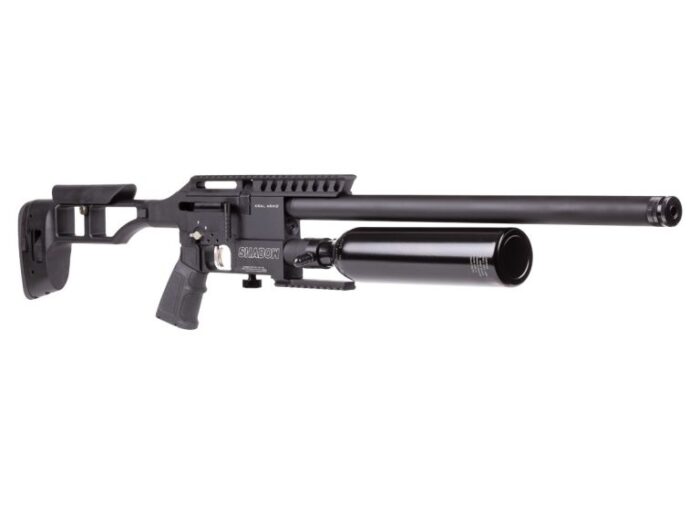
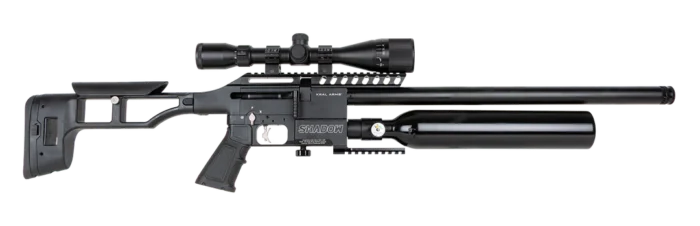
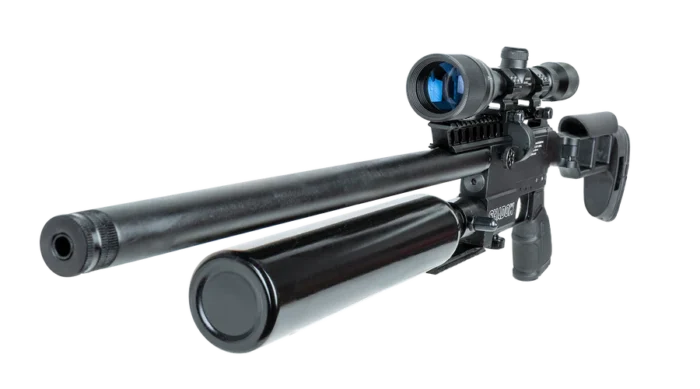
The Kral Arms Puncher Shadow is a well-finished Turkish PCP that delivers solid regulated-style consistency at a price that makes it a genuine competitor in the mid-range market. We carry it in .22 and .25 caliber, making it a versatile option for pest control and small-game hunters who want repeatable downrange performance without stepping into premium pricing.
- Two calibers available: .22 at 870 fps and .25 at 800 fps — both well-suited to small-game and pest work.
- PCP platform: Pre-charged pneumatic for consistent, accurate shot-to-shot performance.
- Puncher series build quality: Kral’s Puncher line has earned a reputation for solid fit, finish, and reliability.
- Shadow configuration: Sleek profile with serious performance underneath.
The Puncher Shadow is a rifle we’re confident recommending to anyone looking for a capable PCP without the top-shelf price tag — stop by and handle one yourself.
| Caliber | .22 Caliber, .25 Caliber |
|---|---|
| Brand | Kral Arms |
Kral Arms Puncher Shadow PCP Air Rifle – Detailed Technical Guide
Kral Arms Puncher Shadow Design, PCP Engineering, and Model Context
Kral and Kral Arms Background
Kral and Kral Arms are associated with a Turkish manufacturer producing both air rifles and firearms. The official company catalog separates its Puncher PCP air-rifle family from shotgun, pistol, and other firearm categories.
Search variations such as krale, kiral, krale airguns, and Kral Air Rifle may appear when researching the manufacturer. However, correct model identification remains important because Kral produces numerous platforms that use very different mechanisms.
Kral Puncher Series and Shadow Puncher
The Shadow belongs to the broader Kral Puncher Series. Kral’s current Puncher range includes models such as Shadow, Shadow F, Empire, Empire X, Bigmax X, Bighorn, NP-500, Auto, Mega, Breaker, NP-01, NP-02, and several additional configurations.
Consequently, searches for Kral NP 02, Kral Puncher, Puncher Mega, Puncher Auto, Shadow Puncher, NP500, Empire X, shadowf, and Kral Puncherk can appear around the same topic. These names should not automatically be treated as interchangeable specifications.
Understanding PCP Air Gun Technology
The Shadow operates as a pcp air gun, or pre-charged pneumatic platform. Instead of relying on a large spring moving during each firing cycle, compressed air is stored in the system before operation.
This architecture can produce a comparatively smooth mechanical cycle because the large moving spring assembly associated with spring-piston systems is absent.
However, consistent performance still depends on seals, reservoir condition, pressure behavior, projectile consistency, and routine maintenance.
Pressure-bearing components should remain within manufacturer specifications, while specialized internal pneumatic servicing is best handled by appropriately qualified technicians.
Shadow Caliber and Published Performance
Kral currently lists three Shadow caliber configurations. The manufacturer publishes approximately 950 fps/23 joules for .177, 870 fps/42 joules for .22, and 800 fps/49 joules for .25.
These figures are useful for comparing factory configurations, but velocity alone should not be interpreted as an accuracy measurement.
Practical precision depends on several factors, including barrel condition, projectile consistency, equipment setup, environmental conditions, and user technique.
Searches for rifles pcp 5.5 usually refer to 5.5 mm/.22 PCP platforms, which includes one of the current Shadow configurations.
Barrel Length and Ergonomics
The Shadow uses a manufacturer-listed 53 cm/20.8-inch barrel and measures approximately 105 cm/41.3 inches overall. Its 36.5 cm/14.3-inch length of pull gives it a traditional full-size sporting profile.
Kral identifies the stock as high-quality synthetic.
Synthetic construction can provide practical resistance to ordinary environmental exposure, although the equipment should still be protected against severe impacts, excessive moisture, and contamination.
Ergonomics remain individual. Balance, hand position, body proportions, and shooting posture can influence how naturally the platform feels.
Magazine Capacity and Shot Count
Kral specifies a 14-round magazine for .177, 12-round capacity for .22, and 10-round capacity for .25. The published number of shots per fill is approximately 126, 108, and 90 respectively.
These differences illustrate how caliber and pneumatic consumption influence practical capacity.
A high theoretical shot count does not necessarily mean every shot within a complete fill will produce identical characteristics. Consistency across the useful pressure range remains more informative than the maximum number alone.
Kral Puncher Breaker and Related Models
The Kral Puncher Breaker Air Rifle is another member of the same broader family. Searches may include Kral Breaker Puncher, Kral Puncher Breaker, Kral Arms Puncher Breaker PCP Air Rifle, Kral Puncher Breaker Synthetic, Kral Puncher Breaker Walnut, and Kral Arms Puncher Breaker review.
However, the Breaker and Shadow are distinct products within Kral’s current Puncher PCP catalog.
Likewise, broad phrases such as Kral Arms PCP Rifle, Kral Puncher PCP, and Kral Arms Airguns describe product categories rather than the exact Shadow configuration.
Other Kral Product Names and Firearm Terms
Kral manufactures products outside its airgun range, which explains why searches sometimes mix unrelated terms.
For example, KP12, K12 shotgun, and ST-500 are represented separately in Kral’s official user-manual catalog, while its website also maintains distinct shotgun and pistol categories.
Terms such as A12 shotgun, A12 gun, XM shotgun, shotgun xm, 410 shotgun semi auto magazine fed, rifle 223, 223 rifles, 223 arma, arma 223, .223 guns, rifle cal 22 semiautomatico, KR9, KR9 rifle, KR-101, kr 101, AKR gun, and kalibre pistol should therefore not be interpreted as Shadow PCP specifications.
Similarly, broader or ambiguous searches such as n_01, Bigmax, tabancalar, tactical tundra, rutundra, kar gun, and air rifle pop require separate model verification before any technical relationship is assumed.
Accessories and Maintenance Context
Kral currently lists air-rifle accessories including filling probes, pressure gauges, air tanks, regulators, magazines, bipods, scopes, single-shot magazines, and other PCP-related components.
Compatibility should always be checked for the exact model rather than assumed across the entire Puncher family.
Kral also maintains official PCP user manuals, which should take priority over generalized instructions when servicing or maintaining the system.
Accuracy and Overall Technical Character
The Shadow combines conventional full-size ergonomics, multi-shot capability, a synthetic stock, three caliber options, and manufacturer-listed shot counts that support extended recreational use.
Its precision potential should be judged through repeatable grouping and consistent operation rather than velocity alone.
Most importantly, equipment condition, appropriate projectiles, safe backstops, eye protection, secure storage, and compliance with local law remain central to responsible ownership.
From an engineering perspective, the Shadow demonstrates how modern PCP technology can combine relatively smooth operation, substantial shot capacity, and straightforward handling within the larger Kral Puncher family.
Engineering Quality, Practical Performance, Precision, and Handling
The Kral Arms Puncher Shadow is designed around a combination of pneumatic efficiency, mechanical consistency, balanced construction, and practical ergonomics. While specifications provide useful information about the platform, the overall experience is determined by how effectively its individual systems operate together. The barrel assembly, stock, receiver, air system, magazine mechanism, and supporting components each contribute to performance. Therefore, understanding the complete engineering package provides a better assessment than focusing on a single figure.
Engineering and Construction Quality
Construction quality establishes the foundation for dependable operation. Major components must remain properly aligned and securely integrated so that the system can maintain predictable characteristics throughout repeated use.
Manufacturing tolerances are particularly important in precision equipment. Small variations between interacting components may influence mechanical feel and long-term consistency. Consequently, quality should be considered through fit, structural integrity, material selection, and reliable operation.
External appearance is useful when assessing condition, but it cannot reveal everything about internal mechanical health. Routine observation and appropriate professional servicing remain important throughout ownership.
Pneumatic Operating Characteristics
The compressed-air system provides a relatively smooth operating cycle compared with designs that rely on a large moving spring. This characteristic contributes to the refined feel associated with modern pneumatic equipment.
However, dependable operation requires the pressure system to remain in suitable condition. Seals, connections, and pressure-bearing components must continue functioning within their intended specifications.
Unexpected pressure loss or visible damage should never be ignored. Because stored compressed air contains substantial energy, specialized repairs should be completed by appropriately qualified personnel.
Following manufacturer requirements provides the strongest foundation for safe and predictable operation.
Understanding Practical Precision
Precision should be evaluated through consistency rather than isolated results. A well-maintained system should provide predictable mechanical behavior from one cycle to another.
Several variables contribute to practical results. Equipment condition, compatible ammunition, environmental conditions, sighting equipment, and user technique all influence overall performance.
Therefore, one unusually successful session does not necessarily represent normal capability. Repeated evaluation under controlled conditions provides more meaningful information.
Consistency also makes it easier to recognize when equipment behavior begins to change.
Barrel Quality and Consistency
The barrel is one of the most important components affecting practical performance. Its internal condition and alignment contribute directly to repeatability.
Proper maintenance helps protect the barrel from contamination and physical damage. Nevertheless, excessive cleaning can be counterproductive when inappropriate materials or techniques are used.
Routine care should follow manufacturer recommendations rather than improvised methods.
When unexplained performance changes persist, professional inspection can help determine whether mechanical condition is contributing to the issue.
Ergonomics and User Comfort
Ergonomics influence how naturally the equipment can be supported during lawful recreational activities.
Stock shape, grip position, overall length, and weight distribution contribute to comfort. A well-balanced platform allows the user to maintain a stable position without unnecessary physical strain.
Individual body proportions also affect the experience. Consequently, a platform that feels comfortable to one person may feel somewhat different to another.
Comfort should therefore be evaluated alongside technical performance rather than treated as a secondary consideration.
Balance and Weight Distribution
Overall weight alone does not determine handling quality. The location of that weight throughout the system can be equally important.
The barrel, receiver, stock, and air system create a particular center of balance. Appropriate distribution can make a full-size platform feel controlled and predictable.
During longer recreational sessions, balance can influence fatigue. A comfortable position allows the user to concentrate on consistent technique rather than constantly compensating for awkward weight distribution.
Magazine System and Practical Convenience
A multi-shot magazine provides convenience during controlled recreational use because the system can be operated repeatedly without manually placing an individual projectile before every cycle.
However, reliable magazine operation depends on appropriate component condition and compatible ammunition.
Magazines should be protected from impacts, dirt, and deformation. If feeding becomes irregular, forcing the mechanism may create additional damage.
Inspection and manufacturer guidance provide a better response to persistent operating problems.
Environmental Influences
Environmental conditions can influence both mechanical behavior and practical results.
Temperature may affect pneumatic characteristics, while wind can influence projectile movement. Moisture can also contribute to long-term material deterioration if equipment is stored without appropriate care.
Recognizing these variables helps users distinguish between environmental changes and mechanical concerns.
Persistent irregularities should still be investigated rather than automatically attributed to weather conditions.
Reliability During Repeated Use
Reliability is developed through the interaction between original engineering quality and responsible maintenance.
Repeated use naturally places demands on seals, mechanical components, and supporting hardware. Routine inspection helps identify gradual changes before they develop into significant problems.
Equipment that behaves unusually should be evaluated rather than repeatedly operated in the hope that the problem will disappear.
Preventive attention generally provides a stronger foundation for long-term reliability.
Maintenance and Equipment Preservation
Regular maintenance helps preserve both appearance and function.
External surfaces should be protected from excessive moisture and contamination. Storage conditions should also reduce exposure to damaging environments.
Internal servicing requires a different level of consideration. Pressure-bearing components and specialized mechanical assemblies should be handled by qualified professionals whenever technical work is required.
Unauthorized modifications can compromise reliability and should be avoided.
Responsible Recreational Use
Technical performance should always be considered alongside responsible handling.
A suitable environment, dependable backstop, appropriate eye protection, and complete awareness of the surrounding area are fundamental requirements.
The equipment should always be treated as capable of causing serious injury. It should never be directed toward a person or handled casually, regardless of whether the user believes it is unloaded.
Applicable local regulations should also be followed.
Overall Performance Perspective
The Puncher Shadow demonstrates how pneumatic technology, balanced construction, practical ergonomics, and precision-oriented engineering can work together within a modern sporting platform.
Its strengths are best understood through repeatability, mechanical consistency, comfortable handling, and responsible long-term ownership rather than maximum figures alone.
When properly maintained and operated according to manufacturer requirements, the system can provide predictable performance for lawful recreational applications. Ultimately, its engineering establishes the foundation, while careful maintenance, appropriate storage, professional servicing, and responsible handling help preserve that foundation throughout its service life.
Build Quality, Durability, Maintenance, and Long-Term Equipment Care
Long-term performance depends on much more than how equipment operates when it is new. Construction quality establishes the original foundation, while maintenance, storage, handling, environmental exposure, and professional servicing determine how effectively that foundation is preserved over time. For a sophisticated pneumatic sporting platform, these considerations are especially important because mechanical, structural, and pressure-bearing components must continue working together consistently throughout the equipment’s service life.
Understanding Overall Build Quality
Build quality begins with the relationship between the major structural components. The receiver, barrel assembly, stock, reservoir, operating mechanism, and supporting hardware should function as one integrated system.
Manufacturing tolerances influence how securely these components fit together. Proper alignment supports consistent mechanical operation, while excessive movement can indicate wear or another condition requiring attention.
Owners should gradually become familiar with the normal appearance and feel of their equipment. This familiarity makes unusual changes easier to recognize during routine inspection.
However, visual observation should complement rather than replace professional servicing.
Material Selection and Structural Strength
Different materials perform different roles throughout the system. Metal components provide structural strength and dimensional stability where required, while other materials can help manage weight, comfort, and resistance to everyday environmental exposure.
Durability depends partly on preserving these materials.
Scratches and ordinary cosmetic marks may develop through normal ownership without significantly affecting operation. In contrast, cracks, deformation, significant corrosion, or damage around important connection points deserve closer attention.
Structural concerns should be evaluated before the equipment returns to regular use.
External Finish and Environmental Protection
Protective finishes contribute to both appearance and material preservation.
Moisture is one of the most common environmental concerns because prolonged exposure can encourage surface deterioration. Equipment should therefore be dried and maintained appropriately after exposure to damp conditions.
Harsh chemicals should also be avoided unless specifically recommended by the manufacturer.
Using unsuitable products may damage finishes or interact poorly with other materials. Controlled care is generally more effective than unnecessarily aggressive cleaning.
Stock Condition and Everyday Durability
The stock forms the primary physical interface between the equipment and its user. It also supports important components and contributes to overall balance.
Routine inspection should include checking for cracks, deformation, looseness, or damage caused by impacts.
Minor surface marks are usually different from structural problems. Nevertheless, unusual movement should not be ignored simply because the exterior still appears acceptable.
Appropriate professional assessment can determine whether repair or replacement is necessary when structural integrity becomes uncertain.
Caring for Pressure-Bearing Components
The compressed-air system requires particular attention because it contains stored energy.
Pressure-bearing components should remain within manufacturer-defined operating limits throughout use. Visible damage, significant corrosion, persistent leakage, or unexplained changes should receive immediate attention.
Equipment with suspected pressure-system damage should not continue operating until its condition has been properly evaluated.
Specialized servicing should be completed by qualified personnel because incorrect work can compromise both reliability and safety.
Seal Condition and Pressure Retention
Sealing components contribute directly to maintaining pneumatic integrity.
Normal aging, contamination, temperature changes, and repeated use can gradually influence seal condition. A persistent change in pressure retention may therefore indicate that servicing is necessary.
Users should avoid repeatedly attempting improvised adjustments without identifying the underlying cause.
Professional diagnosis provides a more reliable solution and can prevent unnecessary disturbance of components that remain serviceable.
Routine Inspection Practices
Routine observation is one of the simplest ways to manage long-term equipment condition.
Before legitimate recreational use, visible components can be checked for obvious damage or unusual changes. This basic process provides an opportunity to recognize concerns before operation.
Equipment that has been dropped, transported roughly, exposed to contamination, or stored under poor conditions deserves additional attention.
If there is uncertainty about its condition, professional evaluation should take priority.
Cleaning and General Care
Regular external care helps maintain appearance while making inspection easier.
Dust, dirt, and moisture should not be allowed to accumulate unnecessarily. However, cleaning should remain appropriate to the materials involved.
Unnecessary internal disassembly is generally not a substitute for maintenance. Specialized assemblies may require tools, knowledge, and procedures beyond routine owner care.
Following manufacturer guidance reduces the possibility of creating problems while attempting to prevent them.
Storage Between Uses
Storage conditions have a significant influence on long-term durability.
A clean, dry environment protected from excessive heat, humidity, and corrosive substances provides a better setting for technical equipment.
Physical security is equally important. The system should be protected against unauthorized access and accidental handling.
Where children or inexperienced individuals are present, secure storage becomes particularly important. Local legal requirements should also be followed.
Transportation and Physical Protection
Transportation exposes equipment to impacts, vibration, contamination, and changing environmental conditions.
A suitable protective case can reduce these risks, although careful handling remains necessary.
Heavy objects should not be placed where they can damage the equipment during travel.
After a significant transportation incident, inspection is appropriate even when obvious external damage is absent. Applicable transportation regulations should always be respected.
Keeping Maintenance Records
Basic documentation can provide considerable value throughout long-term ownership.
Records of professional inspections, servicing, component replacement, and unusual incidents create a useful history.
This information can assist technicians by showing what work has previously been completed.
Documentation becomes particularly valuable when equipment changes ownership because the next user gains greater insight into its maintenance background.
Nevertheless, records complement physical inspection rather than replacing it.
Recognizing Changes Over Time
Familiarity allows users to recognize normal equipment behavior.
Persistent differences in mechanical feel, pressure retention, sound, or physical condition can provide an early indication that attention is required.
Changes should not automatically be dismissed as ordinary aging.
Early evaluation can prevent a relatively minor maintenance issue from developing into a more significant concern.
Responsible Long-Term Ownership
Responsible ownership involves protecting the equipment both during and between periods of use.
Regular observation, suitable storage, careful transportation, appropriate external maintenance, and professional servicing all contribute to dependable condition.
Unauthorized modifications should be avoided because altering mechanical or pressure-bearing components can affect reliability and potentially create safety concerns.
Manufacturer requirements should remain the primary reference for technical maintenance.
Overall Durability Perspective
The long-term quality of the Puncher Shadow depends on the relationship between sound engineering and disciplined ownership.
Manufacturing establishes the original structural and mechanical characteristics. From that point forward, storage conditions, environmental protection, maintenance quality, professional servicing, and responsible handling influence how effectively those characteristics are preserved.
Durability should therefore be understood as the ability to maintain predictable condition rather than simply withstand repeated use.
Through careful equipment management, owners can identify changes earlier, protect important components from unnecessary deterioration, and maintain a clearer understanding of overall condition. This approach provides the strongest foundation for reliable, lawful, and responsible recreational use throughout the equipment’s appropriate service life.
Practical Performance, User Experience, Reliability, and Everyday Ownership
Practical performance involves much more than the figures presented on a specification sheet. During regular ownership, characteristics such as balance, comfort, mechanical consistency, maintenance requirements, environmental resistance, and overall reliability become increasingly important. A well-designed pneumatic sporting platform should provide predictable operation while remaining manageable and comfortable during appropriate recreational activities. Consequently, understanding everyday usability provides a more complete picture of quality than concentrating exclusively on maximum output.
Practical Performance in Real-World Conditions
Performance should be evaluated through repeatability. When equipment behaves consistently across multiple sessions, the user gains a clearer understanding of its normal characteristics.
Several variables can influence results. Environmental conditions, equipment condition, compatible ammunition, sighting equipment, and individual technique all contribute to practical performance.
For this reason, one isolated result provides limited information. Consistent observations under controlled conditions offer a better indication of overall quality.
Users who understand normal behavior are also more likely to recognize when something changes and requires attention.
Handling and Overall Balance
Handling characteristics depend heavily on weight distribution.
Major components contribute differently to the balance of the complete platform. The position of the barrel assembly, air reservoir, receiver, and stock determines where the system naturally carries its weight.
Good balance can make substantial equipment feel more manageable during controlled recreational use.
However, individual preferences vary. Body proportions, physical strength, and preferred posture can influence how comfortable a particular configuration feels.
Therefore, handling should be evaluated personally rather than through dimensions alone.
Ergonomics and Comfort
Comfort contributes directly to the overall user experience.
A properly proportioned stock helps create a natural connection between the equipment and the user. Grip geometry and overall dimensions can also influence how easily a stable position can be maintained.
During longer sessions, uncomfortable ergonomics can contribute to fatigue and inconsistent technique.
A comfortable setup should allow the user to remain relaxed without requiring excessive physical effort. Any available adjustments should remain within manufacturer-approved limits.
Mechanical Consistency
Predictable mechanical operation contributes strongly to perceived quality.
Controls and operating components should function consistently without unusual resistance or unexpected movement. As owners become familiar with their equipment, changes in normal mechanical feel can become easier to recognize.
Persistent irregularities deserve investigation.
Forcing a mechanism that does not operate normally may create additional damage. Inspection or professional servicing provides a more appropriate response when the cause of a problem is uncertain.
Pneumatic Reliability
A compressed-air system relies on multiple components maintaining pressure correctly.
Reliable pressure retention supports predictable operation, while unexplained losses may indicate that maintenance is required.
Temperature can sometimes influence pneumatic characteristics, so environmental conditions should be considered when evaluating minor variations.
However, persistent leakage or unusual behavior should not automatically be attributed to weather. Pressure-related concerns require careful assessment because compressed air contains substantial stored energy.
Environmental Influence on Everyday Use
Outdoor conditions can affect both practical performance and long-term equipment condition.
Wind can influence projectile movement, while temperature changes may affect pneumatic behavior. Humidity and moisture can contribute to deterioration when equipment is stored without appropriate care.
Recognizing these influences helps users develop realistic expectations.
After exposure to unfavorable conditions, appropriate external care should be completed before the equipment is returned to storage.
Reliability Through Repeated Use
Long-term reliability is created through a combination of engineering quality and responsible maintenance.
Repeated operation naturally places demands on mechanical components and seals. Therefore, routine observation becomes increasingly important as ownership continues.
Small changes identified early can often be evaluated before they develop into larger problems.
Equipment that receives consistent care is also easier to assess because its maintenance history and normal condition are better understood.
Maintenance as Part of the User Experience
Maintenance should not be viewed separately from ownership. It is part of preserving the qualities that make the equipment enjoyable and predictable to use.
Routine external care helps protect finishes and visible components. Secure storage limits environmental exposure and unauthorized access.
Specialized internal servicing requires greater technical knowledge and should be assigned to qualified professionals where appropriate.
Following manufacturer guidance reduces the risk of unnecessary damage caused by incorrect maintenance.
Appropriate Recreational Environment
A suitable environment is fundamental to responsible operation.
The intended area should provide reliable containment and remain clear of unintended people, animals, vehicles, and property.
Users should consider not only the immediate target area but also what exists beyond it.
Appropriate eye protection and disciplined handling are important throughout any lawful recreational session.
Local regulations should also be checked because permitted locations and operating requirements vary between jurisdictions.
Responsible Handling
Consistent handling practices contribute to both safety and equipment preservation.
The system should always be treated as capable of causing serious injury. It should never be directed toward a person or handled casually, regardless of whether the user believes it is unloaded.
Controls should be operated deliberately rather than forcefully.
Developing these habits creates a more disciplined ownership experience while reducing the likelihood of accidental damage or unsafe behavior.
Storage After Recreational Use.
Everyday ownership continues after operation ends.
Equipment should be returned to a clean, secure, and appropriately dry storage environment. This protects against moisture, dust, accidental impacts, and unauthorized handling.
Secure storage becomes especially important where children or inexperienced individuals could gain access.
Applicable legal requirements should always determine the final storage arrangement.
Building Familiarity Without Complacency
Experience with the same equipment creates familiarity. Users gradually learn its normal balance, mechanical feel, and operating characteristics.
This knowledge can increase confidence and make unusual behavior easier to identify.
However, familiarity should never replace inspection or safe handling practices. Experienced users still need to maintain the same fundamental standards applied during initial ownership.
Confidence is most useful when it is supported by knowledge and disciplined behavior.
Overall Practical Perspective
The Puncher Shadow combines pneumatic operation, full-size ergonomics, substantial construction, and precision-oriented engineering into a platform designed for responsible adult sporting use.
Its everyday qualities are best understood through balance, comfort, consistency, reliability, and manageable maintenance requirements.
Technical specifications establish expectations, but the ownership experience is ultimately determined by how effectively the complete system performs over time.
Appropriate storage, careful handling, routine observation, professional servicing, and compliance with manufacturer requirements help preserve predictable operation. When these responsibilities are maintained consistently, the platform can continue providing a refined and dependable experience for lawful recreational applications throughout its appropriate service life.
Be the first to review “Kral Arms Puncher Shadow PCP Air Rifle”
Related products
Kral Arms
Kral Arms
Kral Arms
Kral Arms
Kral Arms
Kral Arms
Reviews
There are no reviews yet.