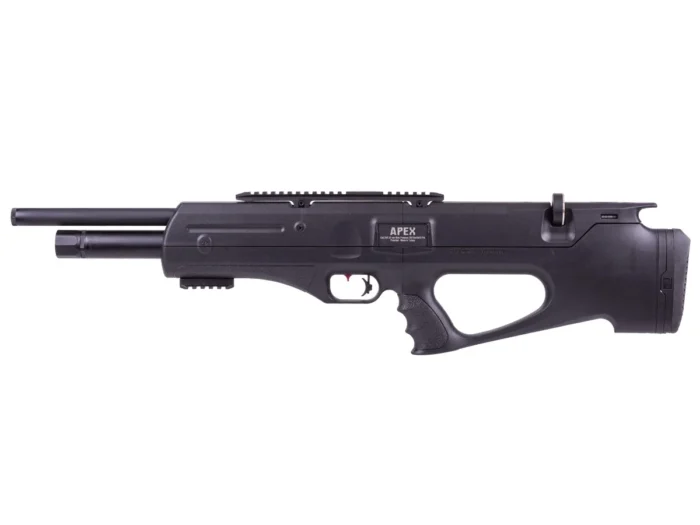
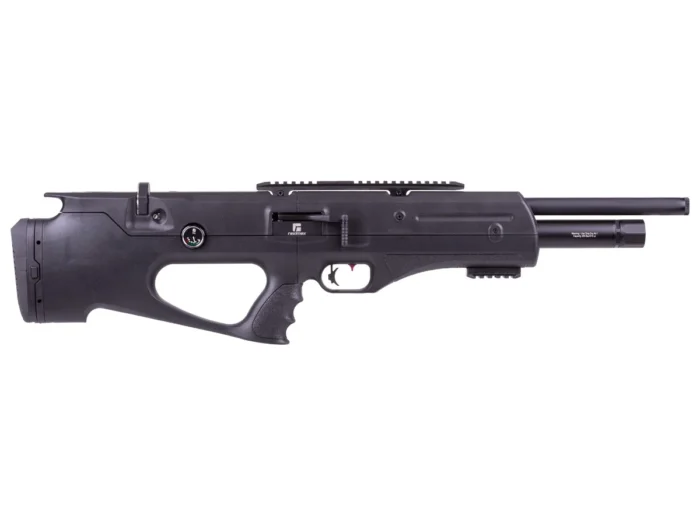
Reximex Apex PCP Air Rifle
Price range: €200.00 through €230.00
Description
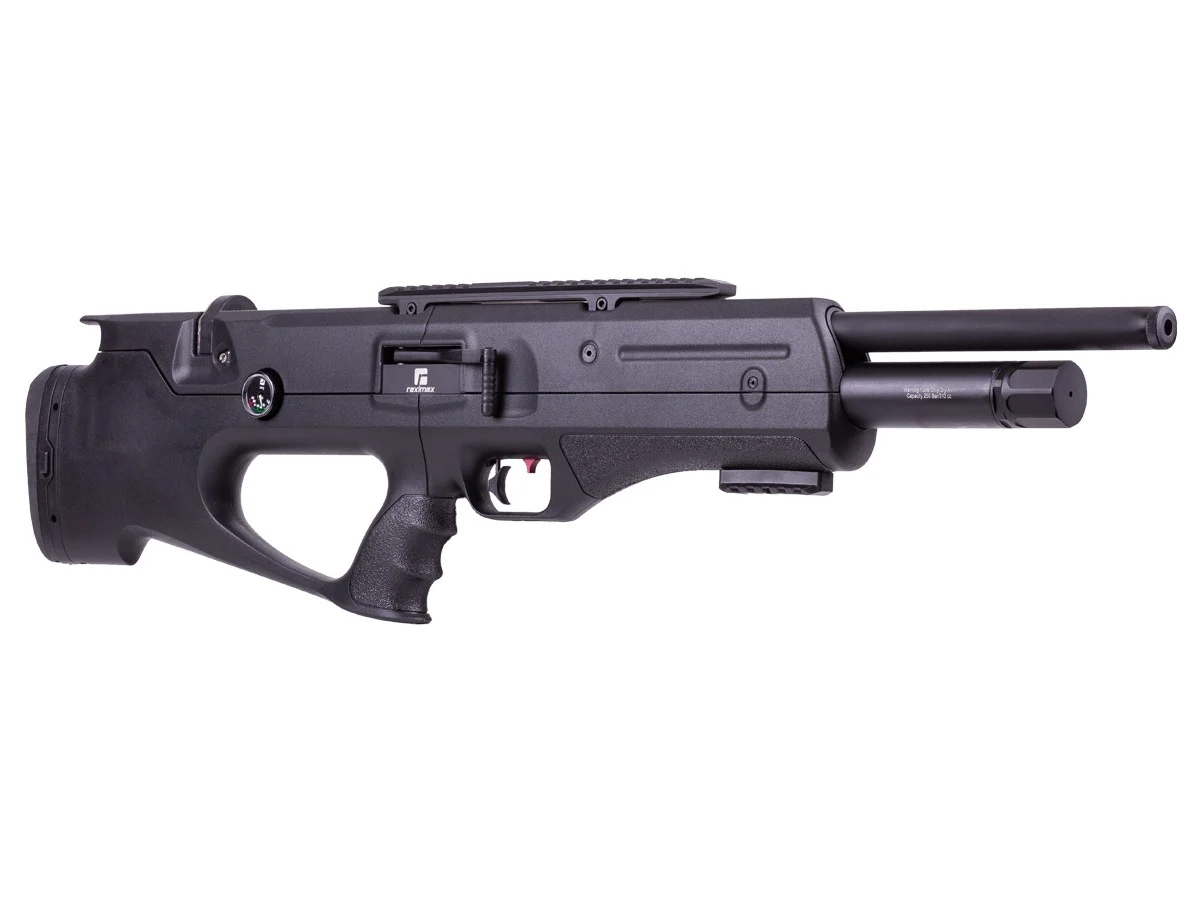
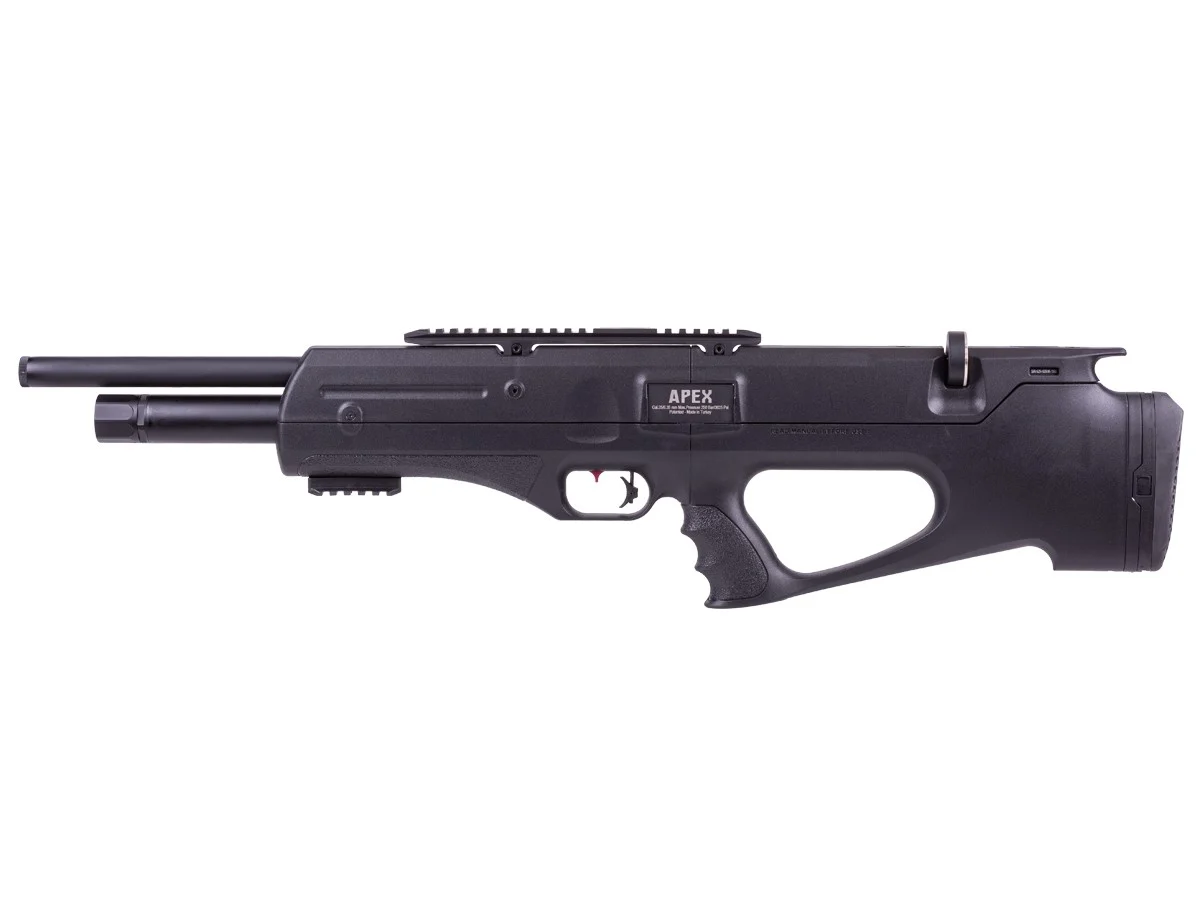
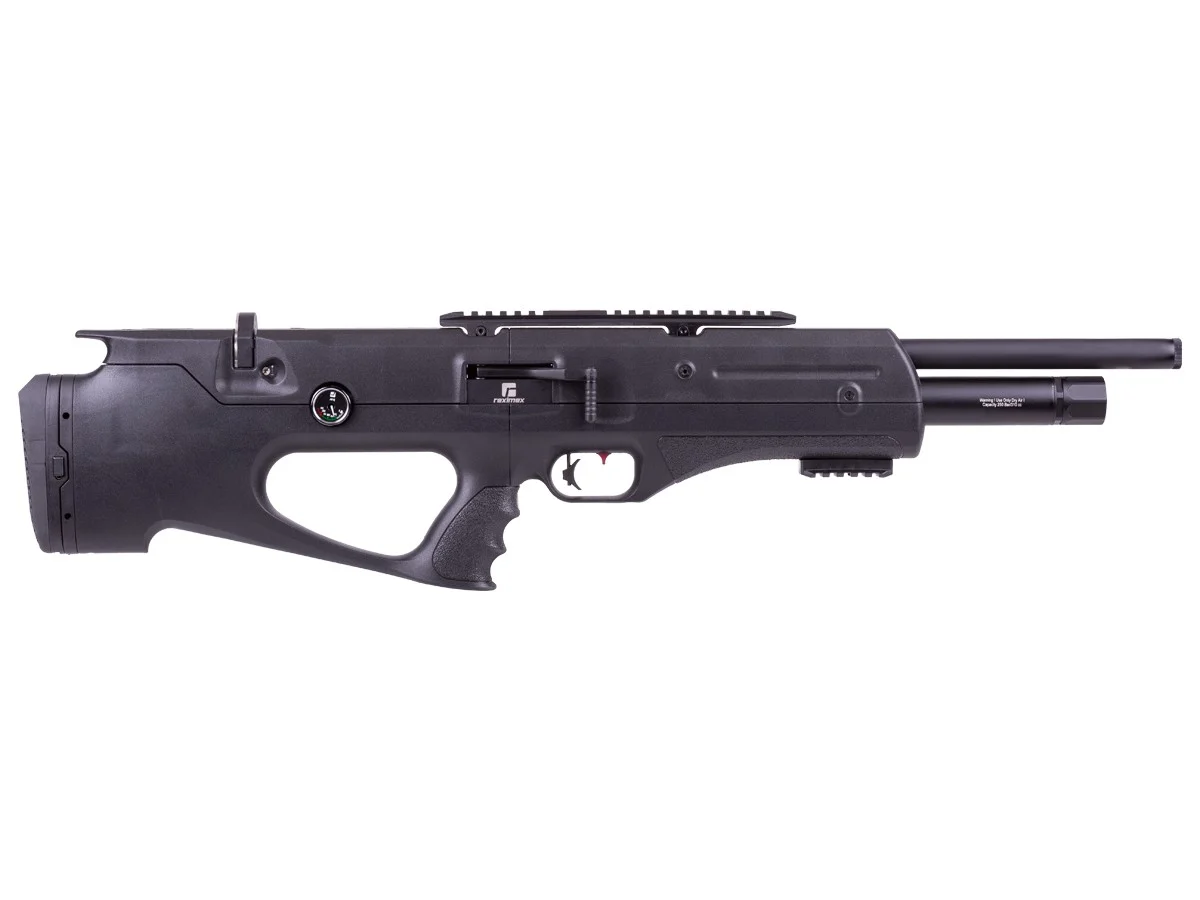
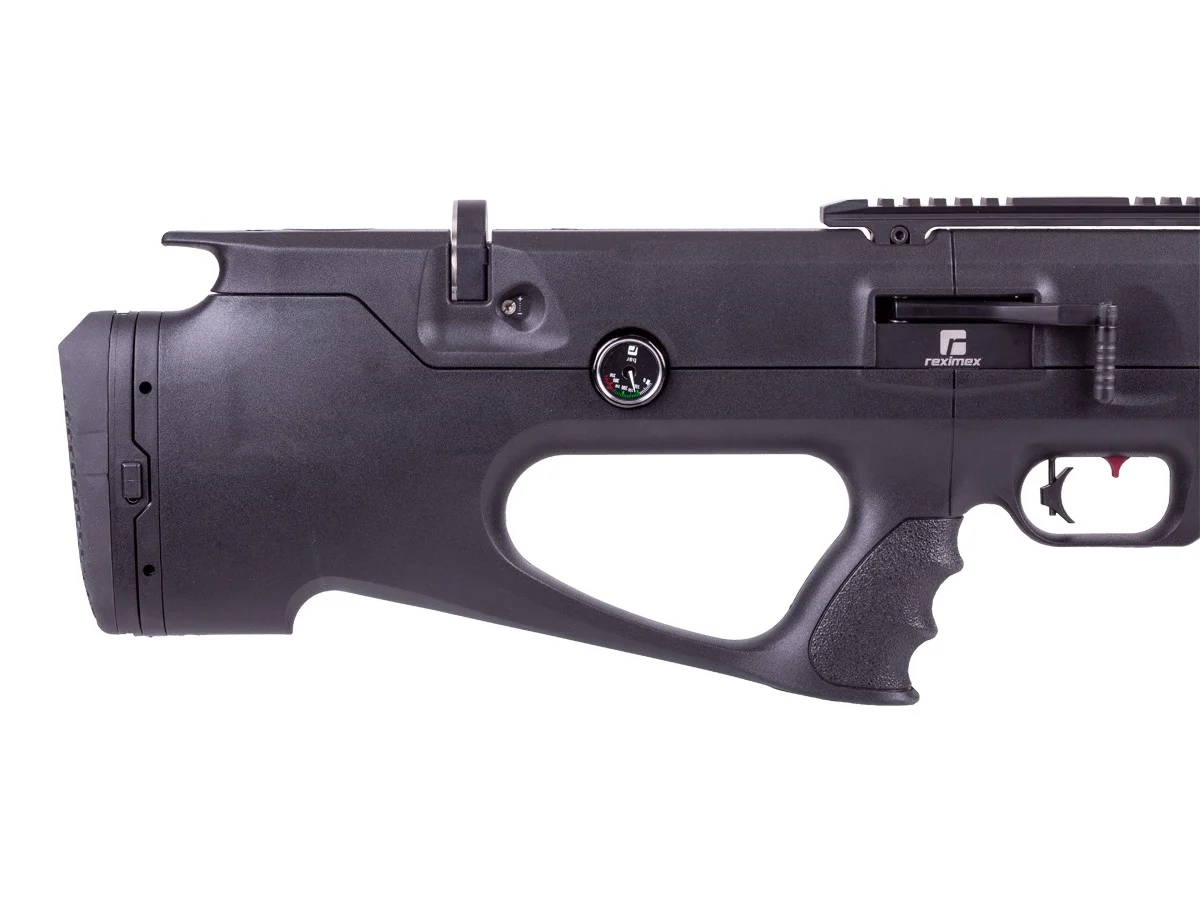
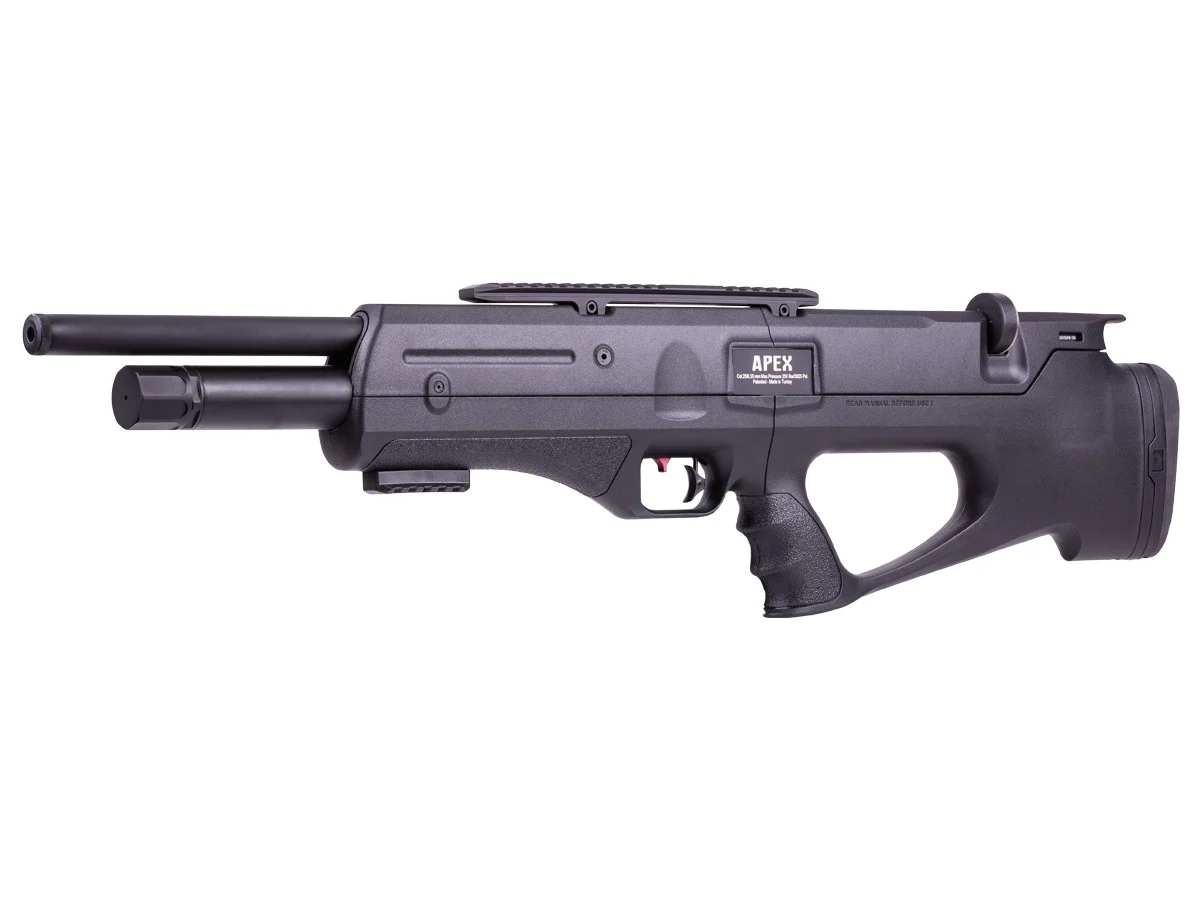
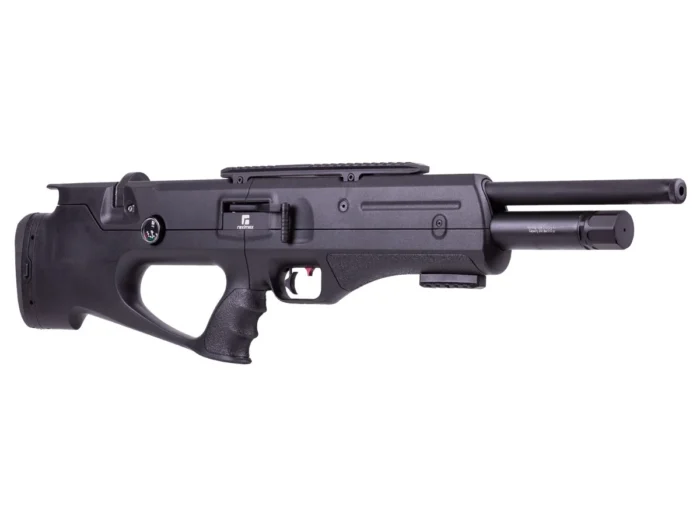
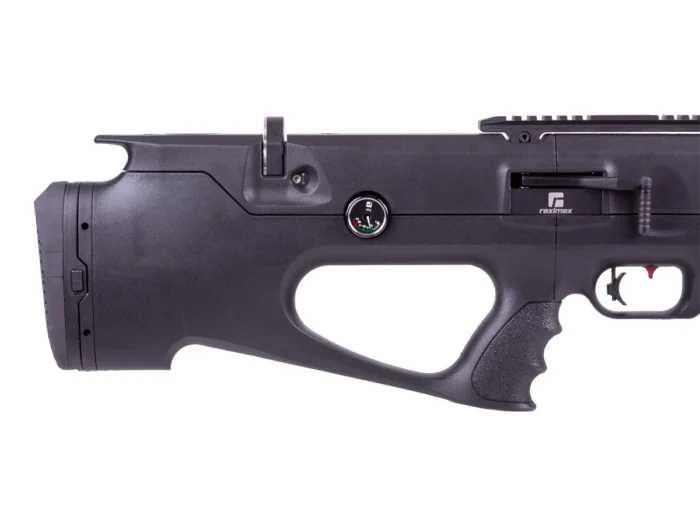
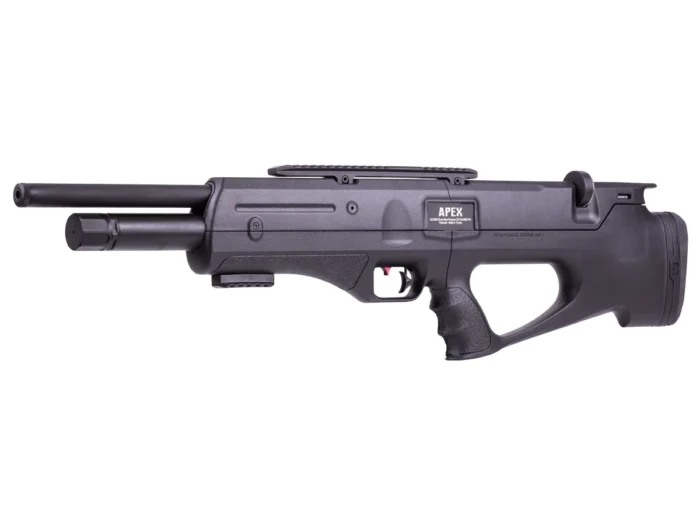
The Reximex Apex is a bullpup PCP air rifle with a compact and portable design for hunting small game such as squirrels and rabbits in .22 caliber, up to animals such as raccoons and possums in .25 caliber. It has adjustable features and durable construction for dependable performance.
Key Takeaways
- The transfer port knob allows shooters to change the power level of the air rifle, enabling performance tuning.
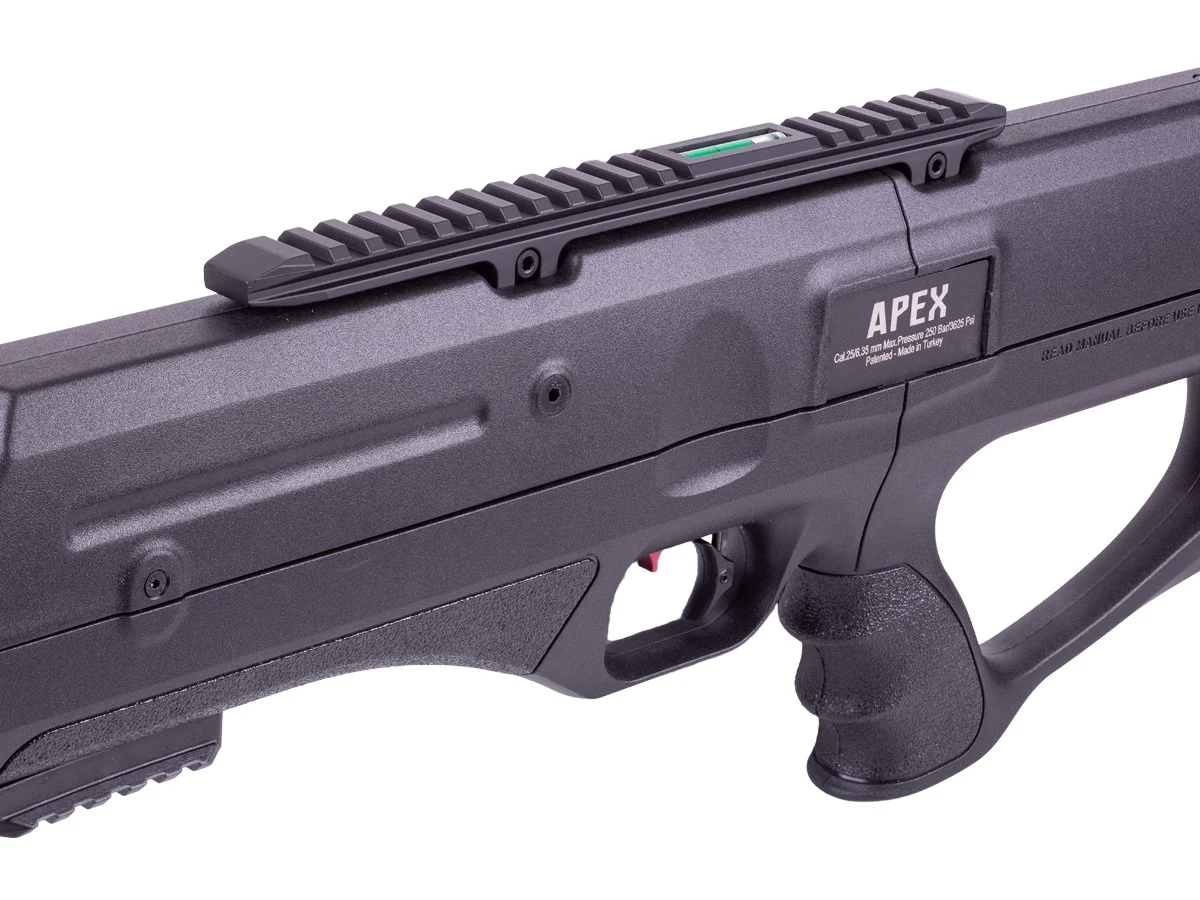
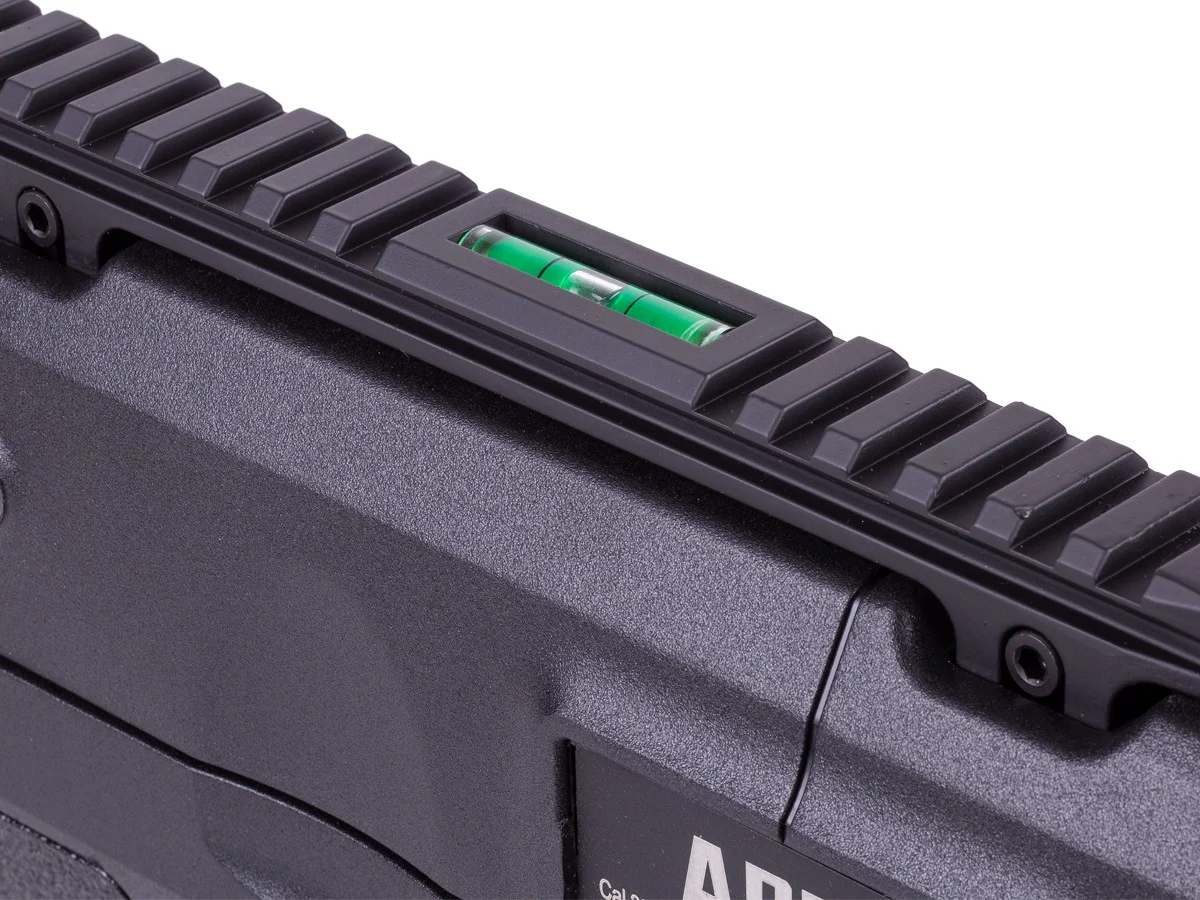
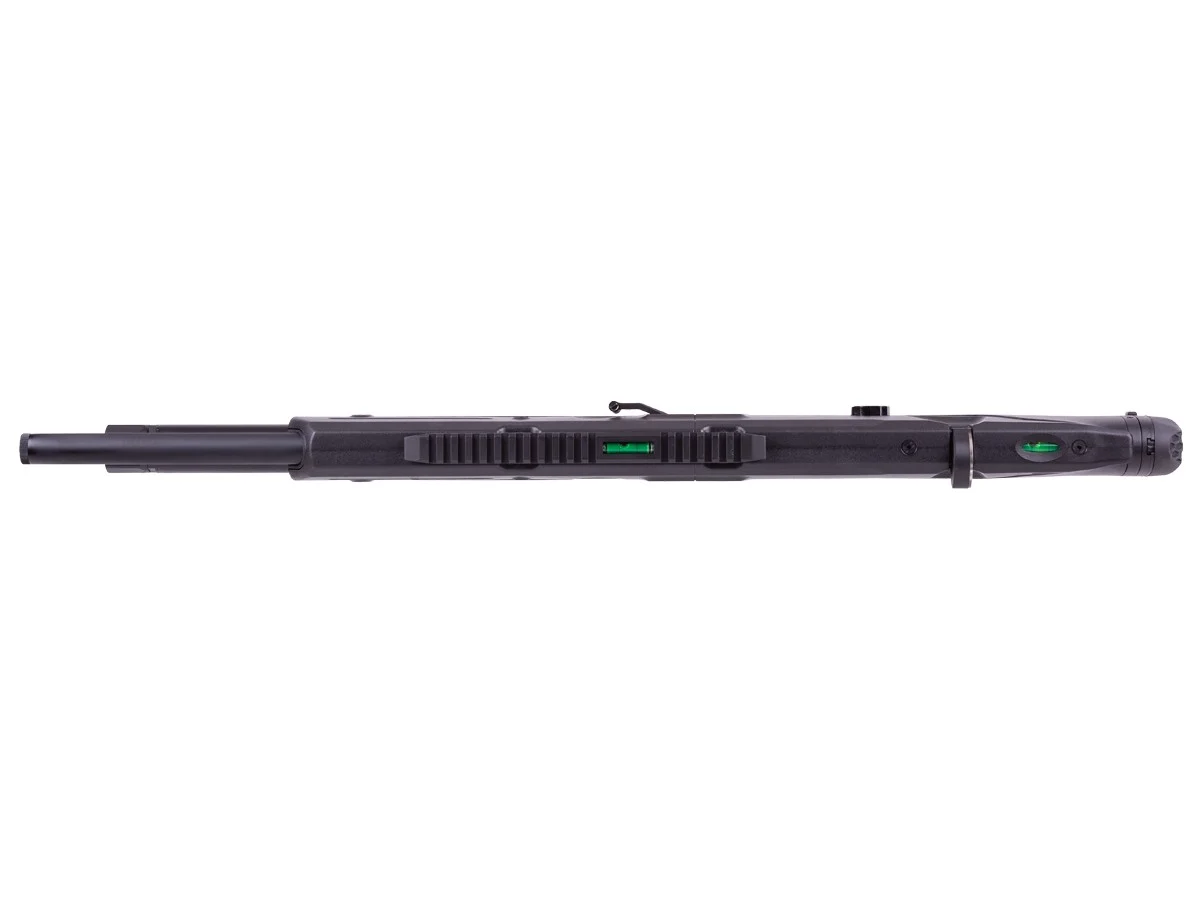
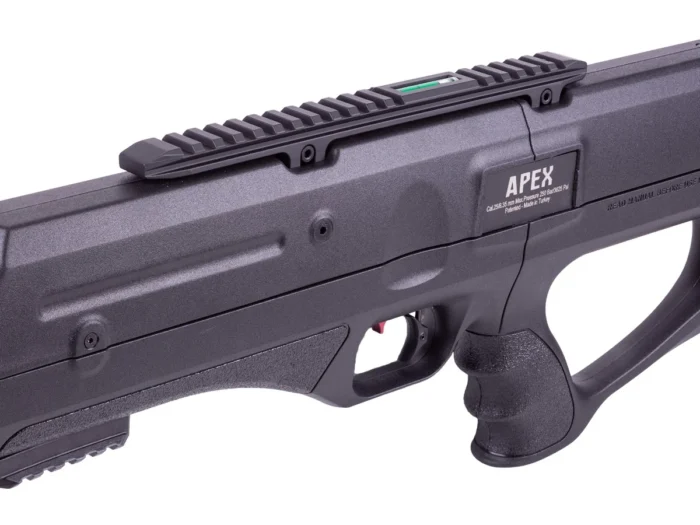
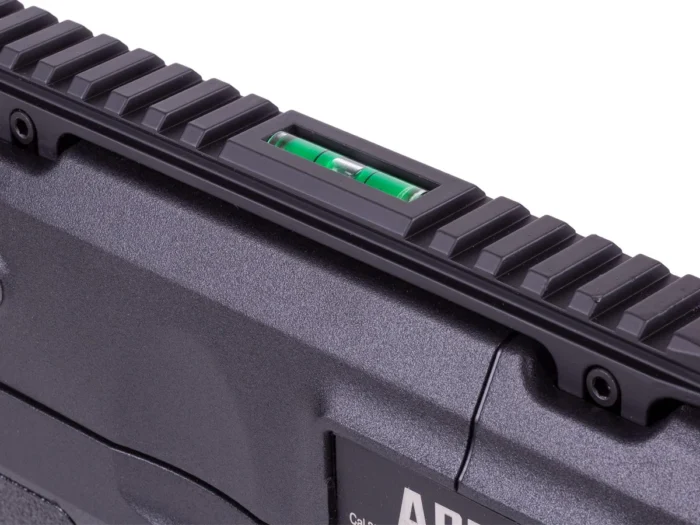
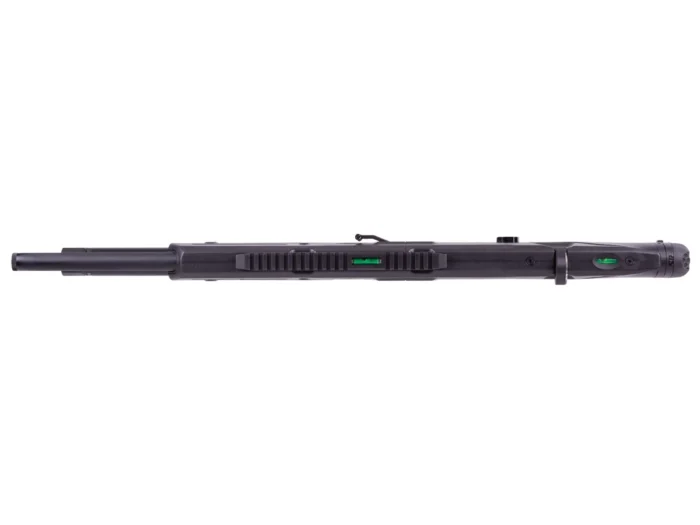
- The Weaver/Picatinny optics rail is adjustable for height at the front and rear for ideal optics alignment and long-range scope adjustments, and includes a bubble level.
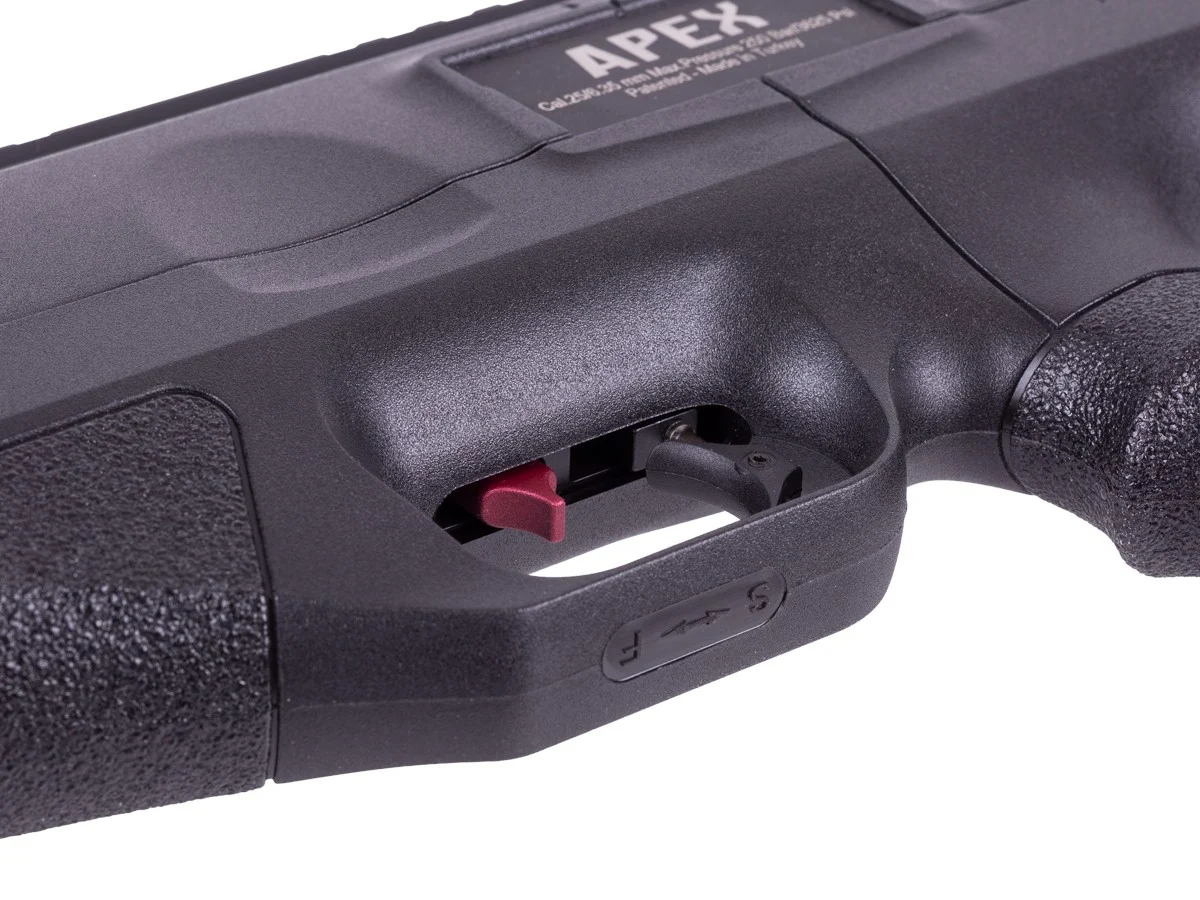
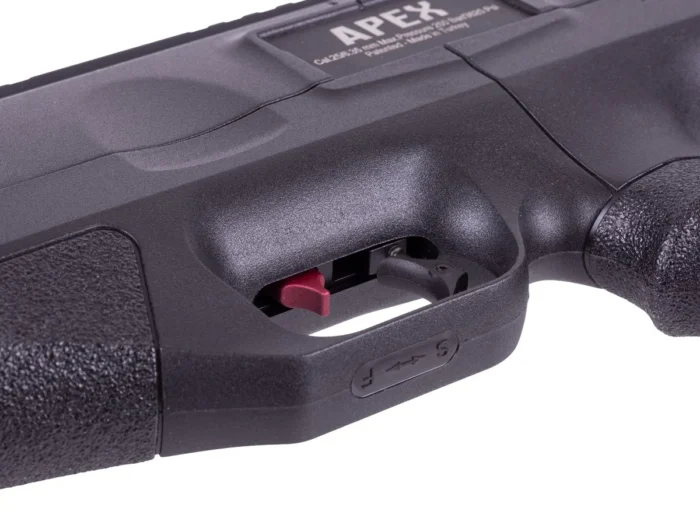
- The four-way adjustable trigger shoe offers a customized feel and trigger pull.
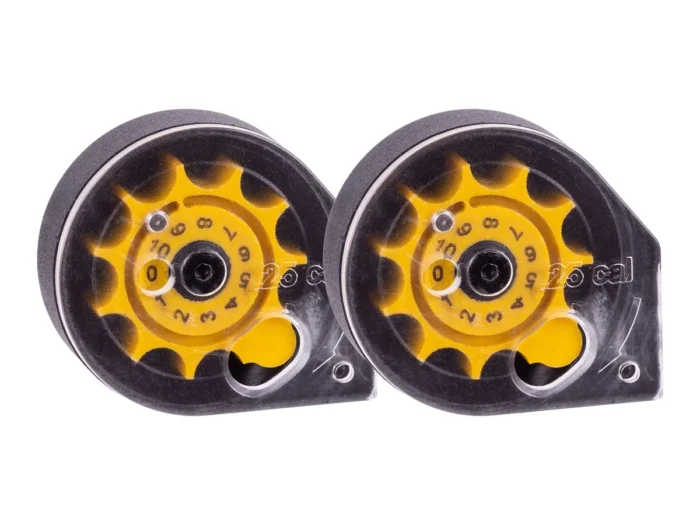
- The reversible sidelever provides ambidextrous operation and offers smooth cocking and cycling of the included magazines.
- The optional regulator delivers consistent velocities for dependable performance on models that are purchased with it included.
Transfer Port Knob for Performance Tuning
The Reximex Apex PCP Air Rifle has a transfer port knob that enables performance tuning by changing the amount of air used by each shot to change the velocity and efficiency. With this feature, shooters can customize the tune of their air rifle for specific ammo and different types of shooting.
Four-Way Adjustable Trigger Shoe for Custom Operation
This PCP air rifle has a four-way adjustable trigger shoe that enables shooters to get a customized feel and trigger pull, which leads to added comfort and predictable operation for optimal accuracy.
Adjustable Weaver/Picatinny Optics Rail for Versatility
The Reximex Apex PCP Air Rifle has a Weaver/Picatinny optics rail that can be adjusted for height in both the front and the rear. This allows shooters to get better eye alignment, accommodates larger scopes, and help compensate for ammo drop at longer distances to help with scope adjustments.
Optional Regulator
Specific models of this air rifle have an internal regulator, which offers steady velocities for reliable performance with each shot.
Features and Benefits
| Feature | Benefit |
|---|---|
| Four-Way Adjustable Trigger Shoe | Enables confidence and accuracy because it allows for a customized feel and trigger pull. |
| Height-Adjustable Weaver/Picatinny Optics Rail | Allows improved eye alignment for optics, an adjustable angle for ammo drop compensation at longer distances, and scopes with larger objectives that would otherwise contact the barrel. |
| Transfer Port Knob | Delivers adjustable power for performance fine tuning, enhancing versatility for different ammo and types of shooting. |
| Reversible Sidelever Cocking | Provides ambidextrous use and smooth and reliable cocking. |
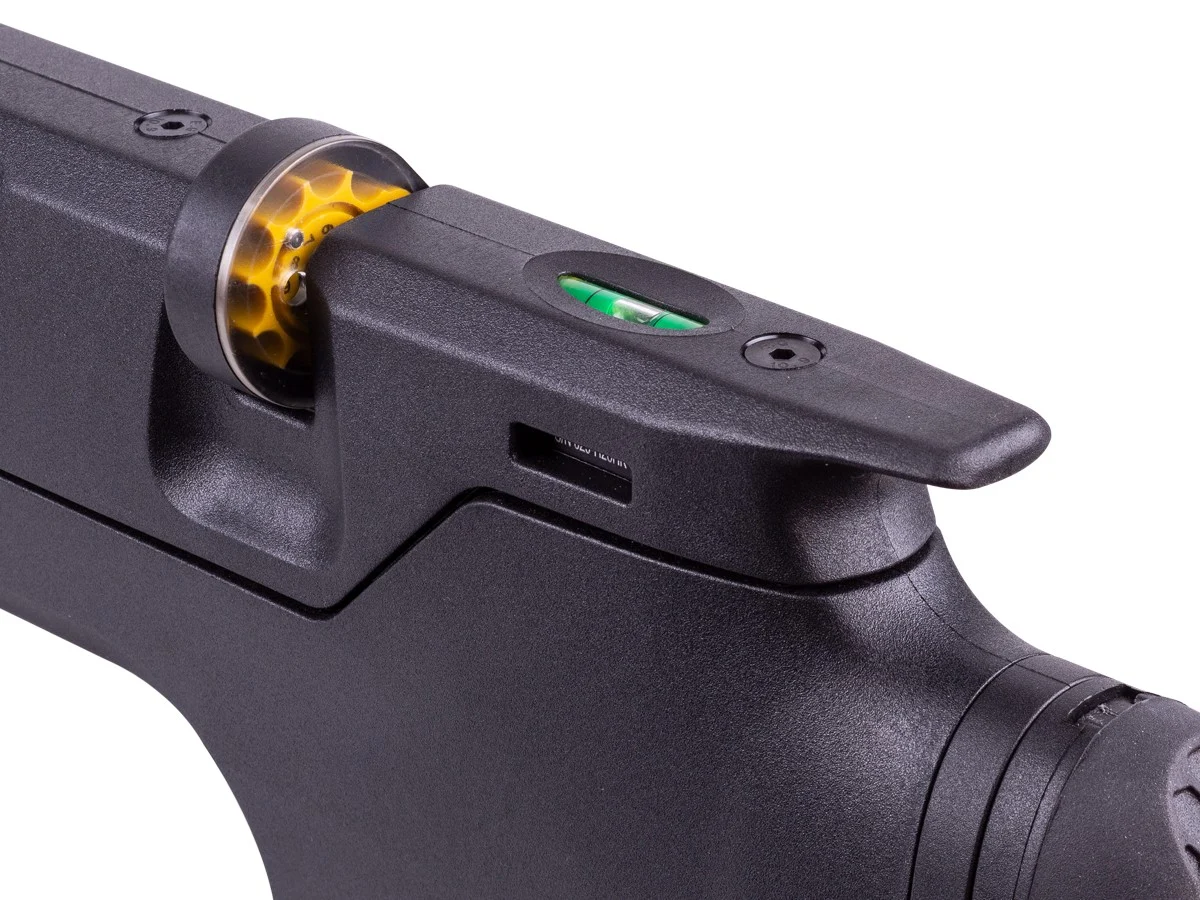
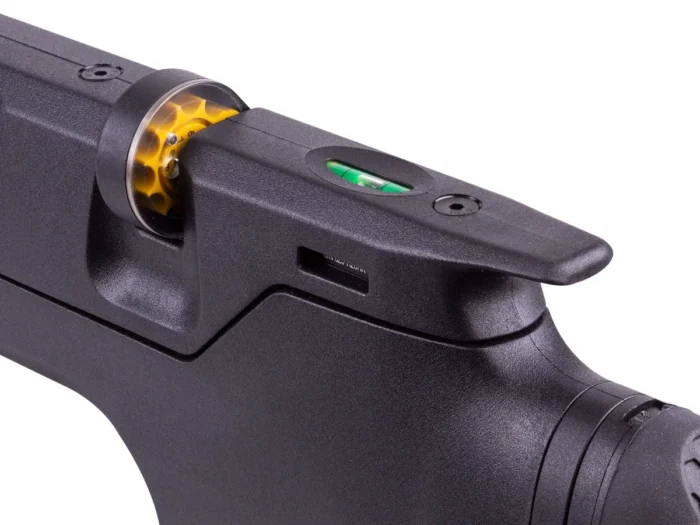
| Bubble Levels in Optics Rail and Above Buttstock | Helps with accurate adjustment of the scope rail and repeatable positioning of the air rifle. |
| Optional Regulator | Offers consistent velocities from each shot, available with the regulated versions of this air rifle. |
Specifications

Reximex Apex PCP Air Rifle – Detailed Technical Product Guide
Reximex Apex PCP Engineering, Specifications, and Model Context
Reximex and Reximex Airguns
Reximex is a Turkish manufacturer founded in Konya-Beyşehir in 2015. The company states that its products are developed using modern manufacturing and R&D processes and that its customer network extends across more than 60 countries.
The broader Reximex airguns range includes Apex, Accura, Lyra, Lyra-K, Lieva, Throne Gen2, Zone, Daystar, Meta variants and several newer pneumatic platforms.
Therefore, searches such as Reximex Lyra K, Reximex Throne Gen2, Reximex Throne Gen 2, Reximex Mito, Reximex Mitos, Reximex Lieva, Reximex RPA, reximex гр, and similar terms may appear together even though they refer to different products or search variations.
Reximex Apex PCP Air Rifle Design
The Apex uses a futuristic bullpup configuration. This layout allows Reximex to combine an 18.9-inch barrel with a total length of only approximately 33.4 inches.
Bullpup construction places much of the operating system farther rearward than a conventional sporting layout. As a result, the platform can remain compact without requiring an extremely short barrel.
Compact size can influence transportation, storage, and overall balance, although practical comfort still depends on stock geometry, accessories, and individual body proportions.
PCP Air System and 250-Bar Fill Pressure
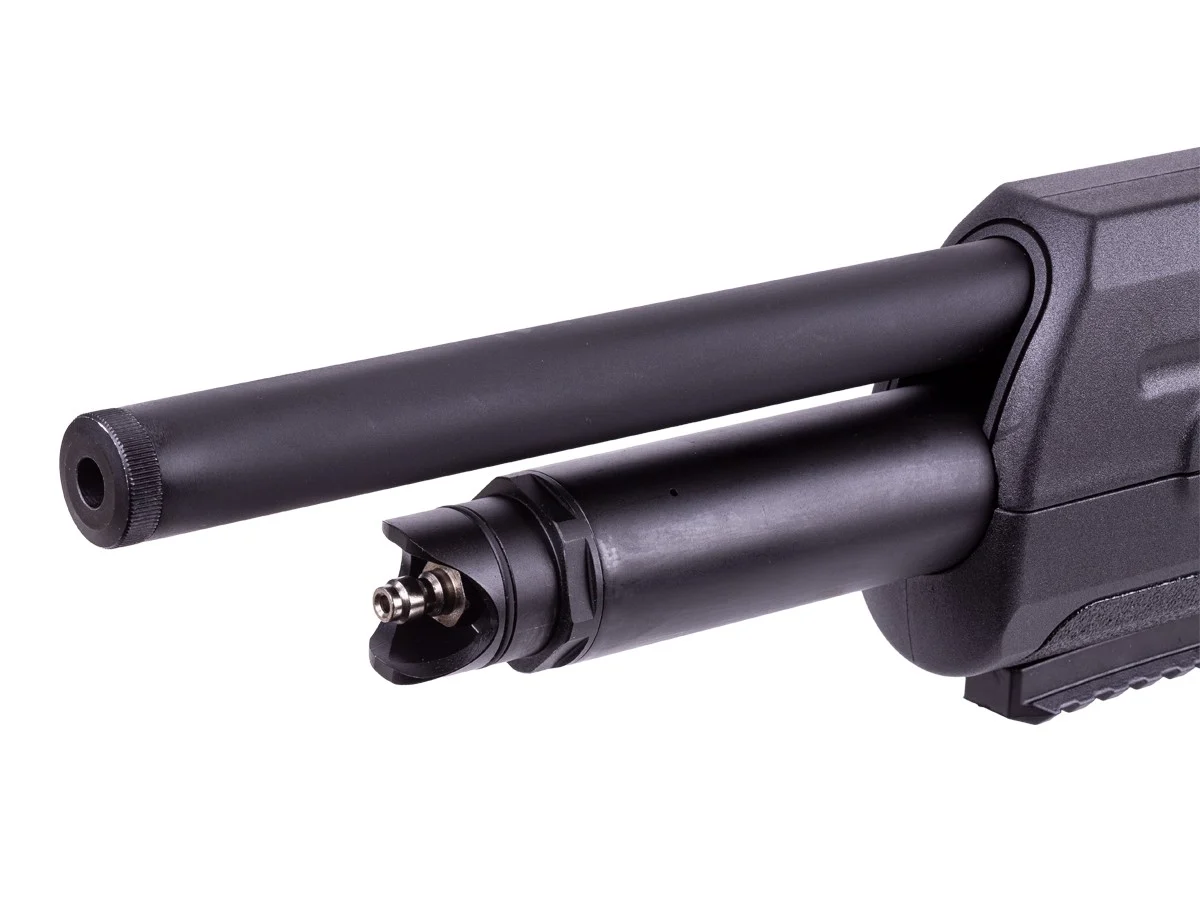
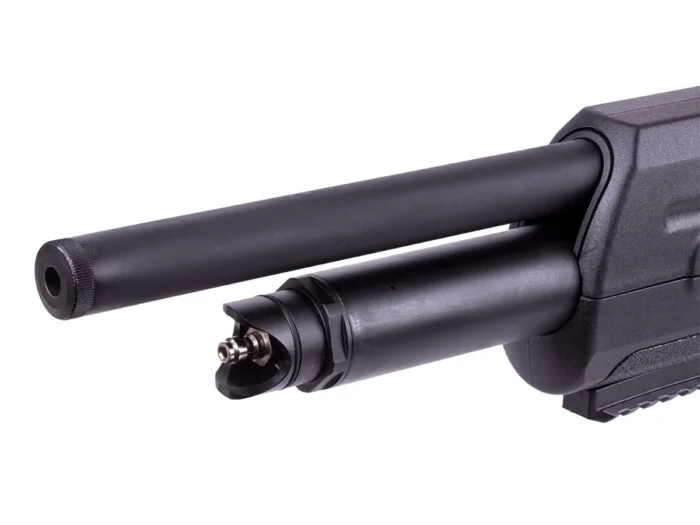
The Apex is a pre-charged pneumatic system with a 310 cc reservoir rated by Reximex to 250 bar.
The manufacturer specifically identifies the air tube as being constructed from 7075-series aluminum.
Because compressed air is stored at substantial pressure, reservoir integrity and correct servicing are important. Pressure-bearing components should remain within manufacturer limits, while damage, corrosion, or unexplained leakage should be professionally assessed.
Caliber Options and Published Output
Reximex lists the Apex in three calibers. The .177 configuration is rated at approximately 340 m/s or 1110 fps and 31.3 joules. The .22 version is listed at 270 m/s or 880 fps and 42.3 joules, while the .25 configuration is rated at 255 m/s or 830 fps and 53.9 joules.
The corresponding manufacturer figures are approximately 23.1, 31.2, and 39.8 ft-lb. Reximex notes that results may vary with pellet weight, pellet shape, temperature, elevation, and regulator configuration.
TPS to Joules Calculator and Energy Terminology
Searches for tps to joules calculator, Tps joule calculator, fps to ft Ibs, and airgun joules calculator generally reflect interest in understanding projectile energy.
Velocity alone is insufficient to determine energy because projectile mass is also required.
For that reason, manufacturer-published energy figures provide better context than comparing platforms solely by maximum velocity.
The Apex demonstrates this clearly because each caliber combines different projectile mass, velocity, and energy characteristics.
Magazine Capacity and Shot Count
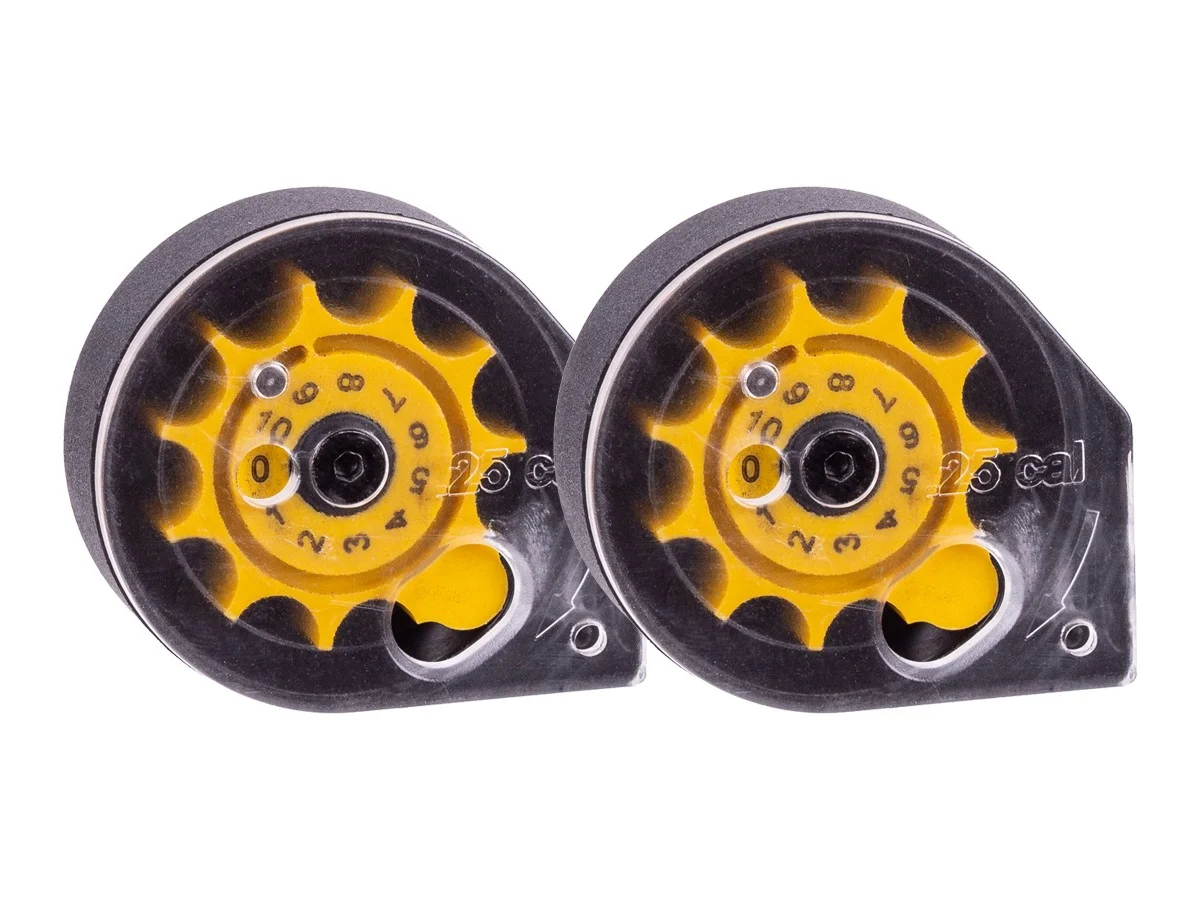
Magazine capacity varies by caliber. Reximex lists 14 rounds for .177, 12 for .22, and 10 for .25.
The manufacturer also publishes approximately 112 shots at optimal velocity for .177, 96 for .22, and 80 for .25 across a stated 250-to-100-bar operating range.
These figures illustrate how caliber influences air consumption.
However, total theoretical shot count should not automatically be interpreted as identical performance from the first shot through the last. Practical consistency remains a more meaningful indicator during controlled recreational evaluation.
Adjustable Side Lever and Controls
One notable feature is the two-way interchangeable side lever, allowing the operating control to be configured for different user preferences. The Apex also incorporates a four-way adjustable trigger shoe and ergonomic trigger safety.
These features contribute to user fit and operational flexibility.
Mechanical controls should operate smoothly without excessive force. Persistent resistance should be inspected rather than overcome through aggressive handling.
Adjustable Rail and Sight Configuration
Reximex equips the platform with a two-way adjustable 11/22 mm rail and describes the design as incorporating an adjustable Picatinny-style sighting interface.
This provides flexibility for compatible optical equipment.
Reximex explicitly notes that a scope is not included in the standard manufacturer specification.
Rail alignment, optic mounting quality, and user head position can all influence the practical sighting experience.
Reximex Accura PCP Air Rifle Comparison
The Reximex Accura PCP Air Rifle is a separate model. The Accura uses a 425 cc reservoir, synthetic stock with an adjustable Turkish-walnut cheekpiece, and manufacturer-listed outputs reaching 55.2 joules depending on caliber.
Therefore, Accura specifications should not automatically be applied to the Apex.
The Apex emphasizes compact bullpup dimensions and a 310 cc reservoir, whereas the Accura uses a longer, more conventional sporting layout.
Reximex Lyra-K PCP Air Rifle Context
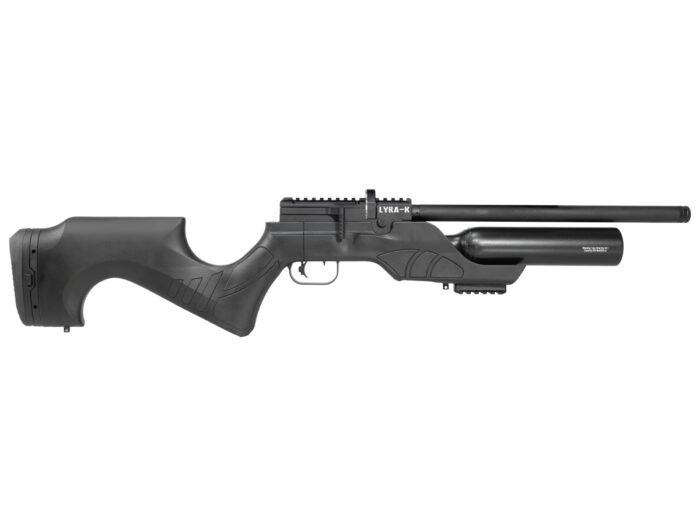
The Reximex Lyra-K PCP air rifle is another separate platform. Reximex currently lists the Lyra-K with a side lever, 250 cc reservoir, 250-bar fill pressure, Turkish walnut stock, and 34.6-inch overall length.
Search phrases including Reximex Lyra-K airgun, Reximex Lyra-K review, Reximex Lyra-K PCP rifle, Reximex Lyra-K regulated PCP, Reximex Lyra-K compact PCP rifle, and Reximex Lyra-K pellet gun relate specifically to that platform.
Likewise, phrases such as Reximex Lyra-K tactical air rifle, Reximex Lyra-K hunting rifle, Reximex Lyra-K accuracy test, Reximex Lyra-K scope package, Reximex Lyra-K for pest control, and Reximex Lyra-K small game hunting should not be treated as Apex specifications.
Commercial and Ambiguous Search Terms
Searches such as buy Reximex Lyra-K online and best price Reximex Lyra-K indicate commercial intent rather than technical characteristics.
Similarly, terms such as roxy max, mx rex, and gunseek do not establish Apex specifications and should be verified independently before being associated with any Reximex platform.
Technical research should always rely on the exact manufacturer model name and official documentation.
Reximex Throne Gen2 and Other Platforms
The Reximex Throne Gen2 is also listed separately within the manufacturer’s PCP catalog, alongside Throne Gen2 Compact, Zone, Accura, Apex, Daystar, Lieva, Lyra, and several newer models.
This broad catalog explains why many Reximex-related searches overlap.
However, stock design, reservoir capacity, overall length, regulator configuration, magazine specifications, and performance figures can vary significantly between individual models.
Precision and Practical Accuracy
The Apex combines a compact bullpup structure, 18.9-inch barrel, adjustable sight rail, adjustable trigger interface, substantial pneumatic reservoir, and optional regulator into one integrated platform.
These features provide a technical foundation for repeatability, although practical accuracy still depends on ammunition consistency, barrel condition, sighting setup, environmental conditions, equipment maintenance, and user technique.
Maximum velocity should therefore not be treated as a complete measurement of precision.
Overall Technical Perspective
The Reximex Apex PCP Air Rifle is distinguished by its compact bullpup layout, 310 cc 250-bar air system, interchangeable side lever, adjustable rail, adjustable butt-pad, four-way trigger shoe, integrated moderation system, and three caliber configurations.
Reximex also provides a dedicated Apex user manual through its official support section, which should take priority over generalized maintenance information.
From an engineering standpoint, the Apex is best evaluated through consistency, ergonomic fit, equipment condition, and responsible maintenance rather than maximum output alone. Secure storage, appropriate eye protection, a dependable backstop, and compliance with applicable local regulations remain essential throughout lawful recreational use.
Engineering Quality, Practical Performance, Precision, and Handling
The Reximex Apex combines compact construction, pneumatic technology, adjustable ergonomics, and modern mechanical controls in a platform intended to provide a balanced recreational experience. While published specifications explain dimensions and basic capabilities, practical quality depends on how effectively the complete system works together. Mechanical consistency, structural rigidity, pressure stability, balance, user fit, and environmental conditions all influence performance. Therefore, the platform should be evaluated through repeatability and overall engineering quality rather than maximum figures alone.
Engineering and Construction Quality
Construction quality begins with the integration of the major components. The receiver, barrel assembly, reservoir, stock structure, operating mechanism, and supporting hardware need to remain appropriately aligned during normal use.
Manufacturing tolerances are particularly important because small variations can influence mechanical feel and structural stability.
A well-constructed platform should feel secure without unexplained movement between major components.
As ownership continues, familiarity with normal condition becomes useful. Unexpected looseness, unusual resistance, visible deformation, or significant changes in mechanical behavior should receive appropriate inspection rather than being ignored.
Compact Bullpup Architecture
One of the most noticeable engineering characteristics is the compact layout.
Positioning major operating components farther toward the rear allows a relatively substantial barrel assembly to be incorporated without requiring the overall platform to become excessively long.
This can provide practical advantages during transportation and storage.
However, compact dimensions do not automatically guarantee ideal handling. Weight distribution, stock geometry, accessory placement, and individual body proportions remain equally important.
The complete configuration should therefore be considered when assessing maneuverability and comfort.
Structural Rigidity
Structural rigidity contributes to predictable mechanical behavior.
The relationship between the receiver, barrel assembly, and supporting structure should remain stable during ordinary recreational use.
Unnecessary movement can influence the overall feel of the platform and potentially affect repeatability.
This is why structural condition deserves routine observation.
Equipment that has experienced a substantial impact should be inspected before returning to normal use, even when external damage initially appears limited.
Pneumatic Consistency
The compressed-air system provides the foundation for the operating cycle.
Consistent pressure behavior can support predictable performance across a recreational session. However, pneumatic characteristics depend on several components working together correctly.
Reservoir condition, seals, internal pressure management, temperature, and general maintenance can all influence behavior.
Persistent leakage or unusual pressure changes should never be dismissed casually.
Because pressure-bearing components contain substantial stored energy, specialized inspection and repair should be handled professionally.
Understanding Practical Precision
Precision should be evaluated through repeatability rather than one isolated result.
A mechanically consistent platform provides a stable foundation, but practical results are influenced by several additional factors.
Projectile uniformity, barrel condition, sighting equipment, environmental conditions, equipment setup, and user technique all contribute.
Consequently, maximum velocity alone does not determine precision.
Repeated evaluation under similar controlled conditions provides a more useful indication of how consistently the complete system performs.
Barrel Stability and Condition
The barrel plays an important role in maintaining repeatability.
Its condition should remain protected from contamination, physical damage, and inappropriate maintenance.
Cleaning should follow manufacturer recommendations rather than being performed aggressively without a specific reason.
Excessive intervention can introduce unnecessary wear.
If performance changes persistently, the complete platform should be evaluated systematically because several mechanical or environmental variables may be responsible.
Side-Lever Ergonomics
The operating lever contributes to the overall mechanical experience.
A properly functioning mechanism should provide predictable movement without excessive resistance. Familiarity with normal operation allows unusual changes to be recognized more easily.
If substantial resistance develops, forcing the mechanism is inappropriate.
Inspection should occur first because contamination, component condition, or another mechanical issue may be responsible.
Professional servicing becomes appropriate when the cause cannot be identified safely.
Trigger Interface and User Comfort
The trigger interface influences how naturally the user interacts with the equipment.
Adjustability can accommodate differences in hand dimensions and preferred ergonomic positioning.
The objective should be comfortable and consistent contact rather than extreme adjustment.
A poor position may introduce unnecessary tension in the hand or wrist, particularly during longer sessions.
Adjustments should remain within the manufacturer’s intended range, and internal mechanisms should not be altered without appropriate technical knowledge.
Shoulder Position and Rear Support
Rear support contributes to overall stability and comfort.
An adjustable interface can help accommodate different shoulder positions and body proportions.
A natural fit can reduce unnecessary physical effort while making the platform feel more manageable.
However, there is no universal setting that works identically for every person.
Individual comfort should guide ergonomic configuration while remaining within the equipment’s intended adjustment limits.
Balance and Weight Distribution
Total weight provides only part of the handling picture.
Where that weight is positioned can have an equally significant influence on the user experience.
A compact design may concentrate mass closer to the body, creating a different balance from a conventional full-length sporting platform.
Accessories can alter this relationship considerably.
Additional equipment positioned toward the front may shift balance forward, while other configurations can create greater rearward concentration.
Therefore, the complete setup should be evaluated rather than individual components in isolation.
Sight Alignment and Rail Stability
A stable sighting interface contributes to repeatable recreational use.
The relationship between the user’s head position, cheek contact, and properly installed sighting equipment should feel natural rather than forced.
Comfortable alignment can reduce unnecessary neck movement and physical tension.
Mounting components should remain structurally secure and compatible with the equipment.
If alignment changes unexpectedly, the cause should be investigated rather than repeatedly compensated for without understanding the underlying issue.
Environmental Conditions
Outdoor environments introduce variables that can influence practical results.
Wind can affect projectile movement, while temperature changes may influence pneumatic characteristics.
Humidity, moisture, and dust can also affect equipment condition when appropriate care is neglected.
Understanding these variables helps distinguish environmental variation from potential mechanical problems.
Nevertheless, persistent irregularities should still receive attention, particularly when they continue under different environmental conditions.
Reliability During Extended Ownership
Reliability becomes increasingly meaningful after repeated use.
A dependable platform should maintain predictable characteristics when appropriately maintained.
Mechanical components and sealing materials naturally experience service over time, making routine observation valuable.
Preventive maintenance should focus on preserving normal operation rather than constantly changing adjustments.
Unnecessary intervention can sometimes create problems rather than prevent them.
Maintenance and Preservation
Routine care should remain straightforward and purposeful.
External moisture, dust, and contamination should be addressed using appropriate materials. Specialized internal components should generally remain undisturbed unless servicing is required.
Technical pneumatic work should be assigned to qualified professionals.
Manufacturer documentation should remain the primary reference for operating limits, inspection requirements, and maintenance procedures.
Overall Performance Perspective
The Apex brings compact architecture, adjustable ergonomics, pneumatic engineering, and modern mechanical controls together within a sophisticated sporting platform.
Its practical strengths are best understood through comfortable handling, structural stability, repeatable mechanical behavior, and long-term reliability.
Maximum output represents only one element of performance. Consistency, equipment condition, environmental awareness, and appropriate maintenance provide a more complete picture.
Ultimately, engineering establishes the platform’s foundation, while responsible ownership determines how effectively that foundation is preserved. Routine inspection, careful transportation, secure storage, appropriate maintenance, and qualified servicing can help maintain dependable characteristics throughout years of lawful recreational ownership.
Build Quality, Durability, Maintenance, and Long-Term Equipment Care
The Reximex Apex is designed around a combination of compact construction, pneumatic engineering, durable materials, and adjustable components. While initial performance provides an important impression of quality, long-term ownership depends heavily on durability and responsible equipment care. Structural integrity, surface condition, pressure-system health, mechanical consistency, environmental protection, and proper storage all influence how well the platform maintains its intended characteristics. Therefore, durability should be considered as an ongoing relationship between original engineering and appropriate maintenance rather than simply the ability to withstand repeated use.
Overall Construction Quality
Construction quality begins with the relationship between the major components.
The receiver, barrel assembly, reservoir, stock structure, operating controls, and supporting hardware must remain correctly integrated. Good manufacturing tolerances help maintain alignment while reducing unnecessary movement between components.
A properly maintained platform should feel structurally secure during ordinary handling.
Unexpected looseness, visible deformation, or significant changes in mechanical feel deserve attention. Becoming familiar with normal equipment condition makes these changes easier to recognize before they potentially develop into larger problems.
Material Selection and Structural Strength
Different areas of the platform experience different mechanical demands, so material selection plays an important role in durability.
Structural components require strength and dimensional stability, while external elements may prioritize impact resistance, manageable weight, and environmental durability.
No material should be considered completely maintenance-free.
Repeated exposure to moisture, extreme temperatures, corrosive substances, or severe impacts can eventually influence condition. Consequently, responsible ownership should focus on preventing unnecessary environmental and physical stress.
Compact Construction and Durability
Compact architecture places several major components relatively close together.
This arrangement provides practical dimensional advantages, but it also means that impacts affecting one area can potentially influence neighboring components.
Equipment that has experienced a substantial fall or collision should therefore receive appropriate inspection.
External appearance alone may not reveal every issue.
If structural alignment or mechanical condition becomes uncertain, professional assessment provides a more dependable approach than continued use without investigation.
External Surface Protection
External surfaces experience regular contact during handling, transportation, and storage.
Fingerprints, dust, moisture, and minor cosmetic marks may gradually appear. These signs do not necessarily indicate mechanical deterioration.
Nevertheless, suitable cleaning helps preserve the finish and makes inspection easier.
Harsh chemicals and abrasive materials should be avoided unless specifically recommended.
Maintenance should focus on preservation rather than repeatedly attempting to restore the equipment to an unused appearance.
Pressure-System Integrity
The compressed-air system requires particular attention because pressure-bearing components contain significant stored energy.
These components should remain within their intended operating conditions throughout ownership.
Visible deformation, substantial corrosion, persistent leakage, or unusual pressure behavior should never be ignored.
If the condition of a pressure-bearing component becomes uncertain, continued operation should be avoided until appropriate inspection has been completed.
Technical repairs involving these systems should be performed by qualified professionals.
Seal Condition and Pressure Retention
Seals contribute directly to pressure retention and overall pneumatic reliability.
Over time, sealing materials can be affected by normal service, contamination, age, and environmental conditions.
Persistent pressure loss may indicate that maintenance is required.
However, diagnosing the actual cause is preferable to assuming that one particular component is responsible.
Unnecessary adjustments or improvised repairs can potentially introduce additional problems.
Professional servicing provides the appropriate solution when pressure behavior changes significantly.
Mechanical Components and Normal Wear
Moving components naturally experience some degree of service-related wear.
This does not mean that frequent replacement should automatically be expected. Instead, normal behavior should remain reasonably consistent throughout appropriate use.
Unexpected resistance, excessive movement, unusual sounds, or sudden changes in operating feel deserve inspection.
Applying additional force to a mechanism that no longer moves normally can worsen an existing problem.
Careful observation provides a better first response.
Protecting the Barrel Assembly
The barrel should remain protected from impacts, contamination, and unsuitable maintenance practices.
Its external condition can be observed routinely, while internal cleaning should follow manufacturer recommendations.
Aggressive cleaning is not automatically beneficial.
Inappropriate materials or excessive intervention may introduce unnecessary wear.
When practical performance changes unexpectedly, several factors should be considered rather than immediately assuming that the barrel requires extensive treatment.
Adjustment Mechanism Care
Adjustable components provide useful ergonomic flexibility but also require responsible handling.
Adjustment controls should move through their intended range without excessive force.
Once a comfortable position has been established, unnecessary repeated adjustment may provide little benefit.
If a mechanism becomes difficult to move or fails to remain in position, inspection is appropriate.
Improvised modifications should be avoided because they may compromise the original design or create additional wear.
Routine Inspection
Regular inspection provides one of the simplest ways to monitor long-term condition.
Before legitimate recreational use, visible components can be checked for damage, unusual movement, contamination, or deterioration.
Equipment returning from extended storage deserves similar attention.
Additional inspection should occur after significant impacts or unusually harsh environmental exposure.
Routine observation does not replace professional servicing, but it can help identify developing concerns earlier.
Cleaning and Preventive Maintenance
Preventive maintenance should remain controlled and purposeful.
External dust and moisture can be removed using materials appropriate for the finish. Internal components should generally remain undisturbed unless servicing is genuinely necessary.
Frequent disassembly can introduce alignment problems or damage sensitive components.
Manufacturer documentation should determine the appropriate maintenance approach.
Whenever work extends beyond normal external care, qualified technical assistance provides a more reliable option.
Environmental Protection
Temperature, humidity, moisture, and contamination can influence long-term durability.
A clean and reasonably stable environment helps reduce unnecessary deterioration.
After outdoor exposure, the equipment should be inspected and appropriately cared for before being returned to storage.
Rapid temperature changes may also create condensation.
Allowing equipment to stabilize appropriately before long-term storage can help reduce moisture-related concerns.
Secure Storage
Storage conditions influence both preservation and safety.
The equipment should remain in a clean, dry, secure location protected from unauthorized access.
Children and inexperienced individuals should not be able to reach it.
The storage arrangement should also prevent accidental falls or impacts.
Corrosive substances, excessive humidity, and extreme heat should be avoided.
Applicable local requirements should determine any additional storage precautions.
Transportation Protection
Transportation introduces vibration, movement, and impact risks.
A suitable protective case can help secure the equipment while protecting exposed surfaces and adjustment mechanisms.
Heavy objects should not be positioned where they can compress or strike important components.
After a substantial transportation incident, inspection should occur before further use.
Applicable transportation regulations should also be followed.
Maintaining Service Records
A basic service history can become increasingly valuable over time.
Owners can document professional inspections, component replacements, maintenance dates, and significant incidents.
These records provide useful context if equipment behavior changes later.
They can also assist technicians during future servicing and provide greater transparency if ownership eventually changes.
Documentation should complement physical inspection rather than replace it.
Overall Durability Perspective
The Apex’s long-term durability depends on the relationship between original manufacturing quality and responsible ownership.
Strong materials and careful engineering establish the initial foundation, while maintenance determines how effectively those qualities are preserved.
Routine inspection, environmental protection, controlled cleaning, secure storage, careful transportation, and professional servicing all contribute to dependable condition.
Ultimately, durability should be measured through structural integrity, stable adjustment, reliable pressure retention, and predictable mechanical behavior. With appropriate care, the platform can retain its intended characteristics and remain properly maintained throughout years of lawful and responsible recreational ownership.
Everyday Usability, Comfort, Reliability, and Ownership Experience
The Reximex Apex is designed to combine compact proportions, adjustable ergonomics, pneumatic operation, and modern controls within a practical sporting platform. While engineering specifications explain much about its construction, everyday ownership reveals characteristics that cannot be represented completely by numbers. Comfort, balance, adjustment flexibility, mechanical consistency, transportation convenience, environmental resistance, and maintenance requirements all contribute to the overall experience. Therefore, practical value is best considered through how naturally the complete system fits into responsible recreational ownership over time.
Everyday Handling Experience
Compact construction can provide noticeable advantages during normal handling. Reduced overall dimensions may make the equipment easier to manage when moving between suitable recreational environments, particularly when compared with substantially longer conventional configurations.
However, compact size does not automatically mean lightweight handling.
The location of the major components influences where the system naturally balances. A configuration with more weight concentrated toward the center or rear can feel substantially different from one carrying greater mass toward the front.
Personal preference therefore remains important when evaluating everyday comfort.
Comfort During Extended Sessions
Comfort becomes increasingly significant as recreational sessions become longer.
A platform that feels manageable for several minutes may produce greater physical fatigue after extended handling if the ergonomic setup does not suit the individual.
Shoulder position, cheek placement, grip geometry, support-hand location, and total balance all influence comfort.
Appropriate adjustment can reduce unnecessary muscle tension and help establish a more natural posture.
Users should prioritize comfortable positioning rather than selecting adjustments primarily for appearance.
Compact Layout and User Fit
The shortened architecture creates a distinctive physical relationship between the user and the equipment.
Because major components are positioned differently from a traditional full-length layout, balance and shoulder positioning can feel unfamiliar initially.
This is not necessarily a disadvantage. Some users may appreciate the concentrated dimensions, while others may prefer a more conventional arrangement.
Individual arm length, shoulder width, hand size, and preferred recreational position all influence the experience.
Practical evaluation should therefore focus on natural fit.
Adjustable Rear Support
An adjustable rear interface can help accommodate differences between users.
Small changes may influence how comfortably the equipment contacts the shoulder and how naturally the head aligns with properly installed sighting equipment.
The objective should be stability without unnecessary physical pressure.
Once a comfortable position has been established, the adjustment should remain secure during normal use.
If movement develops unexpectedly, the mechanism should be inspected rather than continually readjusted without identifying the cause.
Grip and Trigger-Hand Comfort
Grip geometry contributes significantly to the overall handling experience.
A comfortable grip allows the hand and wrist to remain in a relatively natural position without excessive tension.
Individual hand dimensions can influence how the interface feels.
Therefore, adjustable elements can provide useful flexibility when configured within their intended range.
Excessive modification should be avoided because the original structure is designed around specific mechanical relationships.
Comfort should be achieved through appropriate adjustment rather than structural alteration.
Fore-End Support and Balance
The front portion of the platform provides an important support area.
Its relationship with the center of balance influences how much effort is required from the support arm.
A balanced configuration can reduce fatigue because the user does not need to continually compensate for excessive forward or rearward weight.
Accessories may change this relationship.
Additional components should therefore be considered as part of the complete configuration because even modest increases in weight can influence handling when positioned far from the natural balance point.
Mechanical Operating Experience
Predictable controls contribute strongly to everyday confidence.
The operating mechanism should provide familiar feedback during normal use. Over time, owners naturally develop an understanding of what ordinary movement and resistance feel like.
This familiarity becomes useful when something changes.
Unexpected stiffness, unusual movement, or unfamiliar sounds should receive attention.
Applying excessive force is rarely an appropriate response to unexplained mechanical resistance.
Inspection or qualified servicing provides a more dependable approach.
Pneumatic Reliability
A well-maintained compressed-air system can provide a smooth and predictable recreational experience.
Pressure retention depends on the condition of multiple components working together correctly.
Environmental temperature may influence pneumatic characteristics, so small variations should be considered in context.
However, persistent leakage or unexplained pressure changes deserve greater attention.
Because the system contains significant stored energy, specialized pneumatic work should remain within the responsibility of qualified professionals.
Consistency Across Recreational Sessions
Reliability becomes clearer through repeated use.
A dependable platform should maintain reasonably predictable characteristics when equipment condition and environmental factors remain similar.
Isolated variations should not automatically be interpreted as mechanical problems.
However, repeated changes deserve investigation.
Keeping the equipment properly maintained provides a more stable baseline for understanding whether differences originate from the platform, environmental conditions, or other external variables.
Environmental Considerations
Outdoor environments introduce temperature, moisture, wind, humidity, and contamination.
These factors can influence both practical results and equipment condition.
After exposure to damp conditions, appropriate external care should be completed before storage.
Dust and other contamination should also be addressed using suitable maintenance methods.
Extreme temperature exposure should be minimized where practical.
Environmental awareness helps preserve surfaces while supporting more consistent long-term ownership.
Ease of Routine Maintenance
Everyday care should remain simple and purposeful.
External surfaces can be inspected and cleaned without unnecessary internal intervention.
Frequent disassembly is not required simply because the equipment has been used.
Specialized mechanical and pneumatic assemblies should remain undisturbed unless servicing is genuinely necessary.
Manufacturer recommendations provide the appropriate basis for routine maintenance, while qualified assistance should be used for more complex technical work.
Storage Convenience
Compact dimensions can provide useful storage advantages.
However, saving space should never take priority over security or environmental protection.
A suitable location should remain clean, dry, and protected from accidental impacts.
Unauthorized individuals should not have access, particularly children or inexperienced users.
The equipment should also be positioned securely so that it cannot fall.
Local requirements may establish additional storage obligations and should always be followed.
Transportation Experience
A suitable protective case can make transportation considerably more convenient.
Compact equipment may require less case length, although adequate internal protection remains important.
The platform should not move excessively during travel, and heavy objects should not be positioned where they can strike or compress important components.
After a significant impact, inspection should occur before further use.
Applicable transportation regulations should also be respected.
Long-Term Ownership Confidence
Confidence develops when equipment remains predictable.
Stable adjustments, familiar controls, dependable pressure retention, comfortable ergonomics, and straightforward maintenance all contribute to the ownership experience.
However, familiarity should never encourage careless handling.
Routine observation remains important regardless of experience level.
Owners who understand the normal condition of their equipment are generally better positioned to recognize meaningful changes early.
Overall Everyday Ownership Perspective
The Apex combines compact architecture, adjustable ergonomics, pneumatic engineering, and practical controls into a distinctive sporting platform.
Its everyday strengths are best understood through manageable dimensions, comfortable positioning, predictable mechanical operation, convenient storage, and long-term reliability.
Ultimately, practical value depends on more than initial performance. Equipment that remains comfortable, structurally sound, properly maintained, and straightforward to manage can provide a more satisfying long-term experience.
Routine inspection, environmental protection, careful transportation, secure storage, appropriate maintenance, and professional servicing when necessary help preserve these characteristics throughout years of lawful and responsible recreational ownership.
Be the first to review “Reximex Apex PCP Air Rifle”
Related products
Reximex
Reximex
Reximex
Reximex
Reximex
Reximex
Reximex
Reviews
There are no reviews yet.