

Reximex Accura PCP Air Rifle
Price range: €250.00 through €350.00
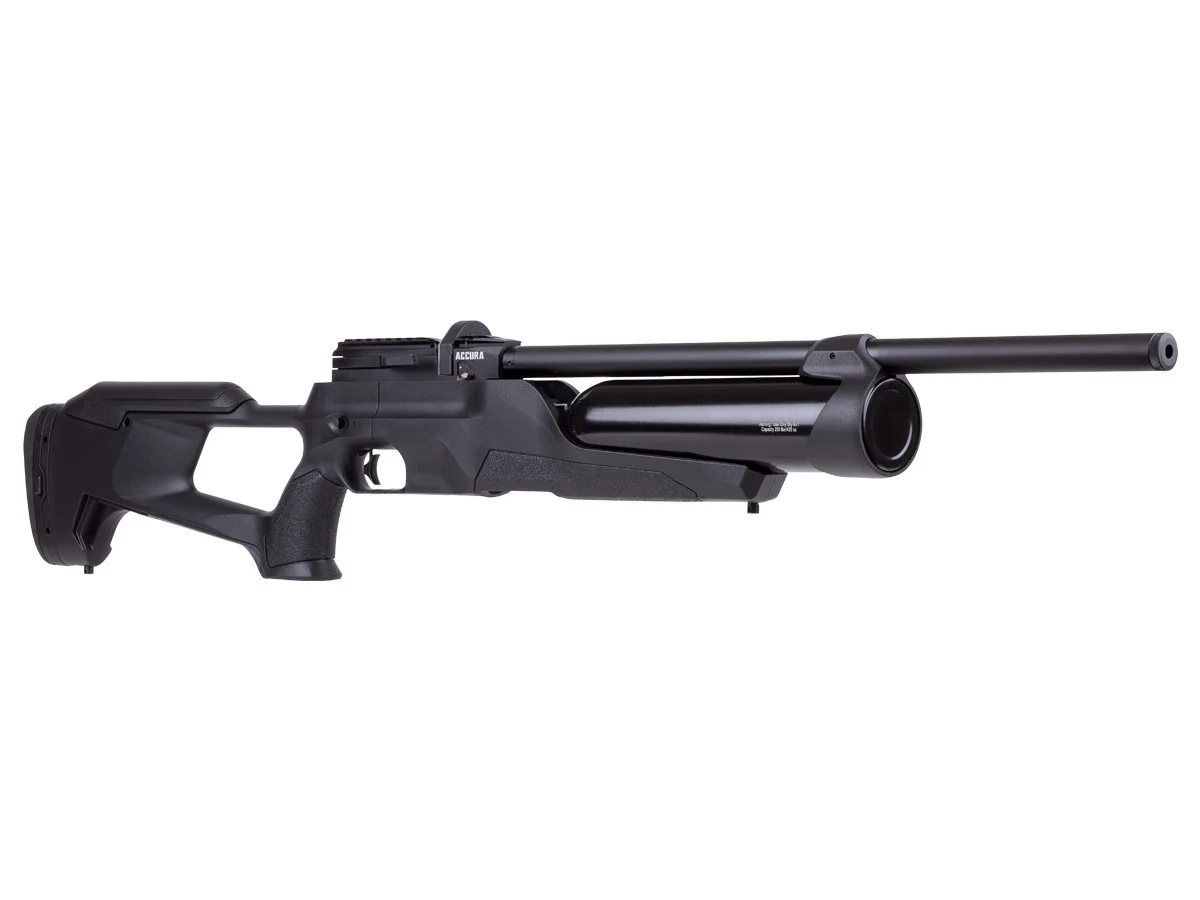
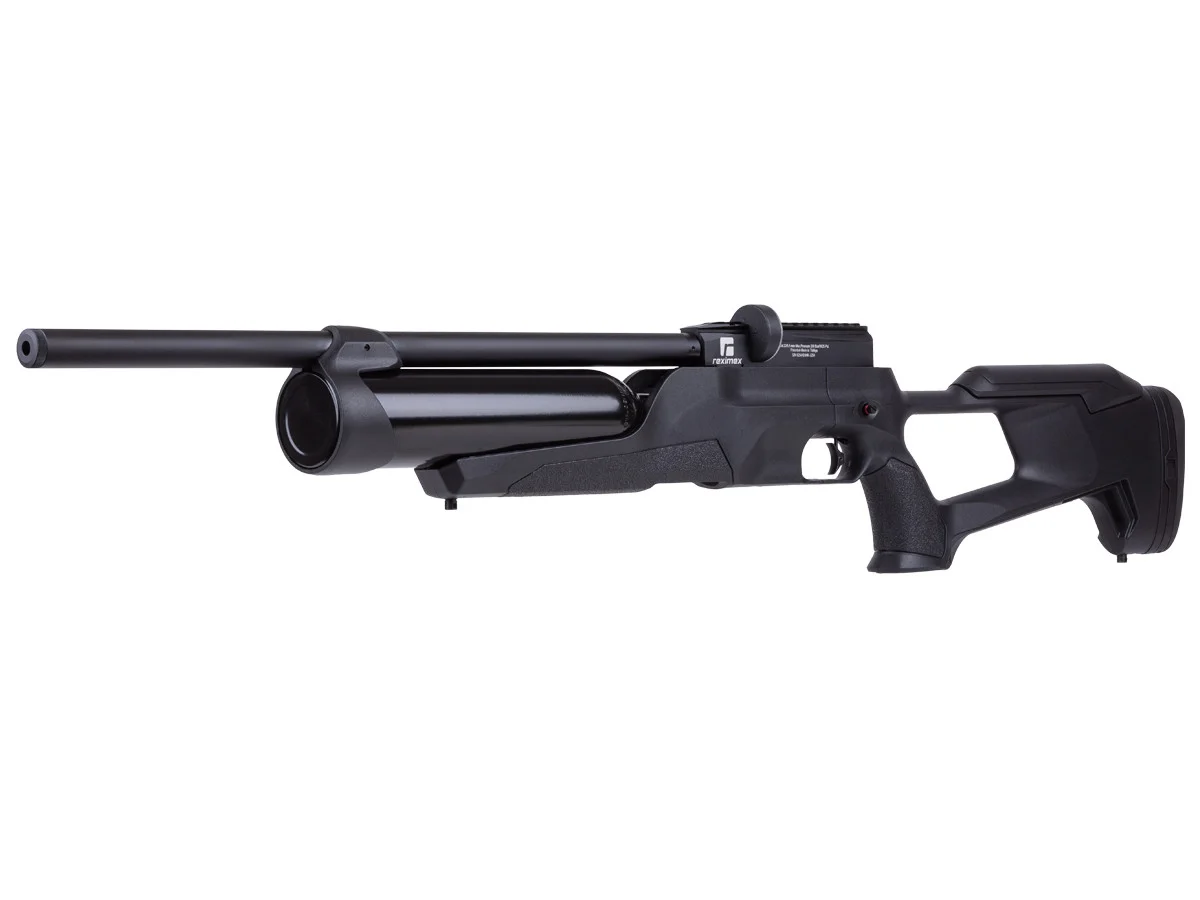
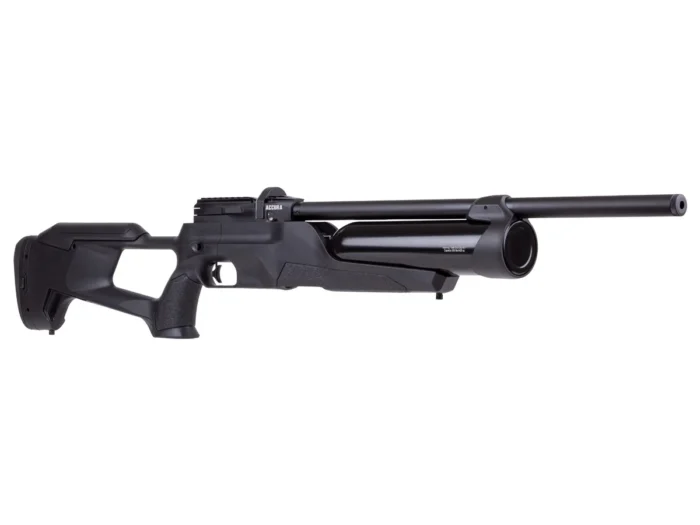
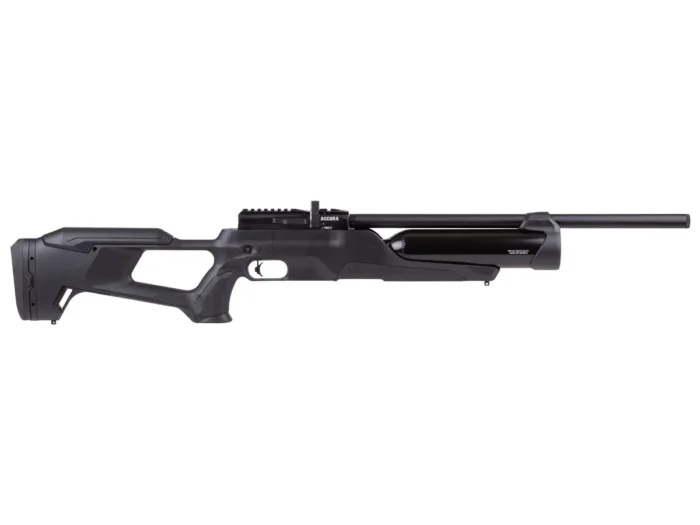
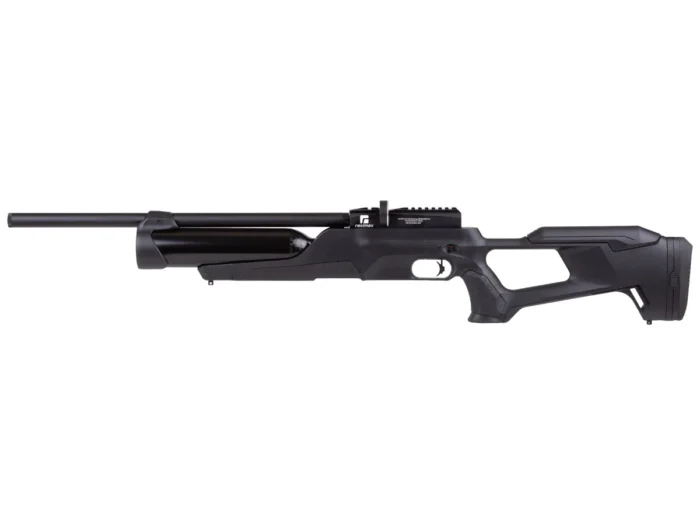
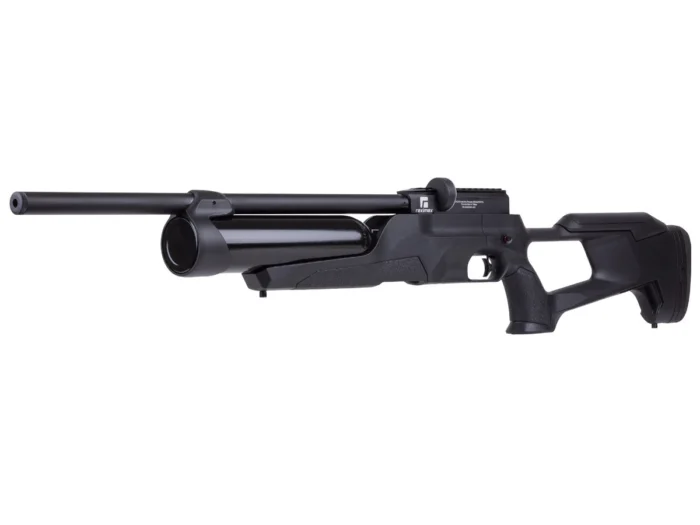
The Reximex Accura PCP Air Rifle is an airgun that features adjustable options for ergonomics at a surprising price for the included features. It is capable of velocities up to 950 FPS in .22 and 850 FPS in .25 to deliver the perfect combination of power and accuracy for effective target practice and small-game hunting.
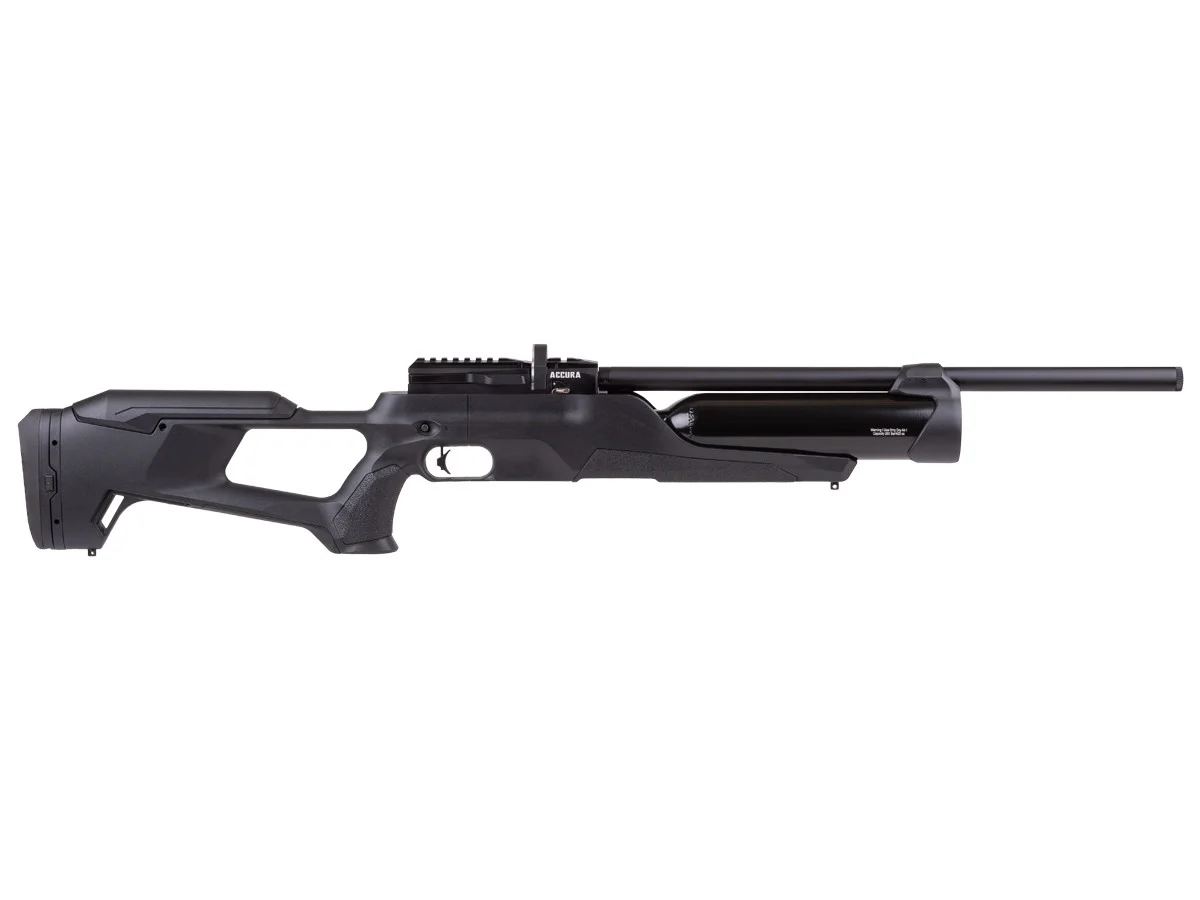
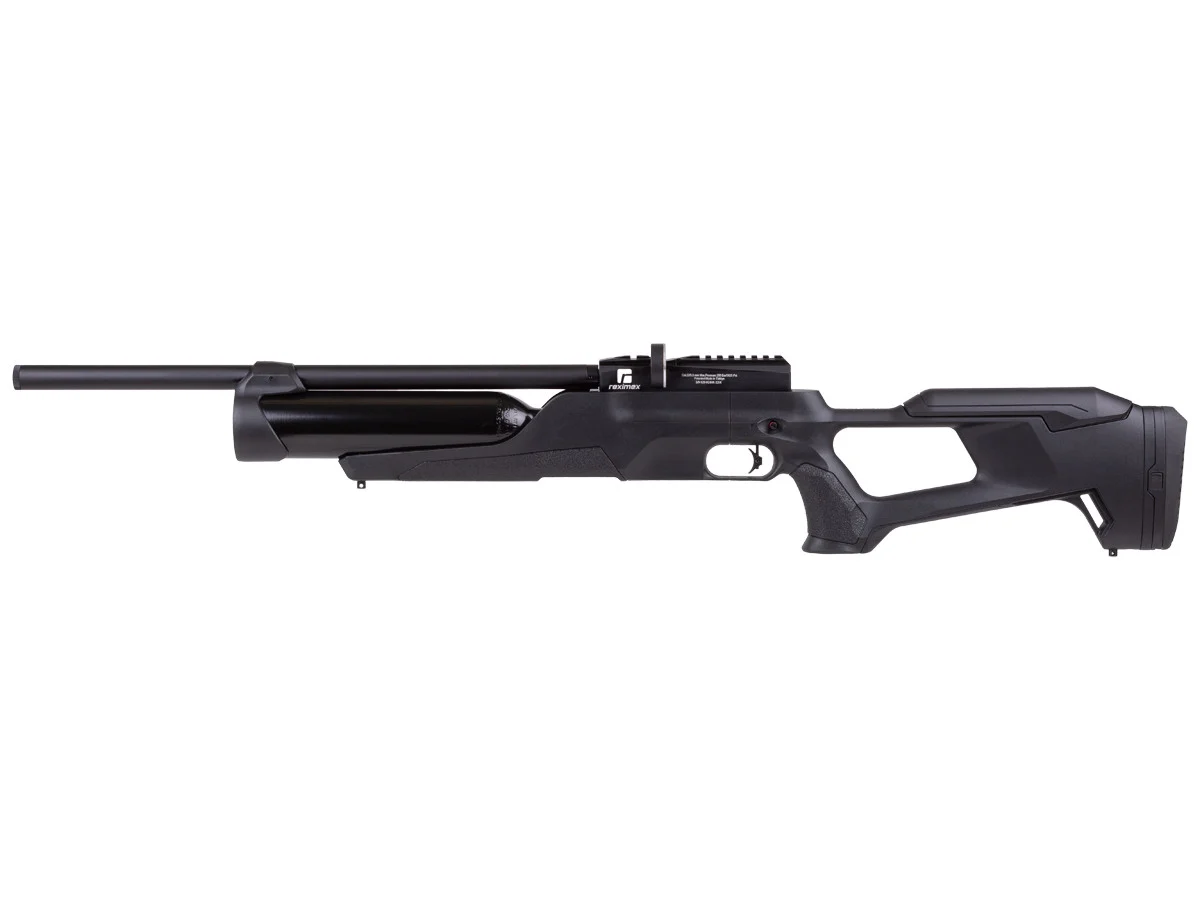
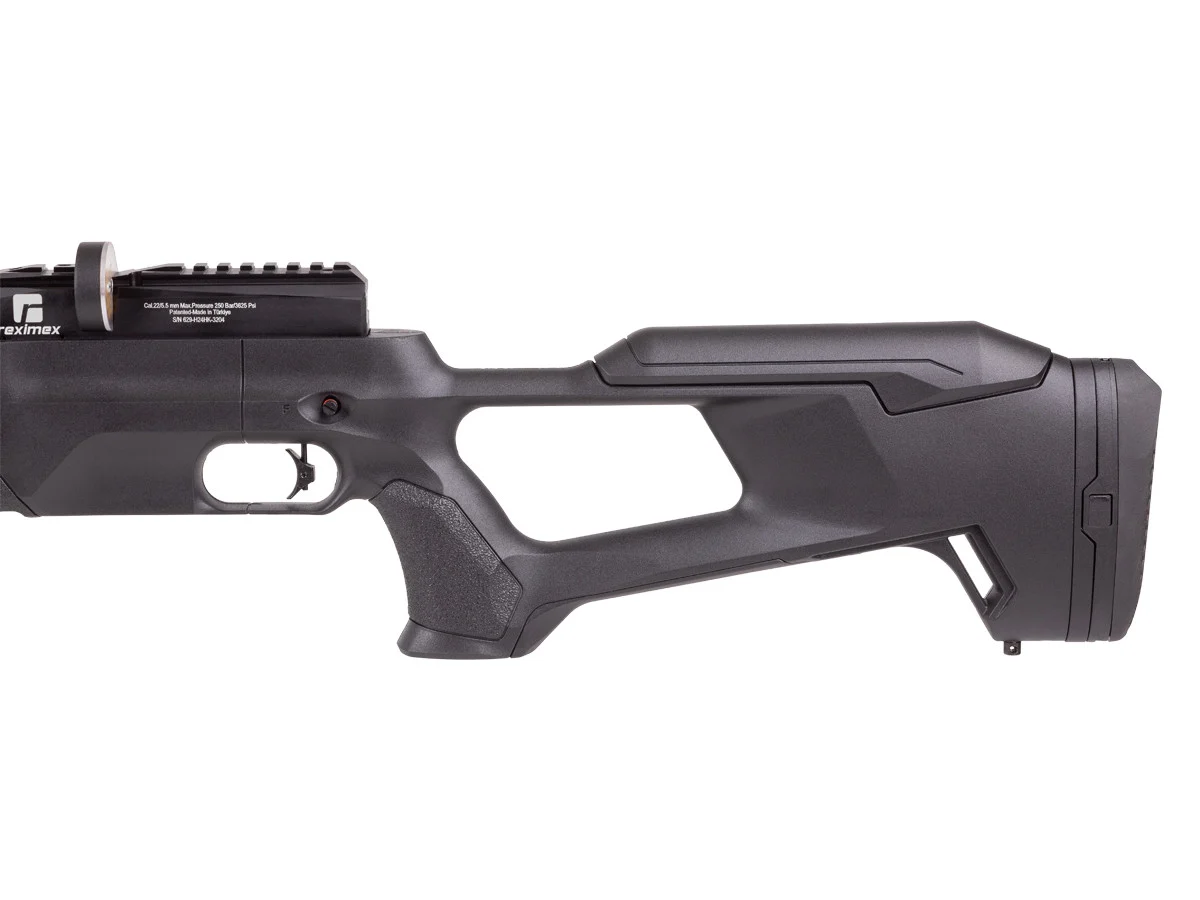
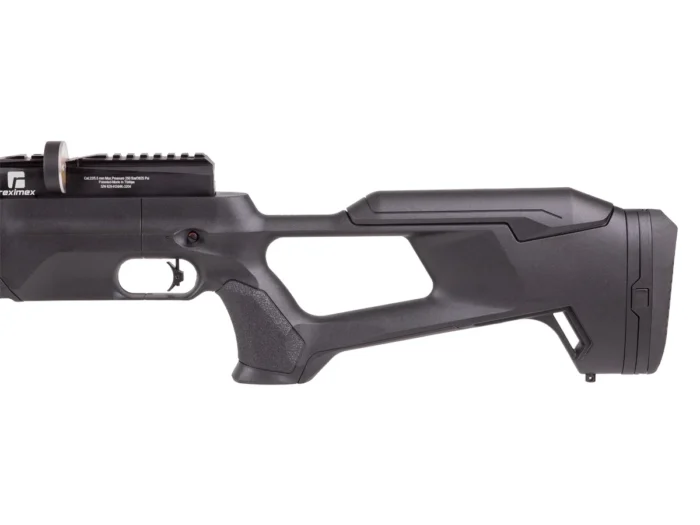
This air rifle is available with either a durable synthetic thumbhole stock or a handsome and classic Turkish walnut thumbhole stock, both of which share most of the same features and functions, including texturing on both the pistol grip and forearm, an adjustable rubber recoil pad, and a cheekpiece that adjusts for elevation, all of which provide ease of use and a personalized fit for a superior shooting experience.
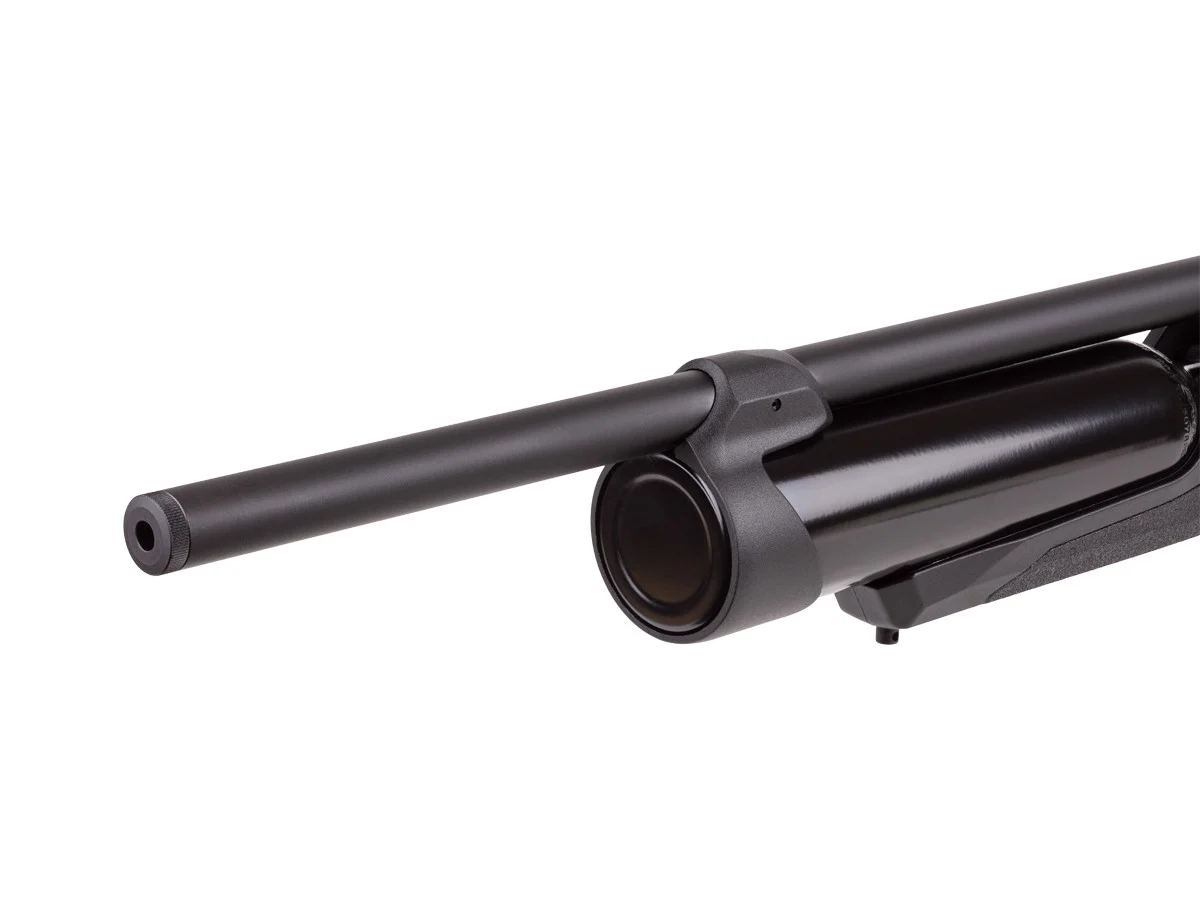
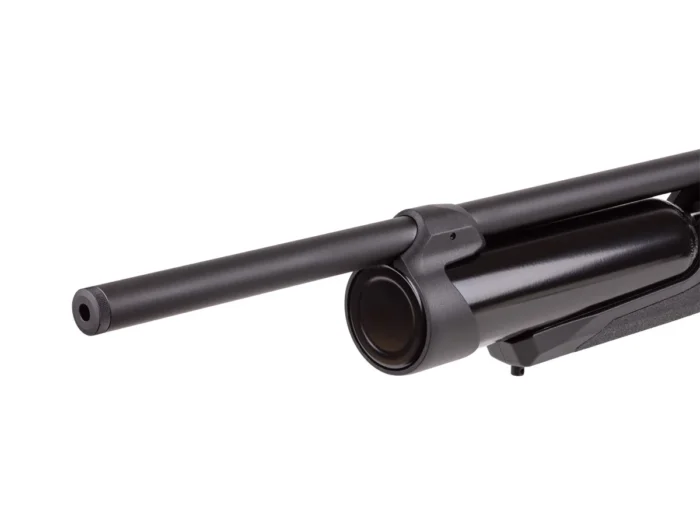
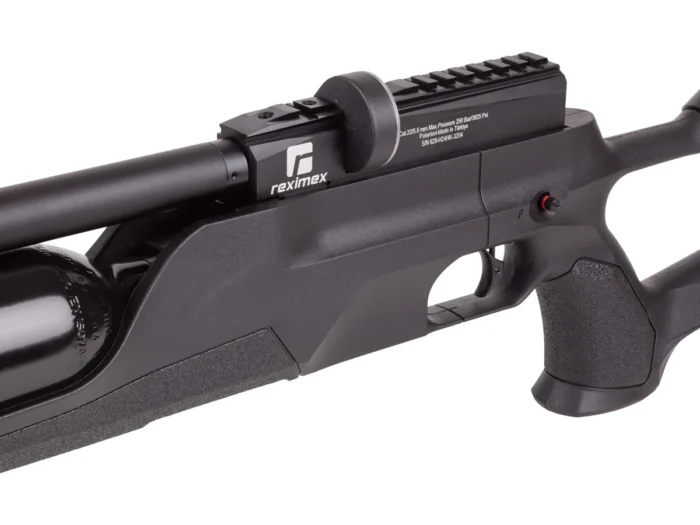
The Reximex Accura uses a two-stage trigger with four-way adjustable trigger shoe that can be adjusted for sensitivity to produce the clean and well-defined break that shooters need for repeatable accuracy. It also has a power adjustment knob that helps shooters adjust the power level for different uses and shooting scenarios, as well as a SilentForce shroud on the barrel that acts as an integrated moderator for quieter shots.
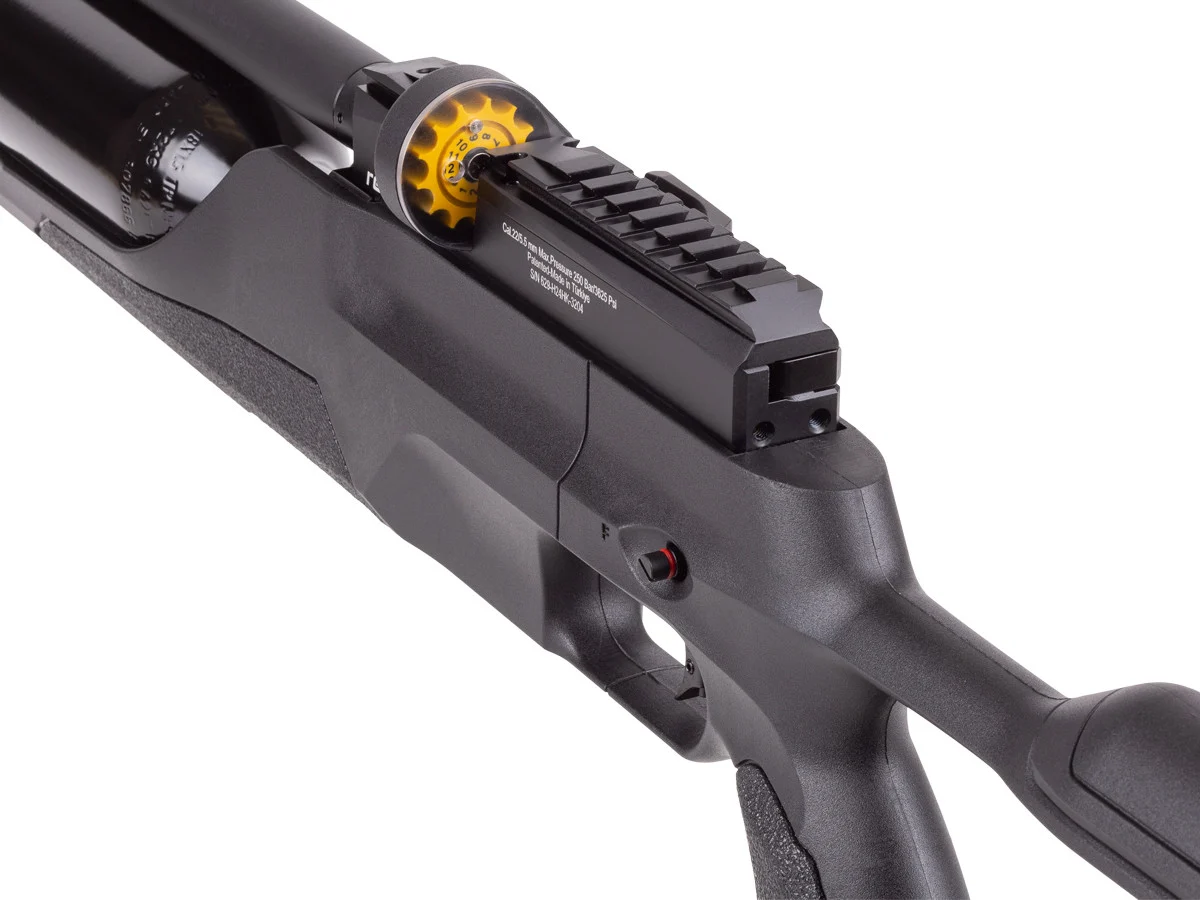
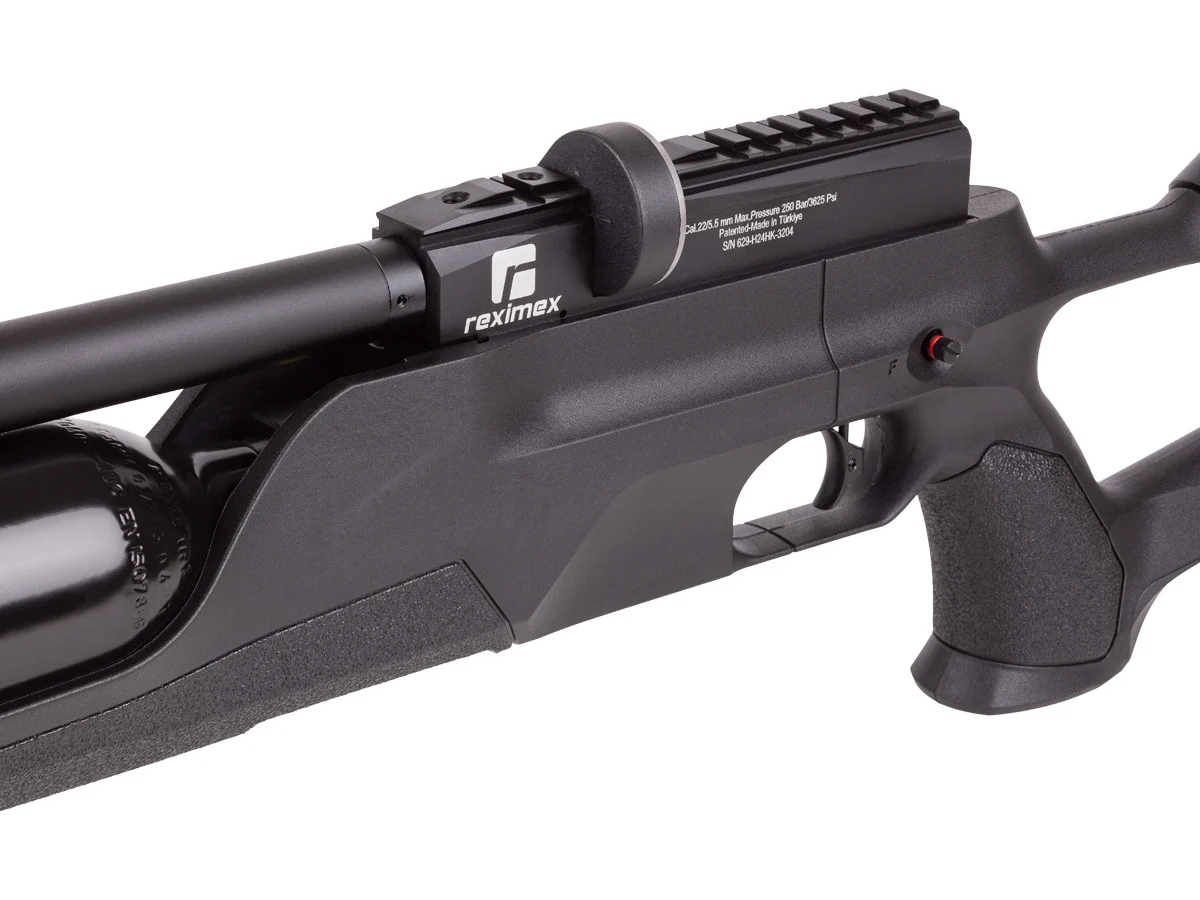
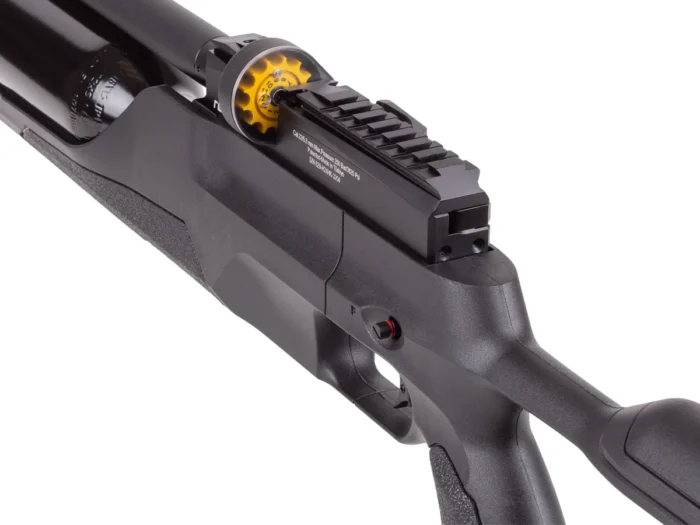
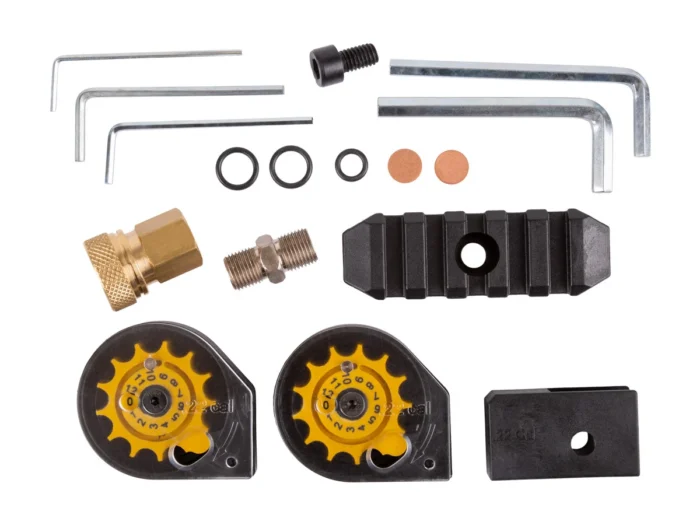
To offer a secure and versatile mount for scopes, this air rifle has a combination 11mm dovetail and Picatinny optics rail, and the package includes a Picatinny accessory rail that can be attached to the underside of the forearm to extend the functionality of the airgun with items such as bipods, lights, and lasers. The 425cc aluminum bottle provides up to 144 shots in .22 and 120 shots in .25 when starting from 3625 PSI and ending at 1450 PSI.
To get an adjustable airgun at a reasonable price for the features it provides and high performance for small-game hunting and target practice, buy the Reximex Accura PCP Air Rifle at Pyramyd AIR today.
Reximex Accura PCP Air Rifle
- Precharged pneumatic
- Sidelever cocking
- Synthetic or Turkish Walnut thumbhole stock
- SilentForce integrated moderator
- 425cc aluminum bottle
- 3,625 PSI/250 BAR max. fill pressure
- Shots at optimal velocity*: 144 (.22), 120 (.25)
- Magazine capacity: 12 rounds (.22), 10 rounds (.25)
- Max. velocity (lead pellets**): 950 FPS (.22), 850 FPS (.25)
- Max. energy: 36.3 FPE (.22), 40.7 FPE (.25)
- Transfer port power adjustment knob
- 2-stage adjustable trigger with adjustable blade
- Textured pistol grip and forearm
- Adjustable rubber buttpad
- Elevation-adjustable cheekpiece
- Combination 11mm dovetail and Picatinny optics rail
- Manual safety
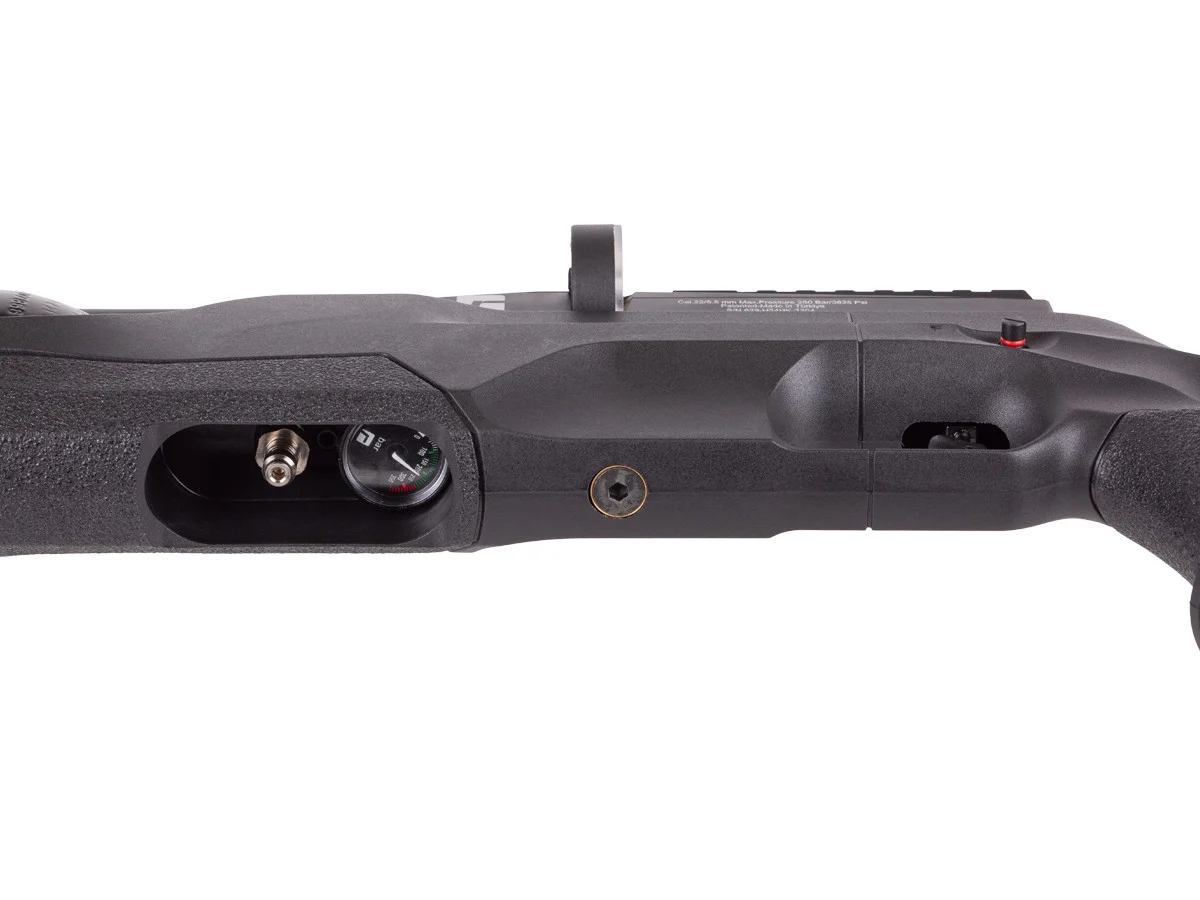
- Fill pressure gauge
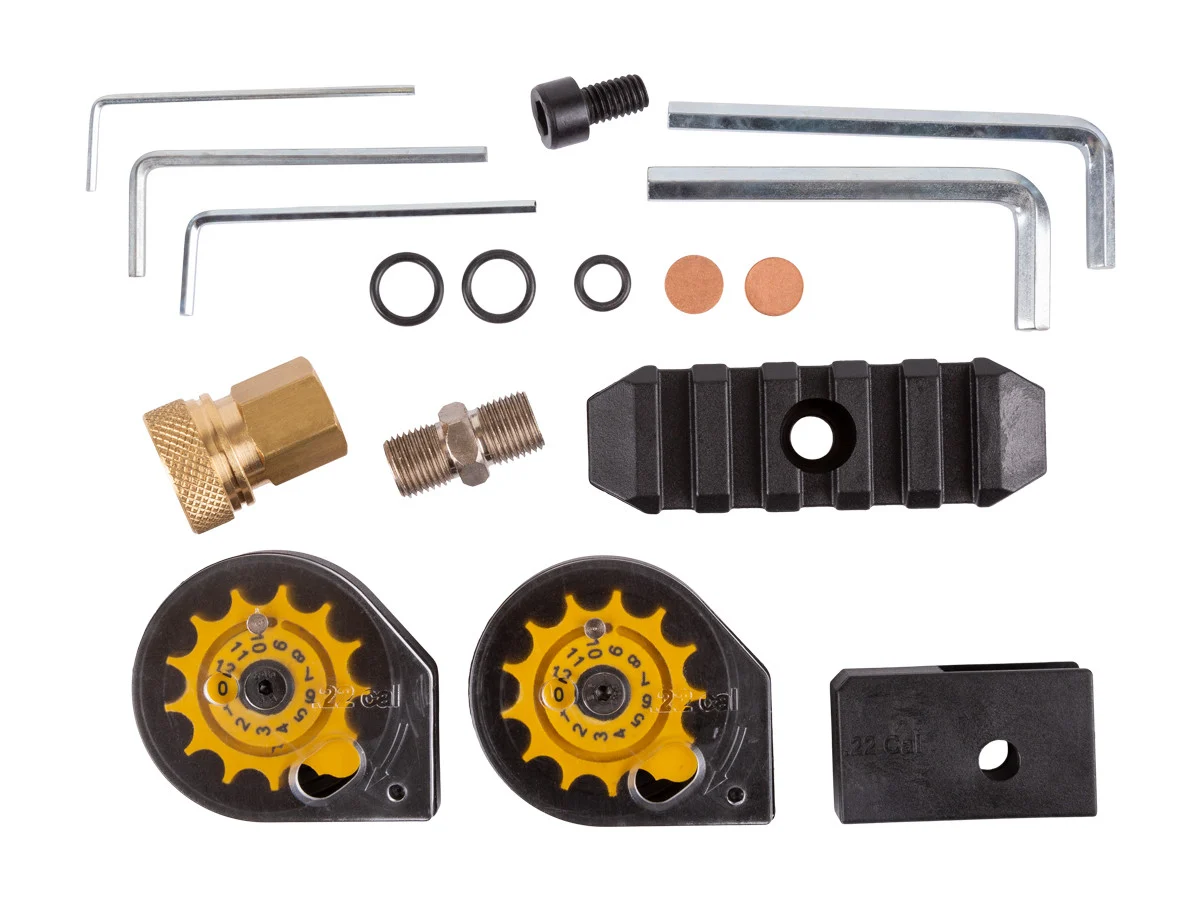
- Includes two magazines, single-shot tray, Picatinny accessory rail, and fill probe
- Barrel length: 14.9″
- Overall length: 39.7″
- Weight: 7.8 lbs. (synthetic), 7.5 lbs. (wood)
* – at pressures between 3625 PSI to 1450 PSI (250 BAR to 100 BAR)
** – tested with 18.13gr JSB pellets in .22 and 25.39gr JSB pellets in .25
Specifications

Reximex Accura PCP Air Rifle – Detailed Technical Product Guide
Reximex Accura PCP Engineering, Specifications, and Model Context
Reximex and Reximex Airguns Background
Reximex is a Turkish manufacturer founded in Konya-Beyşehir in 2015. The company states that it develops and manufactures its products using modern R&D and production methods and has built a customer base spanning more than 60 countries.
The wider Reximex airguns catalog includes the Accura, Accura Carbon, Lyra, Lyra-K, Lyra BP, Lieva, Meta variants, Throne Gen2, Zone, Apex, Daystar, Tormenta and several other PCP platforms.
Consequently, searches for Reximex Lyra K, Reximex Throne Gen2, Reximex Throne Gen 2, Reximex Mito, Reximex Mitos, Reximex Lieva, Reximex RPA, and similar terminology often appear around the same brand even though these are different products.
Understanding the Reximex Accura PCP Air Rifle
The Reximex Accura PCP Air Rifle uses a pre-charged pneumatic operating system.
PCP equipment stores compressed air in an onboard reservoir before operation. In the Accura, Reximex specifies a substantial 425 cc air tube and a maximum fill pressure of 250 bar.
This design separates the Accura from spring-powered platforms because it does not rely on a large moving spring assembly during each firing cycle.
Instead, pneumatic consistency depends on the condition of the reservoir, seals, internal pressure-control components, projectile selection, and general maintenance.
Pressure-bearing components should always remain within manufacturer-defined limits.
Caliber Options and Published Energy
Reximex offers the current Accura in three established airgun calibers.
The .177 configuration is rated at approximately 350 m/s or 1150 fps and 33.6 joules. The .22 version is listed at approximately 290 m/s or 950 fps and 49.3 joules, while the .25 configuration reaches approximately 260 m/s or 850 fps with a listed energy of 55.2 joules.
These are manufacturer figures rather than guaranteed measurements for every individual rifle or projectile.
Projectile mass, atmospheric conditions, regional configuration, and equipment condition can all affect measured output.
FPS, Foot-Pounds, and Joule Calculators
Searches for tps to joules calculator, Tps joule calculator, fps to ft Ibs, and airgun joules calculator generally relate to converting projectile velocity and mass into energy measurements.
Energy cannot be calculated accurately from velocity alone because projectile weight is also required.
For that reason, published joule and foot-pound values from the manufacturer are more meaningful than attempting to compare two rifles solely through maximum fps figures.
Reximex lists the Accura at approximately 24.8 ft-lb in .177, 36.3 ft-lb in .22, and 40.7 ft-lb in .25.
Side-Lever Operation
The Accura uses a side-lever cocking system.
This configuration provides a dedicated mechanical control for cycling the action and is common across many modern PCP platforms.
Smooth operation depends on maintaining compatible magazines and keeping the mechanism free from unnecessary contamination.
If unusual resistance develops, forcing the lever is inappropriate because it may damage components or worsen an existing issue.
Manufacturer documentation and professional servicing should guide any technical work.
Magazine Capacity and Shot Count
Reximex lists magazine capacities of 14 rounds for .177, 12 rounds for .22, and 10 rounds for .25.
The manufacturer also publishes approximately 168 shots at optimal velocity in .177, 144 in .22, and 120 in .25 across the stated 250-to-100-bar operating range.
These figures highlight the importance of the large 425 cc reservoir.
However, theoretical maximum shot count should not be confused with identical performance across every shot. Practical consistency across the usable pressure range remains a more meaningful technical consideration.
Adjustable Stock and Ergonomic Design
One of the Accura’s defining features is its combination of a high-quality synthetic stock with a Turkish-walnut adjustable cheekpiece. Reximex also lists an adjustable butt-pad and four-way adjustable trigger shoe.
These features allow the physical interface to be adapted more closely to the user.
A repeatable cheek position, consistent shoulder contact, and comfortable trigger-hand alignment can support greater ergonomic consistency during lawful target use.
Nevertheless, adjustments should remain within manufacturer specifications rather than being altered structurally.
Power Adjustment and Pressure Monitoring
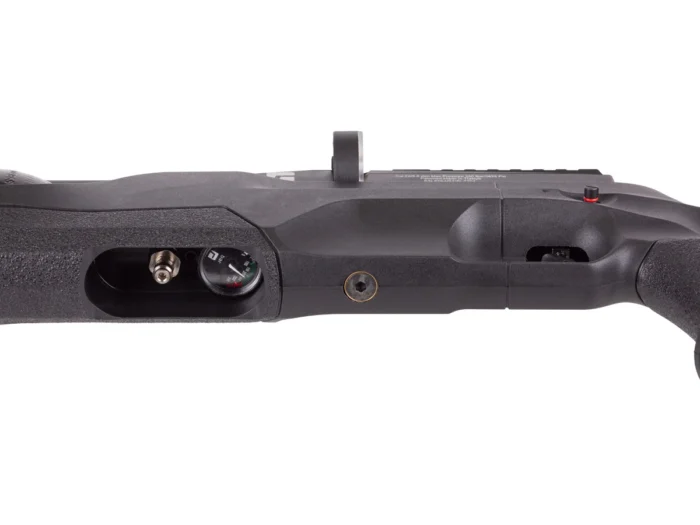
Reximex equips the Accura with a power adjustment knob and manometer.
The pressure gauge allows the user to monitor reservoir status, while the power-control feature forms part of the model’s factory design.
These controls should be treated as technical system components rather than opportunities for unapproved modification.
Local laws may also impose power limits, making compliance with jurisdiction-specific restrictions important.
Reximex Lyra-K Comparison Context
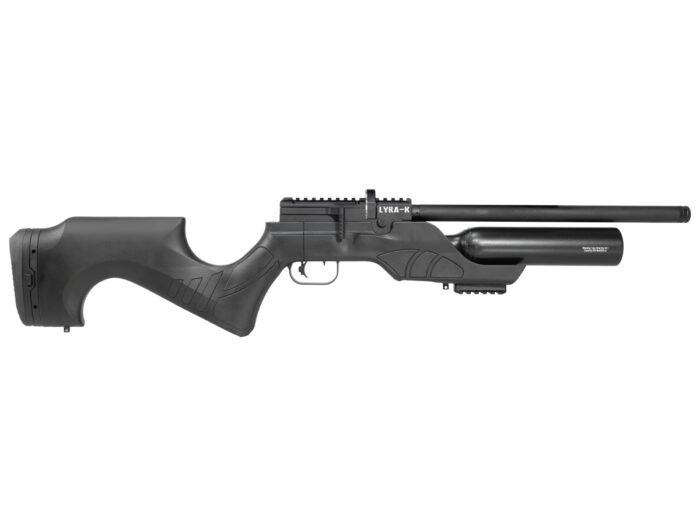
The Reximex Lyra-K PCP air rifle is another current platform within the company’s catalog.
Reximex lists the Lyra-K with a side lever, .177/.22/.25 caliber options, a 250 cc reservoir, 250-bar fill pressure, Turkish walnut stock, and 34.6-inch overall length.
Searches including Reximex Lyra-K airgun, Reximex Lyra-K review, Reximex Lyra-K PCP rifle, Reximex Lyra-K regulated PCP, Reximex Lyra-K compact PCP rifle, and Reximex Lyra-K pellet gun therefore relate to a different product rather than alternate names for the Accura.
Lyra-K Accuracy, Scope, and Sporting Terms
Phrases such as Reximex Lyra-K accuracy test, Reximex Lyra-K scope package, and Reximex Lyra-K tactical air rifle describe search interests surrounding the Lyra-K rather than defining specifications for the Accura.
Likewise, phrases such as buy Reximex Lyra-K online and best price Reximex Lyra-K are commercial search terms and should not be confused with technical product data.
Searches such as Reximex Lyra-K hunting rifle, Reximex Lyra-K for pest control, and Reximex Lyra-K small game hunting concern potential use contexts that depend on local law, experience, and appropriate safety practices rather than being inherent mechanical characteristics of the rifle.
Reximex Throne Gen2 and Other Platforms
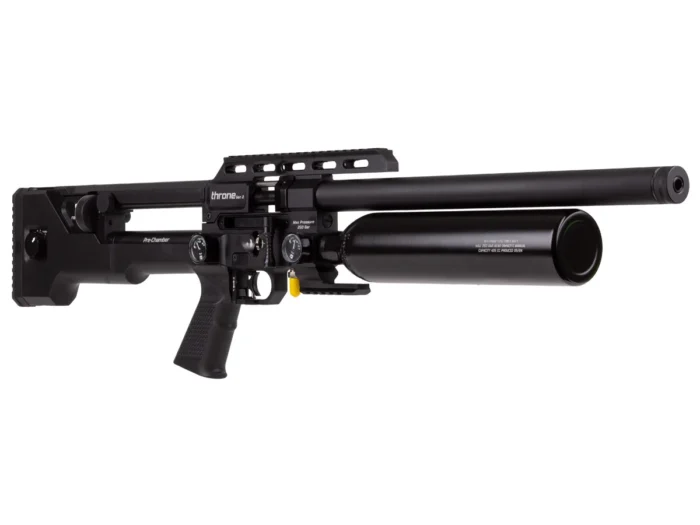
The Reximex Throne Gen2 and Reximex Throne Gen 2 are separate PCP models within the same brand family. Reximex also currently lists products such as Lieva, Lyra BP, Meta, Daystar, Accura Carbon, and various RPA and RP platforms.
Terms such as reximex гр, reximex rра, roxy max, mx rex, and gunseek may appear in broader searches but should be verified individually rather than assumed to identify Accura specifications or compatible parts.
Accura Carbon Versus Standard Accura
The newer Accura Carbon should also be distinguished from the standard Accura.
Reximex lists the Accura Carbon with a 480 cc carbon bottle, 250-bar fill pressure, regulator, and 28 cc pre-chamber.
By comparison, the standard Accura uses the 425 cc system described above.
Therefore, performance figures, air capacity, and component specifications should never be transferred automatically between the two models.
Precision and Practical Accuracy
The Accura’s technical design provides several characteristics that can support repeatable sporting performance: substantial pneumatic capacity, adjustable ergonomics, a dedicated side lever, magazine operation, and factory power control.
However, practical accuracy still depends on the complete system.
Barrel condition, compatible projectiles, sighting equipment, environmental conditions, pressure consistency, and user technique all influence results.
A single high velocity figure therefore provides less useful information than repeatable groups produced under controlled conditions.
Maintenance and Responsible Ownership
Reximex maintains official user manuals for the Accura and several other PCP platforms, and these should take priority over generalized maintenance information.
The reservoir and other pressure-bearing components require particular respect because compressed air stores substantial energy.
Secure storage, appropriate eye protection, controlled target environments, dependable backstops, and compliance with applicable local laws remain essential.
From an engineering perspective, the Reximex Accura combines a large 425 cc reservoir, substantial manufacturer-listed shot counts, adjustable ergonomics, multiple caliber choices, and a modern side-lever PCP architecture into a technically sophisticated sporting platform.
Engineering Quality, Practical Performance, Precision, and Handling
The Reximex Accura is designed around a combination of pneumatic engineering, substantial air capacity, adjustable ergonomics, and a full-size sporting configuration. Although specifications provide a useful technical foundation, everyday performance depends on how effectively the complete system works together. Barrel stability, pressure consistency, mechanical operation, stock geometry, weight distribution, and equipment condition can all influence the ownership experience. Therefore, the platform is better evaluated through repeatability, comfort, construction quality, and reliability than through maximum performance figures alone.
Engineering and Construction Quality
Engineering quality starts with component integration. The receiver, barrel assembly, reservoir, stock, operating mechanism, and supporting hardware must maintain appropriate alignment throughout normal use.
Manufacturing tolerances are particularly important in a precision pneumatic system. Components that fit correctly help preserve predictable mechanical behavior and reduce unnecessary movement.
External appearance can provide some indication of manufacturing quality, although structural condition matters considerably more.
Owners should become familiar with how the equipment normally looks and feels. This makes unusual movement, damage, or mechanical changes easier to identify over time.
Pneumatic System Performance
The compressed-air system forms the foundation of the platform’s operating characteristics.
A substantial reservoir can support extended recreational sessions while reducing the frequency with which the system needs attention between normal operating cycles. However, reservoir size alone does not determine performance quality.
Pressure management, sealing condition, internal consistency, environmental temperature, and equipment maintenance all influence practical behavior.
Because compressed air contains significant stored energy, pressure-bearing components require careful handling. Any unexplained leakage, deformation, or significant corrosion deserves professional assessment.
Understanding Practical Precision
Precision should be understood as repeatability rather than maximum velocity.
A system capable of behaving consistently provides a stable foundation for controlled recreational target use. Nevertheless, the final result depends on several variables working together.
Projectile uniformity, barrel condition, sighting equipment, environmental conditions, pressure behavior, and user technique all contribute.
Consequently, isolated results provide limited information.
Repeated evaluation under similar conditions gives a clearer understanding of the platform’s practical consistency and helps distinguish equipment behavior from external influences.
Barrel Quality and Consistency
The barrel has a direct relationship with projectile stability and repeatability.
Its internal condition should remain protected from contamination, physical damage, and unsuitable maintenance practices.
Cleaning should follow manufacturer guidance rather than being performed aggressively without reason.
More frequent cleaning does not automatically create better performance. Inappropriate tools or excessive intervention can potentially introduce unnecessary wear.
When a persistent change in performance occurs, the complete system should be evaluated rather than immediately assuming the barrel is responsible.
Side-Lever Handling Experience
A side-mounted operating control contributes to the platform’s modern mechanical character.
During ordinary recreational use, the mechanism should feel predictable and consistent. Smooth operation can contribute to a refined overall experience because the user does not need to fight unnecessary resistance.
If significant resistance develops unexpectedly, additional force should not automatically be applied.
Inspection is preferable because contamination, component condition, or another mechanical issue may be responsible.
Professional servicing becomes appropriate when the cause cannot be identified safely.
Ergonomic Stock Design
The stock provides the primary physical connection between the user and the equipment.
Its dimensions, cheek support, shoulder interface, grip position, and fore-end geometry influence comfort and stability.
Adjustability can help accommodate differences in body proportions. A comfortable position reduces unnecessary muscle tension and can make longer recreational sessions more manageable.
However, adjustment should remain within the intended design range.
Structural modifications outside manufacturer recommendations may compromise reliability or equipment integrity.
Cheek Support and Head Position
A repeatable head position can contribute significantly to a comfortable sighting experience.
Adjustable cheek support allows the user to establish a natural relationship between the eye and appropriately mounted sighting equipment.
The goal should be comfortable alignment without unnecessary neck movement.
A position that requires the head to be forced downward or stretched upward can introduce fatigue.
Small, controlled ergonomic adjustments generally provide a better solution than dramatic changes made solely for appearance.
Shoulder Fit and Stability
Shoulder contact influences how naturally the platform can be supported.
An adjustable rear interface can help users accommodate differences in physical proportions and preferred recreational positions.
Comfort should remain the priority.
A stable shoulder relationship can reduce unnecessary movement, while poor fit may increase muscular effort.
This becomes increasingly noticeable during extended sessions because even small ergonomic problems can gradually contribute to fatigue.
Weight Distribution
Overall weight tells only part of the handling story.
Where that weight is concentrated determines how substantial the platform feels in practice. Reservoir position, barrel length, stock construction, receiver mass, and accessories all influence the center of balance.
A well-balanced setup can feel more manageable than expected.
Conversely, excessive accessory weight can alter handling substantially.
Therefore, practical evaluation should consider the complete configuration rather than examining individual components independently.
Environmental Influences
Outdoor conditions can influence both equipment behavior and practical results.
Temperature changes may affect pneumatic characteristics, while wind can influence projectile movement. Humidity and moisture can also affect materials when equipment is not maintained appropriately.
Understanding these variables helps prevent environmental effects from being mistaken for mechanical problems.
Nevertheless, persistent changes should still receive attention, particularly when they continue under different conditions.
Reliability During Extended Ownership
Reliability becomes easier to assess after repeated use.
A dependable system should maintain reasonably predictable characteristics when properly cared for. However, sealing materials, mechanical components, and external surfaces naturally experience service over time.
Routine observation provides an opportunity to identify gradual changes.
Preventive maintenance can therefore support long-term reliability without requiring unnecessary intervention.
Maintenance Considerations
Routine care should focus on preservation.
External contamination and moisture should be addressed appropriately, while unnecessary internal disassembly should be avoided.
Specialized pneumatic components require technical knowledge and suitable equipment.
When internal servicing becomes necessary, qualified professional assistance provides a more appropriate approach than experimentation.
Manufacturer documentation should remain the primary reference for servicing requirements and operating limits.
Responsible Recreational Use
Engineering quality must always be considered alongside responsible handling.
A controlled environment should provide dependable containment and remain clear of unintended people, animals, vehicles, and property.
Appropriate eye protection and a suitable backstop are fundamental considerations.
The equipment should always be treated as capable of causing serious injury.
Local requirements concerning ownership, storage, transportation, and permitted recreational use should also be followed.
Overall Performance Perspective
The Accura combines substantial pneumatic capacity, adjustable ergonomics, modern mechanical operation, and full-size construction into a sophisticated sporting platform.
Its practical strengths are best measured through consistency, comfortable handling, equipment reliability, and predictable mechanical behavior rather than maximum figures alone.
Ultimately, engineering provides the initial performance foundation, while maintenance and responsible ownership determine how effectively that foundation is preserved.
Routine inspection, environmental protection, secure storage, appropriate servicing, and disciplined handling can help maintain the platform’s intended characteristics throughout its appropriate service life.
Build Quality, Durability, Maintenance, and Long-Term Equipment Care
The Reximex Accura is constructed as a substantial sporting platform where durability depends on the relationship between material quality, mechanical integrity, pneumatic condition, and responsible maintenance. Although performance often receives the greatest attention when equipment is new, long-term ownership places increasing importance on reliability and preservation. Regular inspection, suitable cleaning, careful transportation, secure storage, and professional servicing when necessary can help maintain the original condition of the system. These factors also make gradual wear easier to identify before it develops into a more significant concern.
Overall Construction Quality
Construction quality begins with the integration of the major structural components.
The receiver, stock, barrel assembly, air reservoir, operating controls, and supporting hardware need to remain securely positioned and appropriately aligned. A strong platform should feel structurally stable during ordinary handling without unexplained movement between major components.
Manufacturing tolerances contribute significantly to this experience. Accurate component fit can reduce unnecessary movement while helping the mechanical system maintain predictable behavior throughout repeated use.
Owners should become familiar with normal equipment condition so that changes are easier to recognize.
Material Selection and Durability
Different areas of the platform perform different mechanical roles, so material requirements vary throughout the construction.
Metal components provide strength and dimensional stability where mechanical loads are concentrated. Synthetic elements can reduce maintenance requirements while providing resistance to ordinary environmental exposure.
Decorative natural materials contribute a different visual and tactile character.
Regardless of material type, no component should be considered completely maintenance-free.
Physical impacts, moisture, excessive heat, contamination, and inappropriate chemicals can gradually affect even durable surfaces.
Stock Condition and Long-Term Care
The stock forms both a structural component and the primary physical interface with the user.
Routine inspection can help identify cracks, deformation, loose components, or significant impact damage.
Minor cosmetic marks generally have different significance from structural deterioration.
External surfaces should be cleaned using materials compatible with the original finish. Aggressive household cleaners and abrasive products should be avoided unless specifically approved.
A controlled maintenance routine usually provides better long-term protection than excessive cleaning.
Protecting Natural Material Components
Natural material requires additional environmental consideration.
Although properly finished surfaces provide protection, prolonged moisture or extreme environmental changes can gradually influence appearance and condition.
After exposure to damp conditions, the equipment should receive suitable care before storage.
Direct exposure to excessive heat should also be minimized.
The objective is not to keep the material completely isolated from ordinary environments but to avoid unnecessary extremes that may accelerate deterioration.
Metal Surface Protection
Metal components benefit from routine observation because environmental exposure can gradually affect protective finishes.
Moisture should not remain on surfaces for extended periods.
Small cosmetic marks may develop during normal ownership without affecting mechanical performance. However, significant corrosion deserves greater attention.
Deterioration near structural or pressure-bearing areas should never be treated purely as a cosmetic problem.
Professional assessment becomes appropriate whenever corrosion creates uncertainty about component integrity.
Pneumatic System Integrity
The compressed-air system requires particular respect because it contains substantial stored energy.
Pressure-bearing components should remain within their intended operating conditions and should never be modified casually.
Visible deformation, unexplained leakage, substantial corrosion, or unusual pressure behavior should receive immediate attention.
If system integrity becomes uncertain, continued operation should be avoided until appropriate inspection has been completed.
Technical repairs involving pressure-bearing components should be handled by qualified professionals.
Seals and Pressure Retention
Sealing components contribute directly to reliable pressure retention.
Over time, seals can be influenced by age, environmental conditions, contamination, and normal service.
A persistent change in pressure retention may indicate that maintenance is required.
However, the underlying cause should be diagnosed rather than assumed. Repeated adjustments without understanding the problem may disturb components that were functioning correctly.
Professional evaluation provides a more reliable approach when pressure behavior changes significantly.
Mechanical Components and Normal Wear
Moving components naturally experience service over time.
This does not mean that frequent replacement should be expected. Instead, normal wear should be distinguished from abnormal mechanical behavior.
Unexpected resistance, excessive movement, unusual noises, or significant changes in operating feel may indicate that inspection is necessary.
Forcing a component when movement becomes difficult can potentially create additional damage.
Careful observation remains one of the simplest methods of identifying developing problems.
Barrel Preservation
The barrel should be protected from contamination, physical impacts, and unsuitable maintenance techniques.
Cleaning should be performed according to actual need and manufacturer guidance.
Aggressive treatment is not automatically beneficial. Inappropriate tools or materials may create unnecessary wear.
When performance changes persistently, the complete system should be considered rather than immediately assuming one component is responsible.
Professional inspection may provide a clearer diagnosis when the cause remains uncertain.
Routine Inspection
A brief visual inspection can provide valuable information before legitimate recreational use.
External components can be checked for obvious damage, unusual movement, contamination, or deterioration.
Equipment that has been dropped or subjected to a substantial impact deserves additional attention.
Likewise, equipment returning to service after extended storage should be examined before normal use resumes.
Routine inspection does not replace professional servicing, but it can identify concerns earlier.
Cleaning and Preventive Maintenance
Preventive maintenance should focus on preservation rather than unnecessary intervention.
External dirt and moisture can be removed appropriately, while specialized internal components should generally remain undisturbed unless servicing is genuinely required.
Excessive disassembly can introduce alignment problems or damage components.
Manufacturer documentation should determine the appropriate maintenance schedule.
Qualified technical assistance becomes particularly important whenever work involves internal pneumatic or mechanical assemblies.
Storage Environment
Long-term storage conditions can strongly influence equipment durability.
A clean, dry, and reasonably temperature-stable environment helps reduce exposure to moisture, contamination, and corrosion.
The equipment should also remain protected from accidental impacts.
Secure storage prevents unauthorized handling and becomes especially important where children or inexperienced individuals may be present.
Any additional local storage requirements should always be followed.
Transportation Protection
Transportation introduces vibration, impacts, and changing environmental conditions.
A suitable protective case can reduce these risks by limiting unnecessary movement and shielding exposed surfaces.
Heavy objects should not be positioned where they can compress or strike the equipment.
After a serious transportation incident, inspection should occur before further operation.
Applicable transportation regulations should also be understood before moving equipment between locations.
Maintaining Service Records
A basic service history can provide considerable value throughout ownership.
Inspection dates, professional servicing, component replacements, and significant incidents can be documented.
These records help owners track equipment condition and provide useful information to technicians during future servicing.
Documentation can also benefit a future owner by providing greater transparency about maintenance history.
Overall Durability Perspective
The Accura’s long-term durability depends on the relationship between original engineering and responsible ownership.
Quality materials and manufacturing establish the foundation, while appropriate maintenance determines how effectively those characteristics are preserved.
Routine inspection, controlled cleaning, environmental protection, careful transportation, secure storage, and professional servicing all contribute to dependable condition.
Ultimately, durability should be measured through structural integrity and predictable operation rather than appearance alone. With consistent care, the platform can retain its intended characteristics and remain appropriately maintained throughout years of lawful and responsible recreational ownership.
Everyday Usability, Comfort, Reliability, and Ownership Experience
The Reximex Accura is designed to provide a refined ownership experience through a combination of full-size construction, adjustable ergonomics, pneumatic operation, and practical mechanical controls. While technical specifications establish the basic capabilities of the platform, everyday usability depends on factors that numbers alone cannot fully explain. Comfort, balance, mechanical consistency, environmental conditions, maintenance requirements, transportation, and storage all influence how the equipment feels throughout long-term recreational ownership. Therefore, practical value is best assessed through the complete experience rather than through maximum performance figures.
Everyday Handling Experience
Handling begins with the relationship between overall dimensions and weight distribution.
A substantial sporting platform may initially appear demanding, yet balanced construction can make the equipment feel considerably more manageable than its total weight suggests. The position of the reservoir, receiver, barrel assembly, stock, and accessories determines where the system naturally balances.
Individual preferences also influence the experience.
Some users prefer greater stability from a substantial configuration, while others prioritize lighter equipment. Consequently, practical handling should be evaluated according to comfort and intended lawful recreational use.
Comfort During Longer Sessions
Comfort becomes increasingly important during extended periods of controlled use.
A suitable physical fit reduces unnecessary muscular tension and helps the user maintain a natural posture. Shoulder position, cheek support, grip geometry, and fore-end placement all contribute to this relationship.
Poor fit can gradually increase fatigue. As fatigue develops, the equipment may begin to feel heavier even though its physical mass has not changed.
Appropriate ergonomic adjustment can therefore contribute significantly to long-term comfort.
Adjustable Ergonomics
Adjustability allows the physical interface to accommodate differences between users.
Body proportions vary considerably, so one fixed configuration cannot provide identical comfort for everyone. Appropriate adjustments can help establish a natural relationship between the shoulder, head, hands, and equipment.
However, adjustments should remain within the manufacturer’s intended range.
The purpose is to improve comfort and repeatability rather than fundamentally modify the original engineering.
When an adjustment mechanism becomes difficult to operate, excessive force should be avoided.
Cheek Position and Visual Comfort
A comfortable cheek position supports a natural relationship between the user’s head and appropriately mounted sighting equipment.
Repeatedly stretching the neck or forcing the head downward can create unnecessary fatigue.
A properly positioned cheek support helps reduce this problem by allowing a more natural head position.
Small changes can make a noticeable difference, particularly during longer recreational sessions.
The most suitable position should therefore be determined through comfort rather than appearance alone.
Shoulder Support
The rear portion of the stock contributes significantly to stability and overall handling.
Consistent shoulder contact can make the equipment feel more predictable and reduce unnecessary movement.
Individual body proportions influence the ideal relationship, so adjustment provides practical value.
Comfort should remain the main consideration.
A setup that feels natural during a brief session should also remain manageable during longer use without creating excessive pressure or strain.
Fore-End and Support Position
The fore-end establishes another important physical contact point.
Its shape and dimensions influence how comfortably the equipment can be supported. Weight should be managed without requiring excessive gripping pressure.
A relaxed and controlled support position can reduce fatigue while providing a stable recreational experience.
Accessories added around the front portion may alter this relationship because additional mass can shift the center of balance.
Therefore, the complete setup should always be considered when evaluating comfort.
Mechanical Operation
Predictable mechanical operation contributes to everyday confidence.
Controls should behave consistently and provide familiar feedback during normal use. As ownership continues, users naturally develop an understanding of how the equipment normally feels.
This familiarity can help identify unusual changes.
Unexpected resistance, excessive movement, or unfamiliar sounds deserve attention rather than being ignored.
When the cause is unclear, inspection or qualified servicing provides a better response than forcing the mechanism.
Pneumatic Consistency
The compressed-air system influences the practical experience throughout each recreational session.
Reliable pressure retention helps maintain predictable equipment behavior.
However, pneumatic characteristics can be influenced by environmental temperature, component condition, and normal service.
Minor variations should therefore be considered in context.
Persistent leakage or unexplained pressure changes require greater attention because pressure-bearing components contain significant stored energy.
Specialized repairs should be handled professionally.
Environmental Considerations
Outdoor environments introduce variables that may affect both equipment condition and practical results.
Wind can influence projectile movement, while temperature changes may affect pneumatic behavior. Moisture, humidity, and dust can gradually affect materials if equipment is neglected after use.
Recognizing these factors helps users understand differences between sessions.
After exposure to damp or dirty conditions, appropriate external care should be completed before the equipment returns to storage.
Reliability Across Repeated Use
Reliability becomes increasingly meaningful after repeated ownership experience.
A dependable system should maintain predictable characteristics when properly cared for.
However, mechanical components and sealing materials naturally experience service over time. Routine observation can therefore help identify gradual changes.
Preventive maintenance is most effective when it focuses on preserving normal condition rather than making unnecessary adjustments.
Manufacturer recommendations should remain the primary reference.
Ease of Routine Maintenance
Everyday maintenance should be straightforward and purposeful.
External surfaces can be kept clean using suitable materials, while moisture and contamination should not be allowed to accumulate unnecessarily.
However, routine care should not involve repeated internal disassembly.
Specialized mechanical and pneumatic assemblies require appropriate knowledge.
Professional assistance should be used whenever servicing extends beyond normal external maintenance.
Storage Convenience and Security
A suitable storage environment protects both equipment condition and the people around it.
The location should remain clean, dry, secure, and protected from excessive temperature changes.
Unauthorized access must be prevented, particularly where children or inexperienced individuals are present.
The equipment should also be positioned where it cannot fall or be struck accidentally.
Local regulations may establish additional storage requirements and should always be followed.
Transportation Experience
A protective case can simplify transportation while reducing exposure to scratches, contamination, and impacts.
The equipment should remain securely positioned so that it cannot move excessively during travel.
Other heavy objects should not be placed where they could apply pressure to important components.
After a substantial transportation incident, inspection should occur before further operation.
Applicable transportation requirements should also be respected.
Responsible Recreational Environment
Everyday usability cannot be separated from responsible handling.
A controlled environment should provide dependable containment and remain clear of unintended people, animals, vehicles, and property.
Appropriate eye protection and a reliable backstop are fundamental considerations.
The equipment should always be treated as capable of causing serious injury.
Familiarity should never lead to careless handling, regardless of experience level.
Overall Ownership Perspective
The Accura combines substantial construction, adjustable ergonomics, pneumatic technology, and practical mechanical operation into a sophisticated sporting platform.
Its everyday strengths are best understood through comfortable handling, predictable operation, manageable maintenance, and long-term reliability.
Ultimately, practical value depends on the relationship between engineering and ownership habits. Routine inspection, appropriate cleaning, environmental protection, secure storage, careful transportation, and qualified servicing help preserve the equipment’s intended characteristics.
When these responsibilities are maintained consistently, the platform can provide a comfortable, refined, and dependable experience throughout years of lawful and responsible recreational ownership.
Be the first to review “Reximex Accura PCP Air Rifle”
Related products
Reximex
Reximex
Reximex
Reximex
Reximex
Reximex
Reviews
There are no reviews yet.