-
×
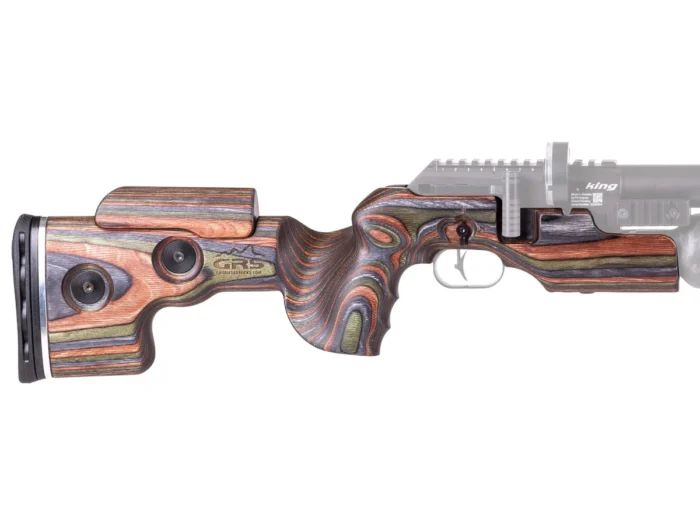 FX King GRS Green Mountain Stock, Right Hand
1 × €450.00
FX King GRS Green Mountain Stock, Right Hand
1 × €450.00
Subtotal: €450.00
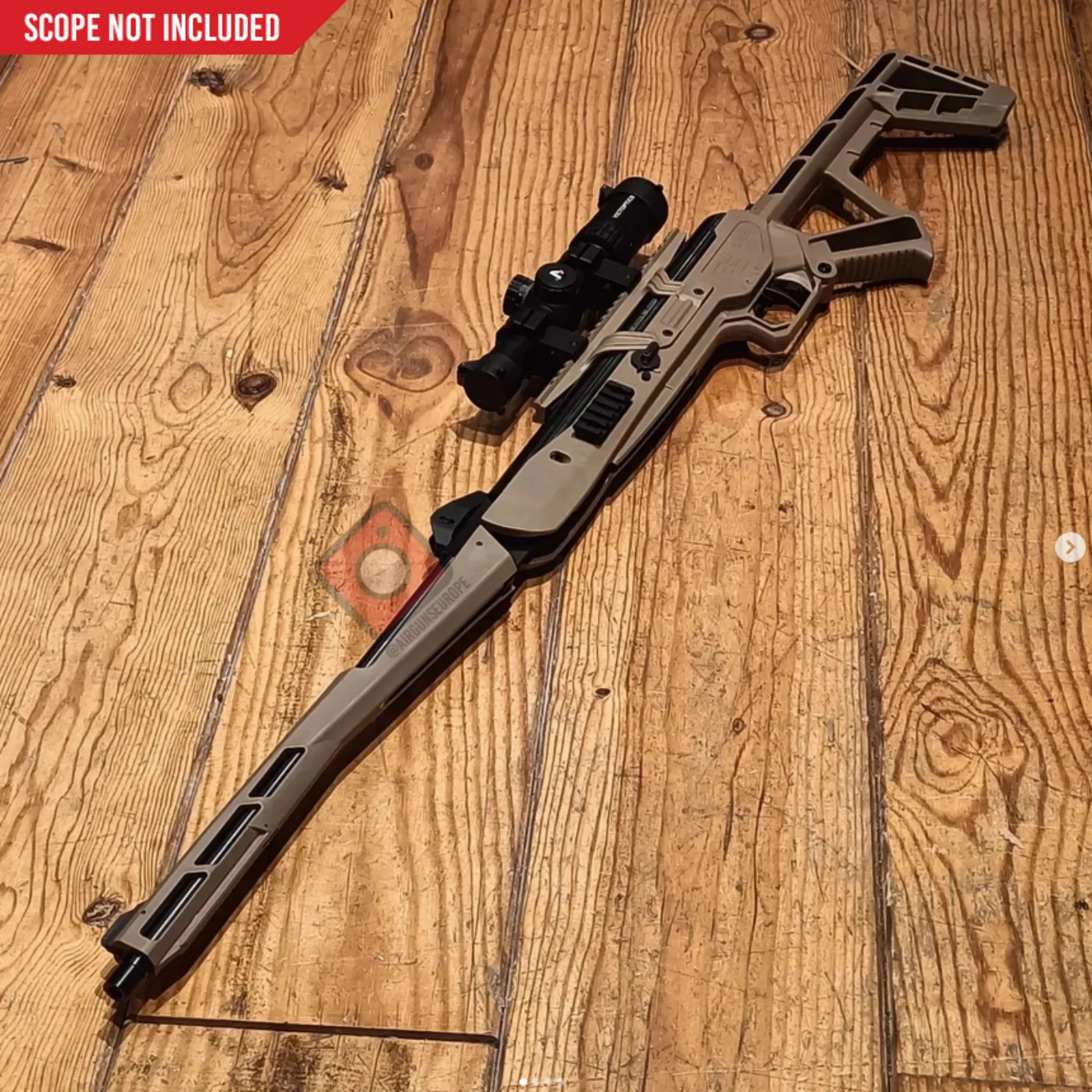

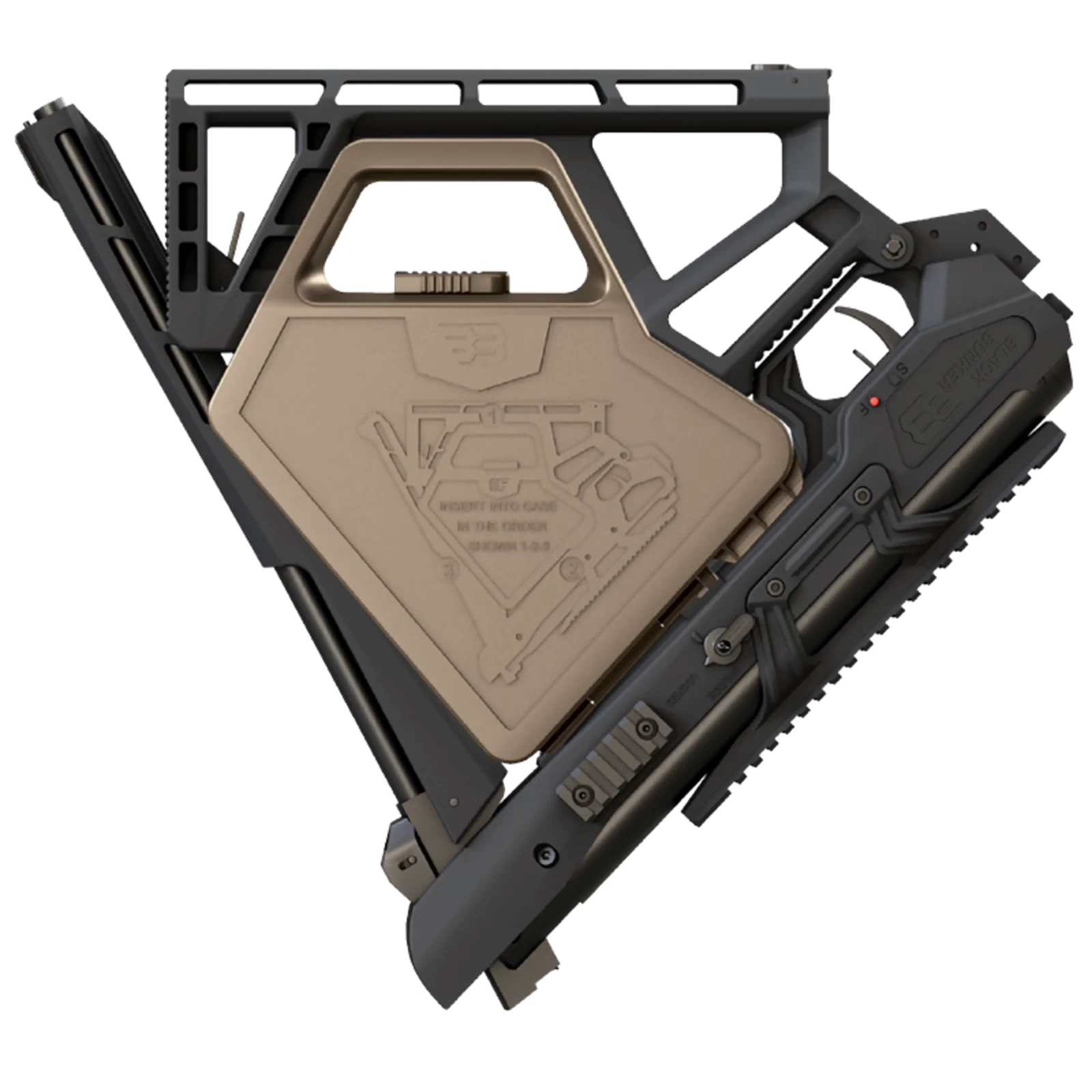
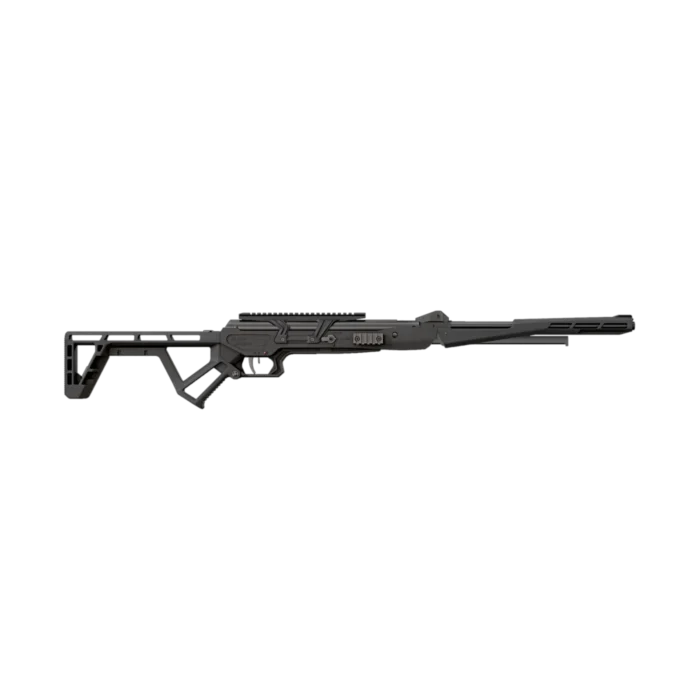
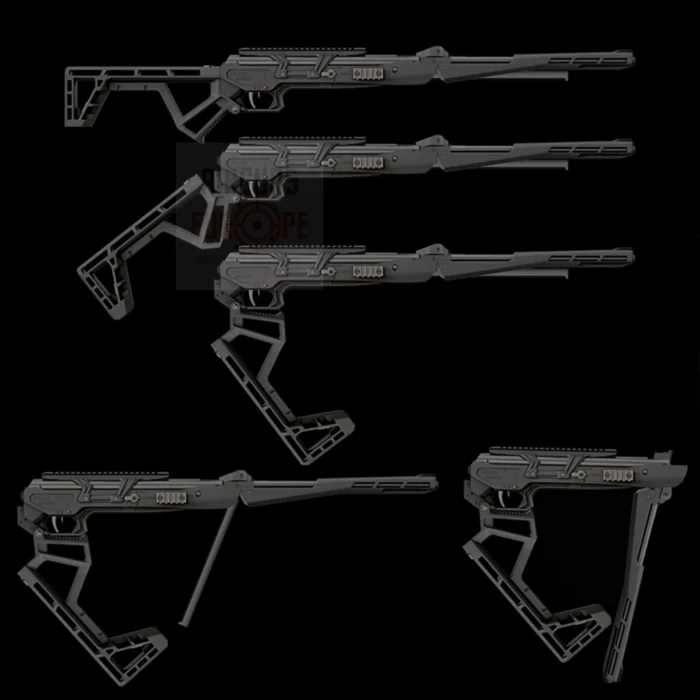

€200.00
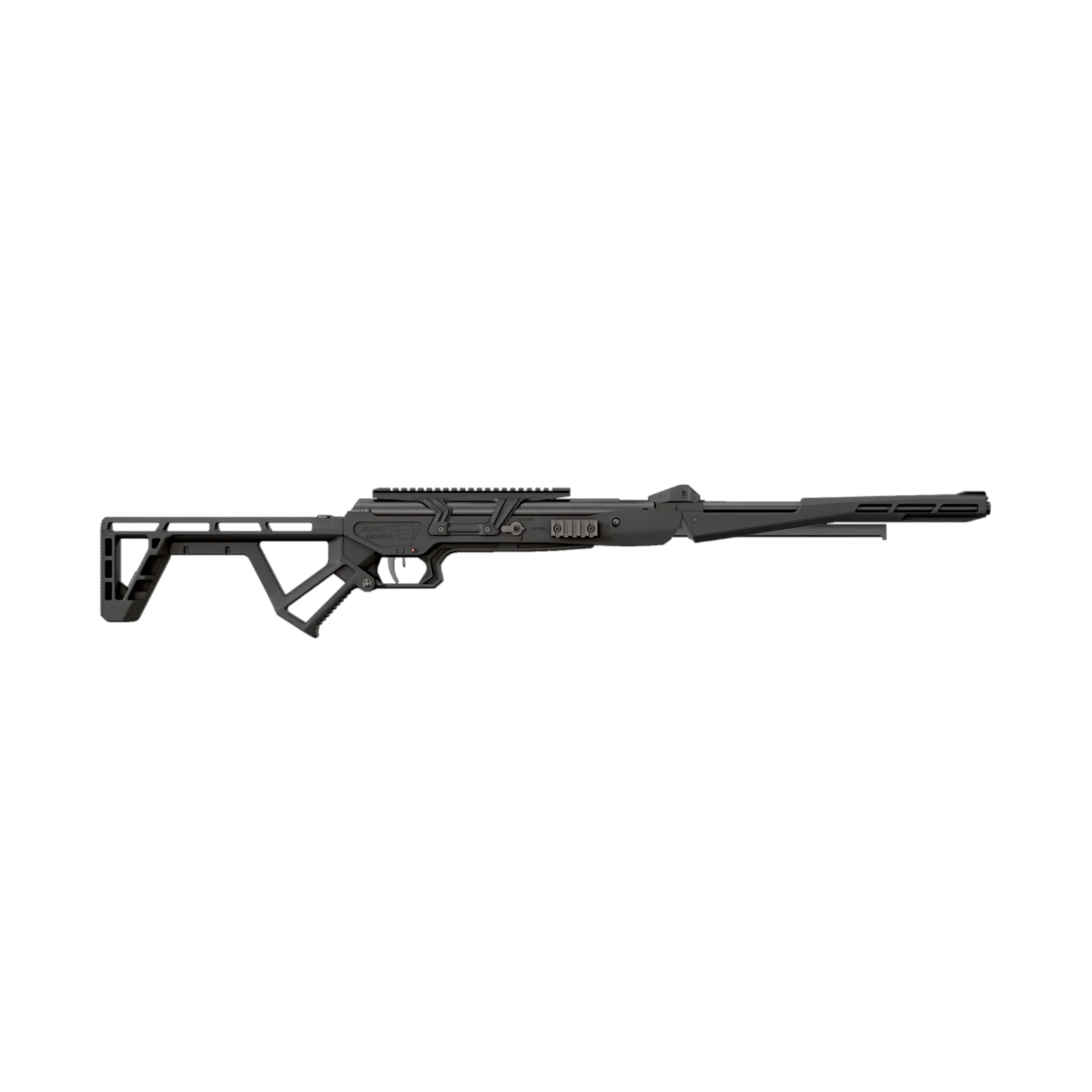
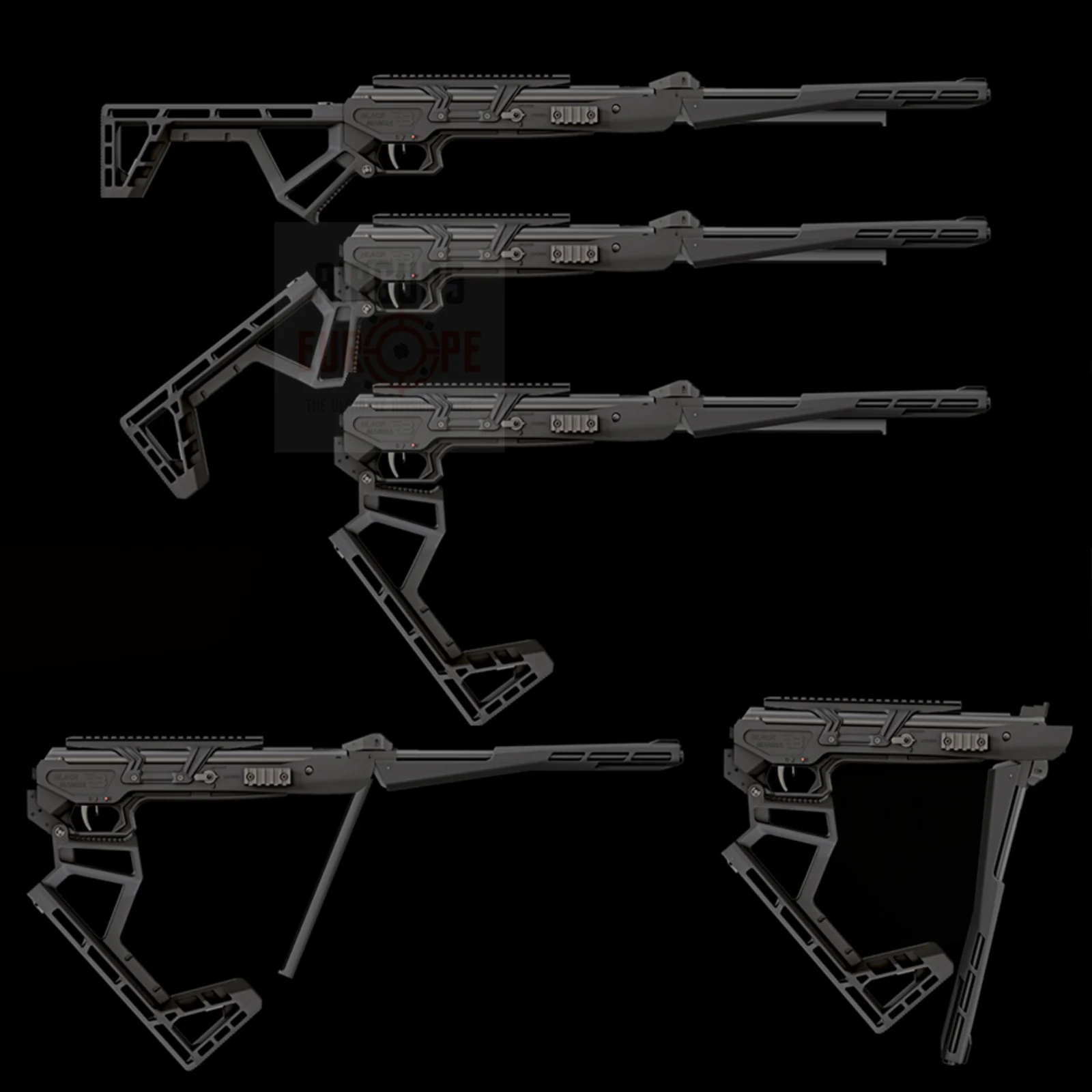
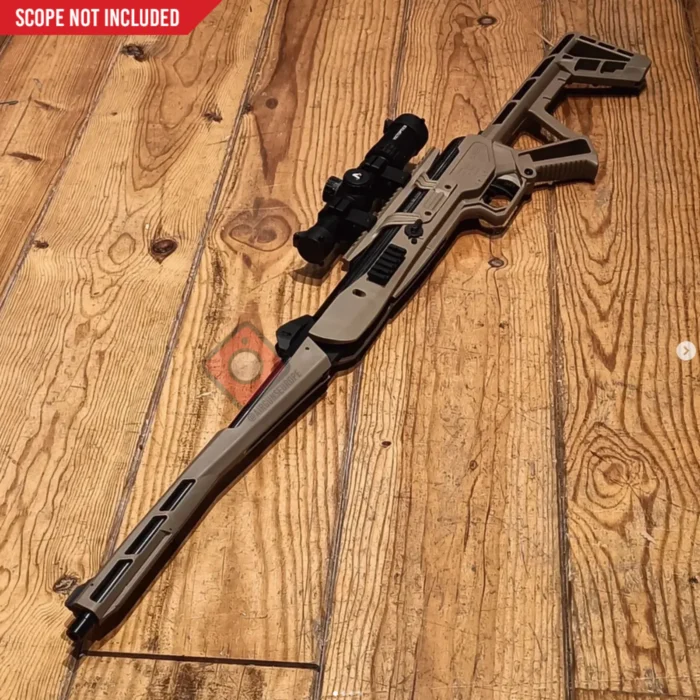
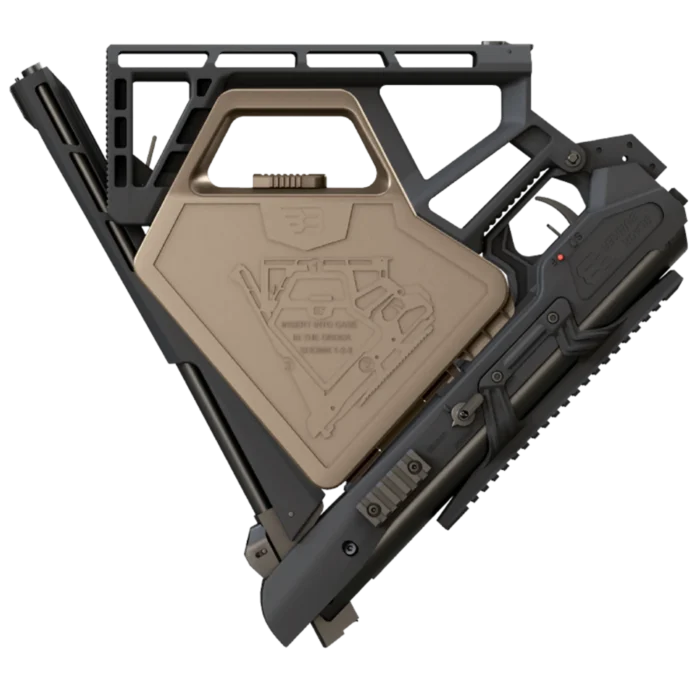
Of course, the most striking feature of the BM8 is the folding design, but this is not the only thing this rifle has to offer!
Black Bunker has clearly thought of the design of the BM8 and it sports some nice features.
When we saw the Black Bunker BM8 at IWA 2023, we wondered how they did this.
Now that we have it in our hands it is clear that it is a functional, smart, sturdy but above all simple design.
With a simple lever you disconnect the cocking arm and you can fold the rifle without cocking it.
Secure the barrel in the folding the stock and now the BM8 is easy to transport or store.
Then you click the barrel loose from the stock, extend the rifle and re-tighten the cocking arm.
This takes less than a full second and your rifle is ready for use.
The Black Bunker BM8 has a stout power of 24 joules in 5.5mm (.22), this is a popular power class that provides enough power, but is still easy to cock and shoot.
The BM8 is able to generate this force with a gas ram/piston.
In contrast to the traditional coil spring, it shoots and cocks much more smoothly.
The BM8 also has 22mm rails on the sides of the stock for mounting accessories.
This allows you to easily mount the AG-3 2-piece bipod for a stable shot.
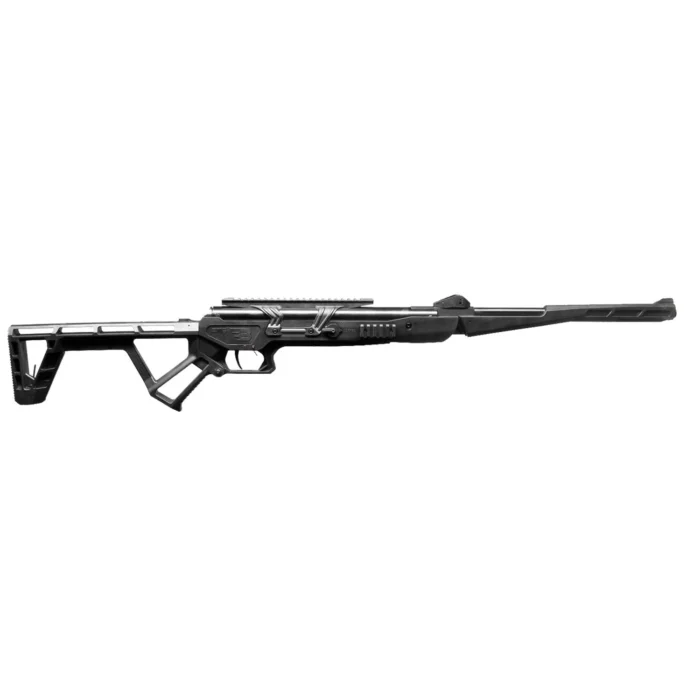
On top of this air rifle there is a 22mm rail for optics. This allows you to easily mount your favourite rifle scope.
Don’t have this yet? No problem! The BM8 is equipped with a set of very good iron sights.
What is not yet visible in all photos is that this air rifle is equipped with 1/2unf threads on the barrel.
This allows you to easily install a suppressor/silencer such as the NGS-60.
A break-barrel rifle is difficult to silence due to the mechanism (which is the loudest for the shooter), but a good silencer will significantly reduce the muzzle blast at the barrel!
| Power source: | Gasram/piston |
| Caliber: | 5.5mm (.22) |
| Muzzle energy: | 24 joules |
| Magazine: | Single shot |
| Operating system: | Break barrel |
| Trigger: | |
| Optics mounting: | 22mm picatinny/weaver |
| Barrel length: | |
| Total length: | 1080mm |
| Weight: | 3.4kg |
| Muzzle: | Thread 1/2unf |
| Extra: | |
| Accessories: | Case for accessories, barrel cover |
The black bunker bm8 is distinguished primarily by its folding architecture. The barrel and stock can be brought into a compact triangular arrangement for storage and transportation, while a mechanical locking arrangement helps prevent normal operation when folded. Black Bunker specifically highlights the compact format as suitable for storage in a backpack, vehicle compartment, shelf, or similar location.
Black Bunker
black bunker is a tactical and survival-oriented equipment brand introduced by Kore Outdoor. Kore states that the BM8 was developed as the first major product for the Black Bunker brand and that the rifle was designed and engineered in-house.
BM8
The bm8 uses a break-barrel system rather than a PCP reservoir, CO₂ cartridge, or battery-powered mechanism. The barrel is used to cock the gas-ram system before a pellet is loaded manually.
This means the platform remains mechanically straightforward and does not require a separate high-pressure charging system.
Collapsible Pellet Gun
The phrase collapsible pellet gun accurately describes the BM8’s defining storage feature, although “foldable break-barrel air rifle” is technically more precise.
The folding function is designed around transportation and storage rather than changing the operating principle.
Once unfolded and properly locked into its normal configuration, the rifle functions as a conventional single-shot gas-ram break barrel.
Foldable Airgun
As a foldable airgun, the BM8 differs from conventional fixed-stock break-barrel designs.
The folding architecture allows the full-length rifle to occupy substantially less storage space without requiring the barrel to be permanently removed.
However, the folding joints and locking mechanism should be periodically inspected for looseness, contamination, or unusual movement.
Black Bunker Foldable Airgun
The Black Bunker foldable airgun uses a two-stage safety-lock concept that Kore Outdoor says renders the rifle non-functional during storage and transportation.
This is an engineering feature of the folding system rather than a substitute for normal safe handling or secure storage.
Black Bunker Air Rifle
The Black Bunker air rifle uses a gas-ram system. Unlike a traditional steel coil spring, a gas ram uses a sealed compressed-gas strut to provide the energy for the piston.
This configuration can provide smoother cycling characteristics and avoids some of the long-term mechanical behaviors associated with coil springs.
Gas Ram Survival Rifle
The term gas ram survival rifle describes the BM8’s operating concept and design positioning.
Its gas-ram system means it does not rely on a refillable compressed-air reservoir, external pump, or replaceable CO₂ capsule.
The design therefore emphasizes mechanical independence and portability.
Black Bunker Survival Rifle
The Black Bunker survival rifle concept is centered primarily on compact storage, durability, and transportability.
Black Bunker states that the stock uses reinforced nylon-fiber material while key structural components incorporate carbon steel.
Black Bunker 5.5mm
The Black Bunker 5.5mm configuration corresponds to .22 caliber.
Kore Outdoor lists full-power .22 models at up to approximately 850 fps with lead pellets, while some European retailers list the 5.5mm version at approximately 24 joules. Output can vary by regional specification.
BM8 .22
The BM8 .22 is the larger of the two standard BM8 calibers.
It retains the same foldable architecture, break-barrel system, gas-ram powerplant, reinforced stock construction, iron sights, and accessory mounting arrangement as the wider BM8 family.
BM8 .177 and Black Bunker 4.5mm
The BM8 .177 and Black Bunker 4.5mm refer to the smaller-caliber configuration.
Kore Outdoor lists the .177 version at up to approximately 1100 fps with lead pellets in full-power form.
Specifications from the .177 version should not automatically be transferred to the .22 model.
Compact .22 Air Rifle
The term compact .22 air rifle describes the BM8 primarily when folded.
When fully opened, retailer specifications commonly list an overall length of approximately 1080 mm and weight around 3.4 kg, although some market listings differ slightly.
Backpack Air Rifle
The backpack air rifle description refers to its ability to fold into a significantly shorter package.
Black Bunker specifically markets the BM8 as capable of fitting into backpack-type storage.
However, storage and transportation must always comply with local laws.
Backpack Hunting Rifle
The phrase backpack hunting rifle is sometimes used commercially around the BM8, but suitability for hunting depends on local law, caliber, power configuration, target species, and ethical standards.
It should not be assumed that every regional version is legally or practically suitable for hunting.
Threaded Muzzle
The threaded version uses a 1/2 UNF muzzle thread according to multiple European listings.
Local regulations may control muzzle devices and related accessories, so compatibility and legality should be confirmed separately.
Picatinny Rail System
The rifle incorporates an upper optics rail and side accessory rails. Black Bunker identifies these as part of the rifle’s standard feature set, allowing compatible optical and support accessories to be mounted.
Iron Sights
The BM8 also includes open sights, with the rear sight described by Kore Outdoor as adjustable.
This allows the rifle to remain usable without requiring an optical sight.
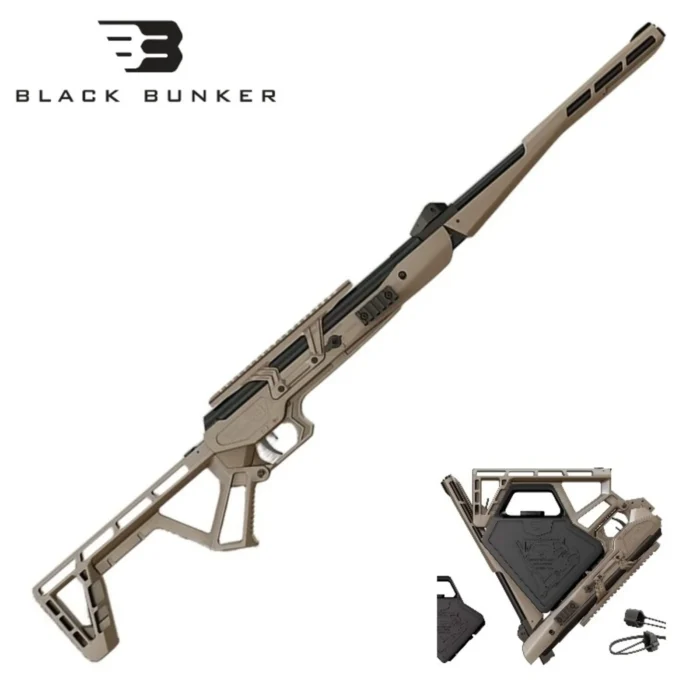
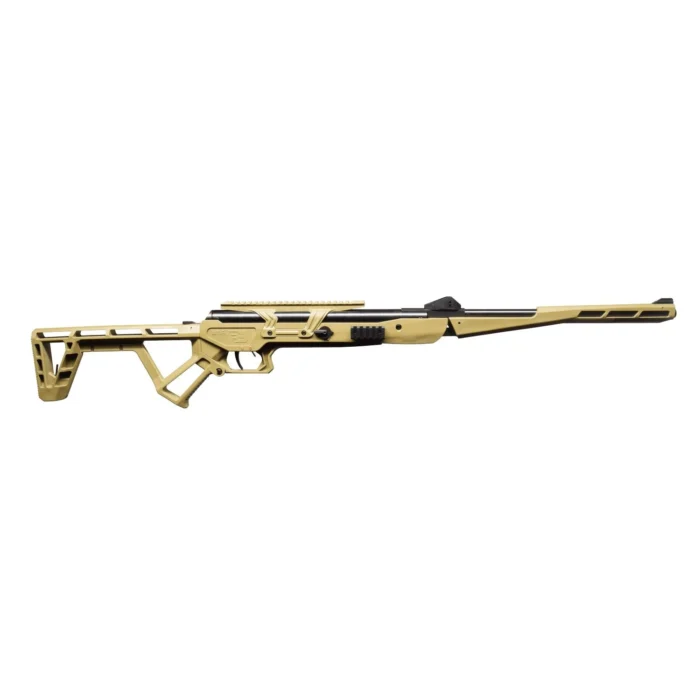
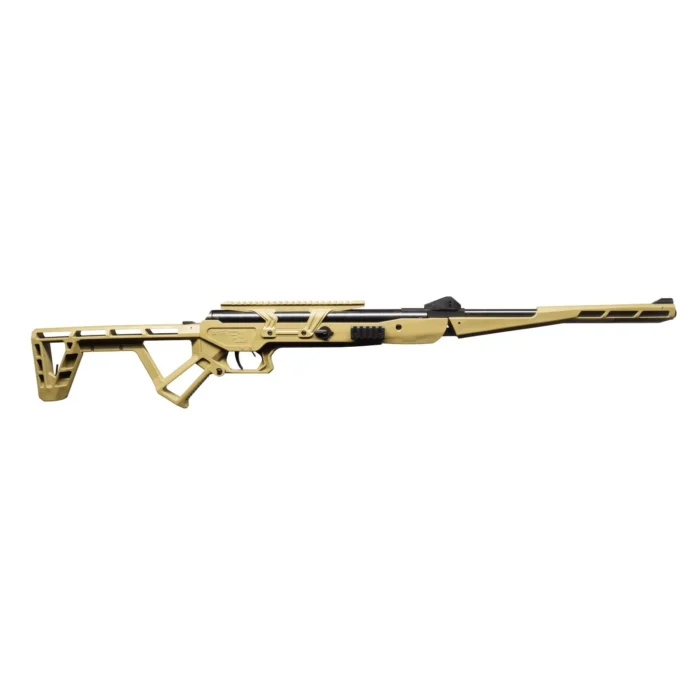
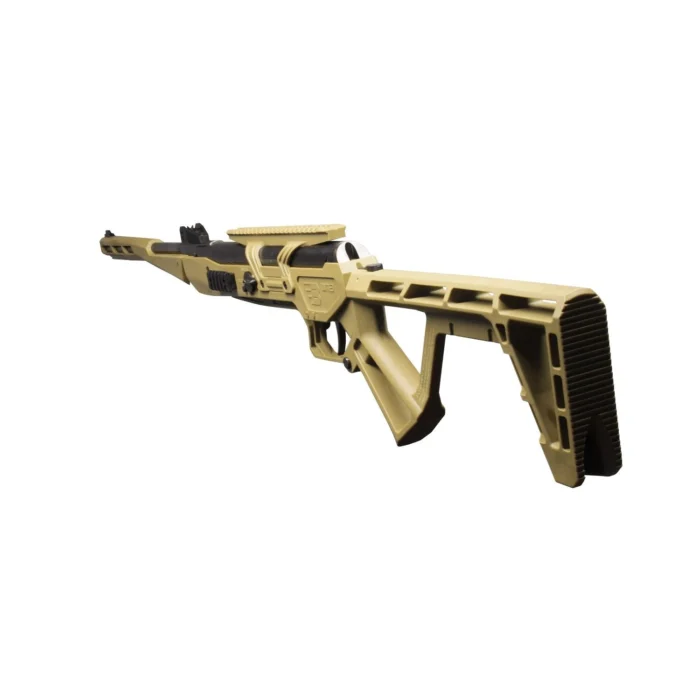
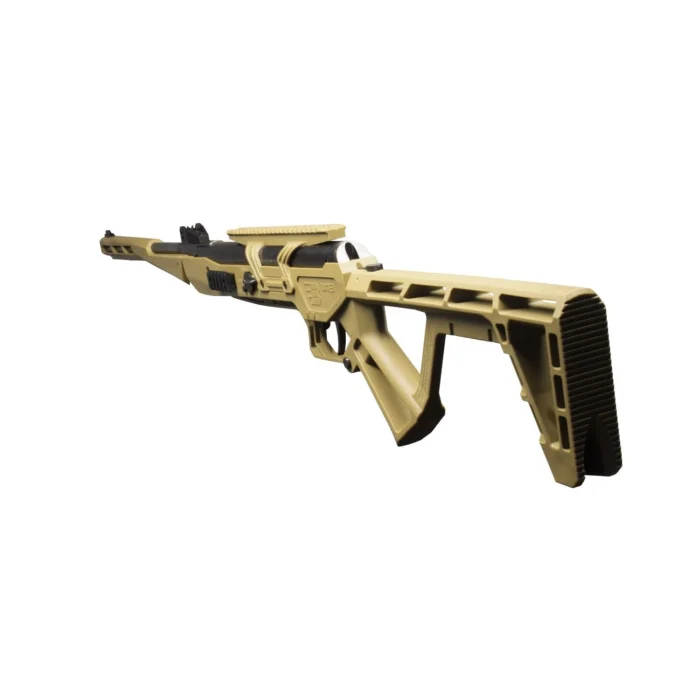
Black Bunker Coyote Tan
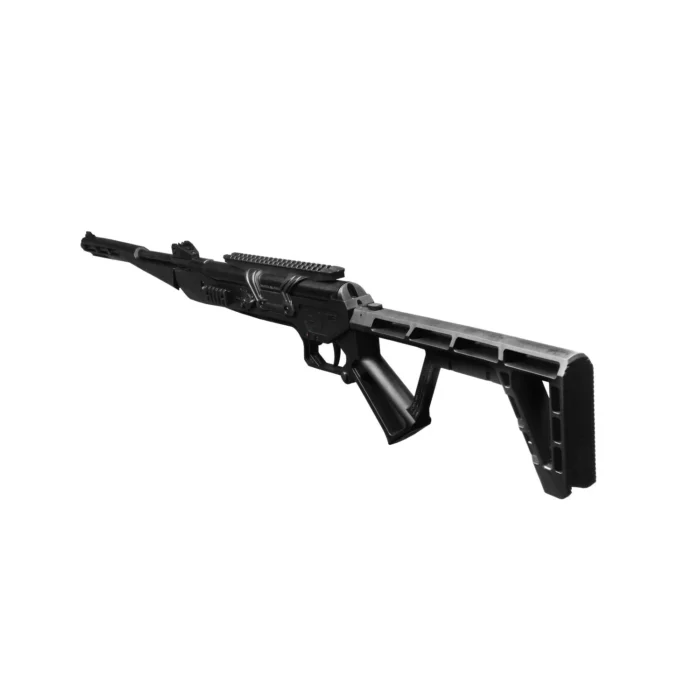
Black Bunker Coyote Tan refers to the alternate color option. Black Bunker currently displays both Full Black and Coyote Tan variants.
The color does not change the fundamental operating system.
Kore Outdoor Black Bunker
Kore Outdoor Black Bunker refers to the corporate relationship behind the product. Kore Outdoor officially introduced Black Bunker and the BM8 in 2024.
Survival Airguns
The term survival airguns is commonly used for self-contained platforms that emphasize portability and simple power systems.
The BM8 fits this concept through its folding design and gas-ram action, but safe storage, lawful use, and routine inspection remain essential.
Bunkrr.com and Similar Search Terms
Terms such as bunkrr.com, black bomb, plank gun, blackberry gun, b c 8, bedbunker, inflatable gun, banair, air bk, b 8 bomber, and b & r guns & outdoor range do not establish verified BM8 specifications.
Likewise, searches such as how to get the black hole sniper rifle appear unrelated to this physical air rifle.
These terms should not be treated as compatible product names or technical references.
Battery Powered Air Gun
The BM8 is not a battery powered air gun.
Its power comes from a mechanical gas-ram piston system. No battery is required for the rifle’s basic firing mechanism.
Overall Technical Perspective
The Black Bunker BM8 BLACK Thread 5.5mm combines a folding stock-and-barrel architecture, gas-ram break-barrel action, single-shot loading system, reinforced polymer construction, iron sights, Picatinny mounting rails, and threaded muzzle. Current manufacturer information confirms .177 and .22 caliber options, while European listings commonly specify approximately 24 joules for the 5.5mm version.
Its strongest technical distinction is portability rather than maximum output. The foldable architecture allows a full-sized break-barrel rifle to occupy substantially less storage space while retaining conventional mechanical operation when opened.
For lawful recreational ownership, the rifle should be stored securely, handled responsibly, inspected periodically around the folding and locking mechanisms, and used only with the correct caliber ammunition and within applicable local regulations.
Engineering Design, Folding Architecture, Build Quality, and Practical Performance
The Black Bunker BM8 BLACK Thread 5.5mm is built around an unusual engineering objective: combining the familiar characteristics of a full-length break-barrel platform with a structure that becomes substantially more compact for storage and lawful transportation. Instead of relying on a removable stock or complicated disassembly process, the design incorporates dedicated folding points into the platform itself. Consequently, its engineering should be evaluated not only by its power system but also by the quality of the locking mechanisms, structural materials, ergonomics, barrel alignment, and long-term durability.
Engineering Philosophy
The central engineering concept focuses on portability without abandoning conventional mechanical operation.
Once configured for normal use, the platform maintains the recognizable layout expected from a shoulder-fired break-barrel system. When storage becomes necessary, its folding architecture reduces the amount of space required.
This arrangement can be particularly useful where storage space is limited. Nevertheless, every movable structural joint introduces additional areas that deserve periodic inspection.
Folding Architecture
The folding system is the most distinctive part of the design.
Rather than separating the major components completely, the architecture allows them to remain connected while being arranged into a considerably smaller package.
This approach reduces the possibility of repeatedly removing and reinstalling major parts.
Moreover, the compact configuration can make organized storage easier. The mechanism should always move normally without excessive looseness, unusual resistance, or visible structural damage.
Locking Mechanism
A folding design depends heavily on secure locking.
Once opened into its operating configuration, the structural sections need to remain correctly positioned. Therefore, locking areas should be kept clean and inspected periodically.
Sand, dirt, damaged surfaces, or excessive wear can interfere with mechanical interfaces.
Users should never force a mechanism that suddenly feels different. Instead, the reason for abnormal resistance should be identified before further handling.
Gas-Ram Power System
The powerplant uses a sealed gas strut rather than a conventional coiled mainspring.
During the normal cocking cycle, energy is stored within this system and later transferred through the piston mechanism.
One practical advantage is that the operating system does not require an external compressed-air cylinder or disposable gas cartridge.
Consequently, the platform remains mechanically self-contained.
Routine maintenance should still follow manufacturer recommendations because internal components operate under substantial mechanical forces.
Break-Barrel Configuration
The break-barrel arrangement combines cocking and chamber access within one mechanical action.
This architecture has been used extensively in sporting airguns because it avoids the need for a separate external charging system.
However, barrel alignment and locking consistency remain important to repeatable performance.
The breech area should therefore be kept clean and protected from unnecessary impacts.
If noticeable movement or abnormal resistance develops, professional inspection is preferable to improvised adjustment.
Single-Shot Design
The single-shot configuration emphasizes mechanical simplicity.
Each firing cycle requires individual loading, which eliminates the additional complexity associated with a magazine-feeding mechanism.
For recreational target use, this can encourage a slower and more deliberate shooting routine.
Additionally, fewer feeding components mean fewer magazine-related parts requiring maintenance.
The correct pellet caliber should always be used, and the barrel should remain pointed in a safe direction throughout handling.
Barrel Construction
The barrel is central to consistency.
Its internal condition, crown, breech alignment, and mechanical lockup can influence repeatability. Therefore, unnecessary contact with the muzzle should be avoided.
Aggressive cleaning methods should also be avoided unless recommended by the manufacturer.
A precision barrel does not normally benefit from excessive intervention. Appropriate maintenance focuses on preserving its condition rather than repeatedly attempting to modify it.
Threaded Muzzle Configuration
The threaded muzzle distinguishes this version from the standard configuration.
Threading provides a standardized mechanical interface for compatible lawful equipment where permitted.
When no accessory is installed, the threads should remain protected against impacts and contamination.
Damaged threads can make later installation difficult and may require professional attention.
Any accessory must be technically compatible and legal in the owner’s jurisdiction.
Structural Materials
The platform combines metal working components with reinforced synthetic structural elements.
This material strategy helps balance durability, weight, and resistance to ordinary environmental exposure.
Synthetic construction can also tolerate routine handling without requiring the same surface treatment as traditional wooden furniture.
Nevertheless, polymer components are not indestructible. Excessive heat, harsh chemicals, crushing loads, and significant impacts should still be avoided.
Ergonomics
Ergonomics affect how naturally the platform can be handled during lawful recreational use.
Stock geometry, grip position, sight alignment, trigger reach, and overall balance all contribute to user comfort.
A portable design still needs to feel stable once fully opened.
Users should establish a comfortable position without forcing an unnatural posture.
Consistent handling generally contributes more to repeatable recreational target performance than constantly changing equipment configuration.
Sight Arrangement
Integrated open sights provide a basic aiming arrangement without requiring an optical accessory.
This can be useful for straightforward recreational target shooting and basic familiarization.
Adjustable sight components should be treated carefully because impacts can affect alignment.
If an optical sight is legally and appropriately fitted, its mounting system should be compatible with the available rail and suitable for the mechanical characteristics of the platform.
Accessory Rail Integration
Integrated mounting surfaces expand configuration flexibility.
However, accessories should be selected conservatively.
Excessive weight can change balance and handling, while poorly fitted equipment may loosen during repeated use.
Compatibility should therefore be confirmed before installation.
The presence of mounting rails does not mean every rail-mounted accessory is technically appropriate.
Manufacturer guidance should take priority over appearance or convenience.
Practical Accuracy
Practical accuracy depends on several interacting factors rather than one specification.
Pellet consistency, barrel condition, sight alignment, mechanical lockup, user technique, environmental conditions, and equipment condition all contribute.
A mechanically sound platform can provide repeatable recreational target performance when used within its intended operating parameters.
However, advertised velocity should never be treated as a direct measurement of accuracy.
Consistency is generally more informative than maximum output alone.
Handling the Compact Configuration
The compact arrangement is intended primarily for storage and transportation rather than normal firing.
Before any use, the platform should be correctly unfolded and its structural sections confirmed to be in their intended operating positions.
The folding mechanism should never be treated as a novelty feature.
Because it forms part of the structural architecture, careless handling can produce unnecessary wear or damage.
Transportation Considerations
Compact dimensions can simplify lawful transportation, particularly when combined with an appropriate protective case.
However, folding does not change the legal classification of the product.
Local transportation and storage laws still apply.
A compact configuration should therefore be viewed as a practical space-saving feature rather than a method of bypassing applicable requirements.
Secure Storage
Secure storage remains essential.
The platform should be kept unloaded, inaccessible to unauthorized users, protected from moisture, and stored according to applicable laws.
Its folding architecture may allow it to fit into smaller secure storage spaces, but accessibility should never be prioritized over security.
Pellets and other equipment can also be organized separately where appropriate.
Environmental Durability
Outdoor equipment may encounter dust, humidity, temperature changes, and occasional moisture.
After exposure, external surfaces should be inspected and appropriately dried before long-term storage.
Extended contact with water should be avoided.
Likewise, strong solvents or household chemicals should not be applied casually to synthetic or finished metal surfaces.
Preventive care usually provides better long-term results than aggressive cleaning.
Routine Inspection
Routine inspection should focus on the folding joints, locking areas, barrel, breech, stock structure, fasteners, sights, mounting surfaces, and visible mechanical components.
Any developing looseness, cracking, corrosion, deformation, or unusual movement should be investigated.
Owners should become familiar with the platform’s normal mechanical feel because gradual changes are easier to recognize when a consistent baseline has been established.
Long-Term Reliability
Long-term reliability depends on responsible ownership as much as original engineering.
The folding mechanism should be kept clean, the platform should remain protected during transportation, and structural components should be inspected periodically.
Unauthorized internal modification should be avoided.
When a mechanical problem develops, qualified servicing is preferable to experimental repair.
Overall Engineering Perspective
The design successfully combines a self-contained gas-ram operating system with an unusually compact folding architecture. Its principal technical strengths lie in mechanical independence, reduced storage dimensions, single-shot simplicity, reinforced construction, conventional sighting capability, and a configurable external layout.
Ultimately, dependable performance depends on correct configuration, appropriate maintenance, secure storage, careful handling, and adherence to manufacturer instructions. When these principles are followed, the folding architecture provides meaningful portability while the underlying mechanical system remains straightforward and familiar for lawful recreational target use.
Maintenance, Inspection, Storage, Durability, and Long-Term Care
Proper maintenance is important for preserving the condition, consistency, and long-term reliability of the Black Bunker BM8 BLACK Thread 5.5mm. Because the platform combines a break-barrel action with a folding structure, routine care should cover both the conventional mechanical components and the additional joints and locking surfaces associated with the compact design. Preventive maintenance does not require unnecessary disassembly. Instead, the most useful approach involves regular external inspection, appropriate cleaning, careful storage, protection from contamination, and professional servicing whenever abnormal mechanical behavior develops.
Routine Inspection
A basic inspection should become part of responsible ownership.
Before and after periods of use, visible components can be checked for looseness, corrosion, cracking, unusual wear, or contamination.
Particular attention should be given to the barrel, breech, folding joints, locking areas, stock, sights, mounting surfaces, and exposed fasteners.
Developing problems are generally easier to manage when they are identified early.
If anything suddenly looks or feels substantially different, continued use should stop until the cause has been established.
Caring for the Folding Mechanism
The folding architecture deserves particular attention because it distinguishes this platform from conventional fixed designs.
Moving joints should remain clean and free from excessive dirt, sand, grit, or other debris.
Forcing contaminated joints can accelerate surface wear.
Likewise, repeated aggressive folding provides no maintenance benefit.
The mechanism should move through its intended range normally, and any developing looseness, binding, or unusual movement should receive appropriate inspection.
Checking Locking Surfaces
Locking surfaces help maintain structural alignment when the platform is configured for normal use.
These areas should remain free from obvious damage, deformation, and heavy contamination.
Users should not attempt to compensate for looseness through improvised modifications.
If the locking arrangement no longer feels consistent, qualified servicing is preferable.
Correct mechanical engagement is more important than achieving a particular cosmetic appearance.
Barrel Exterior Care
The external barrel surface should remain reasonably clean and dry.
After exposure to moisture, fingerprints, or humid conditions, wiping the exterior with an appropriate material can help preserve the finish.
Abrasive pads should be avoided because they can damage protective coatings.
Likewise, aggressive household cleaning products may affect finishes or nearby synthetic components.
Manufacturer-approved maintenance products provide a more appropriate option.
Bore Maintenance
The bore does not require constant aggressive cleaning.
Excessive cleaning can introduce unnecessary wear, particularly when inappropriate tools or chemicals are used.
Maintenance should therefore follow manufacturer recommendations.
If cleaning becomes necessary, suitable equipment and approved products should be selected.
Objects that could scratch internal surfaces should never be forced through the barrel.
The objective is preservation of the bore rather than achieving unnecessary visual perfection.
Breech Inspection
The breech area experiences repeated movement during normal operation.
It should remain free from excessive debris and visible damage.
Sealing surfaces deserve particular attention because deterioration can affect consistency.
However, internal adjustments should not be attempted simply because performance appears different.
Changes can have several causes, and professional diagnosis is preferable when a mechanical problem cannot be identified through ordinary external inspection.
Gas-Ram System Care
The internal power system is designed as a contained mechanical assembly.
Owners should not attempt unnecessary internal disassembly or modification.
High internal forces may be present even when the platform appears inactive.
Routine owner maintenance should therefore focus mainly on accessible external areas.
If the power system develops unusual sounds, inconsistent behavior, or mechanical resistance, inspection by qualified personnel provides the safer approach.
Stock Inspection
Synthetic structural components should be examined for cracking, deformation, impact damage, or loose attachment points.
Although reinforced polymer can provide excellent resistance to ordinary handling, it can still be damaged by excessive heat, crushing, severe impacts, or inappropriate chemicals.
The folding sections should receive additional attention because repeated movement occurs around these areas.
Any significant structural crack deserves professional assessment.
Fasteners and Hardware
Visible fasteners should remain correctly seated.
Repeated mechanical cycling can sometimes contribute to gradual loosening.
However, owners should avoid excessive tightening because damaged threads can create additional problems.
If a fastener repeatedly loosens, the underlying reason should be investigated.
Applying adhesives, thread-locking products, or other compounds without manufacturer guidance may complicate future servicing and should therefore be avoided.
Sight Care
Open sights should remain clean, secure, and protected from impacts.
A bent or damaged sight can affect alignment even when the rest of the platform remains mechanically sound.
Adjustable components should move normally without being forced.
During transportation, protecting the sighting system from heavy objects can reduce accidental damage.
If an optical sight is installed, its mounting hardware should also receive periodic inspection.
Rail Maintenance
Accessory mounting surfaces should remain clean and free from significant damage.
Unused sections do not require excessive treatment.
Accessories should be removed carefully so that mounting surfaces are not scratched unnecessarily.
Overtightening mounting hardware can damage components or make future removal difficult.
Therefore, installation and maintenance should follow the relevant manufacturer’s instructions.
Threaded Muzzle Care
The muzzle threads should be protected from impacts, dirt, and corrosion.
When no compatible lawful accessory is installed, an appropriate protective cap can help prevent accidental damage.
Cross-threading should be avoided because damaged threads may require professional repair.
Any fitted accessory must comply with local regulations and manufacturer compatibility requirements.
The muzzle area should never be modified using improvised tools.
Moisture Protection
Moisture is one of the most common long-term storage concerns.
After exposure to rain or humid environments, the exterior should be dried before the platform is placed into enclosed storage.
A wet product should not be immediately sealed inside a case for extended periods.
Trapped moisture can encourage corrosion on metal components and may affect other materials over time.
Humidity Management
Long-term storage in consistently humid environments deserves additional attention.
A dry storage location with reasonable airflow is preferable.
Where appropriate, moisture-control products may help manage humidity inside secure storage areas.
However, such products should not contact the platform directly unless designed for that purpose.
Regular inspection remains important because humidity problems can develop gradually without obvious early warning.
Temperature Protection
Extreme temperatures should be avoided.
Leaving the platform inside a closed vehicle exposed to strong sunlight for prolonged periods can subject synthetic materials, seals, and finishes to unnecessary heat.
Likewise, rapid movement from very cold conditions into warm humid environments may encourage condensation.
Allowing equipment to stabilize in an appropriate environment before long-term storage can reduce this problem.
Chemical Protection
Fuel, solvents, bleach, strong detergents, acids, and other aggressive substances should be kept away from the platform.
Some chemicals can affect polymer components, protective finishes, seals, or adhesives.
If accidental contamination occurs, manufacturer guidance should be consulted before aggressive cleaning is attempted.
Using an unknown chemical to remove another chemical can potentially make the problem worse.
Safe Storage
Long-term storage should prioritize security as well as preservation.
The platform should be unloaded and kept inaccessible to unauthorized users according to applicable regulations.
A secure, dry storage location protects both the equipment and surrounding people.
The compact folding configuration may reduce the physical storage space required, but it does not reduce the need for responsible security.
Transportation Protection
A suitable protective case or bag can reduce scratches, impacts, moisture exposure, and contamination during lawful transportation.
Heavy tools and loose metal objects should not be packed directly against the platform.
The folding mechanism should be protected from crushing loads.
Transportation requirements vary between jurisdictions, so applicable laws should always be followed.
Maintaining the Exterior Finish
Cosmetic care can contribute to long-term preservation, although appearance should remain secondary to mechanical condition.
Dust and ordinary surface contamination can generally be removed gently.
Abrasive polishing should be avoided.
Frequent aggressive cleaning can gradually damage protective surfaces.
A clean, dry, lightly maintained exterior usually provides better results than repeated cosmetic restoration.
Avoiding Unauthorized Modifications
Internal modification can affect reliability, legal compliance, warranty coverage, and safety.
Owners should avoid altering the power system, locking mechanism, trigger components, barrel, or structural folding arrangement without approved technical guidance.
A modification intended to increase performance may create additional mechanical stress.
Keeping the platform within its manufacturer-supported configuration provides a clearer foundation for maintenance.
Professional Servicing
Professional assessment becomes appropriate when unusual resistance, significant looseness, structural cracking, inconsistent mechanical behavior, damaged threads, severe corrosion, or other substantial defects appear.
Attempting complex repairs without the correct tools and technical knowledge can worsen the problem.
Qualified servicing can also determine whether replacement parts are required or whether routine adjustment is sufficient.
Maintenance Records
Keeping simple records can improve long-term ownership.
Purchase date, major inspections, repairs, replacement parts, and unusual incidents can be documented.
This information becomes particularly useful if the platform changes ownership or requires professional servicing later.
A documented history provides technicians with more useful information than relying entirely on memory.
Long-Term Durability
Durability depends on both engineering and ownership habits.
Careful folding, clean locking surfaces, moisture protection, controlled storage, conservative cleaning, and regular inspection can reduce avoidable deterioration.
Mechanical components naturally experience wear over time, but responsible maintenance helps identify changes before they develop into more significant problems.
Overall Long-Term Care Perspective
The most effective maintenance strategy is consistent rather than excessive. Regular external inspection, careful handling, appropriate cleaning, secure dry storage, protection from chemicals and extreme temperatures, and professional servicing when necessary provide a strong foundation for preserving the platform.
Because the design includes additional folding and locking components, these areas deserve particular attention throughout ownership. Ultimately, responsible maintenance protects structural condition, mechanical consistency, and long-term usability without relying on unnecessary disassembly or experimental modification.
Black Bunker
Black Bunker
Black Bunker

Reviews
There are no reviews yet.