
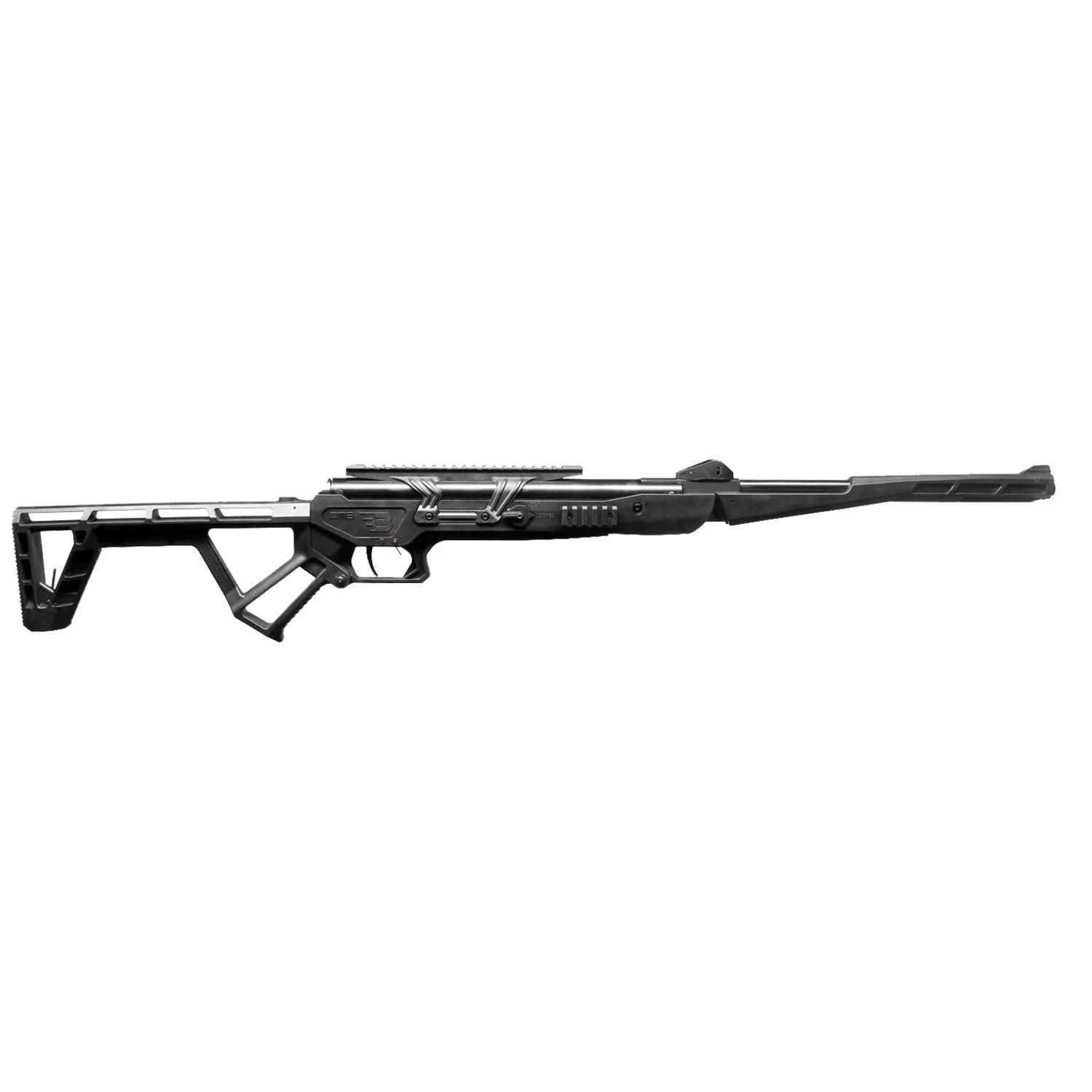
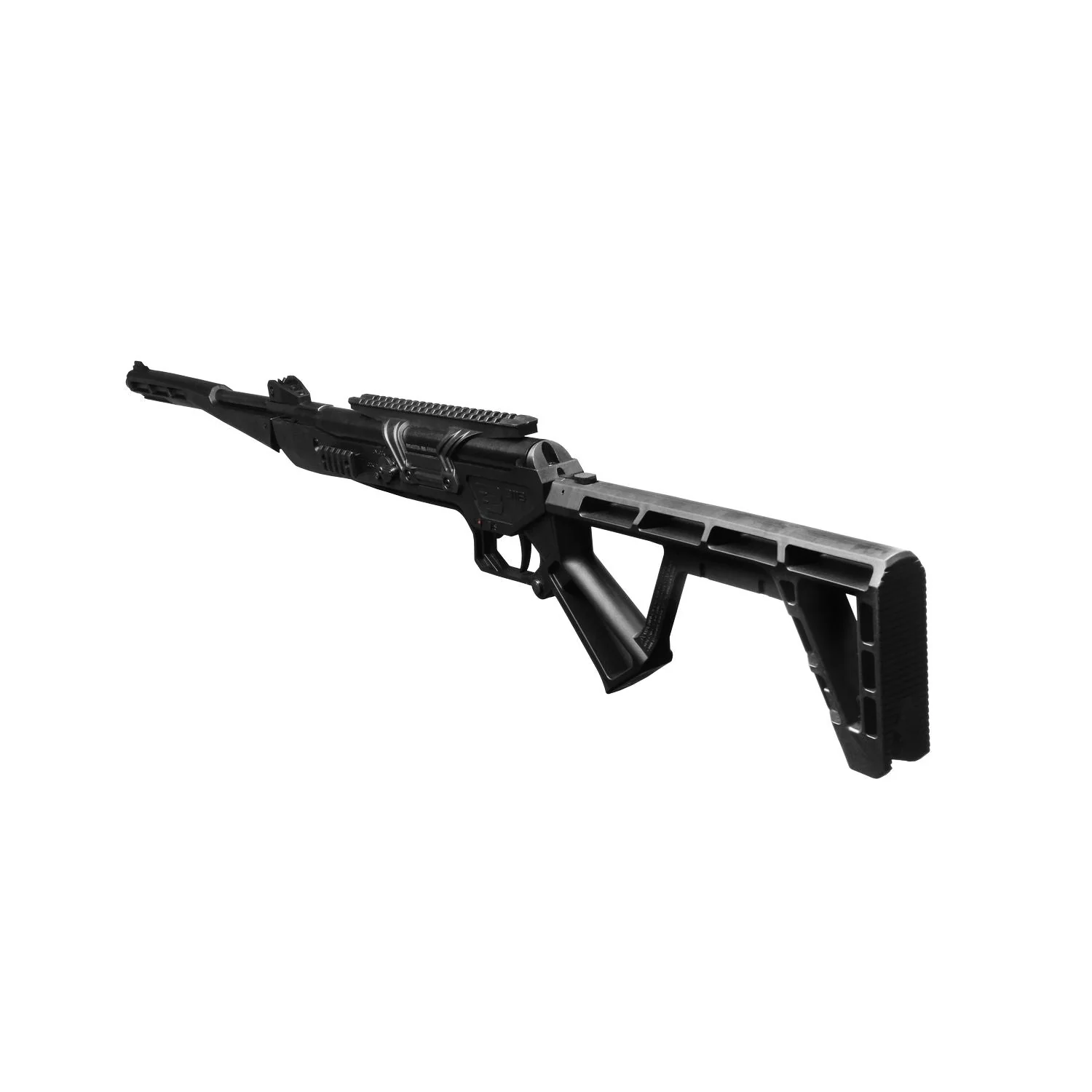
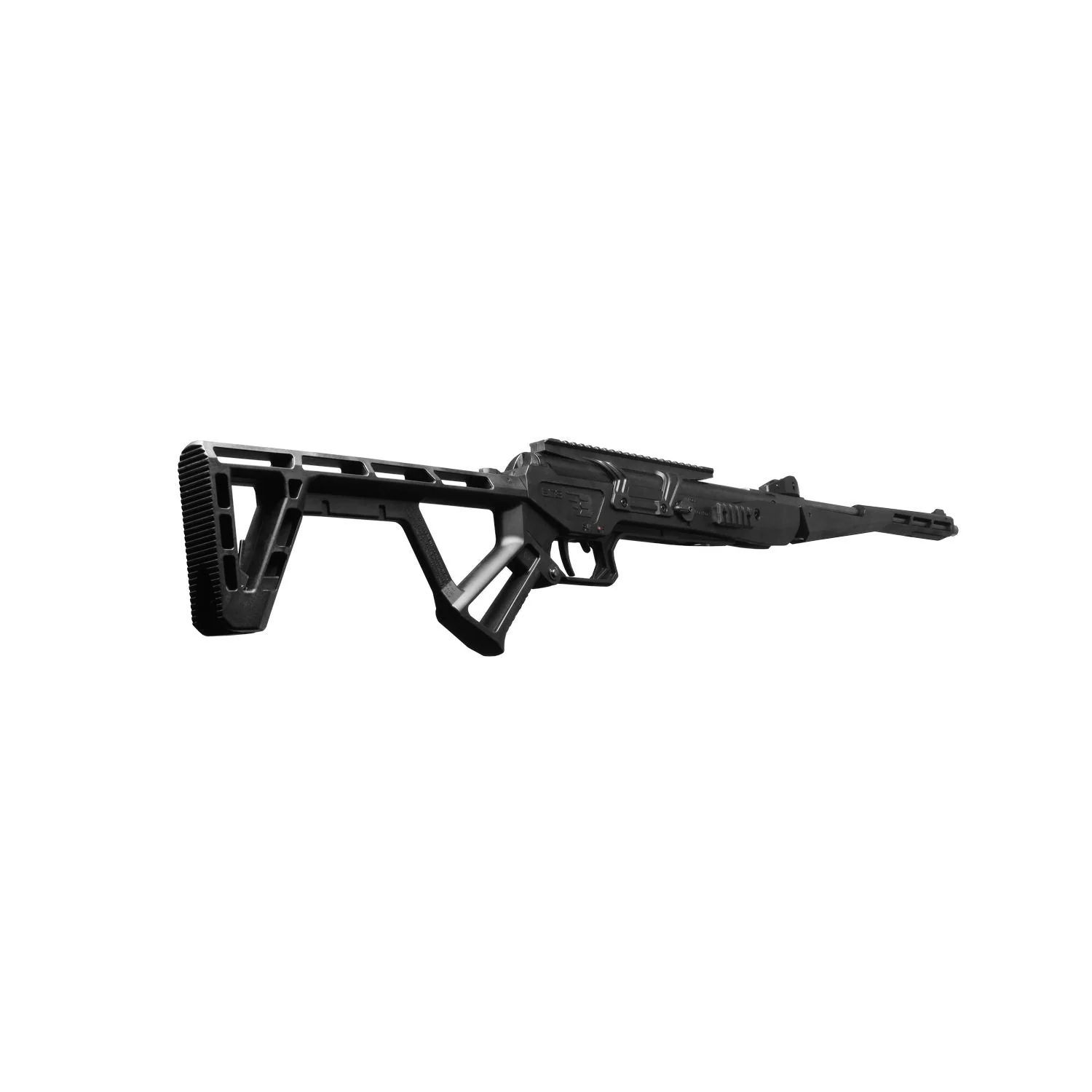
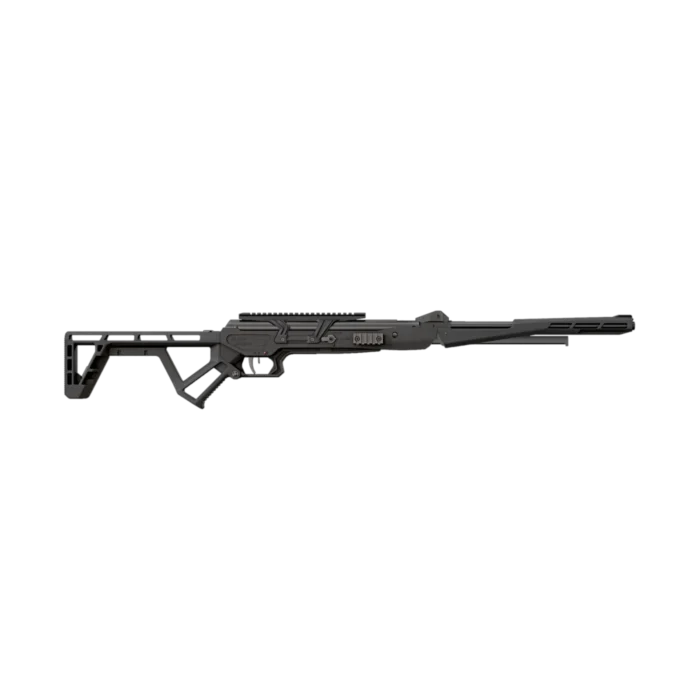
Black Bunker BM8 – Full Black – .22 Cal
€110.00
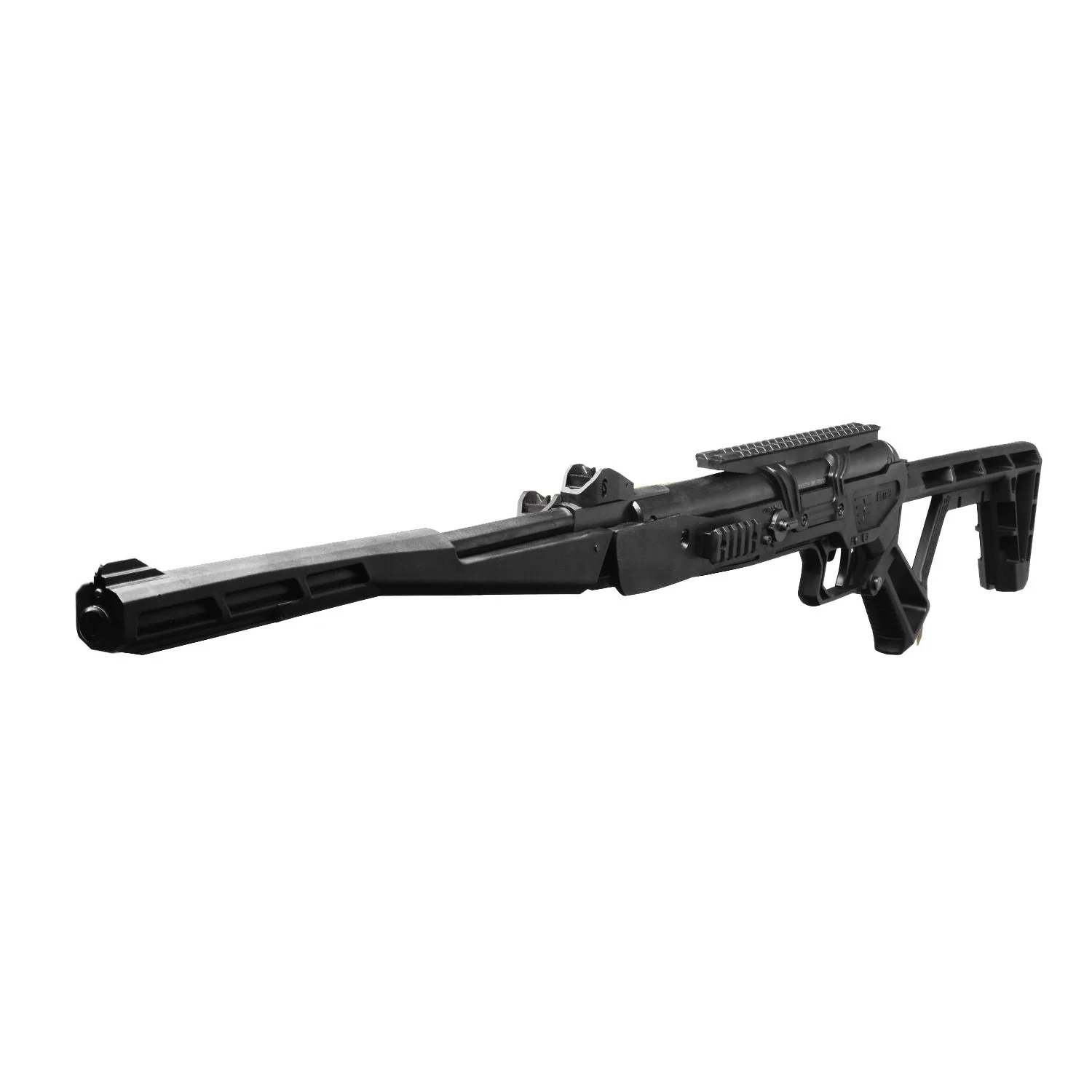
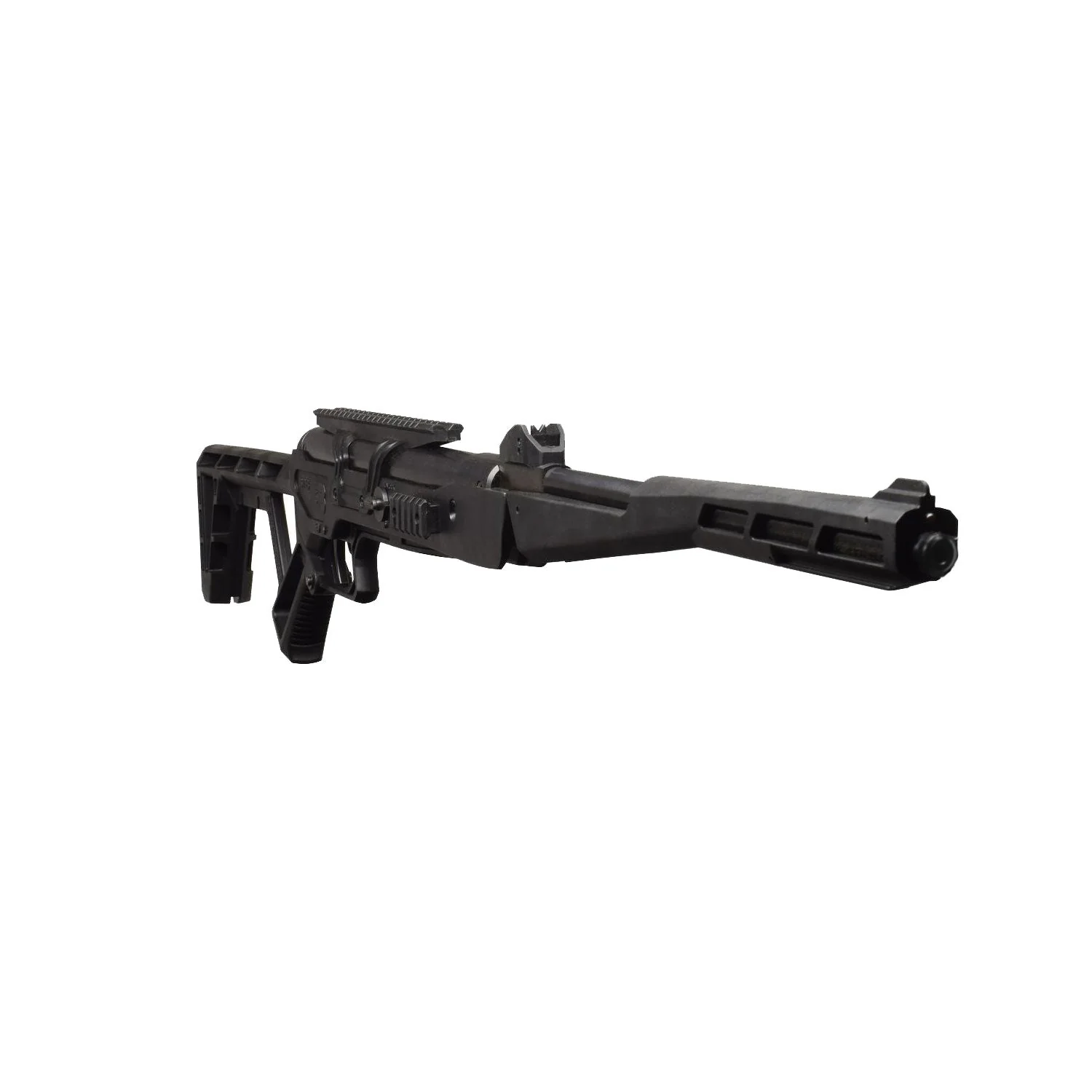
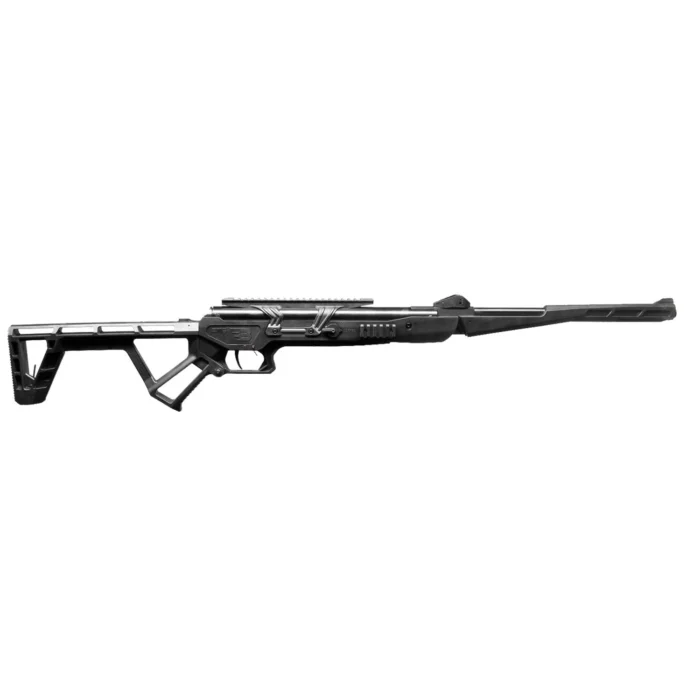
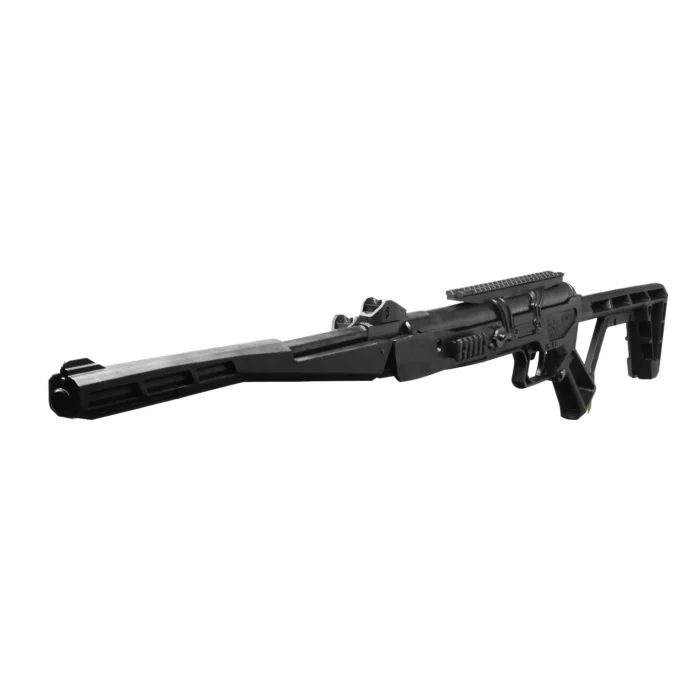
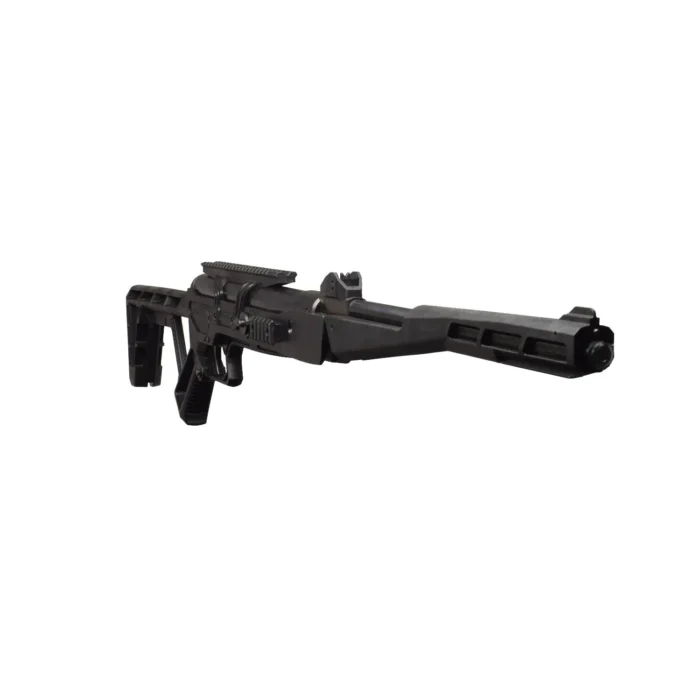
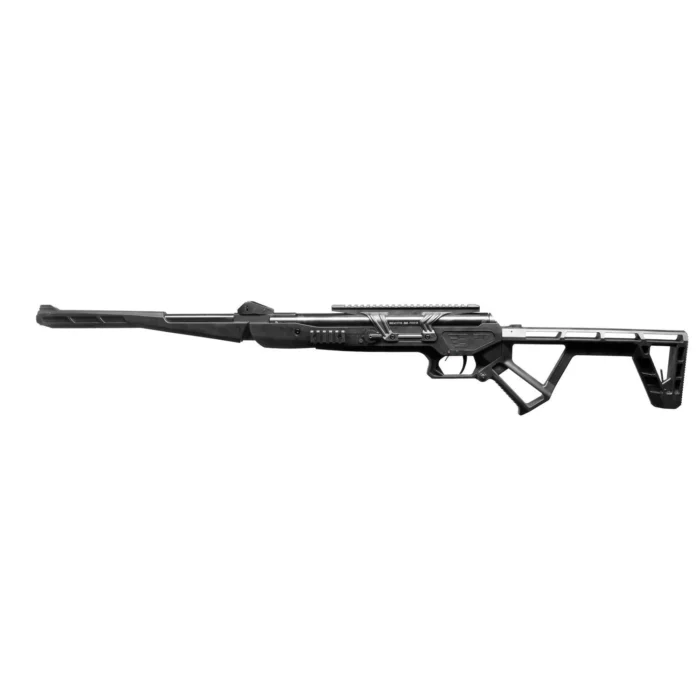
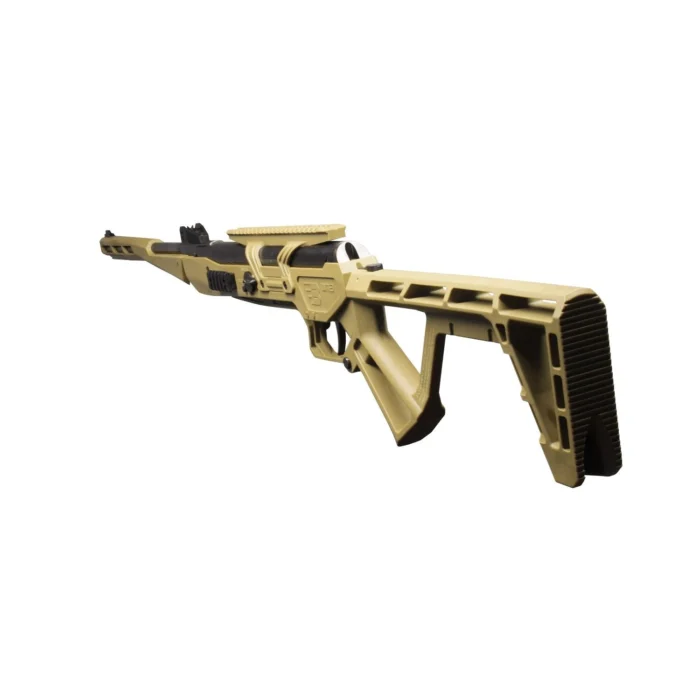
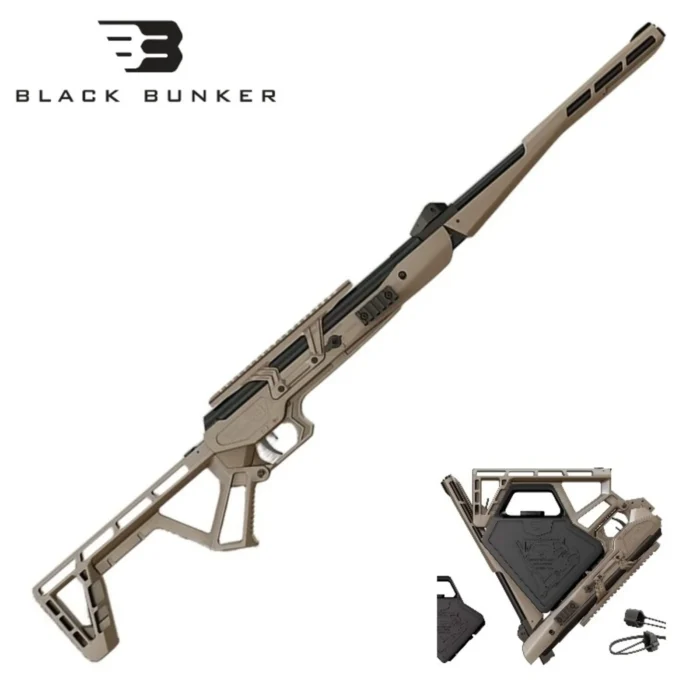
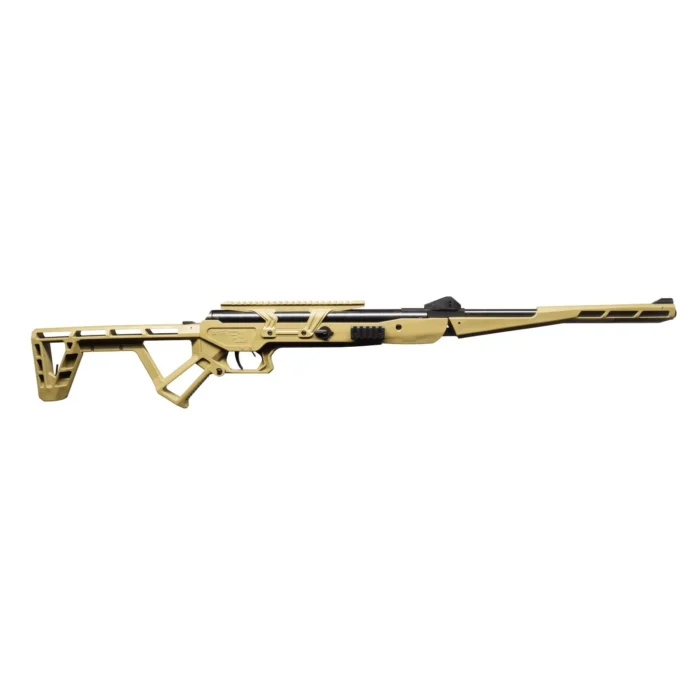
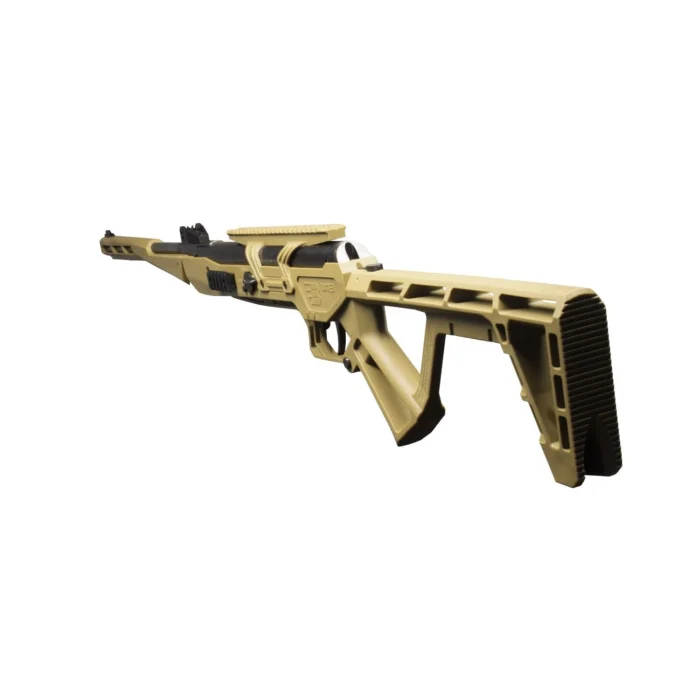
Black Bunker is committed to providing superior tactical survival gear for vigilant citizens in both urban and wilderness environments. Their latest product is the BM8, a foldable break barrel survival air rifle designed to be used indefinitely.
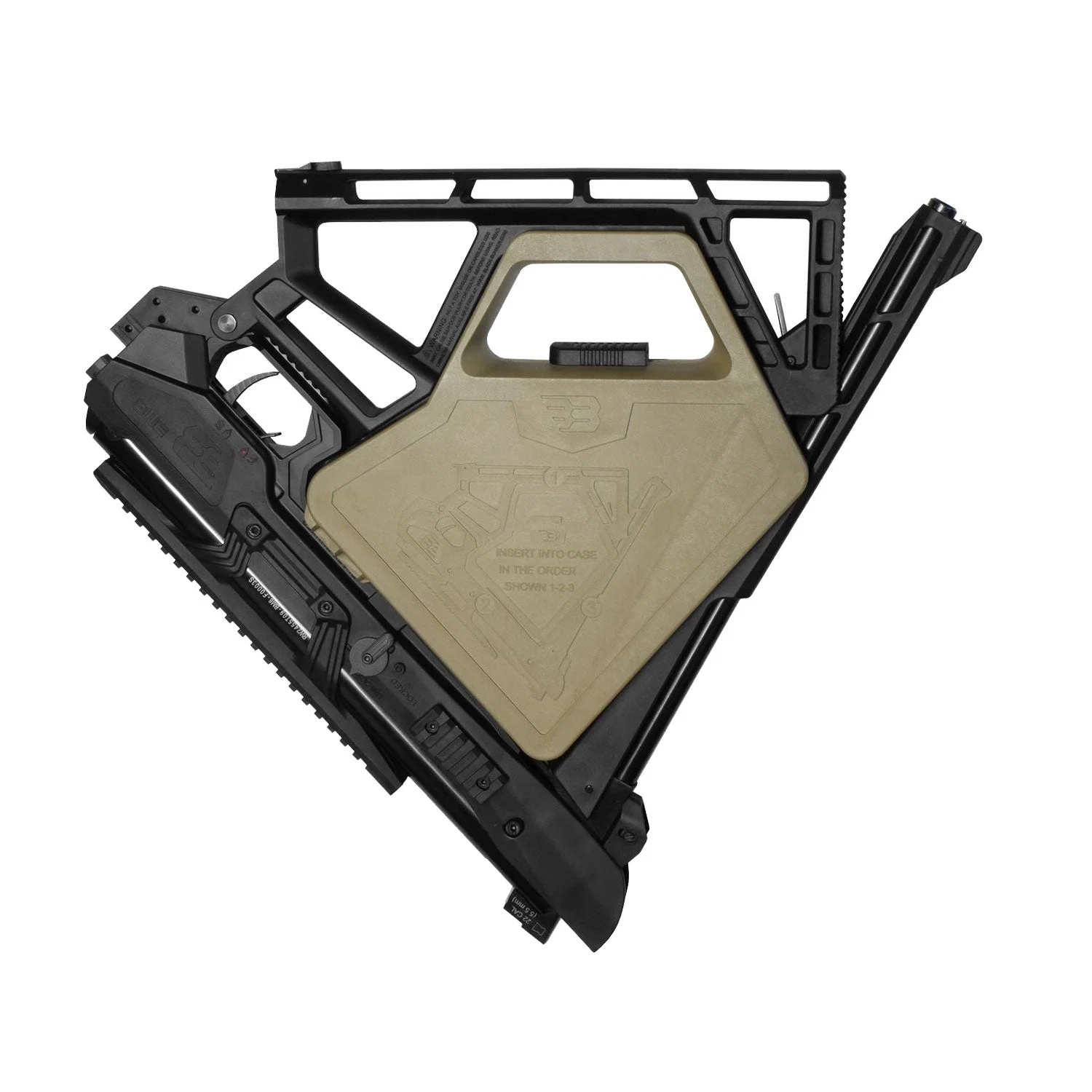
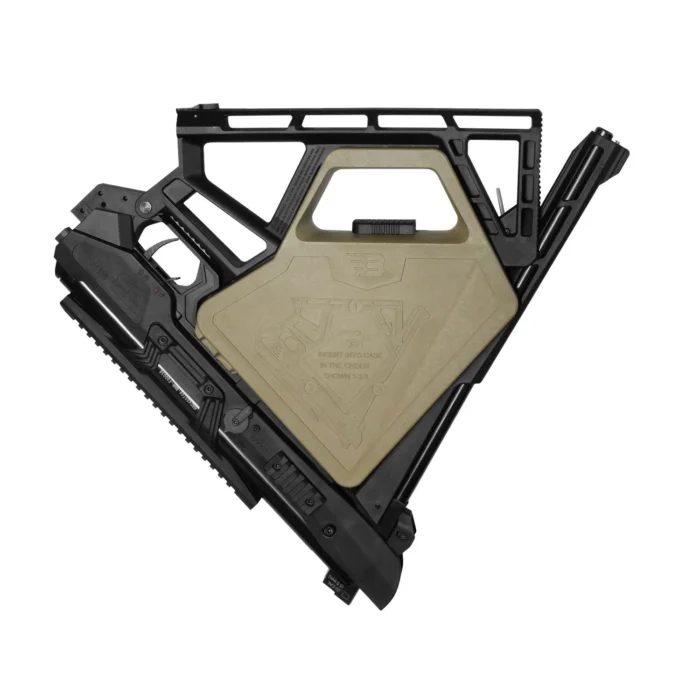
The BM8 stands out with its unique design and innovative features, making it an unprecedented concept. Its compact design allows for easy storage and transportation, fitting in a backpack, car trunk, motorbike storage box, shelf, or mounted on a wall. The triangular water-resistant case with foam provides ample space for a survival kit, knife, multi- tool, pellets, compact optics, and other tools.
The BM8 is powered by a gas ram system, offering several advantages over traditional spring systems, including consistent velocity, less recoil, increased accuracy, reduced noise, less maintenance (no lubrication of spring needed), no spring fatigue, easy cocking, and increased durability.
To ensure user safety and prevent potential damage to the gas ram system, the action of the air rifle can be disengaged by a rapid 2-stage process with a push button and a selector switch, rendering it non-functional.
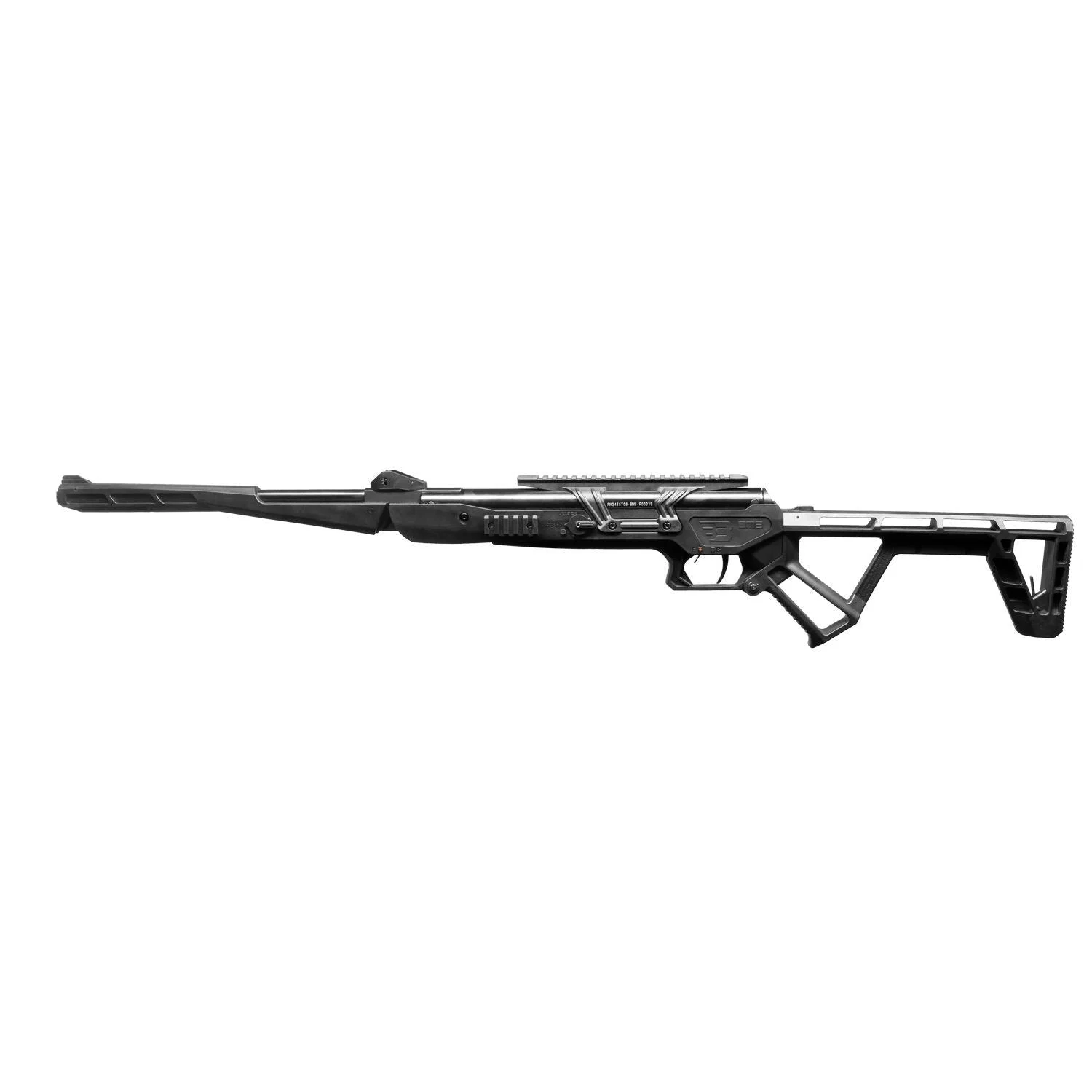
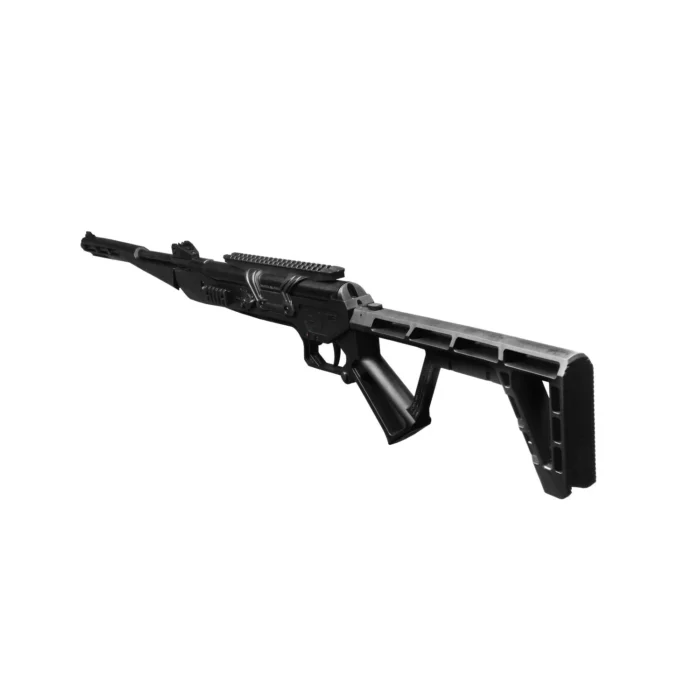
The BM8 comes with a picatinny rail system for scope mounting and picatinny rails on the sides for attaching accessories such as flashlights, lasers, and bipods.
The Black Bunker team is already working on the development of complementary products and next-generation models, which will be introduced continuously. With the BM8, Black Bunker has set a new standard for survival air rifles, combining innovation, durability, and practicality in a single product.
Features:
- The first foldable Survival Air Rifle.
- Ultra compact and easy to store & carry.
- Break barrel technology.
- GAS ram powerplant for increased accuracy, noise reduction, reduced recoil, and increased durability.
- Velocity (full power versions)
- Cal. .22/ 5.5mm: Up to 850 Fps with lead pellets/ Up to 1000 Fps with alloy pellets.
- Available in detuned versions for markets with limitations: 19.9J, • 16J / 12 ft/lbs, 10J, 7.5J.
- 2-stage safety lock system.
- Military grade reinforced polymer stock.
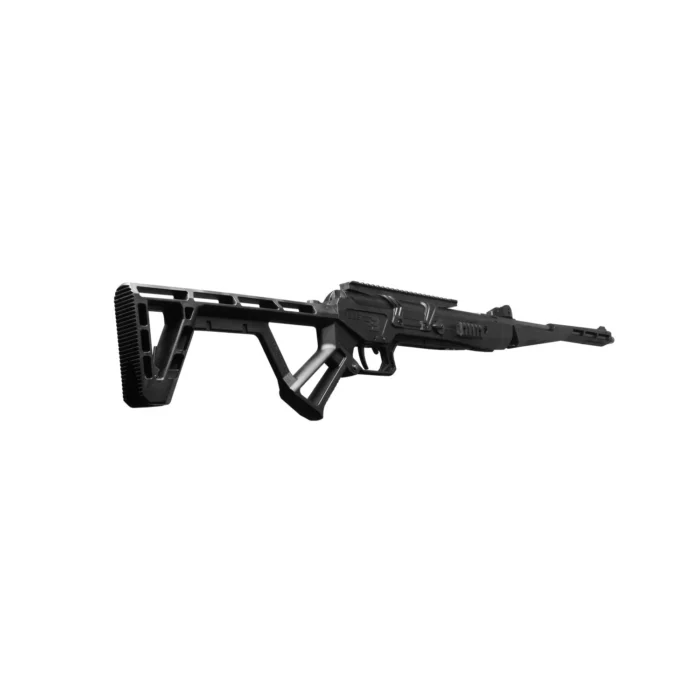
- Textured buttstock for better grip
- Picatinny rails for scope mount – high mount recommended.
- Picatinny rails on sides for additional accessories such as flashlight, laser and bipod.
- Open sights. Rear sight adjustable.
- Includes water resistant case for tools, pellets, and survival kit. (Tools not included)
- Bonus: Includes muzzle break- and breech protection cover.
- Color: Full Black
- Overall length: 42.7 inches/ 106cm
- Weight: 7.5Lbs/ 3.4kg
- Serial number will tell power level, caliber, color, and configuration.
- Patent pending
Black Bunker BM8 – Full Black – .22 Cal Technical Product Guide
BM8 Full Black .22 Engineering, Folding Design, Gas-Ram System, and Model Context
Black Bunker BM8
The black bunker bm8 is distinguished by its ability to fold into a compact triangular configuration while keeping its principal structural sections connected. Black Bunker specifically describes the folded design as suitable for more compact storage and transportation.
Black Bunker
black bunker is Kore Outdoor’s survival-oriented equipment brand. Kore introduced the BM8 in 2024 as a foldable break-barrel platform available in two calibers, two colors, and standard or threaded configurations.
BM8
The bm8 uses gas-ram break-barrel technology rather than PCP, CO₂, or electrical operation. The manufacturer attributes the gas-ram design to more consistent operation, reduced recoil, lower maintenance, less spring fatigue, and increased durability compared with traditional coil-spring systems.
Black Gun
The phrase black gun may describe the Full Black exterior appearance, but it is not the formal product designation. The manufacturer identifies this version specifically as the Full Black BM8.
Collapsible Pellet Gun
The phrase collapsible pellet gun broadly describes the storage concept, although “foldable break-barrel air rifle” is more technically accurate.
The major sections fold inward rather than being completely dismantled.
Survival Airguns
The term survival airguns is commonly applied to self-contained designs that emphasize portability and simple operation.
The BM8 fits that concept through its gas-ram power system and compact folded profile.
Black Bunker Air Rifle
The Black Bunker air rifle is a single-shot system. It does not depend on a detachable magazine or external high-pressure reservoir for normal operation.
This keeps the basic mechanical architecture relatively straightforward.
Black Bunker Survival Rifle
The Black Bunker survival rifle positioning comes primarily from its compact folded configuration and self-contained gas-ram operation rather than from any special legal classification.
Local rules still govern possession, storage, transport, and use.
Black Bunker Foldable Airgun
The Black Bunker foldable airgun incorporates a two-stage safety-lock system. Kore states that this renders the rifle non-functional while it is folded for storage or transportation.
Foldable Airgun
As a foldable airgun, the platform introduces additional joints and locking interfaces that fixed-stock designs do not have.
These areas should remain clean and free from significant damage or unusual looseness.
BM8 .22
The BM8 .22 uses a 5.5mm barrel.
Black Bunker lists full-power output at up to approximately 850 fps with lead pellets and 1,000 fps with alloy pellets.
Black Bunker 5.5mm
The Black Bunker 5.5mm designation is the metric equivalent of .22 caliber.
The Full Black Rest-of-World version is currently listed at 24 joules in both standard and threaded configurations.
BM8 .177
The BM8 .177 is the smaller-caliber sibling and should not be confused with the .22 model.
Its full-power specification is different, and some regional versions are deliberately detuned to comply with local regulations.
Black Bunker 4.5mm
The Black Bunker 4.5mm refers to the .177 configuration rather than the .22 version covered here.
Black Bunker Coyote Tan
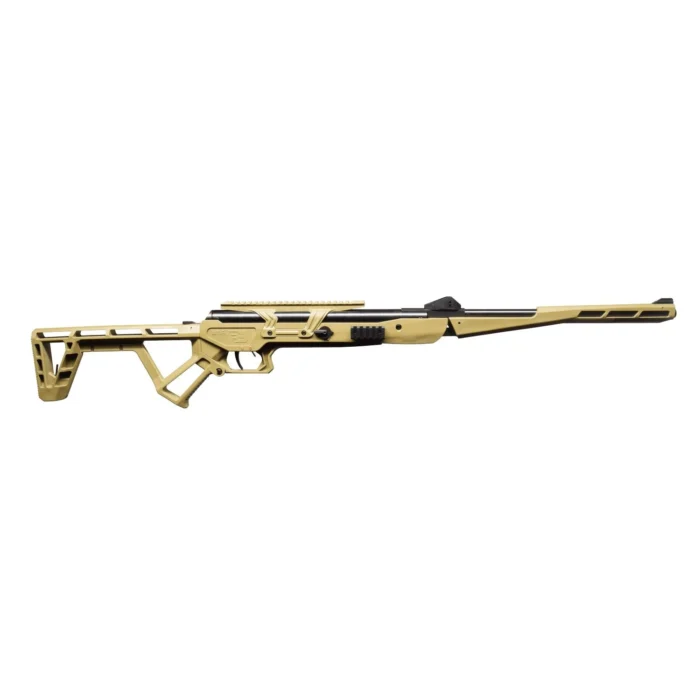
Black Bunker Coyote Tan is the alternative exterior color.
Black Bunker officially offers both Full Black and Coyote Tan versions, while the core folding and gas-ram architecture remains the same.
Compact .22 Air Rifle
The phrase compact .22 air rifle describes the BM8 most accurately when folded.
When fully extended, the rifle measures approximately 106 cm and weighs around 3.4 kg.
Backpack Air Rifle
The term backpack air rifle reflects the manufacturer’s portability concept. Black Bunker specifically notes that the folded platform can fit into backpack-style storage.
Compact Survival Airgun
The phrase compact survival airgun describes the overall design philosophy: a self-contained mechanical powerplant combined with reduced storage dimensions.
Gas Ram Survival Rifle
The term gas ram survival rifle relates directly to the BM8’s operating system.
Its powerplant does not require a PCP hand pump, external air cylinder, or CO₂ cartridge for basic operation.
Backpack Hunting Rifle
The phrase backpack hunting rifle may appear in product searches, but hunting suitability depends on local law, power configuration, species, caliber, and ethical standards.
Black Bunker markets the .22 version toward small-game applications, but local requirements should always control.
Kore Outdoor Black Bunker
Kore Outdoor Black Bunker describes the manufacturer-brand relationship. Kore Outdoor officially launched Black Bunker and introduced the BM8 in 2024.
Open Sights and Picatinny Rails
The BM8 includes mounted open sights with an adjustable rear sight, plus an upper Picatinny rail and side rails for compatible accessories.
Battery Powered Air Gun
The BM8 is not a battery powered air gun.
Its basic firing mechanism is entirely mechanical and powered by the internal gas-ram system.
Ambiguous Search Terms
Terms such as bunkrr.com, black bomb, plank gun, how to get the black hole sniper rifle, black gun big, blackberry gun, b c 8, bedbunker, inflatable gun, big black gun, banair, air bk, b 8 bomber, b & r guns & outdoor range, and blackgun do not establish verified specifications for this model.
They should remain separate from authoritative BM8 technical information unless a reliable manufacturer source directly connects them to the product.
Overall Technical Perspective
The Black Bunker BM8 Full Black .22 combines a foldable chassis, 5.5mm single-shot barrel, gas-ram powerplant, reinforced polymer construction, two-stage folding safety system, open sights, Picatinny mounting surfaces, and compact triangular storage format. The current Full Black Rest-of-World .22 model is specified at 24 joules, while the manufacturer lists full-power velocities of up to approximately 850 fps with lead pellets.
Its strongest engineering distinction is compact storage rather than raw output. For lawful recreational ownership, the key considerations remain correct-caliber ammunition, secure storage, responsible transportation, routine inspection of folding and locking interfaces, conservative maintenance, and adherence to the manufacturer-supported configuration.
Engineering Quality, Folding Architecture, Handling, Precision, and Practical Performance
The Full Black .22 configuration combines a self-contained mechanical power system with an unconventional folding architecture intended to reduce storage dimensions while maintaining the structural characteristics expected from a full-length recreational platform. Its practical quality depends on more than appearance or maximum performance figures. Structural alignment, barrel condition, consistent mechanical lockup, material durability, sight stability, ergonomics, and appropriate maintenance all contribute to dependable operation. Because several major structural sections can move during folding, careful inspection of joints and locking interfaces remains particularly important throughout ownership.
Engineering Philosophy
The fundamental engineering concept focuses on achieving compact storage without requiring major components to be completely separated.
When placed into its compact configuration, the structural sections remain connected. This reduces the number of loose parts that need to be stored or organized.
When returned to its normal configuration, the equipment resumes a conventional full-length layout.
This approach provides an unusual balance between portability and structural simplicity, although the additional movable interfaces require appropriate care.
Folding Architecture
The folding arrangement is the most distinctive structural feature.
Its purpose is primarily to reduce dimensions when the equipment is being securely stored or lawfully transported.
Moving sections should operate smoothly through their intended range without excessive resistance.
If a joint suddenly becomes difficult to move, applying additional force is not the appropriate response.
Contamination, mechanical wear, or damage should instead be investigated before the equipment returns to ordinary use.
Structural Lockup
A folding structure depends heavily on repeatable lockup.
Once opened, the major sections should return to their intended positions without excessive movement.
This consistency contributes to predictable handling and stable alignment.
Therefore, locking surfaces should remain clean and protected from significant impacts.
Grinding, filing, bending, or otherwise reshaping these components can compromise their intended relationship and should be avoided.
Professional inspection is preferable when abnormal movement develops.
Gas-Ram Power System
The internal powerplant replaces the traditional coiled mainspring with a sealed gas strut.
This creates a self-contained mechanical system that does not require external compressed-air equipment for ordinary operation.
From an ownership perspective, this reduces the amount of supporting equipment that needs to be stored and maintained.
However, substantial mechanical force remains within the assembly.
Internal disassembly should therefore be left to appropriately qualified technicians whenever servicing becomes necessary.
Break-Barrel Construction
The break-barrel architecture combines access to the chamber with the mechanical operating cycle.
This design eliminates the need for an external pressure reservoir or detachable power source.
Consequently, the basic system remains relatively straightforward.
Nevertheless, the barrel pivot, breech, seals, locking surfaces, and surrounding hardware remain subject to ordinary mechanical wear.
Regular observation can help identify changes before they become significant maintenance problems.
Single-Shot Simplicity
The single-shot configuration reduces feeding complexity because there is no detachable magazine involved in the standard arrangement.
For controlled recreational target use, this creates a deliberate operating rhythm.
It also reduces the number of magazine components that require cleaning, inspection, or replacement.
Correctly manufactured ammunition of the appropriate caliber should always be used, while visibly damaged or deformed examples should be discarded.
Barrel Condition
The barrel contributes significantly to mechanical consistency.
Its internal surface, crown, alignment, and relationship with the breech can influence repeatable performance.
Therefore, the muzzle should be protected from impacts and unnecessary contact with hard objects.
The bore should also be cleaned conservatively rather than aggressively.
Excessive cleaning with inappropriate equipment can potentially cause more harm than leaving a normally conditioned bore undisturbed.
Understanding Precision
Precision should be evaluated through repeatability rather than maximum speed.
Several variables influence practical results, including ammunition consistency, barrel condition, sight alignment, environmental conditions, mechanical lockup, and user technique.
Therefore, one performance specification cannot independently determine accuracy.
For recreational target sessions, consistent grouping provides a more useful indication of practical precision than concentrating exclusively on maximum output figures.
Ammunition Consistency
Individual pellets can vary slightly in weight, dimensions, shape, and manufacturing quality.
Those differences can influence consistency even when the equipment itself remains mechanically unchanged.
Quality ammunition of the correct caliber provides a more predictable foundation for recreational use.
Damaged ammunition should not be forced into the chamber.
Likewise, improvised projectiles or incompatible sizes should never be substituted for appropriate manufacturer-supported ammunition.
Factory Sighting System
Factory sights provide a straightforward aiming arrangement without requiring additional optical equipment.
This helps preserve a relatively simple overall configuration.
Sight components should remain clean, secure, and protected from accidental impacts.
If alignment appears to change unexpectedly, the mounting points and surrounding mechanical components should be inspected before repeated adjustments are made.
A loose component can sometimes appear to be an accuracy problem.
Optical Equipment Considerations
A compatible optical sight may be fitted where lawful and appropriate, but accessory selection should consider the mechanical characteristics of the platform.
Large or unnecessarily heavy equipment can change balance and reduce some of the convenience provided by compact storage.
Mounting hardware should remain secure without excessive tightening.
Any installed accessory should also be inspected periodically because repeated mechanical movement can gradually affect attachment points.
Accessory Management
Additional mounting surfaces provide flexibility, but every available mounting position does not need to be occupied.
Extra equipment increases weight, alters balance, and can make compact storage more difficult.
Therefore, accessories should serve a clear purpose.
Mechanical compatibility is more important than appearance.
Following the accessory manufacturer’s installation recommendations can also help prevent damage to mounting hardware or surrounding structural components.
Handling Characteristics
Comfortable handling supports consistency.
Stock geometry, grip position, trigger reach, shoulder contact, and sight alignment all influence how naturally the equipment can be positioned.
Because users differ physically, the same configuration may feel different from one person to another.
A comfortable posture should minimize unnecessary tension.
Stable and repeatable positioning generally contributes more to practical precision than frequent changes to the external setup.
Balance
Weight distribution affects both comfort and perceived stability.
The full-length configuration places structural and mechanical components across the entire platform, while folding changes how that weight is concentrated during storage.
During recreational use, a balanced position should feel predictable without requiring excessive muscular effort.
Adding heavy accessories can move the center of balance and should therefore be considered carefully.
Synthetic Construction
Reinforced synthetic components provide resistance to normal handling and environmental exposure while avoiding some maintenance requirements associated with traditional wood.
However, synthetic construction is not indestructible.
Extreme heat, crushing loads, aggressive chemicals, and severe impacts can cause damage.
Routine visual inspection should include the stock and folding sections so that cracking or deformation can be recognized before it becomes a larger structural concern.
Metal Component Protection
Metal surfaces provide strength in areas subjected to mechanical loading.
At the same time, they require protection from prolonged moisture and corrosive environments.
After exposure to rain or high humidity, visible surfaces should be appropriately dried before long-term storage.
Abrasive cleaning should be avoided because it can damage protective finishes.
Preventive care is generally more effective than attempting to correct established corrosion later.
Outdoor Conditions
Outdoor recreational use introduces variables such as wind, humidity, temperature changes, dust, and moisture.
These conditions can affect both practical target results and equipment condition.
Sand and grit deserve particular attention around folding joints because abrasive particles can become trapped between moving surfaces.
After outdoor exposure, appropriate inspection and cleaning should occur before the equipment enters enclosed storage.
Compact Storage
Reduced storage dimensions represent one of the design’s strongest practical characteristics.
A smaller stored profile can make it easier to organize the equipment inside an appropriate secure cabinet or protective case.
However, compactness does not reduce storage responsibilities.
The platform should remain unloaded and inaccessible to unauthorized individuals according to applicable regulations.
Heavy objects should not be stacked directly against the folded structure.
Transportation Considerations
Compact dimensions can also simplify lawful transportation.
A suitable protective case can reduce impacts, contamination, moisture exposure, and uncontrolled movement.
Sharp tools, chemicals, liquids, and heavy objects should remain separated.
The folding configuration does not change legal classification, so applicable transportation requirements remain relevant regardless of the physical arrangement in which the equipment is carried.
Mechanical Inspection
Routine inspection should cover the barrel, breech, folding joints, locking surfaces, stock, sights, rails, fasteners, and visible hardware.
Corrosion, cracking, deformation, persistent looseness, or abnormal resistance should receive attention.
Owners who become familiar with the normal mechanical condition are better positioned to recognize gradual changes.
Early identification can prevent minor wear from developing into more significant damage.
Overall Engineering Perspective
The Full Black .22 configuration derives its practical value from combining compact storage with a mechanically self-contained operating system. The folding architecture reduces stored dimensions, while the single-shot design keeps the basic feeding system straightforward. Meanwhile, structural lockup, barrel condition, sight stability, and ammunition quality remain important contributors to repeatable recreational performance.
Long-term reliability ultimately depends on appropriate ownership practices. Regular inspection, correct ammunition, controlled recreational use, careful transportation, secure storage, environmental protection, conservative maintenance, and professional servicing when required provide the strongest foundation for preserving mechanical consistency and structural condition.
Maintenance, Inspection, Durability, Storage, and Long-Term Care
Maintaining the Full Black .22 configuration properly is important for preserving structural condition, mechanical consistency, and dependable long-term recreational use. Because the design incorporates folding structural sections in addition to a conventional break-barrel mechanism, inspection should cover more than the barrel and exterior finish. Moving joints, locking interfaces, stock components, sights, mounting surfaces, visible fasteners, and other accessible hardware all deserve periodic attention. Good maintenance should remain preventive rather than excessive. Routine observation, careful cleaning, environmental protection, secure storage, and professional servicing when necessary generally provide greater value than repeated unnecessary disassembly.
Routine Inspection
Regular visual inspection provides one of the easiest ways to identify developing problems.
Before and after recreational use, accessible components should be examined for corrosion, cracking, deformation, excessive wear, loose hardware, or contamination.
Becoming familiar with the normal appearance and movement of the equipment makes gradual changes easier to recognize.
If something suddenly feels significantly looser, stiffer, or different than usual, continued use should stop until the cause has been properly evaluated.
Folding Joint Maintenance
The folding joints experience repeated movement and therefore deserve particular attention.
Dust, sand, dried mud, and other contamination should not be allowed to accumulate between moving surfaces.
Abrasive particles trapped in these areas can contribute to unnecessary wear.
If movement becomes difficult, forcing the mechanism can make the situation worse.
The joint should instead be inspected for contamination, visible damage, or abnormal alignment before further handling.
Locking Surface Condition
Structural locking surfaces help maintain the intended configuration when the equipment is unfolded.
These interfaces should remain clean and free from obvious deformation.
Unexpected looseness should not simply be accepted as normal aging.
Likewise, owners should avoid grinding, filing, bending, or reshaping components in an attempt to change their fit.
If structural lockup becomes inconsistent, qualified servicing provides a more appropriate solution than improvised adjustment.
Exterior Barrel Care
The external barrel surface should remain reasonably clean and dry.
Fingerprints, moisture, and ordinary surface contamination can be removed gently using suitable materials.
Abrasive pads and aggressive polishing products should be avoided because they can damage protective finishes.
Household cleaning chemicals may also be unsuitable for nearby synthetic components.
Conservative cleaning generally preserves the original finish more effectively than repeated cosmetic polishing.
Internal Barrel Maintenance
The bore should not be cleaned aggressively without a valid reason.
Excessive cleaning can introduce wear when unsuitable rods, brushes, or chemicals are used.
When maintenance becomes necessary, appropriate equipment and manufacturer-supported methods should be selected.
Hard objects should never be forced through the bore.
Particular care should be taken around the muzzle because damage to the crown can negatively affect mechanical consistency.
Breech Inspection
The breech undergoes repeated movement during normal operation.
Visible surfaces should remain free from significant contamination and obvious damage.
Sealing components should also be observed for signs of deterioration.
However, a change in performance does not automatically mean that internal adjustment is necessary.
Several factors can influence consistency, and professional diagnosis is preferable whenever the source of a mechanical problem cannot be established through ordinary inspection.
Internal Power System Care
The internal powerplant operates under substantial mechanical force.
Routine owner maintenance should therefore concentrate primarily on accessible external areas.
Unnecessary internal disassembly should be avoided.
Unusual noises, severe resistance, sudden changes in mechanical behavior, or obvious loss of normal function can indicate a need for technical assessment.
Qualified servicing reduces the risk of damaging high-force components through inappropriate repair attempts.
Stock Maintenance
Synthetic structural components provide good resistance to ordinary recreational handling, but they can still experience damage.
The stock should periodically be examined for cracking, deformation, deep impact marks, or unusual movement around attachment points.
Extreme heat and aggressive chemicals should be avoided.
Heavy objects should also not be placed directly on top of the folded structure because prolonged crushing loads can place unnecessary stress on structural components.
Fastener Inspection
Visible screws and fasteners should remain correctly seated.
Repeated mechanical movement can sometimes contribute to gradual loosening.
However, excessive tightening can damage threads and create additional maintenance problems.
If the same fastener repeatedly becomes loose, the underlying cause should be investigated rather than progressively increasing tightening force.
Unapproved adhesives or locking compounds should not be applied without appropriate technical guidance.
Sight Maintenance
Factory sighting components should remain clean, secure, and protected from accidental impacts.
Adjustable parts should move normally without excessive force.
If sight alignment changes unexpectedly, mounting security should be checked before repeated corrections are attempted.
A loose component can sometimes produce apparent precision problems.
During storage and transportation, the sights should remain protected from heavy objects that could bend or displace them.
Accessory Mount Care
Mounting surfaces should remain clean and free from obvious structural damage.
Any installed accessory should be checked periodically according to its manufacturer’s instructions.
Loose attachments can move during recreational use, while overtightened hardware can damage mounting interfaces.
Accessories that no longer serve a practical purpose should be removed carefully.
Keeping the configuration relatively simple can also make routine inspection and storage easier.
Dust and Sand Protection
Fine dust can settle across exterior surfaces, while sand and grit can become particularly troublesome around mechanical joints.
After exposure to dusty environments, moving interfaces should be inspected before the folding mechanism is repeatedly operated.
Contamination should be removed appropriately rather than ground between surfaces.
A clean protective case can significantly reduce environmental exposure during transportation and storage.
The case itself should also be periodically cleaned.
Moisture Management
Moisture is one of the most important long-term storage concerns.
After exposure to rain or humid conditions, accessible surfaces should be dried appropriately before the equipment enters enclosed storage.
A damp platform should not immediately be sealed inside a case for extended periods.
Moisture can remain around joints, fasteners, and recessed metal areas even after the most visible surfaces appear dry.
Humidity Control
Consistently humid storage conditions can gradually encourage corrosion.
A dry, secure environment is therefore preferable.
Where appropriate, suitable moisture-control products may help manage humidity inside storage areas.
However, periodic visual inspection remains necessary.
Corrosion can begin in relatively inconspicuous locations, particularly around fasteners, joints, and areas where metal surfaces contact other components.
Temperature Protection
Extreme temperatures should be avoided whenever possible.
A closed vehicle exposed to direct sunlight can become significantly hotter than the surrounding environment.
Prolonged heat may affect synthetic materials, seals, finishes, or accessories.
Likewise, rapidly moving cold equipment into a warm humid environment may encourage condensation.
Allowing gradual temperature stabilization before long-term storage can help reduce unnecessary moisture accumulation.
Chemical Protection
Fuel, strong solvents, bleach, acids, aggressive detergents, and other harsh substances should remain separated from the equipment.
Some chemicals can affect synthetic materials or protective finishes without producing immediate visible damage.
If accidental contamination occurs, experimenting with additional cleaning chemicals should be avoided.
Manufacturer guidance or qualified technical advice provides a more reliable approach when compatibility is uncertain.
Secure Long-Term Storage
Long-term storage should prioritize security as well as preservation.
The equipment should remain unloaded and inaccessible to unauthorized individuals according to applicable regulations.
A clean, dry location protected from extreme temperatures, chemicals, and crushing loads is preferable.
Although the folding configuration reduces the physical space required, compact dimensions should never encourage casual or unsecured storage.
Transportation Protection
During lawful transportation, an appropriate protective case can help reduce impacts, scratches, contamination, and moisture exposure.
Heavy tools, leaking containers, and sharp objects should not be packed directly against the equipment.
The folded structure should also be protected from crushing forces.
Following a significant transportation impact, visible structural areas should be inspected before normal recreational use resumes.
Avoiding Unauthorized Modifications
Preserving the manufacturer-supported configuration generally makes long-term condition easier to assess.
Alterations to internal power components, locking interfaces, structural joints, barrel assemblies, or other critical mechanisms can affect reliability and potentially legal compliance.
When mechanical performance changes unexpectedly, diagnosis and repair should address the actual cause rather than relying on experimental modifications.
Professional Servicing
Professional assessment becomes appropriate when severe corrosion, structural cracks, persistent looseness, damaged joints, abnormal resistance, or internal mechanical problems develop.
A qualified technician can determine whether adjustment, cleaning, repair, or component replacement is required.
Early servicing can also prevent a relatively minor problem from developing into more extensive mechanical damage.
Maintenance Records
Basic maintenance records can provide substantial long-term value.
Purchase information, inspections, repairs, professional servicing, replacement components, and significant environmental incidents can all be documented.
These records make recurring problems easier to recognize and provide useful information if technical servicing becomes necessary.
A documented maintenance history can also assist future lawful ownership transfers.
Long-Term Durability
Durability depends on both engineering quality and ownership practices.
Careful folding, clean locking interfaces, controlled storage, moisture protection, conservative cleaning, and routine inspection can reduce avoidable deterioration.
Mechanical wear cannot be eliminated completely, but early recognition can prevent minor changes from progressing into significant structural or functional problems.
Overall Maintenance Perspective
Effective long-term care does not require constant intervention. Regular inspection, careful handling, appropriate cleaning, environmental protection, secure storage, and professional servicing when required provide a stronger maintenance strategy than unnecessary disassembly.
Particular attention should remain focused on the folding joints and locking interfaces because these components distinguish the design from conventional fixed configurations. When these areas are maintained alongside the barrel, sights, stock, fasteners, and other accessible components, the equipment has a stronger foundation for retaining its structural condition and dependable recreational functionality over time.
Be the first to review “Black Bunker BM8 – Full Black – .22 Cal”
Related products
Black Bunker
Black Bunker
Reviews
There are no reviews yet.