
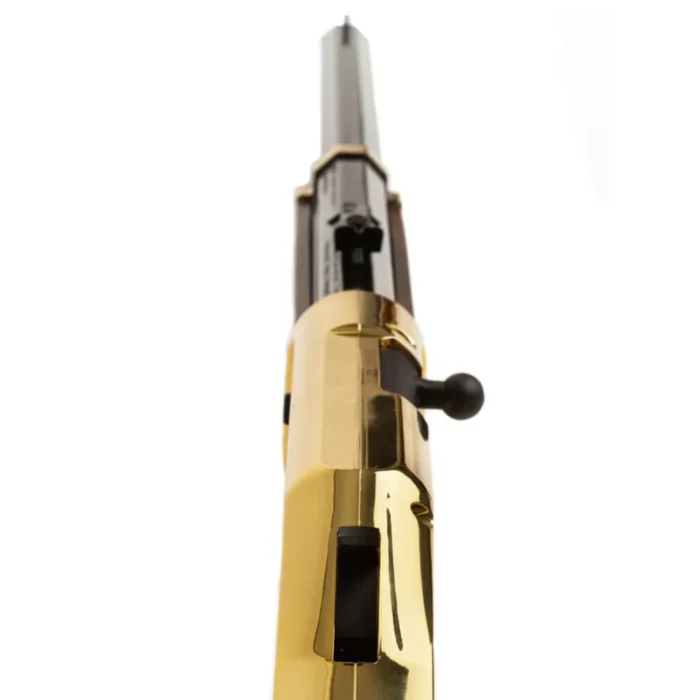
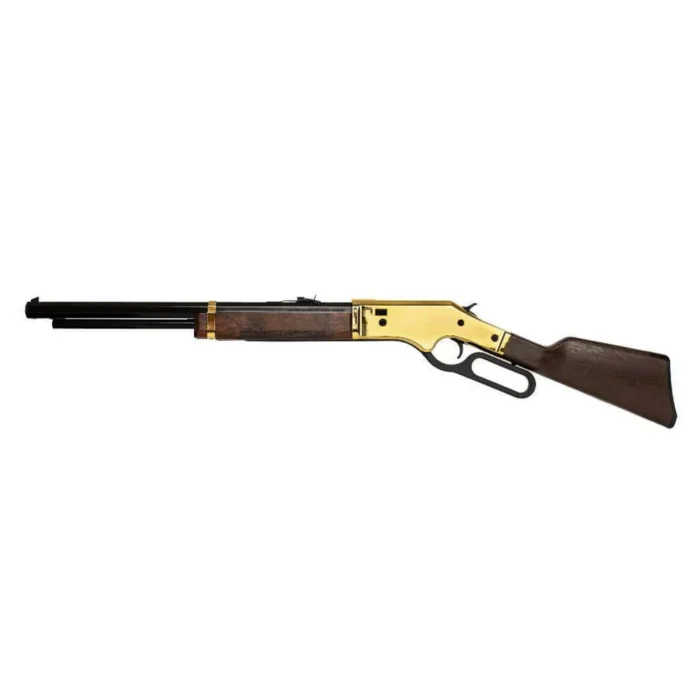
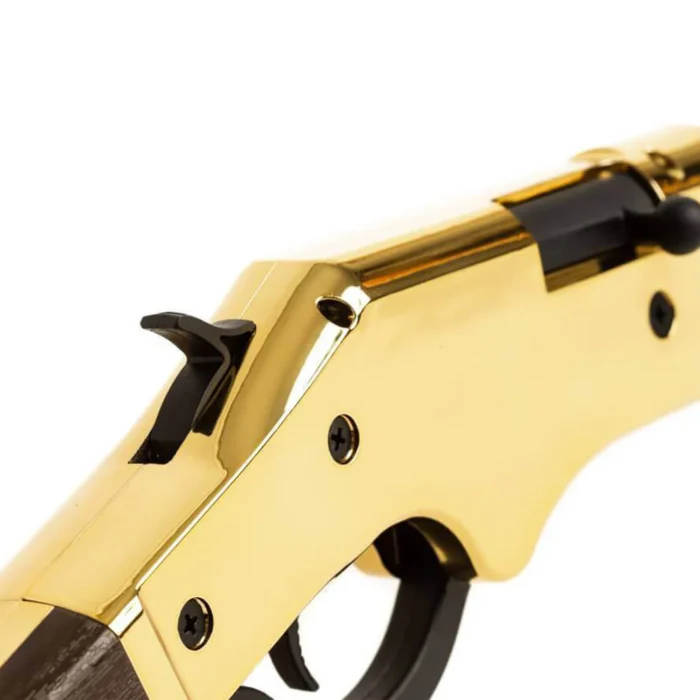
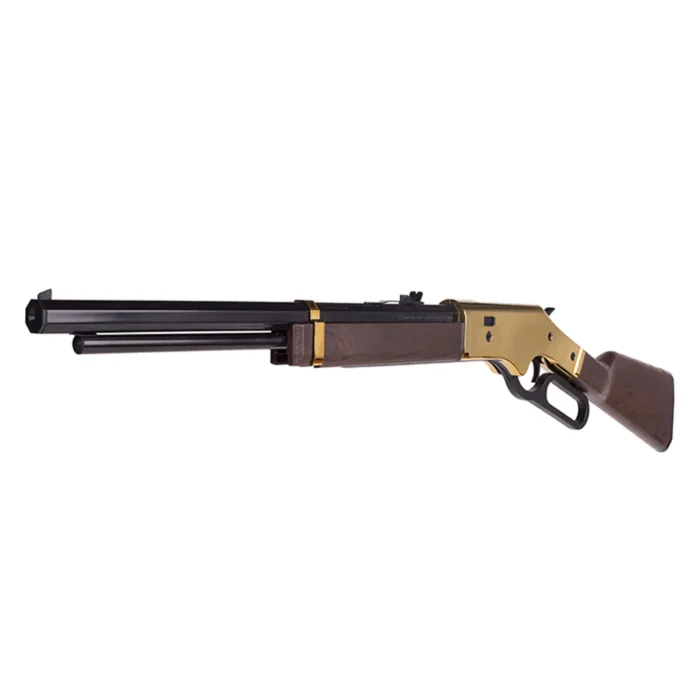
1866 Junior – Gold
€100.00
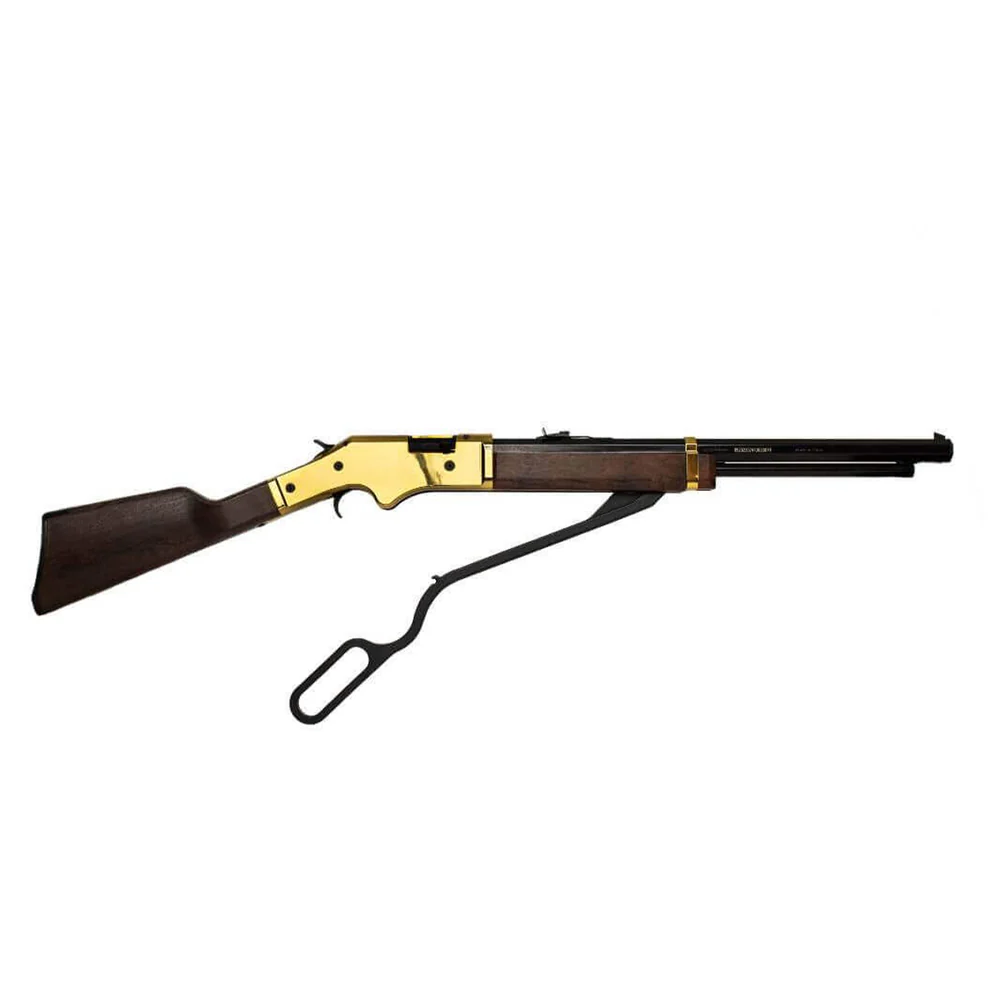
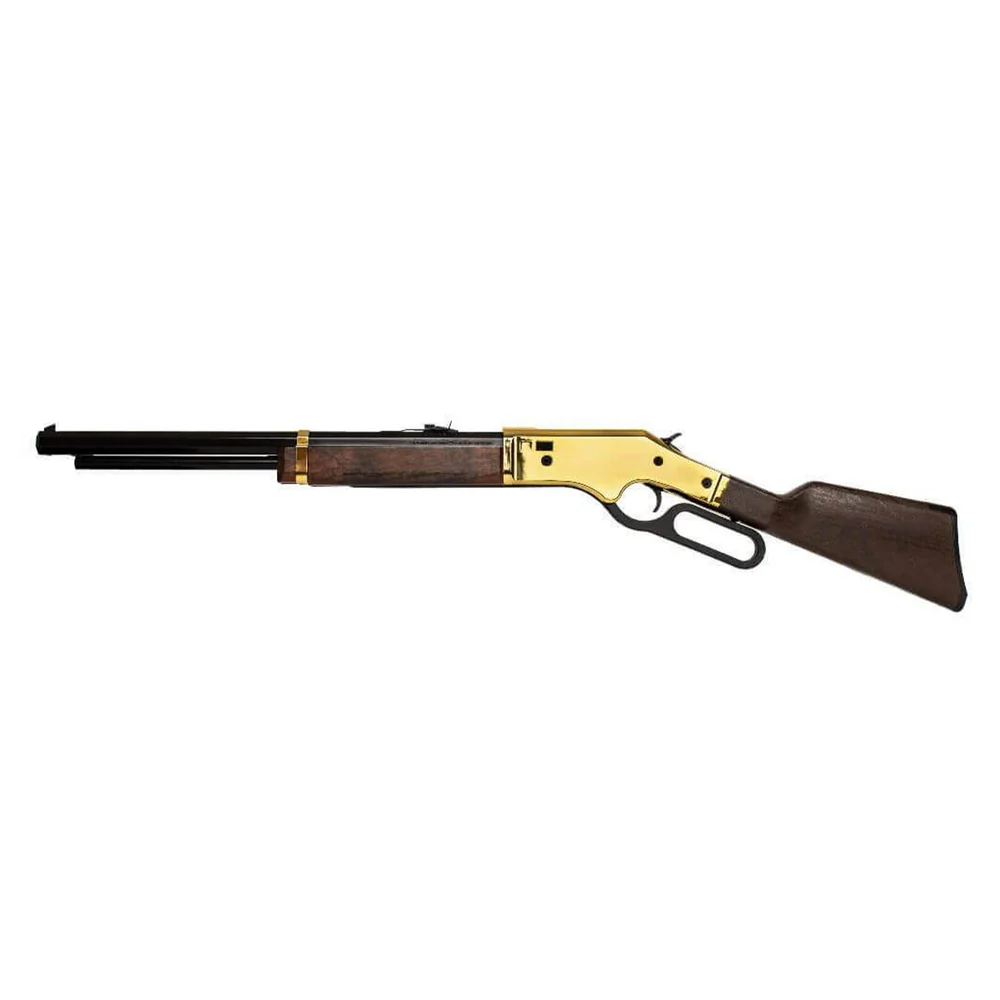
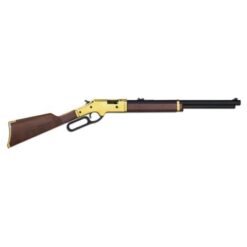
The Junior is the youth-sized version of one of our best-selling air rifles — TheBarra 1866. Designed with youth shooters in mind, the overall length of the air rifle is 5” shorter than the full-size Barra 1866. It’s the perfect first rifle for your little buddy.
Specifications
Plinking
.177 Steel BBs & Pellets
Single Pump
Lever
350 FPS
50
4.1 lbs
16.5 inches
36 inches
Smooth
5 lbs
Automatic
None
Yes
Metal
1866 Junior – Gold: Youth-Sized Single-Pump .177 BB and Pellet Rifle
Design, Powerplant, Ammunition, Performance, and Related Barra Models
Barra Airguns and the 1866 Junior Range
Barra Airguns offers lever-action, multi-pump, break-barrel, electric, CO2, and precharged airgun platforms. Within the broader selection of Barra air rifles, the Junior focuses on compact dimensions, manageable weight, reduced power, and straightforward operation.
The official product page describes the Junior as the smaller version of the full-size Barra 1866 and identifies plinking as its recommended use. Adult supervision remains essential because the manufacturer warns that the product is not a toy and that careless use can cause serious injury or death.
Barra Gun, B&B Gun, and B A R R A Search Terms
Searches for Barra gun, b&b gun, or b a r r a may return unrelated products or incomplete model results. Buyers should confirm the exact model, powerplant, caliber, velocity, safety system, and ammunition before ordering.
The Junior should be identified specifically as a single-pump .177 rifle rather than as a CO2, electric, multi-pump, or reservoir-fed model.
Barra 1866 and Barra 1866 Cowboy Series Styling
The Barra 1866 platform takes inspiration from classic Western lever-action repeaters. Therefore, the compact model fits naturally within the Barra 1866 Cowboy Series.
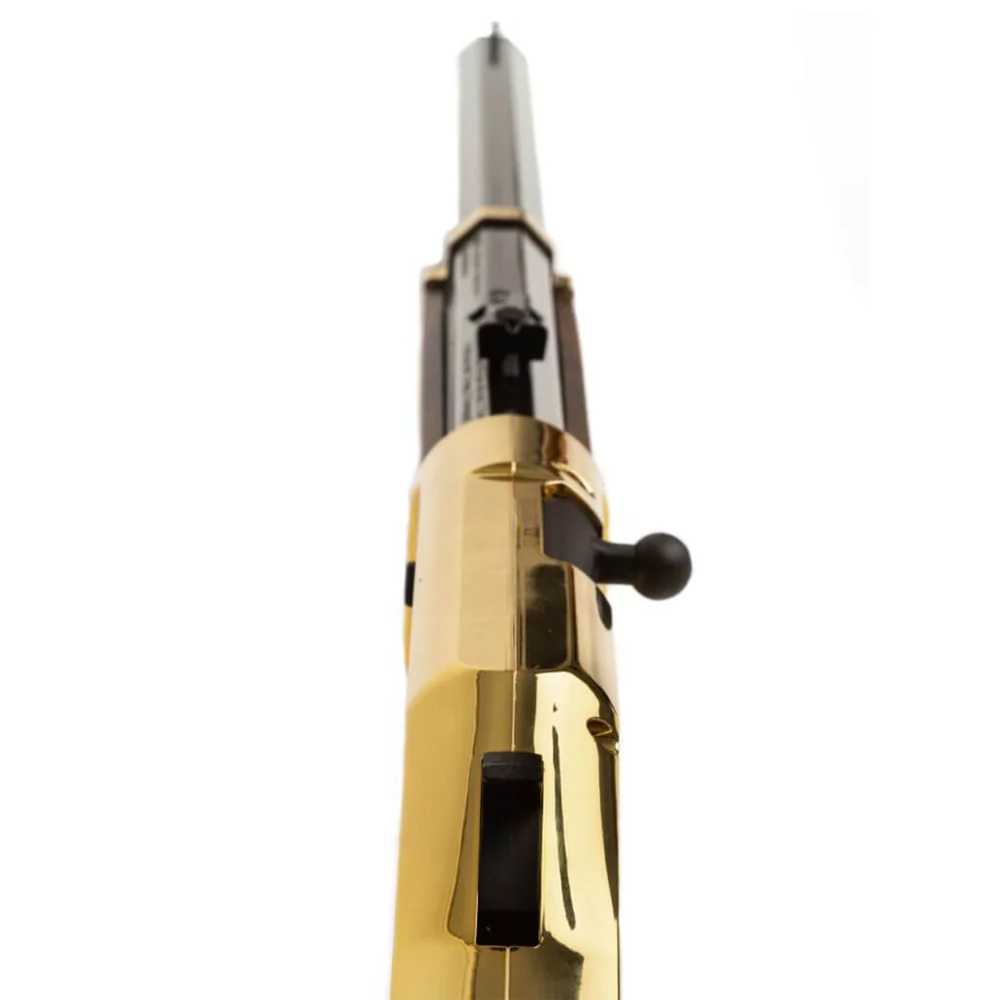
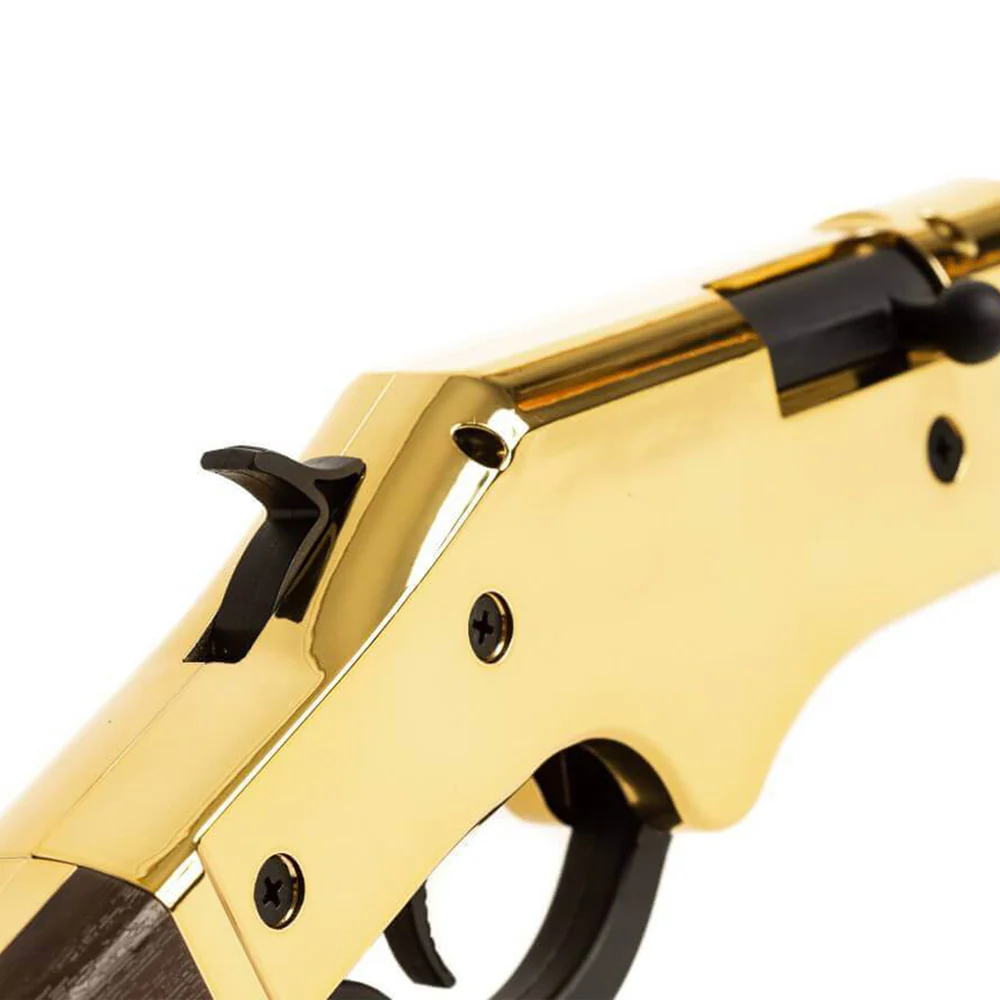
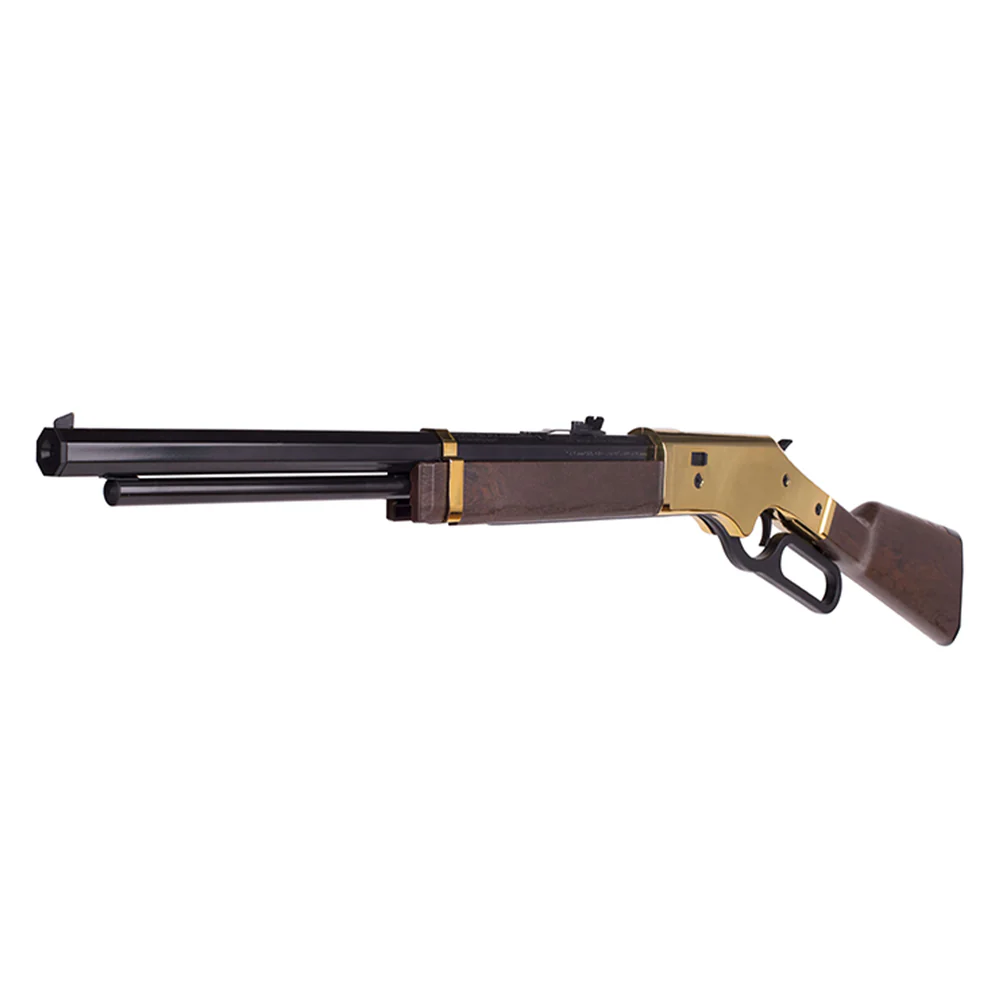
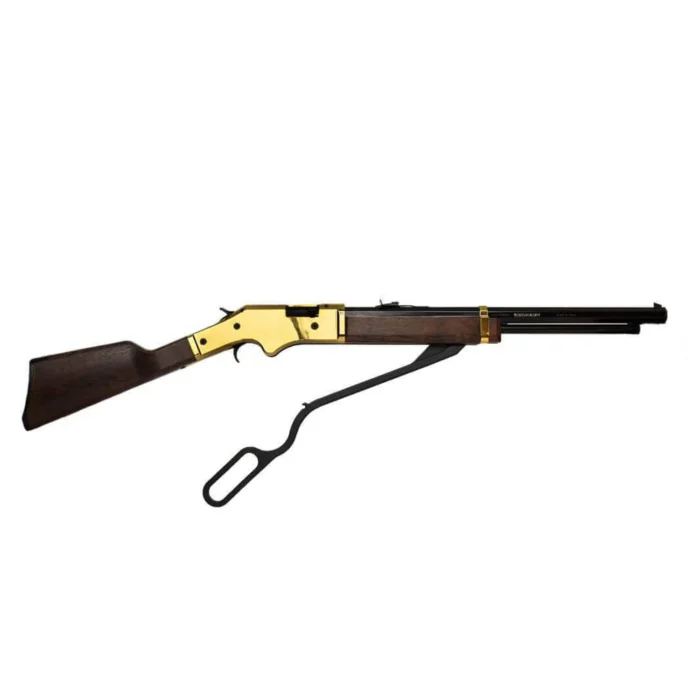
The gold receiver, lever-operated action, long barrel profile, and traditional stock shape provide a recognizable Western appearance. However, the rifle uses modern pneumatic airgun engineering rather than firearm ammunition or combustion.
Single-Pump Pneumatic Operation
One complete pump pressurizes the internal air tube. The shooter then closes the action, confirms the safety status, aims at an approved target, and fires.
This single-pump configuration differs from an air gun pump action or bb gun rifle pump that may require several pumps to increase velocity. Barra rates the Junior at up to 350 FPS and states that one pump fully pressurizes the system.
PCP Air Rifle, Precharged Pneumatic, and Pneumatic Rifle Differences
The Junior is a pneumatic rifle, but it is not a PCP air rifle or precharged pneumatic system.
A PCP stores high-pressure air in a refillable reservoir. By contrast, the Junior compresses the required air through one manual pumping stroke before each shot. Therefore, it does not require the charging equipment commonly associated with air rifle compressed air, high-pressure cylinders, or other compressed air guns.
.177 Ammunition and 177–400 Search Intent
The rifle accepts .177-caliber steel BBs and pellets. The search phrase 177 – 400 may refer to buyers looking for a .177 rifle operating below approximately 400 FPS. With a manufacturer-rated maximum of 350 FPS, this model falls within that general performance category.
Actual speed may vary with projectile weight, temperature, seal condition, pumping technique, barrel cleanliness, and manufacturing tolerance.
4.5mm BB, Steel BBs, and Metal BB
A 4.5mm BB, steel BBs, or a correctly sized metal BB can be used in the BB-loading system.
The term metal BB pellets should be interpreted carefully because BBs and pellets have different shapes. BBs are spherical, whereas pellets usually have a shaped head and hollow or skirted rear section.
Only clean, undamaged ammunition of the correct size should be loaded.
Barra BB Gun and BB Gun Rifle Function
Because it accepts steel BBs, the Junior can be described as a Barra BB gun or compact bb gun rifle. However, it also accepts compatible .177 pellets, which gives beginners an opportunity to compare two ammunition formats under supervision.
The smoothbore barrel is optimized for general recreational shooting rather than formal precision competition.
Airsoft BBs, Plastic BBs, and 6mm Plastic BBs
Standard airsoft BBs, plastic BBs, 6mm plastic BBs, biodegradable airsoft BBs, and bulk packages advertised as airsoft BBs 10000 must not be loaded.
Airsoft projectiles normally measure 6mm, while the Junior uses 4.5mm or .177-caliber ammunition. Forcing the wrong projectile into the barrel can create an obstruction or damage the loading system.
Pellet Loading and Shot Capacity
The official specification lists a capacity of 50, referring to the BB reservoir system. Pellets are normally loaded individually.
The shooter should never assume that the rifle is unloaded simply because one shot has been fired. The chamber and BB reservoir must be checked carefully after every session.
Automatic Safety
The automatic safety helps reduce unintended firing during the cocking and loading sequence. However, no mechanical safety can replace responsible muzzle control.
The rifle must always remain pointed in a safe direction. The trigger finger should stay outside the trigger guard until the target and backstop have been confirmed.
Lightweight Youth-Sized Construction
At approximately 4.1 pounds and 36 inches long, the Junior is more manageable than many full-size models. Barra also describes it as five inches shorter than the standard 1866.
Nevertheless, “youth-sized” does not mean unsupervised. An adult should control loading, pumping, target placement, storage, and safe-range procedures.
Gold Receiver and Barrel Construction
The gold receiver uses durable ABS plastic with an electroplated mirror-style finish. The pump arm uses reinforced nylon resin, while the carbon-steel barrel is enclosed by a steel shroud.
This construction reduces overall weight while retaining the visual character of a traditional lever-action rifle.
Barra Sportsman 900 and Sportsman 900
The Barra Sportsman 900, Sportsman 900, Barra 900 BB gun, and Barra 900 air rifle refer to a larger multi-pump product family.
A Barra Sportsman 900 review should not be used to judge the Junior’s pumping effort, dimensions, power, or safety behavior because the two models use different configurations.
Barra 400E and Electric BB Gun Platforms
The Barra 400E, Barra 400E Gen 2, Barra 400E AEG, bara 400e, and searches for Barra 400E price relate to an electric BB gun.
The electric platform uses a battery-powered mechanism, whereas the Junior relies on one manual pneumatic compression stroke. Consequently, the shooting experience, maintenance requirements, controls, and ammunition systems differ.
Barra 250Z, Barra 350Z, and Barra 1100Z
The Barra 250Z, Barra 350Z, Barra 1100Z, and Barra 1100Z Gen 2 belong to other airgun categories, including higher-performance reservoir-fed models.
They are not alternative names for the Junior and should not be compared solely by appearance or velocity.
.25 Cal PCP Air Rifle and .22 Caliber Air Rifle Searches
A .25 cal PCP air rifle or .22 caliber air rifle serves a different buyer. Those platforms generally use larger projectiles and may produce substantially more energy.
The Junior remains a low-powered .177 recreational rifle intended for controlled introductory use rather than hunting or high-energy applications.
CO2 Pellet Guns and CO2-Powered Air Rifle Differences
The Junior is not part of the typical CO2 pellet guns category and is not a co2 powered air rifle.
It requires no 12-gram cartridges. Therefore, the user avoids temperature-related CO2 pressure loss and disposable-cylinder replacement. However, the rifle must be manually pumped before every shot.
Barra Break Barrel Comparison
A Barra break barrel is cocked by pivoting the barrel downward. The Junior uses a separate lever and pump assembly instead.
The barrel should never be forced downward because it is not designed to function as a break-barrel cocking system.
Barra Schofield and Revolver Searches
The Barra Schofield, Barra Schofield revolver, Schofield revolver 6in barrel, and ASG Schofield in-store searches concern replica revolvers.
Likewise, bb revolver, revolver bb gun, chrome 357 magnum, and air gun pellet co2 revolver describe handgun-style products rather than a youth-sized rifle.
Barra 1858 and Barra 1858 Quality
The Barra 1858 is also associated with revolver-style airguns. Questions about Barra 1858 quality do not describe the Junior’s lever, pump arm, BB reservoir, barrel, or automatic safety.
Barra 1911 Grips and Glock BB Gun With Extended Mag
Barra 1911 grips and a Glock BB gun with extended mag relate to semi-automatic-style air pistols and accessories. These components are not compatible with the Junior.
Airgun Scope, 4×15, and 1/4×15
A compact airgun scope or 4×15 optic might appear suitable for a small rifle, but the official specification lists no optic mount.
The phrase 1/4×15 is likely an incorrect variation of 4×15. Users should not drill, glue, or improvise a mounting rail because unauthorized modifications may damage the receiver or affect safe operation.
Air Gun Accessories and BB Gun Accessories
Useful air gun accessories, bb gun accessories, bb guns and accessories, and bb gun attachments may include impact-rated eye protection, approved paper targets, a suitable pellet trap, a protective case, cleaning supplies, and correct .177 ammunition.
Accessories must not obstruct the lever, safety, loading port, muzzle, or trigger guard.
Pellet Gun Parts and Airgun Forum Guidance
Replacement pellet gun parts should match the exact Junior model and generation.
An airgun forum may contain practical owner opinions, but unofficial instructions should not override the manual, manufacturer support, or qualified repair guidance.
Pistola de Aire Comprimido and BB Guns Sniper
The Spanish phrase pistola de aire comprimido means compressed-air pistol, so it does not accurately describe this rifle.
Similarly, bb guns sniper refers to a visual or marketing category rather than the Junior’s Western lever-action design.
Barra 100 and Model Identification
The phrase Barra 100 may refer to another item or an incomplete product search. Buyers should use the official name, model number, caliber, and powerplant to avoid ordering the wrong rifle.
Responsible Use and Adult Supervision
The 1866 Junior – Gold is not a toy. It should be used only with direct adult supervision, suitable eye protection, a secure backstop, and strict muzzle discipline.
The manufacturer also warns against displaying or using the replica-style airgun in public because it may cause confusion or alarm. Storage should remain locked, unloaded, and inaccessible to children or unauthorized users.
Construction, Pumping Operation, Loading, Accuracy, Safety, and Maintenance
Compact Youth-Oriented Design
The rifle uses a shorter and lighter configuration than many full-sized recreational air rifles. This makes it easier for smaller shooters to hold, shoulder, and operate under direct adult supervision.
However, compact dimensions do not make the rifle a toy. It can still fire projectiles capable of causing serious injury or property damage. Therefore, the same safety rules used with larger airguns must always be followed.
The stock, receiver, barrel assembly, pump mechanism, lever, sights, and trigger system should be checked before every session.
Lightweight Construction
The rifle combines metal and reinforced synthetic components to reduce overall weight while maintaining practical durability.
A lighter design may help a beginner support the rifle more comfortably. Nevertheless, the shooter should still use a stable stance or supported position.
The rifle should not be dropped, thrown, dragged, or used as a walking stick. Impacts may damage the sights, barrel alignment, pump mechanism, or safety system.
Single-Pump Powerplant
One complete pumping stroke compresses the air needed for a shot.
The lever should be opened and closed smoothly through its full operating range. Partial pumping may produce weak performance, while forcing the mechanism can damage the linkage or seals.
Only one complete pump should be used when the manufacturer specifies single-pump operation. Additional pumping should not be attempted because excessive pressure may damage internal components.
Proper Pumping Technique
Before pumping, the safety should be engaged and the muzzle should point toward a secure backstop.
The shooter should keep fingers clear of moving joints and pinch points. An adult should demonstrate the correct hand placement before a beginner operates the mechanism.
The lever should move steadily rather than being slammed open or closed. If unusual resistance is felt, operation should stop immediately.
Avoiding Pinched Fingers
The moving pump arm creates areas where fingers or loose clothing may become trapped.
Hands should remain on the designated gripping surfaces. Sleeves, drawstrings, gloves, and other loose items should be kept away from the linkage.
Younger users should not operate the pump without close supervision until they consistently demonstrate correct technique.
Ammunition Compatibility
Only ammunition of the correct caliber and type should be loaded.
Spherical projectiles and shaped pellets may both be supported, but they use different loading methods. The user should follow the instructions for the selected ammunition.
Incorrectly sized, damaged, rusty, dirty, or deformed projectiles should never be inserted.
Loading Spherical Ammunition
The internal reservoir allows multiple spherical projectiles to be stored for repeated loading.
The rifle should remain pointed safely while the reservoir is filled. Ammunition should be added carefully to prevent dirt or foreign material from entering the loading channel.
The shooter should not exceed the stated capacity. Overfilling may cause feeding problems.
After the session, the reservoir should be checked carefully because projectiles may remain inside even when the rifle appears empty.
Loading Pellets
Pellets are generally loaded individually.
The pellet should be placed into the loading area in the correct direction. Its skirt should not be crushed, bent, or forced.
A pellet that fits unusually tightly may be damaged or incorrectly sized. It should be removed rather than pushed deeper.
The loading port must be closed completely before firing.
Smoothbore Barrel Characteristics
The barrel has a smooth internal surface rather than spiral rifling.
This design supports general recreational shooting with suitable ammunition. However, it should not be expected to deliver the same long-range precision as a dedicated target rifle with a rifled barrel.
Best results are usually achieved at short, controlled distances using consistent ammunition and a stable shooting position.
Realistic Accuracy Expectations
The rifle is intended for supervised recreational shooting and introductory marksmanship.
Accuracy depends on:
- Ammunition quality
- Shooter stability
- Trigger control
- Sight alignment
- Pump consistency
- Barrel condition
- Distance
- Wind conditions
A beginner should start with a large target at close range. Distance can be increased only after consistent groups are achieved.
Establishing a Stable Position
The shooter should stand or sit in a balanced position.
The butt should rest naturally against the shoulder. The support hand should hold the fore-end without interfering with the pump mechanism.
The firing hand should maintain a comfortable grip. Excessive pressure may cause unnecessary movement.
When possible, a bench rest or padded support can help a beginner learn correct sight alignment.
Sight Alignment
The front and rear sights must be aligned consistently.
The shooter should focus on maintaining the same head position for each shot. Small changes in cheek placement can move the point of impact.
The sights should remain secure and straight. Loose or damaged sight components should be corrected before use.
Trigger Control
The trigger should be pressed smoothly toward the rear.
Jerking or pulling sideways may move the rifle before the projectile leaves the barrel. The shooter should apply steady pressure while keeping the sights aligned.
The finger must remain outside the trigger guard until the target has been identified and the shooter is ready to fire.
The trigger mechanism should never be modified.
Automatic Safety Function
The safety is designed to engage during the operating sequence.
However, the user must still confirm its position before loading, pumping, moving, or handing the rifle to another person.
Mechanical safeties can fail or be used incorrectly. Therefore, safe muzzle direction remains the primary protection against accidental injury.
Safe Muzzle Direction
The muzzle should always point toward an area where an accidental discharge would not injure anyone or damage property.
It should never point at a person, animal, vehicle, building, window, or object that the shooter does not intend to hit.
This rule applies whether the rifle is loaded, unloaded, pumped, or stored.
Suitable Target Selection
Paper targets, purpose-built reactive targets, and approved training targets may be used with a proper backstop.
Hard objects such as glass, stone, concrete, water, and flat metal surfaces can cause ricochets.
Cans and other informal targets should only be used when local laws permit and when every projectile can be contained safely.
Choosing a Secure Backstop
The backstop must stop the projectile and prevent escape beyond the target area.
A purpose-built trap or layered soft material may be suitable, depending on the ammunition and distance.
The area behind the backstop must still be checked. No backstop should be assumed to provide unlimited protection.
Eye Protection
The shooter and all observers should wear impact-rated eye protection.
Potential hazards include ricochets, target fragments, damaged ammunition, and mechanical debris.
Ordinary glasses may not provide sufficient impact protection. Safety eyewear should fit correctly and remain in place throughout the session.
Adult Supervision
A responsible adult should control the shooting area, ammunition, storage, target placement, and pumping procedure.
The adult should remain close enough to intervene immediately if the muzzle moves away from the safe direction or another safety rule is broken.
Supervision should continue until the shooter demonstrates consistent and mature handling habits.
Teaching a Beginner
Training should begin with the rifle unloaded and unpressurized.
The beginner should learn:
- Safe muzzle direction
- Trigger-finger discipline
- Safety operation
- Pumping technique
- Loading procedure
- Sight alignment
- Backstop awareness
- Unloading and storage
Live firing should begin only after these steps are understood.
Managing Fatigue
A smaller rifle may still become tiring during a long session.
Fatigue can reduce accuracy and lead to unsafe handling. The shooter may begin lowering the muzzle carelessly, placing the finger on the trigger too early, or pumping incorrectly.
Short sessions with regular breaks are generally more effective for beginners.
Weak Shot Troubleshooting
A weak shot may result from an incomplete pumping stroke, damaged seal, unsuitable projectile, barrel obstruction, or internal wear.
The shooter should stop and confirm whether the projectile left the barrel.
Another shot should not be fired when an obstruction is suspected. The rifle must first be unloaded and depressurized according to the manual.
Failure to Fire
A failure to fire may occur because the safety remains engaged, the rifle was not pumped completely, the ammunition was loaded incorrectly, or an internal fault exists.
The muzzle should remain pointed safely while the shooter waits briefly.
The rifle should then be placed on safe and inspected under adult supervision.
Repeated trigger pulling should not be used to diagnose the problem.
Feeding Problems
A spherical projectile may fail to feed when the loading channel is dirty, the rifle is held at the wrong angle, the reservoir contains unsuitable ammunition, or an internal part is damaged.
The rifle should not be shaken aggressively or struck against another object.
If normal loading procedures do not resolve the issue, professional service should be obtained.
Clearing a Barrel Obstruction
A blocked barrel requires immediate attention.
The rifle should be placed on safe, unloaded, and depressurized. The user must never fire another projectile behind the obstruction.
A suitable cleaning rod may be used only when the manufacturer permits it. Sharp tools, screws, and hard steel rods may damage the barrel.
Exterior Cleaning
The rifle should be wiped with a soft, dry cloth after use.
Dust, fingerprints, moisture, and dirt should be removed from the exterior surfaces.
Strong solvents, abrasive cleaners, and excessive oil should be avoided. Cleaning products should not enter the trigger, pump tube, loading channel, or safety mechanism.
Pump-Seal Care
The internal seals help retain compressed air.
Dirt, dryness, improper lubricant, and excessive pressure may damage them.
Only the lubricant recommended by the manufacturer should be used. General household oil may degrade seals or attract debris.
If pumping becomes unusually easy or the rifle loses power, the seals may require inspection.
Barrel Maintenance
The barrel should be cleaned only when accuracy declines, contamination is visible, or the rifle has been exposed to moisture.
Tools must match the correct caliber. Oversized brushes and hard rods may damage the bore or muzzle.
After cleaning, the barrel should be checked to confirm that no patch or material remains inside.
Protecting the Gold Finish
The decorative receiver finish should be handled carefully.
A soft cloth can remove fingerprints and dust. Harsh chemicals, abrasive pads, and rough tools may scratch or dull the surface.
The rifle should not be stored against sharp metal objects or loose equipment.
Checking Screws and Fasteners
Regular handling and pumping may loosen screws over time.
Visible fasteners should be checked periodically. However, they should not be overtightened because excessive force may strip threads or crack synthetic parts.
Internal screws should not be adjusted without technical guidance.
Storage
The rifle should be stored unloaded, unpressurized, and locked away from unauthorized users.
The reservoir and loading port should be checked carefully before storage.
Ammunition should be stored separately. The storage area should remain cool, dry, and away from direct sunlight or chemicals.
Transport
During transport, the rifle should be unloaded and enclosed in a secure case.
It should not be carried openly in public because its realistic appearance may cause alarm.
Local laws may impose additional requirements. The owner should verify them before traveling.
When Professional Service Is Needed
Qualified service should be obtained when the rifle develops:
- Persistent loss of power
- Pumping resistance
- Trigger irregularities
- Safety failure
- Feeding problems
- Loose internal parts
- Barrel damage
- Cracked structural components
- Repeated accuracy changes
Unauthorized disassembly may damage springs, seals, or safety components.
Long-Term Ownership
Reliable operation depends on correct ammunition, smooth pumping, secure storage, regular cleaning, and careful supervision.
The rifle offers a practical platform for learning basic target shooting when used responsibly. However, its compact dimensions and moderate power do not remove the need for strict safety discipline.
Responsible ownership combines adult control, legal compliance, proper maintenance, secure storage, and respect for the potential danger of every projectile.
Practical Training, Troubleshooting, Care, and Long-Term Use
Preparing the Shooting Area
Before the rifle is handled, the shooting area should be organized carefully. The target must stand in front of a dependable backstop that can stop every projectile. People, animals, vehicles, windows, and fragile objects must remain outside the firing zone.
The area should also have a clearly defined firing line. Only the shooter and supervising adult should handle the rifle at that position.
A safe session begins before the rifle is loaded. Poor target placement or an inadequate backstop cannot be corrected after a projectile has already been fired.
Beginning With an Unloaded Rifle
New users should first practice with the rifle unloaded and unpressurized.
This allows them to learn how to hold it, operate the safety, move the pumping lever, align the sights, and keep their finger outside the trigger guard.
Dry handling should focus on safe habits rather than speed. The user should repeat the basic sequence until every movement becomes deliberate and controlled.
Live firing should begin only after the supervising adult is confident that the shooter understands the rules.
Establishing a Safe Handling Routine
A consistent routine reduces confusion and mistakes.
The shooter should follow the same sequence each time:
- Confirm the muzzle points safely.
- Engage the safety.
- Inspect the rifle.
- Pump the action correctly.
- Load the approved ammunition.
- Confirm the target and backstop.
- Place the finger on the trigger only when ready.
- Fire one controlled shot.
- Return the finger outside the trigger guard.
- Engage the safety again.
This routine should remain unchanged even during informal practice.
Selecting a Suitable Shooting Distance
Beginners should start at a short distance with a large, clearly visible target.
A close target allows the shooter to focus on sight alignment, breathing, trigger control, and safe handling without struggling to see the aiming point.
Once consistent groups are achieved, the target may be moved farther away gradually. Distance should never be increased merely to make the session more exciting.
Accuracy generally decreases as the distance increases, especially when wind and shooter movement become more noticeable.
Learning Correct Sight Alignment
The shooter should position the head consistently behind the sights.
The front sight should appear centered within the rear sight, while the top edges should remain level. The aiming point should be placed in the same position for every shot.
Changing cheek placement can alter the apparent alignment. Therefore, the shooter should use the same shoulder position and head angle each time.
A supervising adult should observe from the side and correct poor posture before it becomes a habit.
Breathing and Trigger Control
Breathing affects rifle movement.
The shooter should breathe normally, pause briefly when the sights appear steady, and press the trigger smoothly. Holding the breath for too long may create tension and shaking.
The trigger should be pressed straight toward the rear. Sudden pulling can move the muzzle and widen the group.
After firing, the shooter should maintain the aiming position briefly. This practice supports consistent follow-through.
Using a Bench or Support
A stable bench can help beginners separate aiming errors from body movement.
The rifle may rest on a padded support under the fore-end. The barrel should not be pressed directly against a hard surface.
The support should not interfere with the pumping mechanism or moving lever. The shooter should still maintain control of the rifle with both hands.
Once consistent groups are achieved from the bench, standing or seated positions may be introduced.
Monitoring Fatigue
Fatigue can reduce both accuracy and safety.
A tired shooter may struggle to support the rifle, pump it completely, maintain safe muzzle direction, or keep the finger away from the trigger.
Sessions should remain short enough to preserve concentration. Regular breaks are especially important for younger or inexperienced users.
The session should stop immediately when the shooter becomes distracted, frustrated, or physically tired.
Handling the Pumping Lever Safely
The pumping lever should be operated through its full range with a smooth and steady motion.
Hands must remain away from hinges and pinch points. Loose clothing, straps, and long sleeves should also be kept clear of the moving parts.
The lever should never be slammed, kicked, or forced. If it becomes difficult to move, the rifle should be inspected before further use.
A supervising adult should assist whenever the shooter cannot complete the stroke safely.
Checking Visible Screws
Repeated pumping and handling may gradually loosen external screws.
Visible fasteners should be checked periodically. They should remain secure without being overtightened.
Excessive force may strip threads or crack synthetic components.
Internal screws should not be adjusted without technical guidance.
Safe Storage
The rifle should be stored unloaded, unpressurized, and locked away from unauthorized users.
Ammunition should be kept separately. The storage area should remain dry, cool, and protected from direct sunlight.
The rifle should not be left where a child can access it, even when the safety is engaged.
A secure case or cabinet provides protection against both unauthorized handling and accidental damage.
Transporting the Rifle
The rifle should be unloaded and placed inside a suitable case before transport.
It should not be carried openly in public because its realistic appearance may cause alarm.
The owner must verify local rules relating to possession, transport, and use.
The rifle should remain secured inside the vehicle and should not be left unattended where it can be seen.
Inspecting After a Drop or Impact
A dropped rifle may develop hidden damage.
The sights, barrel alignment, pump mechanism, stock, receiver, safety, and trigger should all be examined.
The rifle should not be fired immediately after a severe impact simply because the exterior appears intact.
Professional inspection is recommended when cracks, rattling, bent parts, or unusual movement are detected.
When Repairs Are Necessary
Qualified service should be obtained when the rifle develops repeated failures, safety problems, severe power loss, visible structural damage, or unusual trigger behavior.
Improvised repairs may create additional risk.
Glue, tape, household springs, homemade seals, and altered trigger parts should never be used.
Only parts intended for the exact model should be installed.
Maintaining a Usage Record
A simple record can help track condition and performance.
Useful entries include:
- Date of use
- Approximate number of shots
- Ammunition type
- Accuracy observations
- Cleaning completed
- Lubrication performed
- Mechanical problems
- Repairs
- Storage conditions
These notes may help identify gradual wear and support future servicing.
Building Responsible Habits
The rifle can support introductory marksmanship when it is used under direct adult supervision and within a controlled environment.
The most important lessons involve safe muzzle direction, trigger discipline, target identification, backstop awareness, correct unloading, and secure storage.
Accuracy should never be valued more highly than safe conduct.
Long-Term Ownership Perspective
Reliable performance depends on careful pumping, correct ammunition, proper cleaning, healthy seals, secure storage, and professional repairs when needed.
The rifle should always be treated as capable of causing serious injury. Its smaller size and moderate velocity do not reduce the need for strict safety rules.
Responsible ownership combines maintenance, supervision, legal compliance, patience, and respect for every projectile fired
Be the first to review “1866 Junior – Gold”
Related products
Barra Air Rifles
Barra Air Rifles
Barra Air Rifles
Barra Air Rifles
Reviews
There are no reviews yet.