

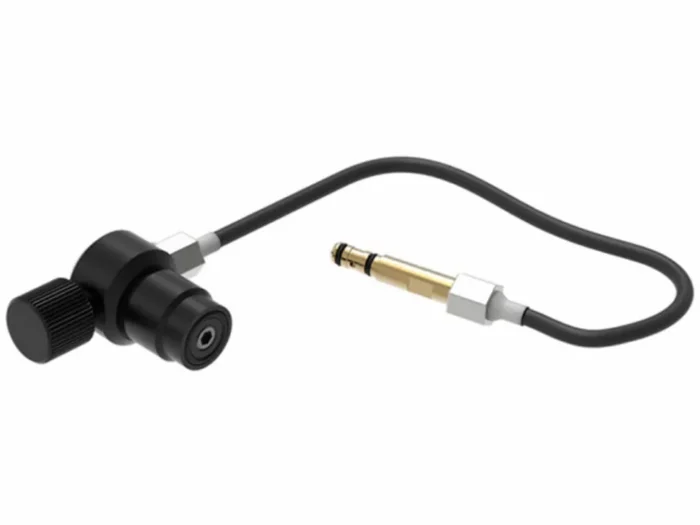
Airmaks Katran Air Rifle
€800.00
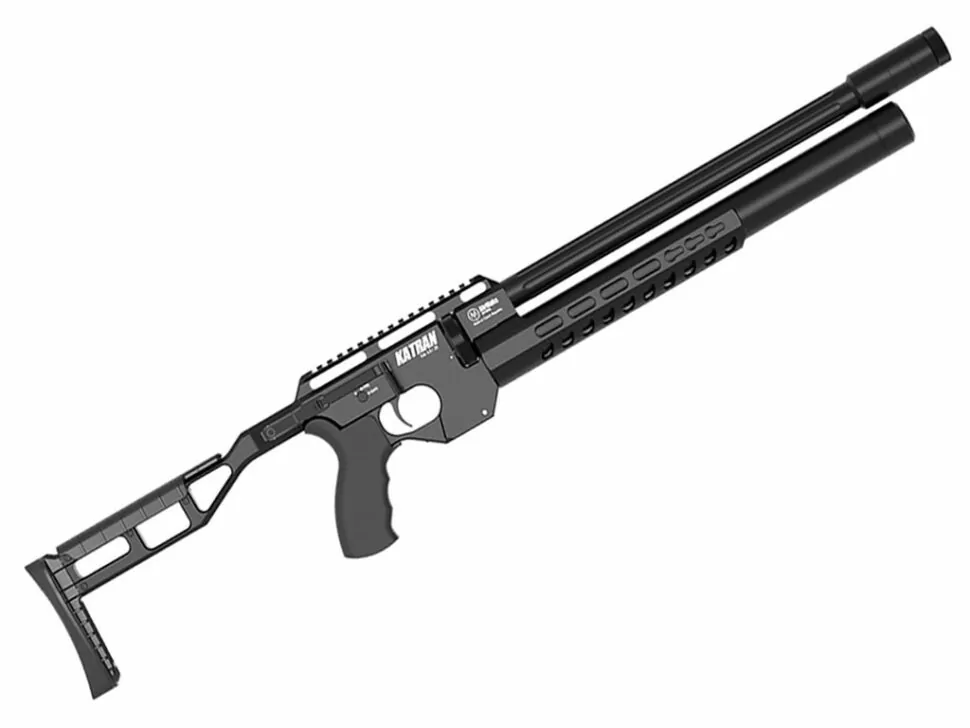
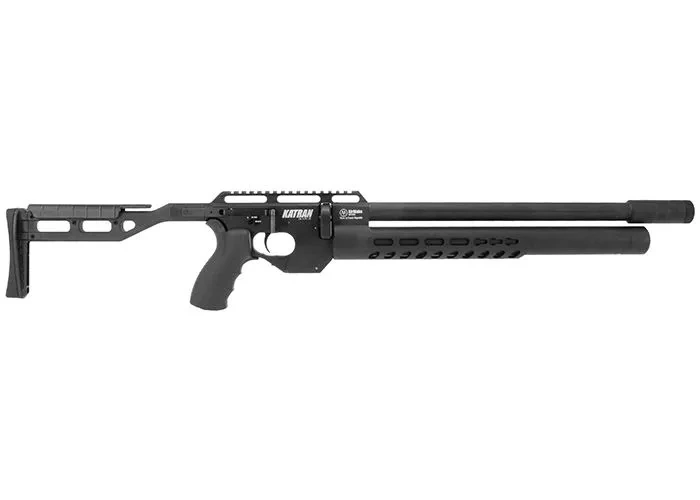
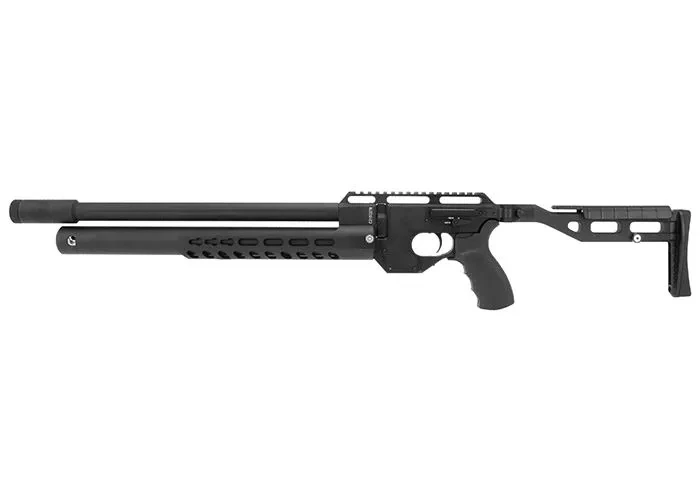
Airmaks Katran Air Rifle
Unveiling the Powerhouse: Airmaks Katran – Your Path to Precision!
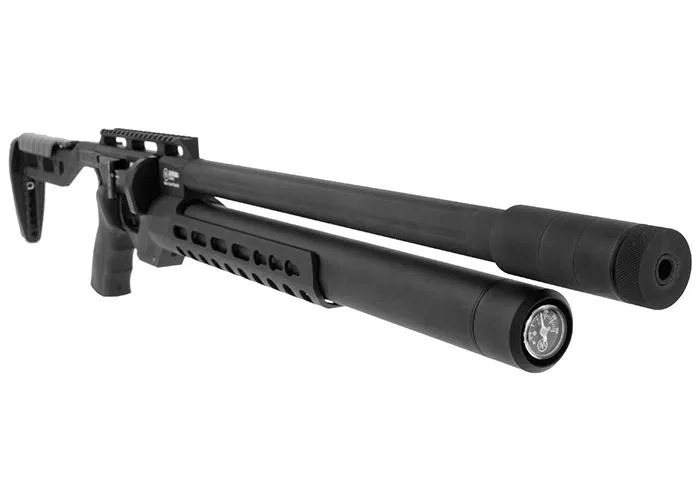
Prepare to be astounded by the relentless might of the Airmaks Katran, a true marvel of Czech engineering in the realm of PCP air rifles. Equipped with a revolutionary regulator, this masterpiece ensures each shot leaves the barrel with unwavering pressure, regardless of the air cylinder’s internal conditions. The result? A symphony of consistency that will elevate your shooting to new heights.
Immerse yourself in a world of unparalleled precision as the power can be tailored to your liking. With a simple adjustment of the valve spring preload, you wield complete control over the rifle’s potency, perfecting your performance.
Indulge in the extensive list of captivating features, seamlessly integrated into the Airmaks Katran’s minimalist design:
- Experience the perfect fusion of a choked barrel and moderator, delivering not only pinpoint accuracy but also a whisper-quiet shooting experience.
- Embrace seamless operation with the anti double feed function, banishing any distractions and elevating your focus on the target.
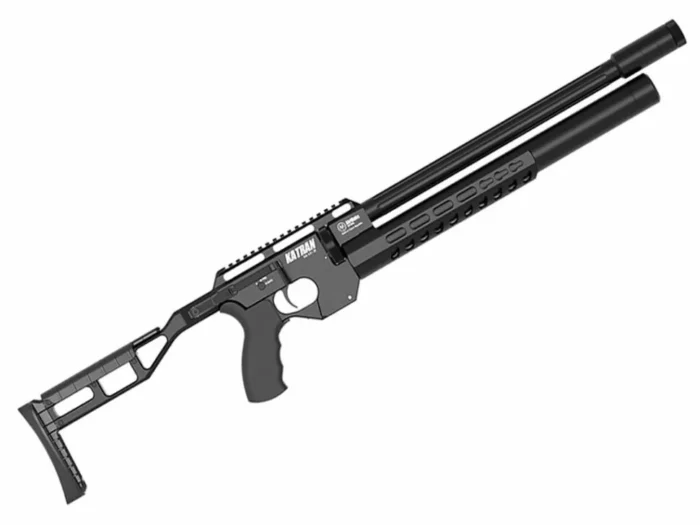
- Discover the epitome of convenience with the aluminium folding stock, a harmonious blend of strength and portability, making it your ideal shooting companion.
- Unleash your inner marksman with the adjustable cheek piece, crafted to ensure the perfect alignment for every shot.
- Relish the ultimate comfort offered by the adjustable butt pad, equipped with recoil damping rubber to cushion your shooting experience.
- Feel the magic of precision at your fingertips with the externally adjustable 2-stage trigger, turning each shot into a masterpiece of accuracy.
- Elevate your shooting prowess with the Weaver/Picatinny scope rail, a gateway to a vast realm of optic possibilities.
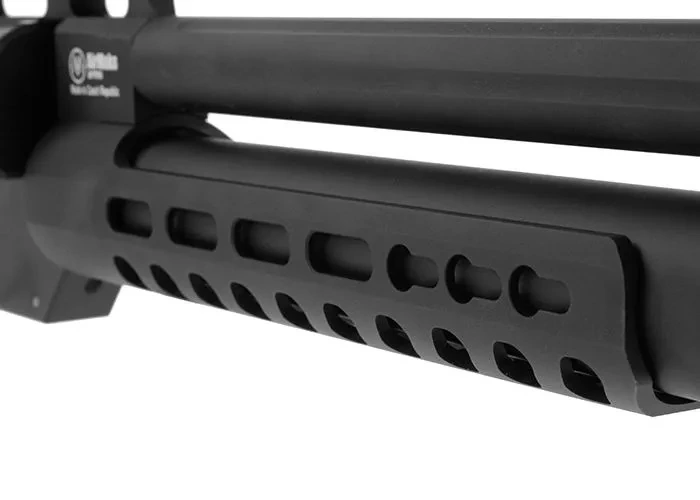
- Unlock your full potential with the Handguard, adorned with KeyMod slots, providing you the freedom to mount accessories like bipods or lasers for enhanced versatility.
- Savor the ergonomic masterpiece that is the textured AR15 grip, designed to fit your hand like a glove, offering unparalleled comfort and control.
- Rest easy with the switchable manual safety, offering ambidextrous adaptability to suit any shooter’s preferences.
- Seamlessly switch sides with the side lever, granting you the flexibility to adjust it from right to left, tailored to your shooting style.
Welcome to a world where precision and power intertwine, encapsulated in the Airmaks Katran. Embrace the journey towards accuracy, and witness your shooting prowess soar to extraordinary heights!
This item can only be sold to persons 18 years and older.
For this item we have to carry out an age check.
You can upload a copy/scan/photo of a legal identification document such as a passport, European ID or driver’s license in the order. Parts of the document may be made illegible or designated as a copy. However, your name, document number and place of issue must be legible. Your copy ID will only be used for verification purposes and will not be retained. If you are not able to upload it right now, we will contact you per email before shipping
We can ship these items only to the countries listed below:
Belgium Bulgaria Cyprus Czechia Denmark Estonia Finland France Germany Greece Hungary Ireland Italy Kroatia Latvia Lithuania Luxembourg Monaco Netherlands Poland Portugal Romania Slovakia Slovenia Spain Austria Sweden United States
Specifications
| Brand | Airmaks |
|---|---|
| Model | .22 / 5,5, .25 / 6,35 |
| Energy (Joule / ft.lbs) | 40/30, 60/44 |
| Cocking system | Side lever |
| Magazine capacity | 14 (.25), 16 (.22) |
| Weight (gram) | 2530 |
| Barrel length (mm) | 400 |
| Length (mm) | 684-910 |
| Mounting base | Weaver / Picatinny |
| Rifle Stock Type | Ambidextrous |
| Stock material | Aluminum |
| Extra accessories included |
Cleaning Pellets, Draining tool, Fill probe, Magazine, O-ring kit |
AirMaks Katran Air Rifle — Modular Regulated PCP Platform with Folding Stock, CZ Barrel Options, 20 MOA Rail, and Multiple Configurations
AirMaks Katran Design, PCP Regulation, Barrel Options, Accuracy, Calibres, Ergonomics, and Practical Performance
The AirMaks Katran Air Rifle is a modular pre-charged pneumatic platform developed around lightweight aluminium construction, regulated air delivery, adjustable ergonomics, and a wide selection of barrel lengths and reservoir configurations. Rather than being a single fixed rifle, the current Katran family extends from a highly portable 230mm-barrel Sub Compact to 700mm Extra High Power versions. Depending on the configuration, current models are offered from .177 through .30 calibre.
Core features across much of the family include a pressure regulator, external hammer-spring velocity adjustment, AR15-style grip, height-adjustable cheek piece and butt pad, adjustable folding or detachable stock, two-stage adjustable trigger, reversible side-lever action, and a 20 MOA Picatinny optics rail. Consequently, buyers can select a configuration around portability, air capacity, barrel length, calibre, and intended lawful sporting use rather than accepting a one-size-fits-all design.
Airmaks Katran
The airmaks katran platform covers multiple configurations, including Sub Compact, Compact, Standard, bottle-fed, Long, High Power, wooden-stock, and Pro versions.
This broad model range is one reason the rifle appeals to buyers who value modularity.
Airmaks
airmaks is the manufacturer behind the Katran family and several other regulated PCP platforms.
Its Katran design combines an AR-style ergonomic layout with adaptable air capacities and barrel lengths.
Airmarks
The term airmarks is commonly encountered as a spelling variation.
The correct manufacturer name is AirMaks Arms.
Katran Airmaks
A katran airmaks search generally refers to the wider modular Katran rifle family rather than one exact configuration.
Because specifications vary considerably, buyers should always check the suffix attached to a listing.
Air Marks
The phrase air marks may also appear as a spelling variation.
Technical specifications should be verified under the official AirMaks Arms product name.
Katran
The katran line ranges from compact 230mm and 280mm barrels to standard 400mm, long 520mm, and extra-high-power 700mm configurations.
Reservoir capacity likewise varies from approximately 100cc to as much as 780cc on certain bottle-fed versions.
Air Max Krait
The phrase air max krait normally refers to the Krait product family rather than the Katran.
Both come from the same manufacturer but use different layouts and should be compared separately.
Airmaks Krait
The airmaks krait is another AirMaks PCP platform.
Buyers choosing between the two should compare overall dimensions, stock design, reservoir layout, weight, and intended shooting style.
Hamster With Gun
The phrase hamster with gun has no technical relationship to this rifle or its intended sporting applications.
Hamster With a Gun
Similarly, hamster with a gun does not describe any rifle component or functional characteristic.
Air Marks
A repeated air marks search should still lead buyers toward genuine AirMaks product information rather than similarly spelled names.
Airmaks
The airmaks Katran platform is particularly notable for its modularity.
The manufacturer currently lists numerous aluminium and wooden-stock configurations ranging from compact rifles to high-capacity and high-output designs.
Ar Max
ar max is not the official model name.
The correct designation is AirMaks Katran.
Best Pellet Gun for Pest Control
People searching for the best pellet gun for pest control should consider legal power limits, humane practices, safe backstops, suitable projectile selection, and local regulations before choosing any air rifle.
Where lawful, consistency and accuracy are more important than simply selecting maximum available power.
Arm Max
The phrase arm max is another likely misspelling associated with AirMaks searches.
Pellet Gun for Pest Control
A pellet gun for pest control should only be used where the activity is lawful and appropriate.
A regulated PCP action can support repeatable shot placement, but safe handling and responsible use remain essential.
Airmaks Katran
The airmaks katran incorporates regulated air delivery and external hammer-spring velocity adjustment across much of the series.
These features allow performance to remain comparatively consistent while also giving the platform a useful degree of tuning flexibility.
Hamster Holding Gun
The phrase hamster holding gun is unrelated to normal air-rifle terminology or legitimate sporting use.
Javelin Pro Hunt Tac Bipod
A javelin pro hunt tac bipod or another compatible support can be useful with a precision-oriented PCP when the mounting interface matches the rifle.
The Katran family includes aluminium handguard systems on many variants, allowing accessories to be positioned without attaching them directly to the barrel.
Air Rifle for Pest Control
An air rifle for pest control requires adequate precision, appropriate calibre, safe operating conditions, and legal use.
Where permitted, the Katran’s regulated action and stable optics interface can support repeatable performance.
What Does PCP Air Rifle Mean
For anyone asking what does pcp air rifle mean, PCP stands for pre-charged pneumatic.
Compressed air is stored in a cylinder or bottle and released in controlled quantities to propel each projectile.
Several Katran configurations use reservoirs rated to a maximum 300 bar. For example, the compact Sub Compact uses a 100cc 300-bar cylinder, while the Standard Bottle uses a much larger 580cc reservoir.
Max Arms
max arms is not the formal manufacturer name.
Listings should identify the rifle correctly as an AirMaks Arms product.
Uramax
uramax is unrelated to the official Katran designation and should not be confused with genuine manufacturer information.
Air Max Krait
The repeated air max krait phrase refers to a different rifle line.
The Katran remains the relevant model when buyers want the folding-stock modular platform described here.
Komprimiran Zrak
komprimiran zrak means compressed air in several South Slavic languages.
Compressed air is the operating energy source used by PCP rifles such as this one.
AirMaks Arms Air Rifles
AirMaks Arms air rifles include several PCP families, but the Katran stands out for the number of configurations offered under one architecture.
Current models range from 1.95kg sub-compact rifles to longer high-performance versions exceeding 4kg depending on configuration.
AirMaks Arms PCP Air Rifles
AirMaks Arms PCP air rifles use pre-charged compressed air rather than spring-piston power.
Because the firing cycle does not involve a large spring and piston moving inside the action, PCP designs can provide a relatively calm shooting cycle that supports precision.
AirMaks Arms PCP Rifles
Among AirMaks Arms PCP rifles, the Katran family covers calibres from .177 through .30 across its current lineup.
Standard configurations typically reach .25, while several High Power variants extend to .30.
AirMaks Arms for Sale
When searching for AirMaks Arms for sale, buyers should verify the exact Katran version rather than purchasing solely from the product image.
Barrel length, reservoir capacity, calibre availability, overall length, and weight can change considerably between variants.
AirMaks Katran
The AirMaks Katran Standard model, for example, is listed at approximately 910mm overall with a 400mm barrel, 200cc air capacity, and 2.53kg weight.
The Long version extends to approximately 1030mm with a 520mm barrel and 285cc reservoir.
AirMaks Arms Shop
An AirMaks Arms shop listing should clearly state calibre, exact model suffix, regional power specification, reservoir capacity, barrel configuration, magazine capacity, and accessories included.
AirMaks Arms USA
Buyers searching for AirMaks Arms USA should confirm current dealer support together with state and municipal regulations governing airgun ownership, transport, storage, and permitted use.
Why the AirMaks Katran Platform Stands Out
The greatest advantage of the Katran is its configuration range.
The current lineup includes a Sub Compact with a 230mm barrel and 100cc reservoir, a Compact with a 280mm barrel and 165cc reservoir, a Standard with a 400mm barrel and 200cc reservoir, and a Long with a 520mm barrel and 285cc reservoir. Bottle-fed versions increase air capacity substantially.
Therefore, the buyer can prioritize portability, balance, air capacity, barrel length, or extended-session shooting.
How Good Is the Accuracy Potential?
The platform combines several features that support repeatable precision.
These include regulated air delivery, an adjustable two-stage trigger, a stable optics rail, adjustable stock geometry, and suitable barrel options.
However, practical accuracy still depends heavily on projectile quality, barrel compatibility, scope installation, pressure consistency, environmental conditions, and shooter technique.
Why the Pressure Regulator Matters
As reservoir pressure gradually falls, an unregulated firing system can experience larger changes in working pressure.
A regulator controls the pressure supplied to the firing system, helping create a more stable operating condition.
Consequently, shot-to-shot velocity variation can be reduced when the system is functioning correctly.
Why External Velocity Adjustment Is Useful
Many Katran versions provide external velocity regulation through hammer-spring adjustment.
This allows the rifle to be tuned within its intended operating range.
However, maximum output is not automatically the best setup.
A balanced setting can provide better air efficiency, stable velocity, appropriate projectile behavior, and more comfortable operation.
How Good Is the Side-Lever Action?
The Katran uses a side-lever action that can be changed between right- and left-side operation on current aluminium configurations.
This makes the platform more adaptable for different shooters.
A smooth side lever also allows magazine cycling while reducing the amount of movement required between shots.
Why the Folding Stock Matters
Many aluminium-stock Katran versions use an adjustable folding stock.
The ability to fold the stock can significantly reduce transport length.
For example, the Standard Bottle measures approximately 910mm extended and 665mm folded.
Why Adjustable Ergonomics Matter
The stock incorporates an adjustable cheek piece and butt pad on many versions.
The cheek piece helps align the eye consistently behind the optic, while the butt pad helps establish a repeatable shoulder position.
These adjustments can improve comfort and consistency during longer shooting sessions.
Why the 20 MOA Rail Matters
The top rail incorporates approximately 20 MOA of built-in inclination on current Katran configurations.
This provides a standardized Picatinny mounting surface while also preserving additional useful elevation adjustment in compatible optics for longer-distance target work.
Calibre Options
Calibre availability depends on the exact model.
Compact, Standard, Long, and several bottle-fed versions are currently offered in:
- .177 / 4.5mm
- .22 / 5.5mm
- .25 / 6.35mm
High Power variants extend the range to:
- .22 / 5.5mm
- .25 / 6.35mm
- .30 / 7.62mm
Magazine Capacity
Current standard Katran specifications commonly list:
- .177 — 18 shots
- .22 — 16 shots
- .25 — 14 shots
The exact magazine should always match the calibre and configuration.
Why Barrel Length Matters
Barrel length varies substantially across the range.
The Sub Compact uses 230mm, Compact uses 280mm, Standard uses 400mm, Long uses 520mm, and Extra High Power versions reach 700mm.
Shorter configurations prioritize portability, while longer versions provide a different balance and can support higher-output configurations.
Why Reservoir Capacity Matters
Air capacity varies just as widely.
Standard cylinder models can range from roughly 100cc to 285cc, while bottle configurations increase capacity to 300cc, 580cc, 660cc, or even 780cc depending on model.
Greater capacity generally reduces how frequently the rifle needs to be refilled, although shot count still depends on calibre, tuning, and output.
Why a Bottle Version May Be Better for Extended Shooting
A larger bottle becomes valuable when frequent refilling would be inconvenient.
For example, the Standard Bottle uses a 580cc reservoir, compared with the conventional Standard model’s 200cc cylinder.
That extra capacity makes bottle-fed models attractive for longer lawful shooting sessions.
How Precise Is the Trigger?
A two-stage externally adjustable trigger is part of the Katran architecture.
A predictable trigger can help reduce unwanted movement during shot release.
However, adjustments should remain within safe manufacturer limits rather than being made excessively light.
Why the AR-Style Grip Matters
An AR15-style grip provides a relatively vertical hand position and allows the rifle to maintain a familiar tactical-style ergonomic layout.
The Sub Compact, for example, uses a soft-touch polymer AR15 grip.
How Good Is the Platform for Supported Precision Shooting?
The combination of adjustable stock geometry, Picatinny optics mounting, aluminium accessory interfaces, and regulated air delivery makes the rifle well suited to supported recreational target shooting.
A securely mounted bipod or rest can further reduce shooter movement when used appropriately.
Where the AirMaks Katran Fits Best
The Katran range is best considered a flexible PCP platform for lawful target shooting, recreational use, field-style shooting, and other permitted sporting applications.
Compact models favor portability, while long and bottle-fed configurations favor stability and extended air capacity.
When a Compact Version Makes Sense
A compact configuration is useful when reduced length and lower overall weight are priorities.
The current Sub Compact measures approximately 695mm overall, weighs around 1.95kg, and uses a 230mm barrel with a 100cc reservoir.
When a Standard Version Makes Sense
The Standard configuration provides a middle ground between compact handling and longer-barrel stability.
Its current specification is approximately 910mm overall with a 400mm barrel and 200cc reservoir.
When a Long Version Makes Sense
The Long format provides a 520mm barrel while remaining considerably shorter than the 700mm Extra High Power designs.
The standard Long currently measures about 1030mm and uses a 285cc reservoir.
Why the High-Power Versions Are Different
High Power models are not simply cosmetic variations.
Current versions include .30 calibre capability and, on certain configurations, larger plenums and different barrel arrangements intended for heavier projectiles.
Local power and ownership regulations should therefore be checked carefully before purchase.
How to Choose the Right Configuration
The best configuration depends on intended lawful use.
A buyer prioritizing portability may prefer a compact model, while someone prioritizing long shooting sessions may prefer a bottle-fed version.
Similarly, shooters prioritizing extended-range target work may prefer longer barrels and heavier configurations.
Important Information Before Buying
Before purchasing, verify the exact:
- Model designation
- Calibre
- Regional power specification
- Barrel length
- Barrel type
- Reservoir capacity
- Maximum filling pressure
- Overall length
- Folded length where applicable
- Weight
- Magazine capacity
- Included magazines
- Fill connector
- Optics compatibility
- Accessory mounting interface
- Warranty and dealer support
Local ownership, transport, storage, hunting, and pest-control laws should also be confirmed.
Why the AirMaks Katran Is a Strong Modular PCP Platform
The AirMaks Katran Air Rifle is defined by flexibility rather than one fixed specification. Current configurations span barrels from 230mm to 700mm, reservoirs from 100cc to 780cc, calibres from .177 to .30, and body styles ranging from lightweight folding-stock rifles to wooden-stock and Pro versions.
Combined with regulated air delivery, an adjustable two-stage trigger, reversible side lever, 20 MOA optics rail, adjustable ergonomics, and multiple reservoir options, the platform gives buyers considerable freedom to choose a rifle around their actual requirements rather than adapting themselves to one fixed configuration.
Air System Performance, Trigger Control, Barrel Behavior, Ergonomics, and Long-Term Reliability
Regulated Air Delivery
A regulated pre-charged pneumatic system is designed to provide more stable firing pressure as the reservoir pressure gradually falls.
This helps reduce shot-to-shot velocity variation and supports more predictable point of impact over a useful portion of the fill.
When the regulator is working correctly, the rifle can maintain a consistent firing cycle without requiring constant adjustment.
Reservoir Management
The air reservoir should always be filled within the manufacturer’s stated pressure limits.
Overfilling does not automatically increase performance and may place unnecessary stress on seals, valves, and pressure-bearing components.
Clean and dry compressed air should be used whenever possible.
The reservoir should also be inspected for dents, corrosion, thread damage, or unusual marks before filling.
Pressure Gauge
The pressure gauge provides a convenient indication of remaining air.
It should remain easy to read and respond normally during filling and use.
If the gauge gives unstable readings or appears damaged, the rifle should be inspected before further operation.
The gauge should not be treated as the only safety reference when filling from an external cylinder or compressor.
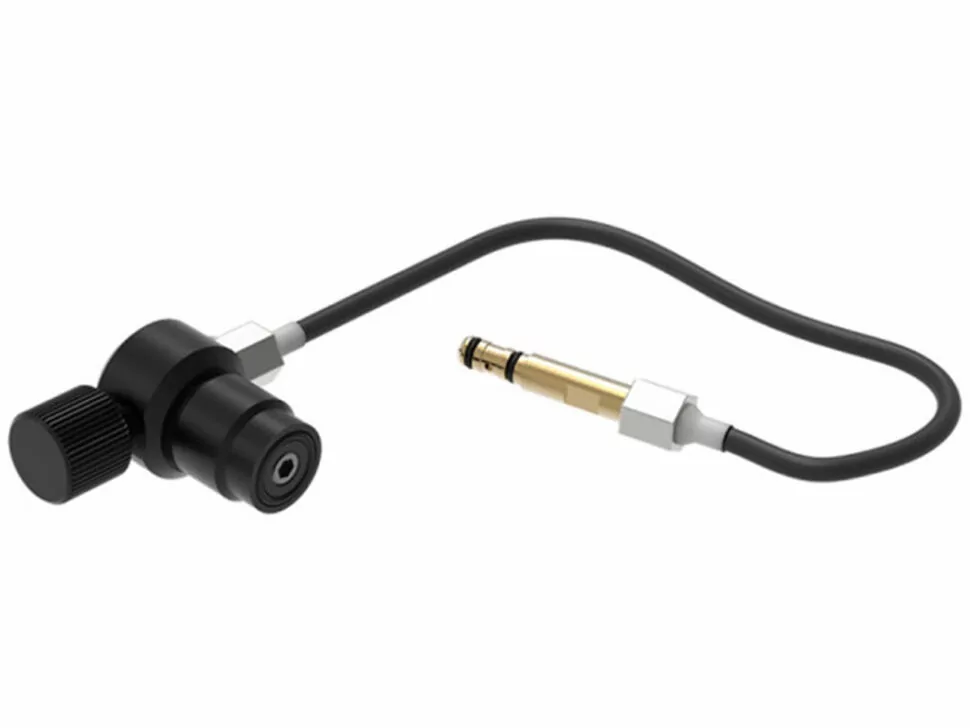
Fill Port
The fill port should remain clean and protected from dirt and moisture.
Only the correct connector should be used.
Forcing an incompatible fitting can damage the port and seals.
A damaged fill connection may also create a slow leak that becomes noticeable during storage.
Seal Condition
Seals naturally wear over time.
Repeated pressure cycles, temperature changes, contamination, and incorrect lubrication can accelerate deterioration.
A slow pressure loss may indicate worn O-rings somewhere in the system.
Replacement seals should match the correct material and dimensions rather than being substituted randomly.
Regulator Stability
A stable regulator supports repeatable air delivery.
If velocity begins changing unexpectedly, the regulator should be considered along with the valve, hammer setting, reservoir pressure, and ammunition.
A gradual change is often easier to diagnose when maintenance records have been kept.
Air Efficiency
Efficient tuning helps the rifle produce more useful shots from each fill.
Maximum output does not always provide the best balance.
A moderate setup can often produce stable velocity, reduced air consumption, and excellent precision while placing less demand on the air system.
Shot Count
Actual shot count depends on reservoir size, calibre, projectile weight, regulator setting, and firing energy.
For that reason, one advertised figure may not represent every rifle configuration.
Users should monitor their own setup to understand how many consistent shots are available from a normal fill.
Barrel Condition
The barrel should remain clean, straight, and free from mechanical damage.
The internal bore should not be aggressively cleaned without a reason.
Incorrect rods or hard tools can damage the crown or internal surface.
Cleaning becomes more useful when accuracy deteriorates or contamination is suspected.
Muzzle Crown
The crown is the final surface affecting projectile release.
Even minor damage can influence consistency.
The muzzle should therefore be protected carefully during transport and storage.
A padded case can reduce the risk of accidental impact.
Barrel Alignment
The barrel should remain correctly aligned with the receiver and optic system.
Any movement can cause point-of-impact changes.
If zero begins shifting unexpectedly, barrel mounting, scope mounts, rail screws, and stock hardware should all be checked.
Projectile Selection
Different barrels may perform better with different projectile designs and weights.
Testing several suitable options can help identify the most consistent combination.
Accuracy should be evaluated using repeated groups rather than one or two individual shots.
Projectile Quality
Damaged or inconsistent ammunition can reduce precision.
Projectiles should remain clean and dry.
Deformed skirts, irregular heads, contamination, or rough handling may create unnecessary variation.
Careful storage helps preserve consistency.
Magazine Performance
The magazine should rotate and index smoothly.
It should hold projectiles securely without deforming them.
Cracks, spring problems, or feeding resistance should be addressed.
A damaged magazine can cause loading problems that may be mistaken for an action fault.
Loading Cycle
The side-lever action should move smoothly and consistently.
Unusual resistance should not be forced.
A damaged projectile, misaligned magazine, dirty probe, or internal obstruction may be responsible.
The cause should be identified before continued use.
Trigger Feel
A predictable trigger can improve shot consistency.
The release should feel clean and repeatable.
An excessively light trigger is not automatically better.
Safe engagement and reliable function should remain the priority whenever adjustments are made.
Trigger Blade Position
The trigger blade should allow the finger to reach naturally.
A comfortable position reduces sideways pressure during the shot.
The shooter should not need to twist the wrist or stretch the finger excessively.
Grip Ergonomics
A relaxed grip helps reduce unnecessary movement.
The hand should sit comfortably without excessive tension.
Good grip position also makes it easier to operate the trigger and safety consistently.
Cheek Support
The cheek piece should place the eye naturally behind the optic.
A repeatable head position improves sight alignment.
Once correctly adjusted, the shooter should be able to shoulder the rifle and find the same sight picture without searching for it.
Butt-Pad Adjustment
The butt pad should sit securely against the shoulder.
Vertical adjustment can improve alignment for different shooting positions.
The locking mechanism should remain tight enough to prevent unwanted movement during use.
Stock Length
Correct stock length supports comfortable trigger reach and shoulder positioning.
A stock that is too long can force the shooter forward.
A stock that is too short can create a cramped position.
The best setting is one that allows relaxed control.
Folding Mechanism
The folding hinge should lock firmly when extended.
Any looseness can affect consistency and comfort.
The hinge should remain clean and free from damage.
If movement develops over time, the mechanism should be inspected.
Optics Rail
The rail should remain straight and securely attached.
Scope mounts should sit flat and tighten evenly.
Loose screws can create unexplained zero shifts.
Mounting hardware should be checked periodically without excessive tightening.
Scope Mounting
The optic should provide correct eye relief and a level reticle.
Misaligned rings can place stress on the scope tube.
A careful installation helps preserve adjustment range and sight-picture consistency.
Parallax Control
When the optic includes parallax adjustment, it should be set correctly for the shooting distance.
Incorrect adjustment can create aiming error even when the rifle itself is stable.
This becomes increasingly noticeable at higher magnification.
Bipod Stability
A bipod can provide useful support when mounted correctly.
The attachment should remain secure and should not place pressure directly on the barrel.
Excessive loading against the support can introduce unnecessary movement.
Balance
The rifle’s balance changes when large optics, bipods, or other accessories are fitted.
A setup that becomes very front-heavy can be tiring during longer sessions.
Accessory choices should therefore consider overall balance rather than individual usefulness alone.
Temperature Effects
Temperature can influence compressed-air pressure and seal behavior.
The rifle should not be stored in extreme heat.
Very cold conditions can also change pressure characteristics.
A stable storage environment is preferable.
Moisture Prevention
Moisture should be kept away from both the external metalwork and internal air system.
Dry compressed air helps reduce the risk of internal corrosion.
After use in damp conditions, the rifle should be wiped and dried appropriately.
Exterior Care
The exterior finish should be cleaned with suitable products.
Aggressive solvents can damage seals, coatings, and synthetic parts.
Routine maintenance usually requires only a soft cloth and careful inspection.
Fastener Inspection
Repeated use and transport can loosen screws.
Stock, rail, grip, and accessory fasteners should be checked periodically.
Overtightening should be avoided because threads and lightweight components can be damaged.
Leak Detection
Unexpected pressure loss should be investigated.
Possible sources include the fill fitting, gauge, regulator, valve, or seals.
A significant leak should be repaired rather than repeatedly compensated for by adding more air.
Storage
The rifle should be stored unloaded and secured against unauthorized access.
It should remain protected from moisture, direct sunlight, excessive heat, and impact.
Local storage requirements should always be followed.
Transport
During transport, the rifle should be unloaded and placed in a protective case.
The barrel, optic, reservoir, stock, and controls should be protected from knocks.
Applicable local transport rules should also be observed.
Routine Maintenance
Routine care should focus on keeping the exterior, magazine, action, and mounting interfaces clean.
The bore should generally be cleaned only when performance indicates that it is necessary.
Unnecessary disassembly should be avoided.
Professional Servicing
Work involving regulators, valves, pressure-bearing components, or internal mechanisms should be handled by a competent technician when specialized tools or knowledge are required.
The air system should never be disassembled while pressurized.
Long-Term Reliability
Long-term reliability depends on stable air delivery, healthy seals, sound barrel condition, smooth loading components, secure stock hardware, properly mounted optics, and sensible maintenance.
When the rifle is filled correctly, operated within its intended limits, stored carefully, and inspected regularly, it can continue to provide efficient air use, comfortable handling, consistent shot delivery, and dependable precision over an extended service life.
Accuracy Management, Handling Stability, Air-System Care, Maintenance Planning, and Long-Term Performance
Accuracy Management
Consistent accuracy depends on the complete relationship between ammunition quality, barrel condition, regulator stability, trigger control, optic setup, and shooting technique.
If one of these factors changes, group size can increase even when the rifle itself remains mechanically sound.
For that reason, accuracy should be judged using repeated groups under similar conditions rather than one isolated result.
Velocity Consistency
Stable velocity supports predictable trajectory and vertical point of impact.
If shot speed begins varying more than usual, possible causes include pressure level, regulator behavior, seals, valve condition, ammunition, or hammer adjustment.
A methodical inspection is more effective than changing several settings at once.
Regulator Monitoring
The regulator should continue to provide stable operating pressure throughout the useful portion of the fill.
Unusual pressure behavior can indicate that servicing is becoming necessary.
Regular observation helps identify gradual changes before they begin affecting practical precision.
Air Pressure Awareness
The reservoir should always remain within its intended operating limits.
Higher pressure is not automatically better.
Overfilling can increase stress on seals and pressure-bearing components without improving real-world accuracy.
Clean, dry compressed air should be used whenever possible.
Air Efficiency
A well-balanced setup should convert stored air into useful shots efficiently.
Excessive output can reduce shot count and increase air consumption.
For many target applications, stable velocity and repeatable accuracy are more valuable than maximum energy.
Useful Shot Range
The most practical part of the fill is the pressure range where velocity remains consistent.
Once reservoir pressure falls below the regulator’s effective range, point of impact may begin to shift.
Learning the rifle’s normal behavior can make refill timing easier.
Seal Health
Seals should retain pressure without significant leakage.
O-rings can gradually harden, flatten, or become damaged through repeated use.
Temperature changes, contamination, and incorrect lubrication can accelerate wear.
Only compatible replacement seals should be installed.
Leak Detection
Unexpected pressure loss during storage should be investigated.
Potential sources include the fill fitting, pressure gauge, regulator, valve, and surrounding seals.
A developing leak should be repaired rather than repeatedly compensated for with additional filling.
Barrel Condition
The barrel should remain free from corrosion, damage, and excessive contamination.
The bore does not normally require aggressive cleaning after every session.
Cleaning becomes more useful when accuracy declines or contamination is suspected.
Incorrect cleaning tools should be avoided because they can damage internal surfaces.
Muzzle Protection
The muzzle should be protected from impact.
Damage near the crown can affect how the projectile exits the barrel.
A padded case and careful handling can prevent unnecessary knocks during transport.
Barrel Alignment
The barrel should remain securely aligned with the receiver.
If point of impact moves unexpectedly, barrel attachment, scope mounts, rail screws, and stock hardware should all be checked.
A zero shift does not always mean the optic itself is faulty.
Ammunition Matching
Different projectiles can produce different results from the same barrel.
Testing several suitable designs and weights can help identify the most consistent option.
The best choice is usually the one that produces repeatable groups rather than simply the highest velocity.
Projectile Quality
Projectiles should remain clean, dry, and free from deformation.
Damaged skirts or inconsistent dimensions can reduce accuracy.
Careful storage helps maintain uniformity between shots.
Magazine Reliability
The magazine should rotate smoothly and feed consistently.
Indexing problems, damaged springs, cracks, or excessive resistance should be corrected.
A poorly functioning magazine can damage projectiles before they enter the barrel.
Loading Smoothness
The loading cycle should feel consistent.
If the lever suddenly becomes difficult to operate, it should not be forced.
The cause may be a damaged projectile, magazine problem, contamination, or mechanical obstruction.
Trigger Consistency
The trigger should provide a predictable release.
A clean and repeatable break helps reduce unwanted movement.
The goal should not be to make the trigger as light as possible.
Safe and reliable operation should remain the priority.
Finger Position
Consistent finger placement can improve control.
The trigger should be reached naturally without twisting the wrist or stretching the hand.
Comfortable positioning supports repeatability.
Grip Control
The grip should be held with enough pressure to maintain control without unnecessary tension.
Excessive grip pressure can introduce movement.
A relaxed and repeatable hold often produces more consistent results.
Cheek Position
The cheek support should allow the shooter to find the same head position repeatedly.
Stable eye alignment behind the optic reduces sight-picture variation.
Once adjusted correctly, the shooter should not need to search for the reticle after shouldering the rifle.
Butt-Pad Position
The butt pad should sit naturally against the shoulder.
Proper vertical placement can improve alignment in different shooting positions.
The locking mechanism should remain secure after adjustment.
Stock Length
Correct stock length affects comfort, trigger reach, and shoulder position.
Too much length can force the shooter forward.
Too little can create a cramped posture.
A balanced setting reduces fatigue during extended sessions.
Folding Mechanism
The hinge should lock securely when the stock is extended.
Any noticeable movement can affect comfort and consistency.
The mechanism should remain clean and free from damage.
Rifle Balance
Balance changes when optics, bipods, and accessories are added.
A setup that becomes excessively front-heavy may feel stable on a rest but tiring during unsupported shooting.
Accessory choices should therefore consider total weight distribution.
Supported Shooting
A stable front and rear support can help reveal mechanical accuracy.
The rifle should rest consistently on suitable chassis areas.
Changing the support position between groups can introduce unnecessary variation.
Prone Shooting
A properly mounted bipod can provide stable support from a prone position.
The attachment should remain secure without placing pressure directly on the barrel.
A comfortable stock setup also helps reduce fatigue.
Bench Shooting
Bench shooting is useful for evaluating ammunition and optic consistency.
The rifle should be positioned the same way for each group.
Stable support helps reduce variables introduced by body movement.
Bipod Attachment
The mounting point should be checked regularly.
Loose screws or movement can alter the rifle’s position.
The bipod should attach to the intended accessory interface.
Scope Alignment
The scope should remain level and securely mounted.
A canted optic can introduce horizontal error when elevation adjustments are made.
Mounting rings should clamp evenly without excessive force.
Eye Relief
Correct eye relief improves comfort and sight-picture consistency.
The shooter should obtain a full image without stretching the neck.
Improper placement can make repeated cheek position more difficult.
Parallax Adjustment
When available, parallax should be set for the intended distance.
Incorrect adjustment can create aiming error even when the rifle is stable.
This becomes especially noticeable at higher magnification.
Zero Stability
A stable zero depends on the optic, mounts, rail, barrel, chassis, and ammunition.
If point of impact changes unexpectedly, every mechanical connection should be checked systematically.
Accessory Weight
Heavy accessories can change handling significantly.
Large optics, bipods, and additional equipment may improve certain functions but can also increase fatigue.
More equipment does not automatically produce better performance.
Fastener Inspection
Repeated use and transport can loosen screws.
Rail, stock, grip, and accessory fasteners should be checked periodically.
Overtightening should be avoided because threads and lightweight parts can be damaged.
Chassis Condition
The chassis should remain free from cracks, severe wear, or loose sections.
Mounting points should remain secure.
Any structural damage should be inspected before the rifle is used again.
Moisture Control
Moisture should be kept away from the air system and exterior metal surfaces.
Dry compressed air helps reduce the risk of internal corrosion.
After use in damp conditions, the rifle should be wiped carefully.
Temperature Management
Extreme heat can increase internal air pressure.
Very cold conditions can also affect pressure and seal behavior.
A stable indoor storage environment is preferable whenever possible.
Exterior Care
The exterior should be cleaned with suitable products.
Aggressive solvents can damage coatings, seals, and synthetic components.
Routine care usually requires only a clean, soft cloth.
Cleaning Schedule
Cleaning should be based on actual need rather than habit.
The action, magazine, exterior, and mounting interfaces should remain clean.
The bore should generally be cleaned when accuracy deteriorates or contamination is suspected.
Magazine Maintenance
The magazine should remain free from dirt and damaged projectiles.
Its internal mechanism should rotate smoothly.
Small feeding issues should be corrected before they develop into repeated loading problems.
Action Maintenance
The cocking and loading mechanism should remain smooth.
Excessive lubricant can attract dust and debris.
Only suitable lubrication should be used where required.
Storage Conditions
The rifle should be stored unloaded and secured against unauthorized access.
The storage area should remain dry and protected from direct sunlight, excessive heat, and impact.
Local storage regulations should always be followed.
Transport Protection
During transport, the rifle should be unloaded and placed in a protective case.
The barrel, optic, air reservoir, stock, and controls should be protected from knocks and crushing.
Maintenance Records
Keeping records of seal changes, regulator servicing, pressure behavior, repairs, and major adjustments can make troubleshooting easier.
These records become more valuable as the rifle ages.
Service Planning
Maintenance should be carried out before a small issue becomes a major failure.
Seal wear, leaks, loose hardware, regulator instability, and magazine problems are easier to manage when detected early.
Professional Servicing
Work involving high-pressure components, regulators, valves, or internal mechanical systems should be handled by a competent technician when specialized tools or knowledge are required.
Pressure-bearing components should never be disassembled while pressurized.
Long-Term Accuracy
Long-term accuracy depends on a healthy barrel, stable air delivery, consistent ammunition, reliable trigger function, secure optics, and sensible maintenance.
When groups begin opening unexpectedly, diagnosis should be systematic rather than based on guesswork.
Long-Term Ownership
A properly maintained precision pneumatic rifle can remain dependable for many years.
Long-term ownership should include realistic planning for seal replacement, regulator or valve servicing, magazine maintenance, optic care, and filling-equipment upkeep.
When the rifle is operated within its intended specifications, filled with clean dry air, stored correctly, and inspected periodically, it can continue to provide efficient air use, comfortable handling, stable shot delivery, and repeatable precision over an extended service life.
Be the first to review “Airmaks Katran Air Rifle”
Related products
Air Arms
Air Arms
Air Arms
Air Arms
Air Arms
Air Arms

Air Arms
Reviews
There are no reviews yet.