
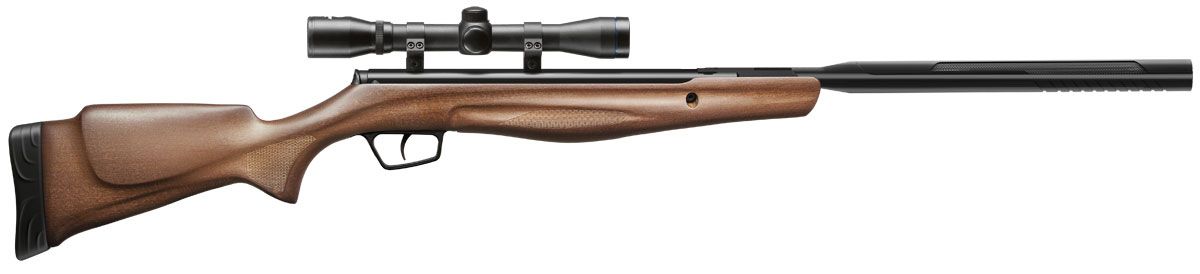
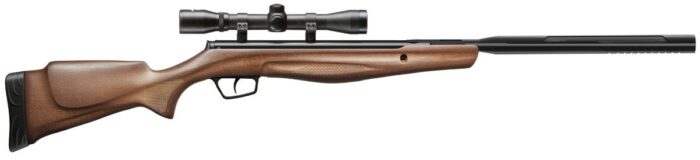
Stoeger RX20 S2 Wood Air Rifle
€130.00
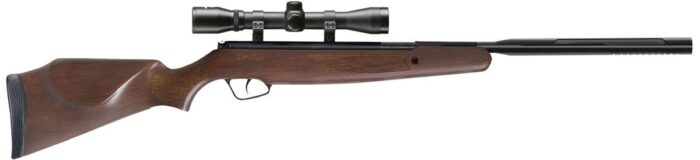
The eye catching design combined with ground breaking technological features, make the Stoeger RX20 S2 Wood really exciting to shoot!
The ergonomic silencer housing provides a firm grip for cocking the break barrel and the AFC (Air Flow Control) internal channels and regulation ring further reduce noise. Equally striking, the advanced ergonomic design of the gun fits perfectly to the shooter.
The attractive Proadaptive Checkering has been developed in collaboration with shooters, and together with the Multigrip System, allows the user to choose the grip which best suits the weather conditions and their style of shooting.
- Trigger: Adjustable T2-Double Stage
- Cocking System: Break-action with ergonomic cocking grip
- Stock:Human Tech Design Stock with ProAdaptive Checkering and Multi Grip System MGS
- Rail:Integral dovetail scope rail on receiver
- Safety: Automatic
Stoeger RX20 S2 Wood Specifications
| Type | Break Barrel |
| Scope Rail | 9-11mm |
| Power Output | 10.8 – 11.8 ft lbs |
| Shots Per Fill Approx
.177 |
–
Single Loader |
| Overall Length | 1122mm |
| Barrel Length | 366mm |
| Weight | 3kg |
| Warranty | 1 year |
| Rifle Comes With | 3-9 x 40 Scope and mounts |
Stoeger RX20 S2 Wood Air Rifle – Technical Product Guide
Stoeger RX20 S2 Wood Design, Engineering Background, and Technical Foundation
Introduction to the RX20 S2 Wood Concept
The Stoeger RX20 S2 Wood was developed around the idea of combining traditional styling with modern air rifle engineering. The design follows the RX family philosophy of creating an accessible platform that provides controlled operation, comfortable handling, and dependable mechanical performance.
The wooden stock immediately separates this version from more tactical-looking configurations. While synthetic stocks often prioritize weather resistance and lightweight construction, hardwood stocks provide a more traditional sporting appearance and a different balance in the hands.
The rifle’s design demonstrates how classic materials can be combined with modern mechanical systems. The result is a platform that reflects traditional sporting aesthetics while maintaining contemporary functional features.
Understanding the Mechanical System
The RX20 S2 Wood uses a break-barrel operating system. This means the barrel is moved downward during the cocking process, allowing a pellet to be loaded into the breech before returning the barrel to its firing position.
This system has been used in air rifles for many years because it offers simplicity and independence from external equipment. The shooter does not need a separate filling station, compressed air bottle, or charging equipment to operate the rifle.
Although the mechanism is simple in concept, consistent performance depends on precise manufacturing and proper maintenance. The relationship between the barrel, trigger system, power mechanism, and stock determines how the rifle behaves during use.
Stoeger Brand Background and Engineering Influence
The Stoeger name is connected with a long history of sporting equipment development. Many searches related to Stoeger products also reference terms such as Stoeger guns, Stoeger airguns, Stoeger Arms, Stoeger Industries, and Beretta because of the relationship between these brands.
Beretta’s history extends back to the 16th century, with the company tracing its documented origins to 1526 in Italy. Over centuries, the organization expanded into multiple sporting and outdoor product categories.
Because of this background, many users researching Stoeger products also look into questions about where Stoeger is made, who owns Stoeger Industries, who makes Stoeger guns, where Beretta is made, and the country of origin associated with the brand.
Understanding this connection provides useful context, but each product should still be evaluated according to its own engineering characteristics rather than only its company history.
RX20 Family and Related Models
The RX20 family includes several configurations designed around different preferences. Variations may include different stock materials, finishes, and additional equipment packages.
The RX20 platform is often compared with other Stoeger models, including the XM1 series, RX40, XRD50, XP4, S4000, and tactical-style configurations. However, each model has different mechanical characteristics and intended design priorities.
For example, some models focus on compressed-air technology, while others use traditional mechanical power systems. Understanding the difference between these operating methods is important when comparing air rifles.
Difference Between Mechanical and Compressed-Air Systems
Many people researching air rifles encounter terms such as PCP, compressed air rifle, regulated systems, air compressors, and CO2-powered designs.
PCP means pre-charged pneumatic. These systems store compressed air inside a reservoir before firing. They require an external filling source such as a hand pump, tank, or specialized compressor.
The RX20 S2 Wood uses a different approach. Its internal power system generates the required energy through the cocking process, making it separate from PCP platforms.
This difference also explains why comparisons such as PCP vs pump air rifle, air rifle compressor requirements, and compressed-air systems are frequently discussed among airgun users.
Trigger Design and Control
One of the important features of the RX20 family is the adjustable two-stage trigger system.
A two-stage trigger allows the shooter to experience an initial movement before reaching the final release point. This design can help users understand trigger operation and develop smoother control.
Trigger consistency is important because unwanted movement during release can affect the final result. A predictable trigger response allows the user to focus more effectively on technique.
Precision and Accuracy Considerations
Accuracy is influenced by many factors working together. The mechanical design provides the foundation, but ammunition selection, shooting technique, environmental conditions, and maintenance also contribute significantly.
A stable shooting position, consistent grip, proper sight alignment, and controlled trigger operation are essential parts of achieving repeatable results.
The RX20 S2 Wood is therefore best understood as a precision-oriented training and recreational platform where user skill development plays a major role in performance.
Traditional Design With Modern Function
The RX20 S2 Wood demonstrates how traditional sporting appearance can coexist with modern engineering concepts. Its hardwood stock, controlled operating system, adjustable trigger, and ergonomic approach create a balanced design intended for users who appreciate both appearance and functionality.
Rather than focusing on one single feature, the rifle represents a complete system where mechanical design, user interaction, and maintenance all contribute to the overall experience.
Handling Characteristics, Shooting Experience, Ergonomics, and Practical Performance
The Stoeger RX20 S2 Wood is designed around a traditional shooting experience where balance, control, and familiarity play important roles. While mechanical design determines how the rifle functions, the interaction between the user and the equipment determines how effectively that design can be used. Factors such as stock shape, weight distribution, trigger operation, and shooting technique all influence the overall experience.
Balance and Handling Characteristics
A rifle’s balance affects how naturally it can be positioned and controlled. The RX20 S2 Wood’s traditional stock design contributes to a classic handling style that many users associate with sporting air rifles. The relationship between the stock and the action helps create a stable platform when the rifle is brought into position.
A well-balanced rifle allows the user to maintain a comfortable posture without excessive effort. This becomes especially important during longer practice sessions because unnecessary strain can affect concentration and consistency.
The wooden stock also contributes to the overall feel of the rifle. Unlike synthetic materials, wood provides a natural texture and appearance that many enthusiasts appreciate. It can also provide a warmer and more traditional contact surface during handling.
Shooting Position and Comfort
A consistent shooting position is one of the most important elements of accuracy. The user’s stance, shoulder placement, hand position, and head alignment all influence the final result.
The stock design helps guide the shooter toward a repeatable position. A comfortable cheek weld allows the eye to align naturally with the sighting system, while a stable shoulder placement helps manage movement during the firing cycle.
Comfort should not be confused with simply making the rifle feel lighter. A properly balanced rifle can sometimes feel easier to control even when it has more weight because the weight is distributed in a way that supports stability.
The Importance of Trigger Control
The trigger is the primary connection between the user and the firing process. A smooth and predictable trigger allows the shooter to complete the shot without unnecessary movement.
The two-stage trigger design provides a gradual process before the final release. This allows the user to prepare for the shot rather than immediately activating the mechanism without feedback.
Developing proper trigger control requires practice. The user should focus on applying consistent pressure while maintaining the sight picture. Sudden movements during the final trigger stage can influence where the projectile travels.
Recoil Management and Shooting Technique
Although air rifles generally produce less movement than many other shooting systems, the firing cycle still creates mechanical motion. Understanding this movement helps users develop better technique.
A consistent hold is important because changing grip pressure between shots can affect how the rifle moves during operation. Many experienced users focus on allowing the rifle to function naturally rather than forcing it into position.
Follow-through also plays an important role. Maintaining the shooting position briefly after the trigger is activated allows the user to observe the shot process and maintain consistency.
Accuracy Development Through Practice
Accuracy is not created by equipment alone. A well-designed rifle provides the foundation, but the user’s ability to apply proper technique determines how effectively that foundation is used.
Regular practice helps users understand the rifle’s characteristics. Over time, they become familiar with the trigger feel, balance, loading process, and firing behavior.
Improvement usually comes from analyzing results and making controlled adjustments. Changing several factors at once can make it difficult to determine what influenced performance. A structured approach allows the user to identify which areas require improvement.
Ammunition and Performance Variation
Different ammunition types can produce different results because of variations in weight, shape, and manufacturing quality. Even small differences can influence consistency.
Testing should be performed under similar conditions whenever possible. Changing ammunition, shooting distance, weather conditions, or shooting position at the same time makes comparisons less reliable.
Finding a suitable ammunition option is part of understanding the rifle. Consistency is usually more valuable than focusing only on speed or maximum performance figures.
Use in Different Environments
The shooting environment has a significant influence on performance. Indoor locations provide more controlled conditions, while outdoor environments introduce additional variables.
Wind can affect projectile movement, particularly at longer distances. Uneven surfaces, changing light conditions, and temperature differences can also influence the experience.
A responsible user should always select a suitable location and ensure that the surrounding area is safe. Proper preparation improves both safety and the quality of the shooting session.
Maintenance and Reliability During Use
Maintaining the rifle properly helps preserve its performance and appearance. Regular care involves protecting the external surfaces, checking important components, and storing the equipment correctly.
Dirt, moisture, and poor storage conditions can affect mechanical systems over time. Preventive maintenance is therefore an important part of ownership.
The user should avoid unnecessary adjustments or modifications without understanding how they affect the system. Mechanical changes can alter performance and may reduce reliability if they are not performed correctly.
Long-Term User Experience
The value of a traditional air rifle often develops over time. As the user becomes more familiar with the equipment, the connection between technique and performance becomes clearer.
The RX20 S2 Wood provides a platform where users can develop patience, consistency, and mechanical understanding. The combination of traditional styling and practical engineering creates an experience focused on controlled shooting rather than simply technical specifications.
Overall Practical Assessment
The Stoeger RX20 S2 Wood offers a balanced shooting experience built around comfort, stability, and user interaction. Its design encourages careful technique and repeatable practice, making it suitable for users who appreciate a traditional approach to air rifle shooting.
Its performance is best understood as the result of several connected factors: mechanical design, user skill, maintenance, ammunition consistency, and environmental awareness. When these elements work together, the rifle can provide a reliable and rewarding shooting experience over time.
Maintenance, Durability, Safety Practices, and Long-Term Ownership
The Stoeger RX20 S2 Wood is designed as a mechanical system that benefits from proper care, responsible handling, and regular inspection. Like any precision instrument, its long-term performance depends not only on the quality of its construction but also on how it is maintained and used. A consistent maintenance routine helps preserve reliability, protects the external appearance, and allows the user to better understand the condition of the equipment over time.
Importance of Regular Maintenance
Regular maintenance is an essential part of keeping an air rifle functioning properly. Dust, moisture, and environmental exposure can gradually affect mechanical components if they are ignored. A simple inspection routine can help identify potential issues before they become more significant.
Maintenance does not always require complicated procedures. Basic care involves keeping the exterior clean, protecting the surface finish, checking for loose components, and storing the rifle in an appropriate environment.
A clean and well-maintained rifle is easier to inspect because changes in condition become more noticeable. Small differences in operation, sound, or handling can be recognized more quickly when the equipment is normally kept in good condition.
Protecting the Wooden Stock
The wooden stock is one of the defining visual features of this model, and it requires appropriate care to maintain its appearance. Wood is a natural material that can react to changes in humidity, temperature, and storage conditions.
Excessive moisture can affect the appearance and structure of wood over time. Therefore, storing the rifle in a dry location is important. The stock should also be protected from unnecessary impacts, scratches, and harsh environmental exposure.
Cleaning should be performed using suitable methods that protect the finish rather than damaging it. Strong chemicals or unsuitable cleaning materials may affect the surface treatment and reduce the appearance of the wood.
Mechanical Inspection and Component Care
The internal and external components work together as a complete system. Regular checks allow users to monitor the condition of important parts.
Fasteners and mounting points should be inspected periodically because repeated operation can sometimes cause gradual loosening. Identifying these changes early helps maintain stability and reliability.
The moving parts involved in the cocking and firing cycle should operate smoothly. Any unusual resistance, unexpected noise, or change in normal operation should be investigated rather than ignored.
Storage Recommendations
Proper storage plays a major role in preserving equipment condition. The rifle should be stored in a clean, dry environment away from excessive humidity and extreme temperature changes.
A protective case can provide additional protection during transportation or periods when the rifle is not being used. Storage areas should also prevent unauthorized access and comply with local requirements.
Before storage, the rifle should be checked to ensure it is in a safe condition. Responsible storage habits protect both the equipment and the people around it.
Developing Safe Handling Habits
Safety begins with responsible handling. Even when a rifle is being inspected, transported, or stored, it should always be treated carefully.
The user should maintain awareness of the direction the rifle is pointed and avoid unnecessary handling. A controlled approach reduces the chance of accidents and encourages good habits.
A proper shooting environment should always be selected. The area should provide a suitable backstop, sufficient space, and protection from unintended access. Shooting should never take place in locations where people, animals, vehicles, or property could be placed at risk.
Understanding Local Regulations
Rules regarding air rifles differ significantly between regions. Some areas regulate equipment based on power level, age requirements, transportation, storage, or approved shooting locations.
Before using an air rifle, users should understand the laws that apply in their location. Responsible ownership includes following all applicable requirements and respecting restrictions designed to promote safety.
Regulations can also change over time, so staying informed is an important part of responsible ownership.
Performance Preservation Over Time
Maintaining consistent performance requires attention to both mechanical condition and user habits. A rifle that is properly stored, inspected, and handled carefully is more likely to provide dependable operation over an extended period.
Performance changes should not automatically be attributed to mechanical failure. Variations can result from ammunition differences, environmental conditions, shooting technique, or maintenance practices.
Keeping notes about shooting sessions can help identify patterns. Recording changes in conditions, equipment adjustments, and results can make it easier to understand performance over time.
Avoiding Unnecessary Modifications
Many mechanical systems are designed to operate as a complete package. Unnecessary modifications can introduce unexpected changes and may affect reliability.
Users should carefully consider any adjustment or replacement before making changes. Understanding how each component interacts with the entire system is important.
When technical servicing is required, following recommended procedures or seeking qualified assistance is generally the safest approach.
Building Experience Through Responsible Use
Long-term ownership is not only about maintaining the equipment; it is also about developing knowledge and skill. As users gain experience, they become more familiar with the characteristics of the rifle and better understand how different factors influence results.
This knowledge helps create a more enjoyable and controlled shooting experience. Patience, observation, and responsible practice are essential parts of improving ability.
Final Thoughts on Ownership
The Stoeger RX20 S2 Wood combines traditional design elements with practical mechanical features that reward careful ownership. Its durability and performance depend on a combination of construction quality, proper maintenance, responsible handling, and suitable storage.
A thoughtful approach to care ensures that the rifle remains functional and visually appealing over time. By focusing on safety, maintenance, and consistent practice, users can fully appreciate the engineering and craftsmanship behind the platform.
Design Philosophy, User Experience, and Practical Shooting Applications
The Stoeger RX20 S2 Wood reflects a design approach that combines traditional sporting aesthetics with practical mechanical engineering. Its purpose is not only defined by its individual components but also by how those components work together to create a balanced and controlled experience. The relationship between the user and the equipment is an important part of performance, and the design choices made throughout the rifle influence comfort, handling, and consistency.
Traditional Appearance and Modern Function
The wooden stock gives the rifle a classic appearance that connects with traditional sporting designs. Wood has been used in sporting equipment for generations because of its natural appearance, comfortable feel, and timeless character.
However, the design is not based only on appearance. The stock provides structural support for the action while also helping the user maintain a stable shooting position. A properly designed stock allows the shooter to position the rifle comfortably and repeat the same shooting process more consistently.
The combination of traditional materials and modern mechanical features demonstrates how classic styling can continue to be relevant in contemporary equipment design.
The Importance of Ergonomic Design
Ergonomics influence how easily a user can control equipment. The shape of the stock, location of controls, and overall balance determine how naturally the rifle fits during use.
A comfortable design reduces unnecessary movement because the user does not need to constantly adjust their position. This allows greater focus on important aspects such as aiming, trigger operation, and follow-through.
The relationship between the user and the rifle develops over time. As familiarity increases, the user can better understand how the equipment responds and make adjustments to improve consistency.
Practical Shooting Applications
The RX20 S2 Wood can be used in various controlled shooting environments where local regulations allow. Its design makes it suitable for activities that focus on precision, concentration, and skill development.
Many users appreciate air rifles because they provide an opportunity to practice fundamental shooting principles in a controlled setting. These principles include maintaining a steady position, understanding sight alignment, controlling breathing, and developing smooth trigger operation.
The experience gained through regular practice can help users improve their understanding of mechanical systems and personal shooting technique.
Learning Through Controlled Practice
Improvement with any precision tool requires patience and observation. Users who take time to study their results can identify areas where adjustments may be needed.
A structured practice routine is generally more effective than random shooting. Changing one factor at a time allows the user to understand what influences performance.
For example, improving body position, refining trigger control, or testing different environmental conditions individually can provide clearer information than changing multiple variables simultaneously.
Confidence and Familiarity
Confidence develops through understanding and experience. A user who becomes familiar with the operation, balance, and characteristics of the rifle can focus more effectively on technique.
Familiarity also improves safety because the user understands how the equipment behaves during normal operation. Knowing the correct procedures for loading, handling, storage, and maintenance contributes to responsible use.
Over time, the equipment becomes less of an unfamiliar object and more of a tool that the user understands and controls properly.
The Role of Patience in Precision
Precision requires patience because consistent results rarely appear immediately. Users must learn how small adjustments affect performance and how different conditions influence outcomes.
The process of improvement involves observation, practice, and gradual refinement. Rushing the process often leads to frustration because many performance factors require time to understand.
A well-designed rifle provides the foundation, but the user’s dedication to learning determines how effectively that foundation is used.
Environmental Awareness and Adaptation
The shooting environment plays an important role in practical performance. Indoor and outdoor conditions create different challenges that require different approaches.
Outdoor environments may introduce wind, changing light, and uneven surfaces. Indoor environments can provide greater consistency but may still require attention to distance, lighting, and positioning.
Understanding these differences helps users make better decisions and interpret results more accurately.
Equipment Care as Part of the Experience
Ownership involves more than using the rifle during shooting sessions. Care, inspection, and storage are part of maintaining the overall experience.
A properly maintained rifle remains more predictable and enjoyable to use. Regular attention also helps preserve the appearance and function of important components.
The process of caring for equipment can also increase the user’s understanding of mechanical design. Learning how different parts contribute to operation creates a deeper appreciation of engineering.
Balanced Performance Approach
The strongest performance comes from balance. Mechanical design, user technique, maintenance, environmental awareness, and proper handling all contribute to the final experience.
Focusing only on one characteristic can create an incomplete understanding. For example, speed alone does not define quality, and appearance alone does not determine function.
A complete evaluation considers how the rifle performs as a whole system and how effectively it supports the user’s goals.
Overall Design Perspective
The Stoeger RX20 S2 Wood represents a combination of traditional styling, practical engineering, and user-focused design. Its wooden construction provides a classic feel, while its mechanical layout supports controlled operation and skill development.
The rifle’s greatest strength is the connection it creates between equipment and user. Through proper practice, responsible handling, and regular care, users can develop a deeper understanding of precision shooting and mechanical craftsmanship.
Rather than being defined by a single feature, the RX20 S2 Wood demonstrates how thoughtful design can create a balanced and rewarding experience built around consistency, control, and long-term usability.
Accuracy Development, Performance Evaluation, and Real-World Shooting Factors
The performance of the Stoeger RX20 S2 Wood is influenced by the relationship between mechanical design, user technique, environmental conditions, and regular care. While the construction of the rifle provides the foundation for consistent operation, achieving reliable results requires understanding how different factors interact. A complete evaluation should consider not only the equipment itself but also the methods used to operate and maintain it.
Understanding Accuracy as a Complete System
Accuracy is not created by one component alone. It is the result of multiple elements working together in harmony. The condition of the rifle, consistency of ammunition, quality of the shooting position, trigger control, and environmental conditions all contribute to the final outcome.
A well-designed mechanical system can provide the opportunity for good results, but the user must apply proper technique to take advantage of that potential. Even small inconsistencies in handling can influence where a projectile reaches the target.
For this reason, accuracy should be measured through repeated performance rather than isolated results. A single successful shot does not always represent the true capability of a system. Consistent groups over multiple sessions provide a more realistic understanding.
Developing Better Shooting Technique
Improvement begins with developing a repeatable routine. A consistent approach before every shot allows the user to reduce unnecessary variation.
Important elements include establishing a comfortable position, maintaining stable support, controlling breathing, and applying smooth trigger pressure. These fundamentals allow the user to reduce movement and improve concentration.
Over time, repeated practice helps the shooter recognize patterns. If results change, the user can determine whether the cause is related to technique, equipment condition, ammunition, or environmental influences.
The Influence of Ammunition Selection
Ammunition plays an important role in performance because different designs can behave differently. Variations in weight, shape, and manufacturing consistency can affect the way a projectile travels.
Testing different options under similar conditions helps identify which type provides the most consistent results. Comparisons should be performed carefully because changing several factors at once makes it difficult to understand what caused a difference.
Consistency is often more valuable than focusing only on speed. A predictable result allows the user to make adjustments more effectively and develop a better understanding of performance.
Managing the Firing Process
The firing process involves several stages that require attention. The user must prepare the rifle correctly, establish a stable position, align the sights, operate the trigger smoothly, and maintain control after the shot.
The moments immediately before and after the shot are especially important. Sudden movement or changes in pressure can influence the result.
Developing a smooth process requires practice. Experienced users often focus on eliminating unnecessary movements and creating the same sequence each time.
Evaluating Performance in Different Conditions
Environmental conditions can significantly influence shooting results. Indoor conditions generally provide fewer external variables, while outdoor environments introduce additional challenges.
Wind is one of the most noticeable factors because moving air can affect projectile movement. Temperature, lighting, and surface conditions can also influence the shooting experience.
Understanding environmental effects allows users to make better evaluations. A change in results does not always indicate a problem with the rifle; sometimes external conditions are responsible.
The Importance of Consistent Maintenance
Performance evaluation should always consider the condition of the equipment. A rifle that is properly maintained is more likely to provide consistent operation.
Regular inspection helps identify changes before they become significant problems. Loose components, contamination, or changes in mechanical behavior can influence performance if they are ignored.
Maintenance should be approached carefully. Excessive adjustments or unsuitable cleaning methods can create problems instead of improving performance.
Long-Term Reliability Assessment
A reliable rifle should maintain predictable operation over time when properly cared for. Long-term performance depends on both the original design and the habits of the user.
Storage conditions, frequency of use, maintenance practices, and handling methods all influence durability. A careful owner can often extend the useful life of equipment by preventing unnecessary wear.
Monitoring performance over time also helps identify normal characteristics versus unusual changes. This knowledge allows the user to respond appropriately when something appears different.
Improving Results Through Observation
One of the most effective ways to improve performance is through careful observation. Keeping track of shooting conditions, adjustments, and results can reveal patterns that may not be obvious during a single session.
Recording information allows the user to compare results objectively rather than relying only on memory. This approach helps identify which techniques produce better consistency.
Small improvements often come from understanding details. A slight adjustment in position, timing, or equipment setup can create noticeable changes when applied consistently.
Balancing Expectations and Performance
Every mechanical system has specific characteristics and limitations. Understanding these realistically allows users to appreciate what the equipment is designed to provide.
Performance should not be judged only by maximum capability. Factors such as comfort, reliability, ease of operation, and consistency are equally important when evaluating overall quality.
A balanced approach leads to a better experience because it focuses on improvement rather than unrealistic expectations.
Final Evaluation of Performance Potential
The Stoeger RX20 S2 Wood provides a platform where mechanical design and user skill work together. Its performance potential is influenced by careful handling, proper maintenance, consistent practice, and awareness of external conditions.
The most successful results come from understanding the complete system. Equipment quality provides the foundation, but disciplined technique and responsible ownership determine how effectively that foundation is used.
Through continued practice and attention to detail, users can develop a deeper understanding of precision shooting while appreciating the engineering principles behind the rifle’s design.
Be the first to review “Stoeger RX20 S2 Wood Air Rifle”
Related products
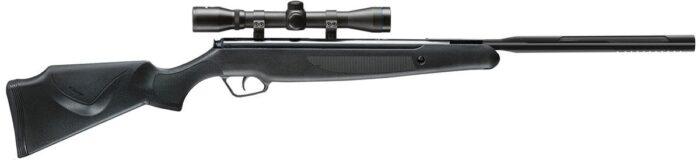
Stoeger Air Rifles
Stoeger Air Rifles
Stoeger Air Rifles
Stoeger Air Rifles
Reviews
There are no reviews yet.