
-
×
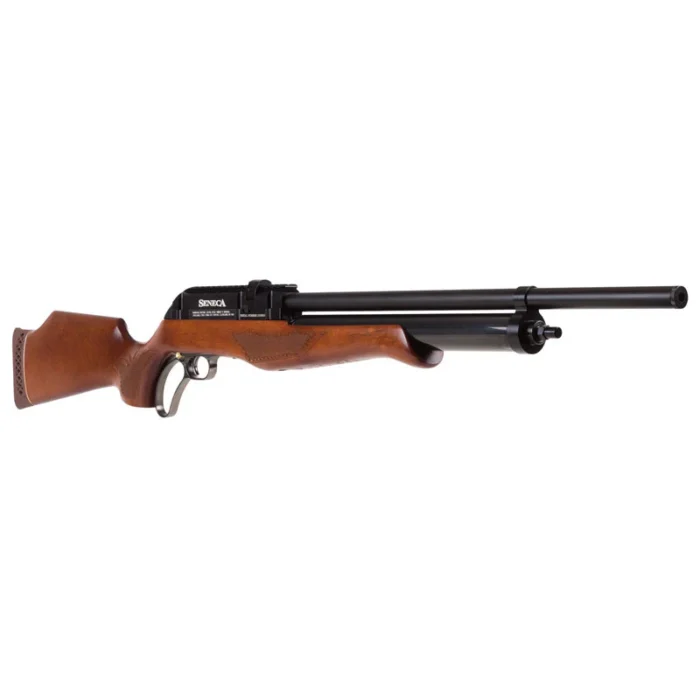 Seneca Eagle Claw Carbine, Lever Action PCP
1 × €450.00
Seneca Eagle Claw Carbine, Lever Action PCP
1 × €450.00
Subtotal: €450.00

€350.00
The Marauder pistol cannot be filled with CO2. Use only high-pressure air.
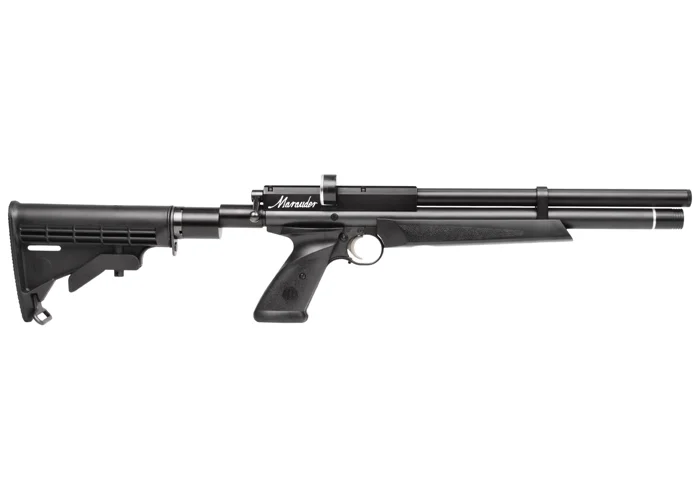
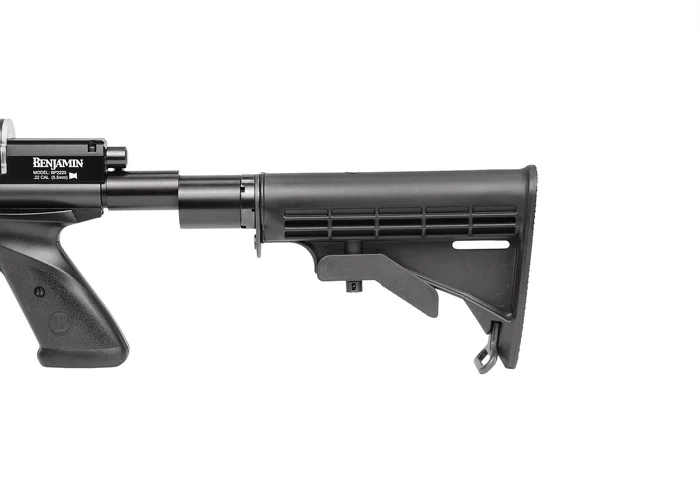
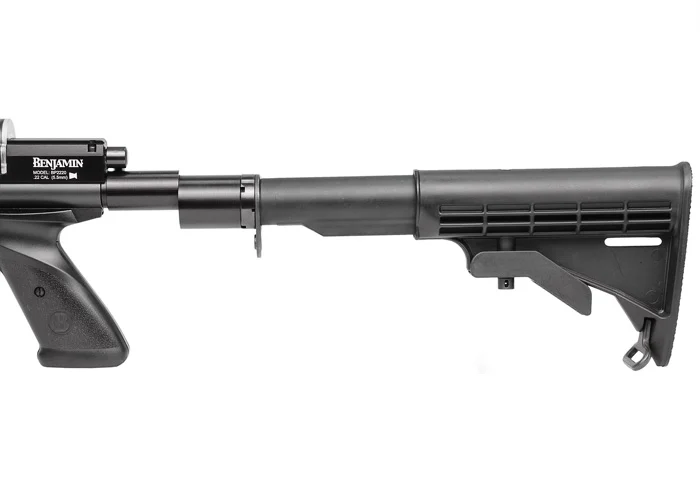
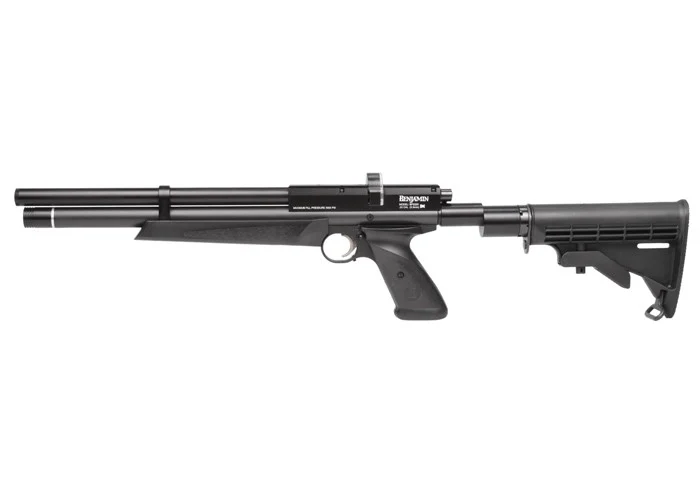
If you’re tired of lugging heavy guns into the field — or even into the backyard, maybe it’s time you got a Benjamin Marauder pistol with our special adapter and your choice of AR15-style stock (Pro/mil-spec version or basic version).
You get the same great action from your pistol but with the convenience of a shoulder stock.
What makes this setup different and better than the standard Marauder shoulder stock is the adapter that gives you adjustability for cast on, cast off, vertical adjustments and horizontal adjustments.
Your gun will easily accommodate right-handed and left-handed shooters, big shooters, little shooters — and every size in between. In fact, the resulting carbine is under 4 lbs. and makes an excellent gun for youngsters or anyone who can’t handle a full-size air rifle.
Your Benjamin Marauder will feel like a custom-made carbine without the expense of buying a full-size rifle.
We’ve taken a fantastic pistol and turned it into a fantastic carbine. Of course, you can quickly remove the adapter and buttstock to shoot this as a pistol One gun for everyone!
Product Description
Benjamin Marauder Air Pistol, AR15 Stock Overview
Compact Benjamin Air Pistol With Shoulder-Supported Control
The Benjamin Marauder Air Pistol, AR15 Stock combines the portability of a benjamin air pistol with the stability of a compact carbine. Its removable shoulder-stock arrangement creates an additional contact point, helping the shooter maintain steadier alignment during lawful target practice, recreational shooting and permitted small-game applications.
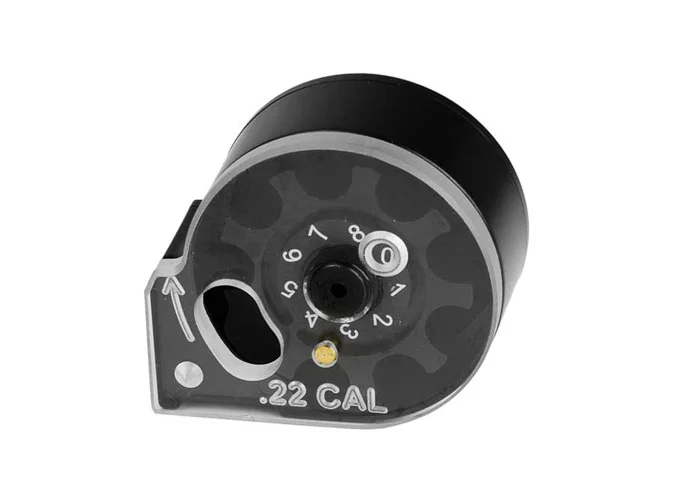
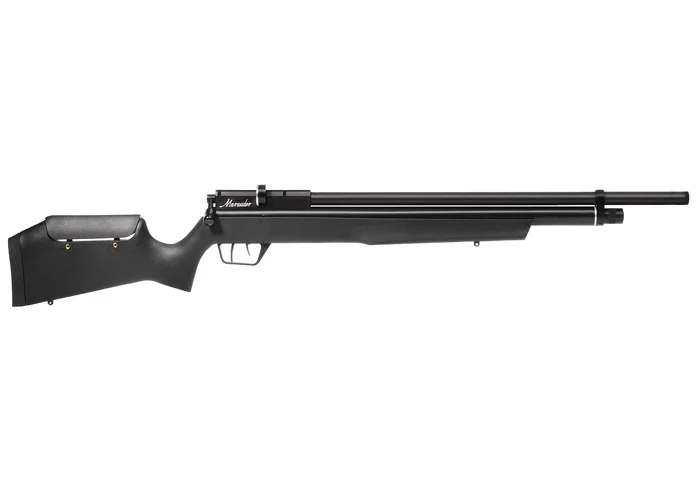
The factory benjamin marauder pistol is a .22-calibre pre-charged pneumatic platform equipped with an eight-shot rotary magazine, rifled shrouded barrel and removable synthetic shoulder stock. Benjamin lists velocities of up to 800 feet per second and as many as 30 shots from a fill, although actual performance depends on pellet weight, pressure, environmental conditions and individual setup.
A listing that specifically uses an AR15-style stock should clearly identify the adapter, stock manufacturer and included mounting hardware. Buyers should verify that the conversion is installed correctly and remains lawful in their jurisdiction.
Benjamin Marauder PCP Operating System
The benjamin marauder pcp uses compressed air stored inside an onboard reservoir. When the trigger is released, the firing valve delivers a measured quantity of air behind the pellet. Consequently, the shot cycle produces less mechanical movement than a spring-powered platform.
This smooth operating behaviour helps the pcp benjamin marauder maintain stable sight alignment and predictable handling. It also reduces the unusual forward-and-rearward recoil that can place stress on optics fitted to conventional spring systems.
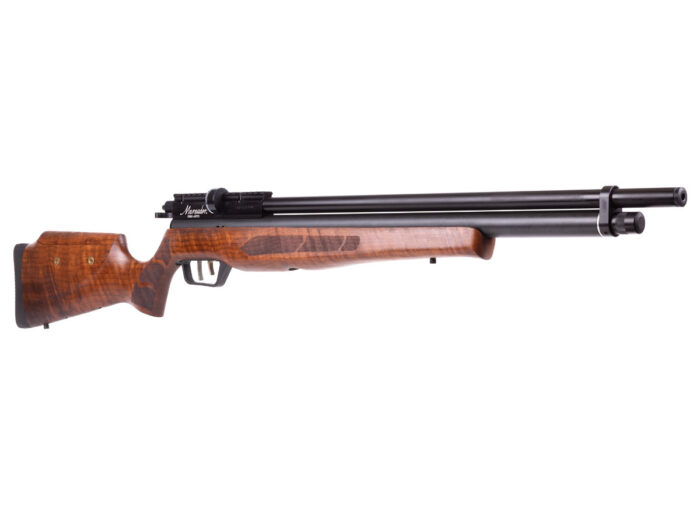
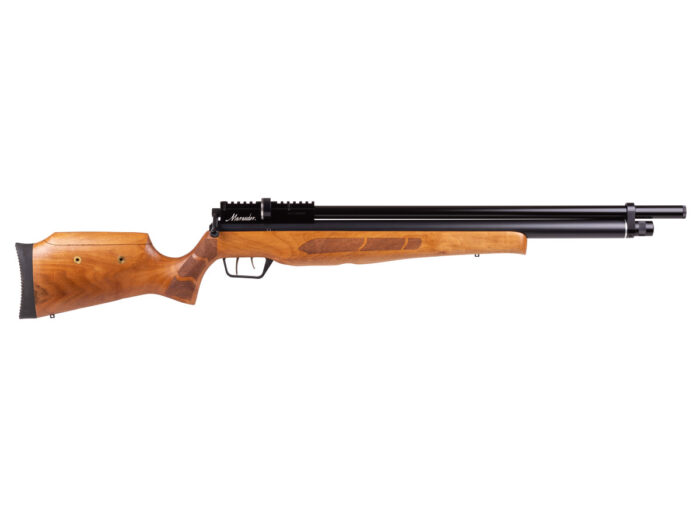
The broader benjamin marauder family includes both compact and full-length configurations. A benjamin marauder pcp air rifle may offer a larger reservoir, longer barrel and additional calibre choices, while the pistol prioritises low weight, portability and close handling.
Air Rifle and Air Pistol Versatility
The phrase air rifle and air pistol describes the adaptable nature of this model. Without the shoulder stock, the platform remains compact. Once a suitable stock is attached, it provides a more stable, carbine-style shooting position.
Unlike co2 pellet guns, the Marauder does not rely on disposable carbon-dioxide cartridges. It must be charged with clean, dry compressed air using compatible high-pressure equipment.
It should also not be described as a pneumatic gun bb gun rifle because the platform is designed for lead or lead-free pellets rather than ordinary steel BBs. Using incorrect ammunition may damage the barrel or loading system.
Benjamin Pellet Gun 22 Cal Precision
As a benjamin pellet gun 22 cal, the Marauder pistol fires larger and generally heavier ammunition than a 177 pellet gun using cal .177 pellets. The increased pellet mass can offer stable flight and useful retained energy for approved sporting purposes.
The correct benjamin pellet should fit the magazine smoothly, chamber without excessive resistance and produce consistent groups. Pellet weight, head diameter, skirt condition and manufacturing quality can all affect accuracy.
A full-length benjamin 22 air rifle may provide additional power or reservoir capacity. However, the compact pistol offers greater portability and lighter handling.
Benjamin Marauder .25 Comparison
The phrase benjamin marauder .25 refers primarily to full-sized rifle configurations rather than this pistol. The larger-calibre rifle uses heavier pellets and is intended for shooters who require greater energy within lawful applications.
Therefore, buyers should not confuse a .25 rifle listing with the standard .22 pistol. Calibre, magazine capacity, velocity, dimensions and fill requirements should always be confirmed before purchase.
Benjamin Armada and AR-Style Furniture
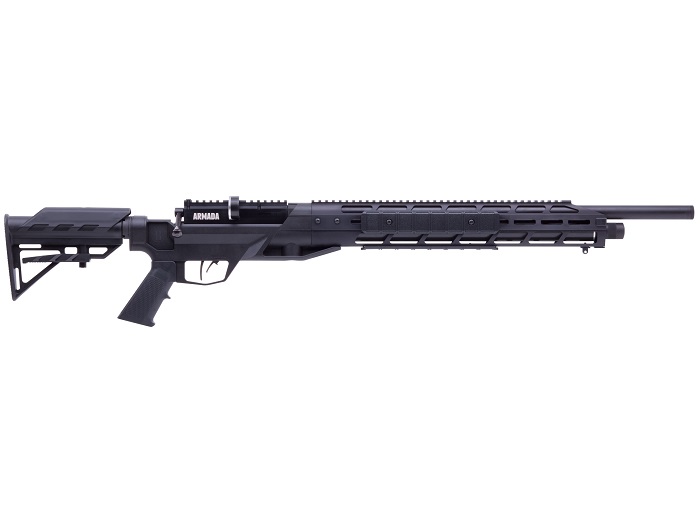
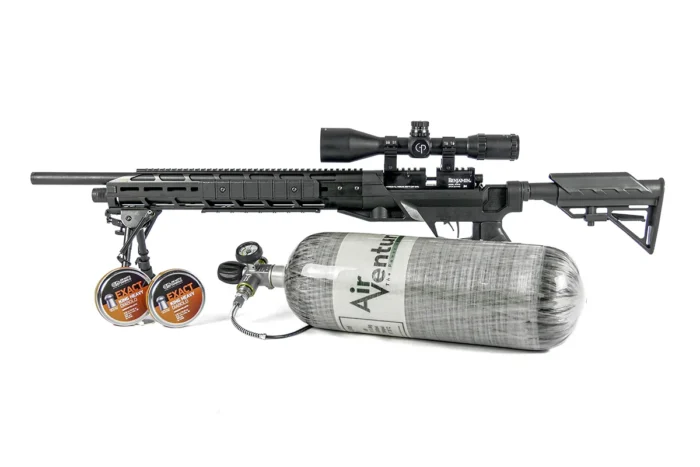
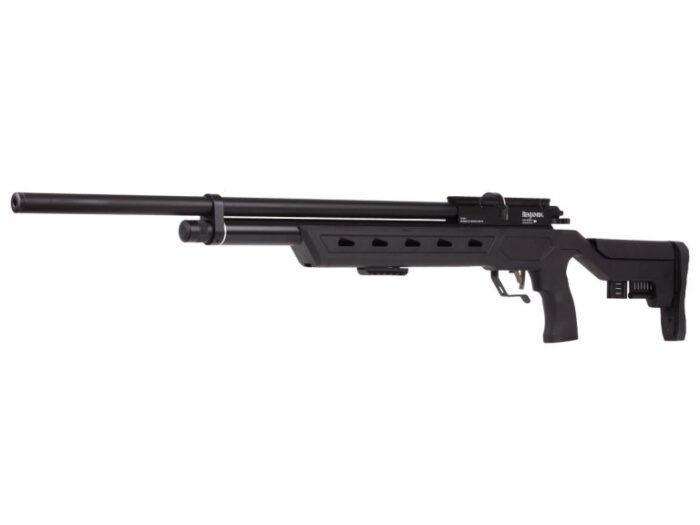
The benjamin armada provides a useful comparison for shooters who specifically want factory tactical furniture. Benjamin describes the Armada as a multi-shot PCP rifle with an M-LOK interface, full-sized rifle construction and velocities reaching up to 1,000 feet per second in .22 calibre.
The Armada offers greater modularity, whereas the Marauder pistol focuses on reduced size and weight. Consequently, the pistol may be preferable when compact storage, transport and manoeuvrability matter most.
Benjamin Bulldog Magnum Series Bullpup
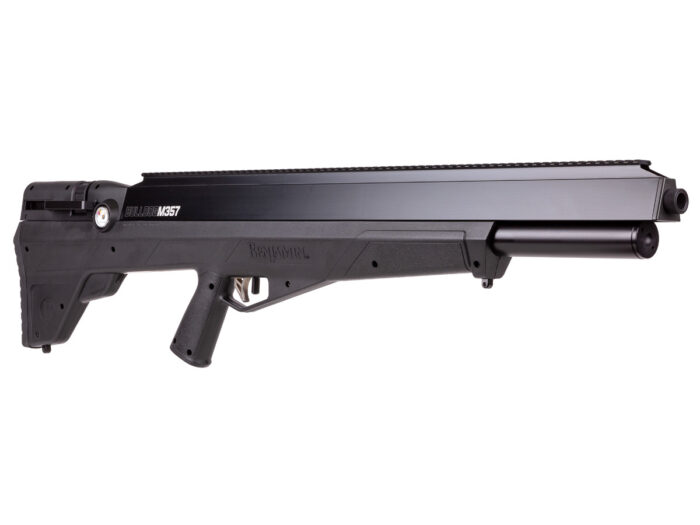
The Benjamin Bulldog Magnum Series Bullpup belongs to a completely different performance category. The current benjamin bulldog M357 is a large-bore PCP rifle in a compact bullpup layout, with Benjamin advertising energy reaching up to 300 foot-pounds.
The phrase benjamin marauder air rifle bulldog 357 combines two separate families. The Marauder pistol is a small-bore, multi-shot platform, while the Bulldog M357 is engineered for substantially heavier projectiles and specialised hunting roles.
The benjamin bulldog 457 is another large-bore design. A phrase such as benjamin bulldog 457 20 joules may refer to a restricted-market specification, but buyers must verify the exact local version rather than assuming it matches the full-power model.
Benjamin Break-Barrel Alternatives
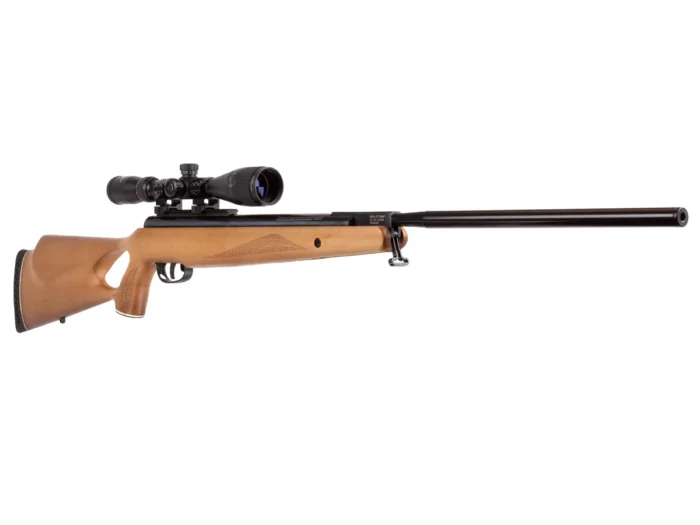
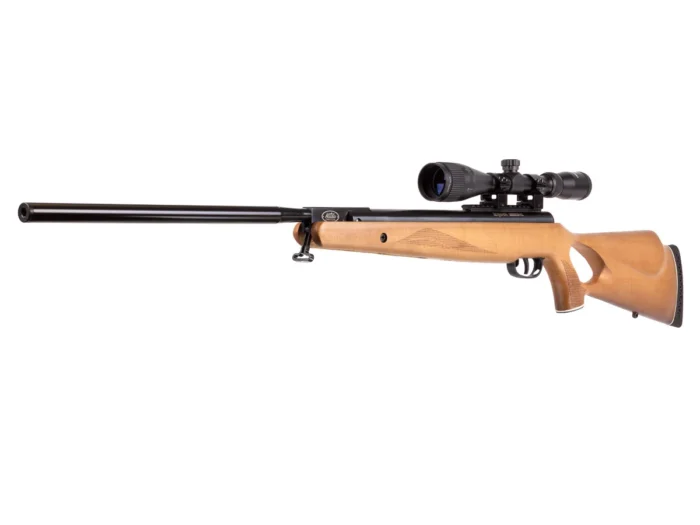
The terms benjamin break, brake barrel bb gun, benjamin air rifle 22 break barrel and benjamibenjamin nitro piston 22 air rifle for hunting refer to different operating systems.
A break-barrel model stores energy by compressing a spring or gas piston as the barrel is opened. The Marauder instead stores compressed air before the shooting session.
The benjamin prowler and benjamin vaporizer are commonly associated with alternative gas-piston or break-barrel designs. Likewise, a pellet rifle 1500 fps description is more closely associated with high-velocity break-barrel models. Benjamin’s Trail XL, for example, is listed at up to 1,500 feet per second in .177 calibre, rather than representing Marauder pistol performance.
Benjamin Airbow Platforms
The benjamin airbow airgun, benjamin bow, benjamin air bow, benjamin pioneer airbow and benjamin airbow m600 belong to an arrow-launching category rather than the pellet-pistol market.
The phrase air bows pellet rifle incorrectly combines two ammunition systems. An Airbow launches full-length arrows, while the Marauder fires pellets.
Benjamin states that the M600 uses compressed air to launch compatible arrows at speeds reaching 600 feet per second. Therefore, an arrow gun for deer hunting must be evaluated under the specific hunting and equipment laws that apply in the shooter’s location.
Air Guns for Hunting and Responsible Selection
Some air guns for hunting are suitable for lawful quarry when their calibre, energy and accuracy match local requirements. However, the Marauder pistol should not be treated as a universal hunting platform.
Before field use, the shooter must verify permitted species, minimum energy requirements, season dates, landowner permission and safe shooting distances. The target and the complete area beyond it must always be identified.
Benjamin Air Rifle Repair and Maintenance
Professional benjamin air rifle repair may become necessary if the reservoir loses pressure, the bolt becomes difficult to operate, the magazine stops indexing or accuracy changes unexpectedly.
Because the system contains high-pressure air, internal valves and reservoir components should not be dismantled casually. Clean filling equipment, suitable pellets and correct storage can reduce premature wear.
Why Choose the Benjamin Marauder Air Pistol?
This compact benjamin air rifle alternative offers smooth PCP operation, multi-shot convenience, quiet barrel technology and adaptable stock support. Among modern benjamin air rifles, it stands out for combining pistol-sized portability with carbine-style stability.
It is especially suitable for shooters who want a lightweight platform for controlled range practice, recreational marksmanship or legally authorised small-game use. With correct pressure management, compatible ammunition and a securely installed stock, the Benjamin Marauder Air Pistol can deliver dependable handling and impressive practical precision.
Design, Performance, Accuracy and Practical Ownership
Compact Carbine-Style Configuration
The removable shoulder stock gives this platform the stability of a compact carbine while preserving the portability of its original handgun-style design. Once the stock is attached correctly, the shooter gains an additional contact point at the shoulder. This support can reduce unwanted movement, improve sight alignment and make longer practice sessions more comfortable.
The short overall configuration also makes the platform easier to handle around shooting benches, field obstacles and compact storage spaces. However, its reduced dimensions do not eliminate the need for disciplined handling. The muzzle must remain pointed in a safe direction, and the trigger finger must stay outside the trigger guard until the shooter is ready to fire.
Before every session, the stock, adapter and fastening hardware should be checked for movement. A loose connection can affect balance, accuracy and safe operation.
Lightweight and Balanced Construction
A lightweight platform is easier to carry and reposition than a full-length sporting rifle. This advantage becomes noticeable during extended range sessions or when moving between authorised shooting positions.
Nevertheless, lighter equipment responds more quickly to changes in grip pressure and body movement. Therefore, the shooter should avoid squeezing the grip excessively or pulling the stock too firmly into the shoulder. A relaxed but controlled hold normally produces more repeatable results.
The supporting hand should remain in the same position for each shot. Small changes in hand placement can alter balance and move the point of impact.
Smooth Pneumatic Firing Cycle
The onboard reservoir stores compressed air before shooting begins. When the trigger is released, the valve delivers a controlled quantity of air behind the pellet. This process creates a smooth firing cycle with very little mechanical disturbance.
Because no heavy spring or piston moves through the action, the sight picture remains relatively stable during discharge. Consequently, the platform can be easier to shoot accurately than many traditional spring-powered systems.
The low-recoil behaviour also reduces stress on suitable optical equipment. Even so, mounts and screws should be inspected regularly because repeated use can gradually loosen hardware.
Filling the Reservoir Correctly
The reservoir must be filled with clean, dry compressed air from approved equipment. A compatible manual pump, certified charging cylinder or purpose-built compressor may be used.
Before connecting the filling system, the probe and port should be inspected for dust, moisture and damaged seals. Contamination can enter the reservoir and affect internal components.
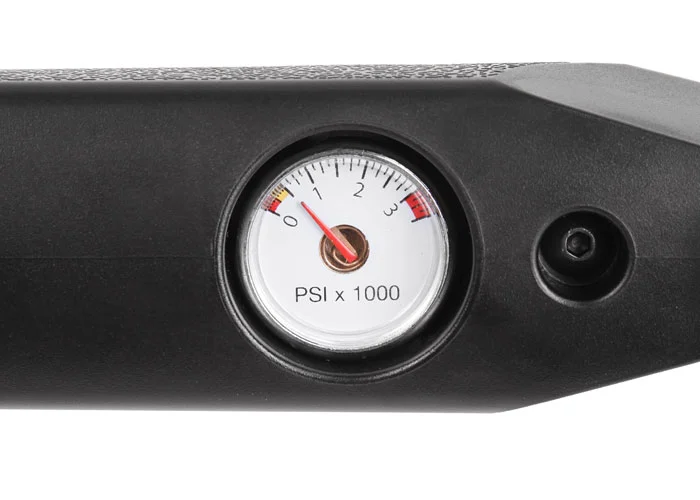
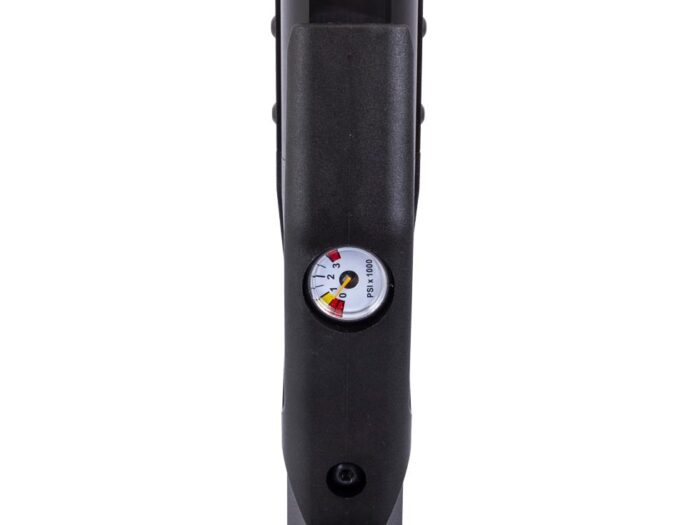
Air should be introduced gradually while the pressure gauge is monitored. Fast filling creates heat, which may produce an inaccurate temporary pressure reading. Once the system cools, the displayed pressure may fall slightly.
The stated maximum pressure must never be exceeded. Overfilling will not necessarily provide more useful shots and may damage seals, valves or the reservoir.
After charging, the hose should be depressurised through its bleed valve before the connection is removed.
Managing the Useful Pressure Range
Performance does not remain identical from maximum pressure until the reservoir becomes empty. The most consistent shots generally occur within a specific operating range.
The owner should record the pressure at the start of a session and note when the point of impact or firing sound begins to change. After several sessions, this information can reveal the most dependable refilling point.
Continuing to shoot at very low pressure may produce inconsistent velocity. It can also create feeding or valve problems under certain conditions.
A pressure log can help the shooter avoid uncertainty and plan refills before accuracy begins to decline.
Multi-Shot Magazine Operation
The rotary magazine allows several pellets to be loaded before firing. This arrangement reduces interruptions and supports an efficient shooting rhythm.
Each pellet should be inspected before insertion. A bent skirt, damaged head or contaminated surface may affect feeding and accuracy.
The magazine must be loaded in the correct direction and installed fully. If resistance is felt while operating the bolt, the shooter should stop rather than force the mechanism.
It is also important to count shots. If the shooter becomes uncertain about whether the chamber contains a pellet, the platform should be pointed safely and inspected according to the manufacturer’s procedure.
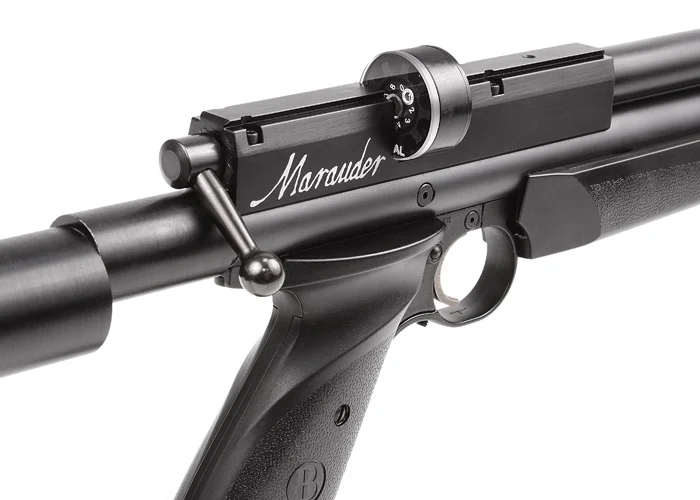
Smooth Bolt-Action Cycling
The bolt controls cocking and transfers a pellet from the magazine into the barrel. It should be operated through its complete movement with steady pressure.
Rapid or incomplete cycling may prevent proper loading. It can also leave the shooter uncertain about whether a pellet has entered the chamber.
If the bolt becomes unusually stiff, the magazine may be incorrectly positioned or a pellet may be damaged. Forcing the handle could damage the loading system.
A clean, deliberate movement provides the best combination of reliability and safety.
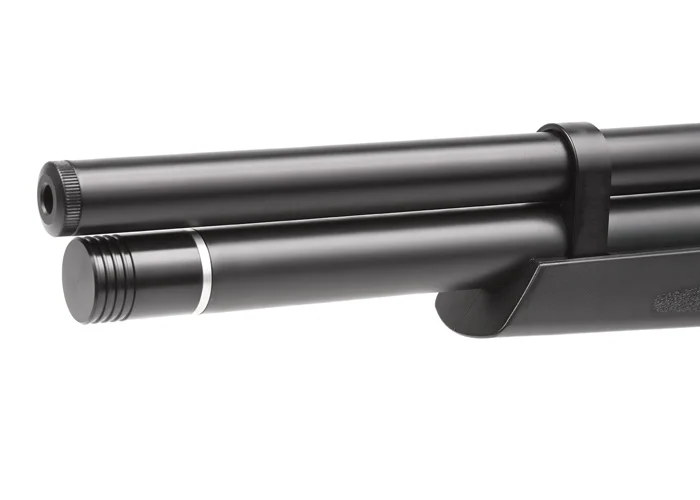
Shrouded Barrel and Reduced Sound
The barrel assembly includes an external shroud that helps moderate the report produced during firing. This can make the platform more comfortable to use at controlled ranges and other lawful locations where reduced noise is beneficial.
Actual sound levels depend on pressure, pellet weight, surroundings and configuration. Enclosed spaces often make a shot appear louder because hard surfaces reflect sound.
The shroud should not be used as a carrying handle or support point. An impact near the muzzle may affect alignment and accuracy.
Hearing protection may still be appropriate, especially at indoor facilities or where several shooters are operating simultaneously.
Rifled Barrel and Accuracy Potential
The rifling inside the barrel gives the pellet rotational stability. When the ammunition matches the barrel well, this rotation supports predictable flight and consistent grouping.
However, barrel quality alone does not guarantee precision. Ammunition condition, pressure, optic setup, trigger control and weather conditions all influence the result.
Several pellet designs should be tested from a stable position. Each type should be evaluated through multiple groups rather than a single successful result.
The best choice is normally the pellet that feeds smoothly and produces repeatable groups across different sessions.
Selecting the Right Pellet Weight
Lighter pellets may travel faster, while heavier pellets often retain momentum and resist certain environmental effects more effectively. Neither option is automatically superior.
The shooter should avoid selecting ammunition solely because it produces the highest advertised velocity. Excessively light pellets may become unstable or perform inconsistently in some barrels.
Medium-weight domed pellets are often a useful starting point for accuracy testing. However, the final choice should be based on measured results.
Pellets should be stored in a dry container and protected from crushing, dirt and oxidation.
Adjustable Trigger Characteristics
A predictable trigger makes it easier to release a shot without moving the muzzle. The staged design allows the shooter to take up initial movement before reaching the final release point.
The trigger finger should contact the blade consistently. Pressure should then be applied straight toward the rear.
Adjustments must be completed carefully and only within the manufacturer’s stated limits. An excessively light or incorrectly configured trigger may become unsafe.
After any permitted adjustment, the mechanism should be tested unloaded and in a controlled environment before normal use resumes.
Proper Grip Technique
The shooting hand should control the grip without excessive tension. Squeezing harder during the trigger release can pull the sights away from the target.
The thumb should rest naturally rather than applying strong sideways pressure. Meanwhile, the supporting hand should hold the front section in a consistent position.
With the shoulder stock installed, the rear contact point should remain the same from shot to shot.
Repeatability matters more than force. A comfortable grip that can be reproduced accurately generally supports better performance.
Establishing Consistent Cheek Contact
The shooter’s cheek should meet the stock at the same point during every shot. This position aligns the eye with the optic and creates a repeatable sight picture.
If the head must be stretched forward or lowered excessively, the optic height or stock position may require adjustment.
Inconsistent cheek pressure can shift the apparent reticle position, especially when parallax is not set correctly.
The platform should be brought toward the face and shoulder rather than forcing the head into an unnatural position.
Choosing a Suitable Optic
A compact optic helps preserve the balanced nature of the platform. Moderate magnification is normally sufficient for recreational target work and controlled sporting applications.
Very large scopes add weight and may interfere with handling. High magnification can also exaggerate natural movement, making the shooter feel less stable.
The selected optic should provide clear glass, suitable eye relief and adjustments appropriate for the intended distance.
Ring height should allow the objective lens to clear the barrel assembly while maintaining comfortable head alignment.
Installing Scope Mounts Correctly
Mounting surfaces should be cleaned before installation. Oil or debris beneath the rings may cause movement.
The rings should be positioned so they do not interfere with the magazine, bolt or adjustment controls. Screws must be tightened evenly.
Excessive torque can damage threads or distort the optic tube. Uneven tightening may also affect internal adjustment.
After installation, the optic should be checked during the first several shooting sessions. Any movement must be corrected before further zeroing.
Initial Zeroing Procedure
Zeroing should begin at an authorised range with a dependable backstop. A large paper target helps ensure that the first shots remain visible.
The shooter should start at a shorter distance and fire a small group. Adjusting after every individual shot can lead to unnecessary corrections because one impact may result from technique rather than equipment.
Once the centre of the group is identified, elevation and horizontal alignment can be adjusted gradually.
After the initial zero is established, the result should be confirmed at the shooter’s normal working distance.
Understanding the Pellet’s Flight Path
The sight line is straight, but the pellet travels along a curved path. Gravity begins affecting it immediately after it leaves the muzzle.
Depending on optic height and zero distance, the pellet may cross the sight line at more than one point. It will strike slightly above or below the aiming point at other distances.
The shooter should test this behaviour on measured targets. Guessing corrections without practical confirmation may lead to inaccurate shots.
A simple trajectory card can record the expected impact position at several common ranges.
Bench-Rest Testing
A supported bench position is useful for evaluating ammunition, confirming zero and diagnosing accuracy issues.
The front of the platform should rest on a padded bag rather than a hard surface. The barrel and air cylinder should remain free from direct contact with the support.
The rear stock may also be supported lightly. However, the platform should not be clamped rigidly.
The shooter should maintain the same grip, cheek position and shoulder pressure for every shot.
Multiple groups provide a more reliable performance picture than one isolated result.
Standing Shooting Position
Standing requires balance because there is little external support. The feet should remain comfortably apart, with body weight distributed naturally.
The supporting elbow may be positioned beneath the platform to transfer weight through the body’s structure.
If the sights naturally settle beside the target, the feet should be repositioned. Using arm strength to force the muzzle sideways creates fatigue and movement.
Practice periods should remain short enough to prevent tiredness from affecting technique.
Kneeling and Seated Positions
Kneeling offers more stability than standing while remaining practical when a bench is unavailable. The supporting elbow should rest against a stable area of the leg rather than directly on the kneecap.
A seated position can provide even greater control when the arms receive support from the legs.
Both positions should feel natural. Pain and excessive muscle tension will reduce accuracy.
A shooting mat or padded surface can improve comfort and protect clothing during outdoor practice.
Breathing Control
Normal breathing moves the chest, shoulders and arms. Therefore, the shot should be released during a brief natural pause.
The shooter may inhale, exhale comfortably and then begin applying final trigger pressure. The pause should not be forced or prolonged.
Holding the breath too long can cause shaking and visual disturbance.
When the sight picture does not settle, the shooter should lower the platform, breathe normally and restart the process.
Trigger Release and Follow-Through
Final trigger pressure should increase steadily until the shot releases. The shooter should avoid attempting to predict the exact discharge moment.
After firing, the head, hands and shoulder should remain in position briefly. This follow-through prevents premature movement while the pellet is still travelling through the barrel.
The sight picture should also be observed after release. Doing so helps identify flinching, sideways trigger pressure or other technique errors.
Consistent follow-through is one of the simplest ways to improve grouping.
Effects of Wind
Wind can move a pellet sideways and influence elevation. Its effect becomes greater as distance increases.
The shooter should observe range flags, vegetation and dust before each group. Conditions may vary between the firing point and target.
Beginners should practise in calm weather while developing basic technique.
When wind becomes unpredictable, postponing the shot is safer and more productive than making uncertain corrections.
Temperature and Pressure Changes
Compressed air reacts to temperature. Pressure may appear higher when the reservoir becomes warm and lower when it cools.
The platform should not be filled to its maximum level in a cold environment and then left in extreme heat.
Direct sunlight and hot vehicles must be avoided. Excessive heat can increase internal pressure and damage seals.
When equipment is moved from cold conditions into a warm room, condensation may form. The exterior should be dried before storage.
Routine Barrel Care
The barrel does not require cleaning after every session. Excessive cleaning can introduce damage if unsuitable tools are used.
Cleaning is appropriate when accuracy declines, contamination is visible or foreign material enters the bore.
A soft pull-through system is generally preferable to an abrasive metal rod. Only compatible cleaning materials should be used.
After cleaning, several shots may be required before normal grouping returns.
Exterior Maintenance
The exterior should be wiped after use to remove fingerprints, moisture and dirt.
A soft, clean cloth is normally sufficient. Harsh solvents may damage synthetic surfaces, seals or protective finishes.
The bolt area, magazine opening and filling port should remain free from debris.
Fasteners and mounting hardware should be inspected periodically, particularly after transport or heavy use.
Detecting a Possible Air Leak
A falling gauge reading may indicate a leak, although temperature changes can also alter pressure.
The reservoir should be monitored after filling. If the pressure continues to drop under stable conditions, the platform should be assessed professionally.
Common leak sources may include seals, the filling valve or internal valve components.
Pressurised sections should never be dismantled by an inexperienced owner.
Recognising Mechanical Problems
Unusual sounds, rough bolt movement, unstable velocity or difficulty filling may signal a developing fault.
The platform should not be used when its behaviour changes significantly. Continuing to operate it may worsen the problem.
Internal repair requires knowledge of high-pressure systems and suitable tools.
A trained technician should inspect the equipment whenever the cause cannot be identified safely through basic external checks.
Safe Storage
The platform should be stored unloaded in a locked cabinet or approved secure container.
The magazine should be removed, and ammunition should be controlled separately when required by local rules.
The storage area must remain dry and stable. Damp garages and sheds can encourage corrosion.
Keys and access codes should be protected from children, visitors and unauthorised individuals.
Transportation Requirements
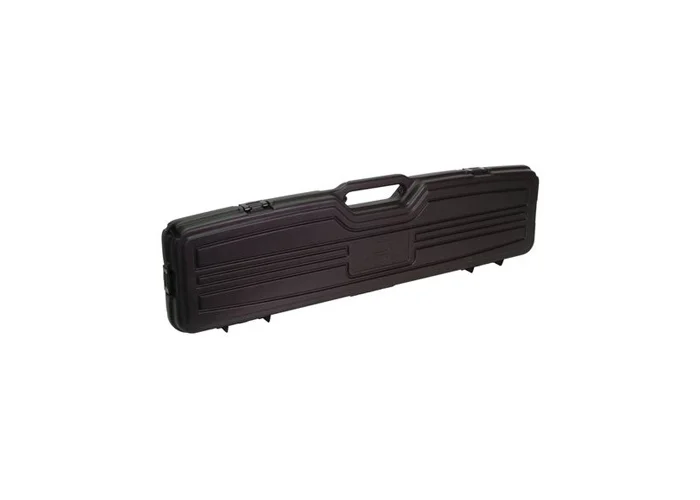
Before transportation, the platform should be unloaded and placed in a padded case.
The magazine should be removed, while the filling port and optic should be protected from impact.
The case must support the receiver and stock without pressing against adjustment controls.
The equipment should remain out of public view and must not be left unattended inside a vehicle.
Applicable licensing and transportation regulations should always be checked before travelling.
Suitable Shooting Locations
The platform should be used only at an authorised range or on private property where shooting is permitted.
A dependable backstop must be placed behind the target. Glass, water, thin wood, stone and exposed metal are unsuitable because they may allow penetration or cause ricochets.
The area behind and around the target must remain clear.
Shooting must stop immediately if a person, animal or vehicle enters the danger area.
Long-Term Ownership Value
Long-term reliability depends on clean filling equipment, proper ammunition, conservative maintenance and safe storage.
Original manuals, receipts and service records should be retained. These documents may support warranty claims and future resale value.
Unapproved internal modifications can reduce reliability, create safety problems and change the platform’s legal classification.
Accuracy should be improved through careful setup and disciplined technique rather than unsafe power alterations.
Overall Performance Assessment
This compact platform offers a practical combination of shoulder-supported stability, smooth pneumatic operation and multi-shot convenience.
Its low-recoil firing cycle supports precision, while the shrouded barrel helps reduce sound during controlled use. The removable stock also allows the owner to choose a compact or carbine-style setup where legally permitted.
With correct pressure management, suitable ammunition and consistent shooting technique, it can provide dependable performance for recreational target practice and other authorised sporting activities.
Benjamin
Benjamin
Benjamin
Benjamin
Benjamin

Reviews
There are no reviews yet.