
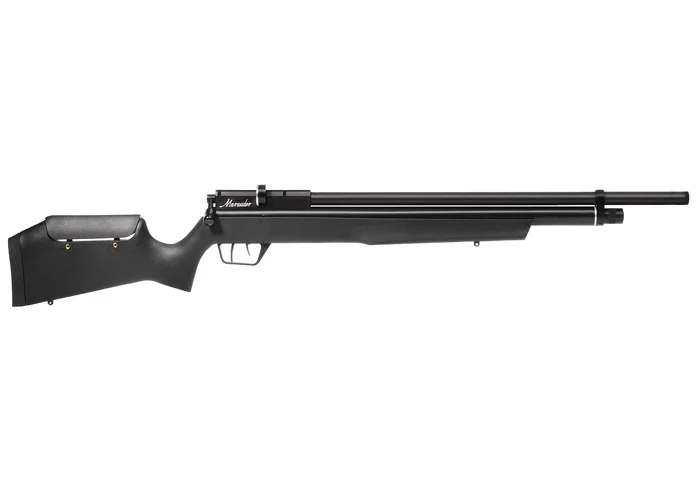
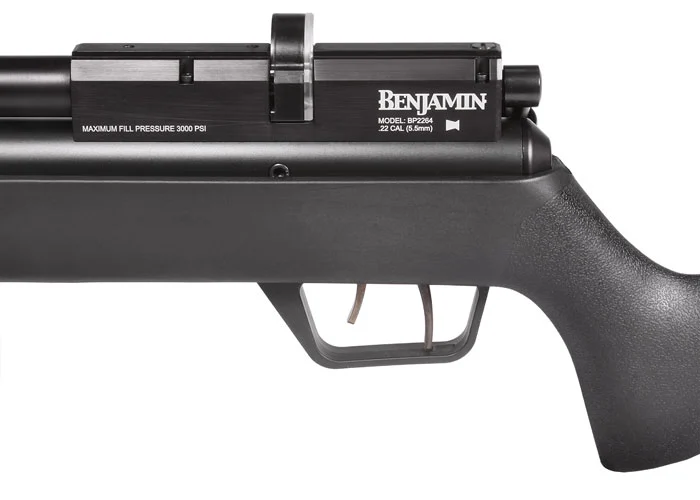
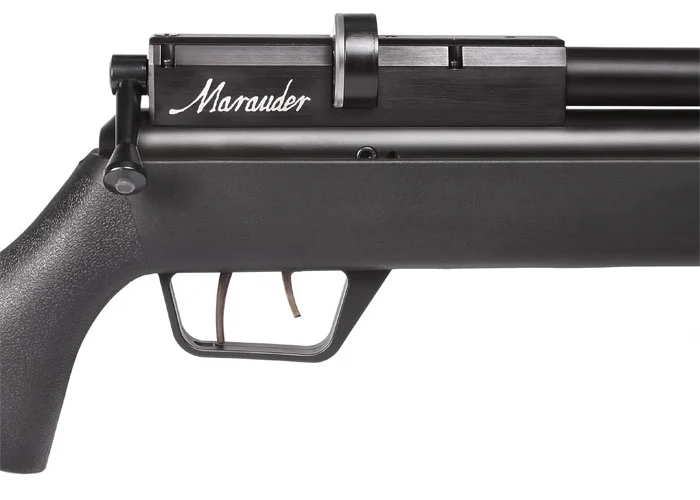
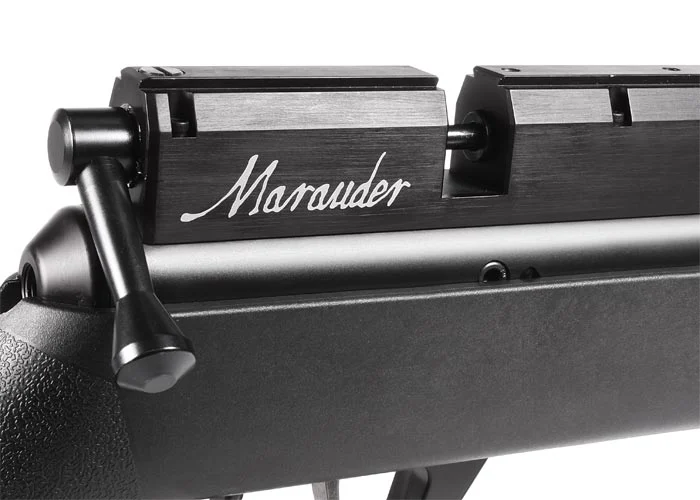
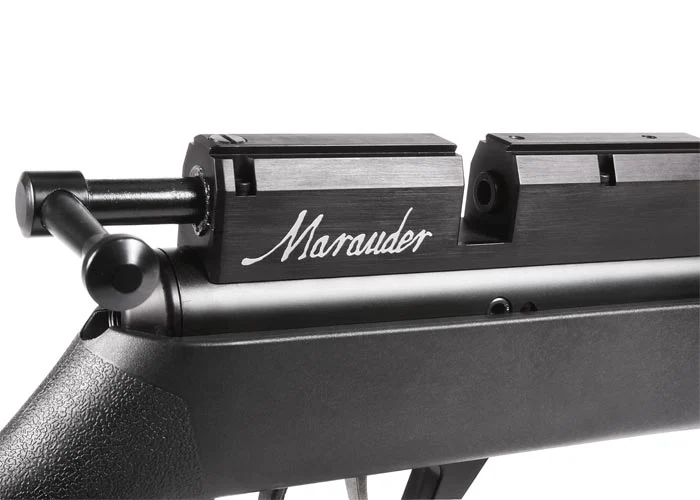
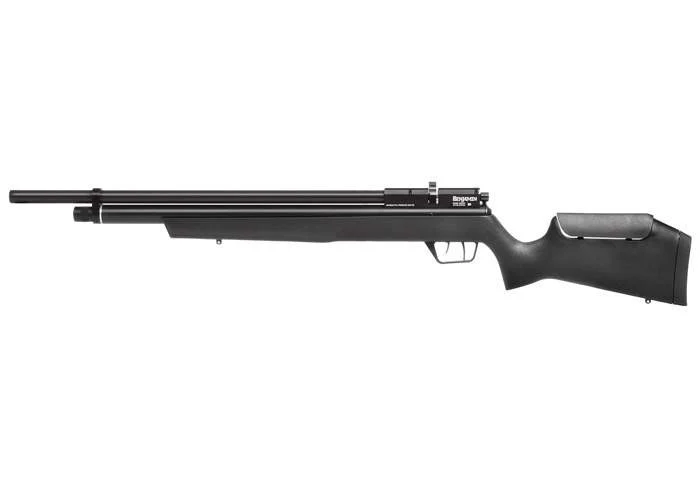
Benjamin Marauder PCP Air Rifle, Synthetic Stock
Price range: €250.00 through €270.00
Description
*The owner’s manual does not show the correct weight and length for this rifle.
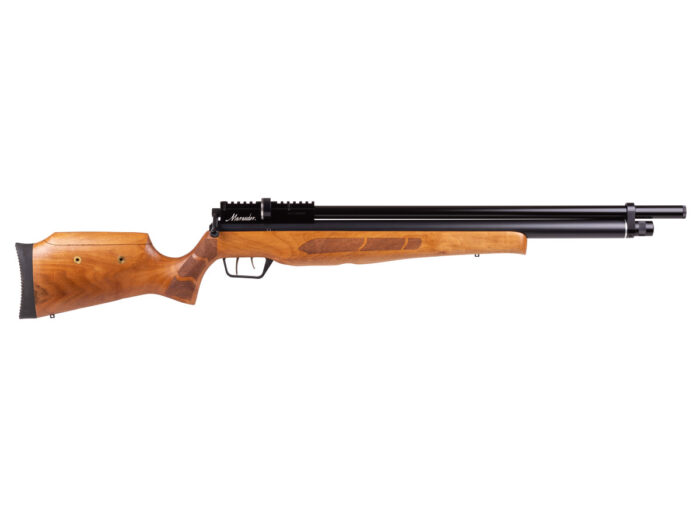
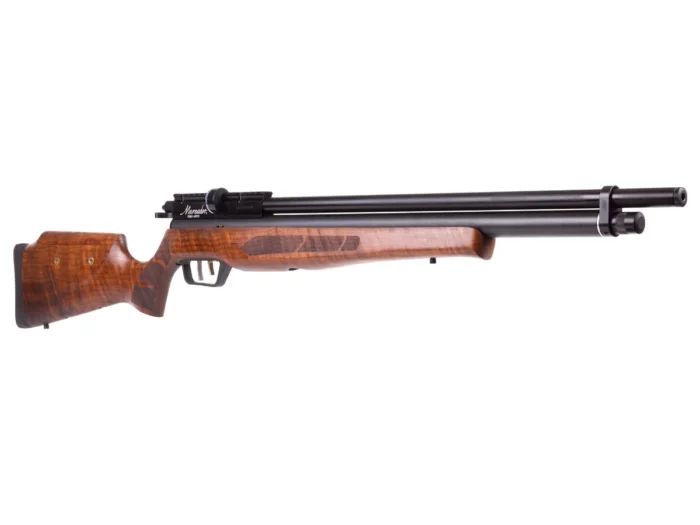
The Benjamin Marauder air rifle is one of the most popular precharged pneumatic guns made today. The wood-stocked version came out first, but this synthetic-stocked version kicks it up a notch with a vertically adjustable comb and a whole bunch of improvements!
Most PCPs require 2,900-3,000 psi air pressure. You can run it on high-pressure air from 2,000 to 3,000 psi by making the adjustments shown in the owner’s manual.
Since this air rifle is a repeater, it’s one of the best hunting rifles you’ll find. Attach sling loops and a sturdy sling to the mounted sling swivel studs so you can easily carry the gun for hours while in the field.
Remember to mount a scope, as this air rifle doesn’t come with open sights.
Testing has shown that filling your Marauder air rifle to no more than 2,600 psi (179 bar) may deliver the greatest accuracy. We recommend trying different fill levels between 2000 and 3000 psi to determine the optimum fill level for your own rifle. Each gun is different. A chronograph is the best way to determine optimum fill levels for precharged pneumatics (PCPs).
The owner’s manual states this about fill pressures:
“The Marauder has been factory set to an efficient fill pressure that will suit most hunting and target uses.”
If you’re left-handed and need the bolt moved to the left side of the rifle, please add that optional service to your cart when you buy your gun.
Helpful resources:
- Learn about hunting with air rifles
- Tips for picking the right airgun for hunting game & pests
- Learn about airgun hunting laws in your state
- Shop related categories: pellet guns, pellet rifles
Benjamin Marauder PCP Air Rifle, Synthetic Stock
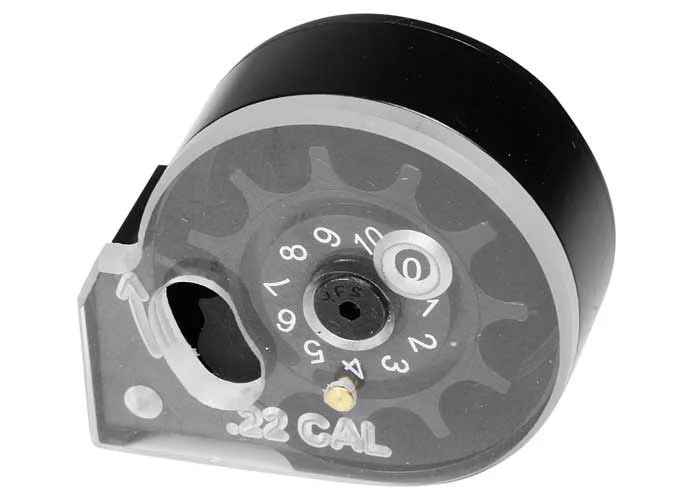
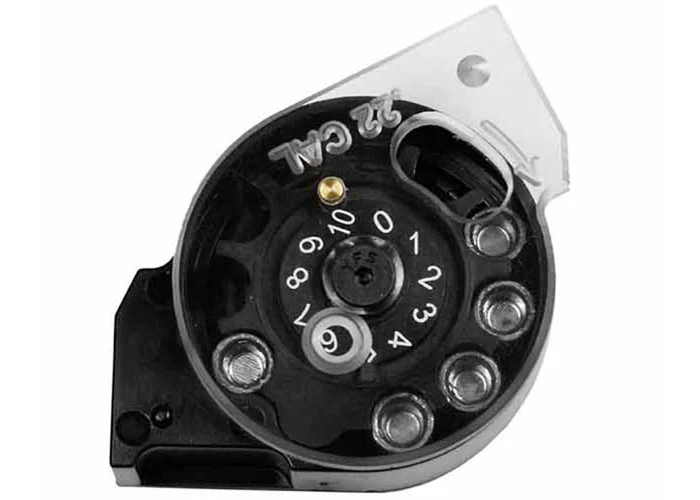
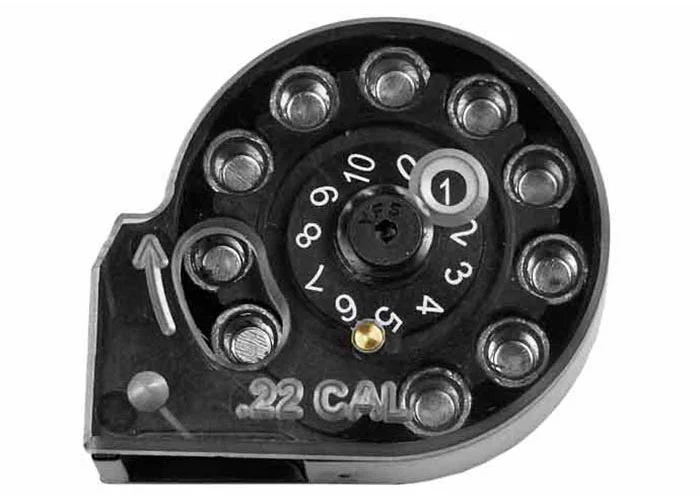
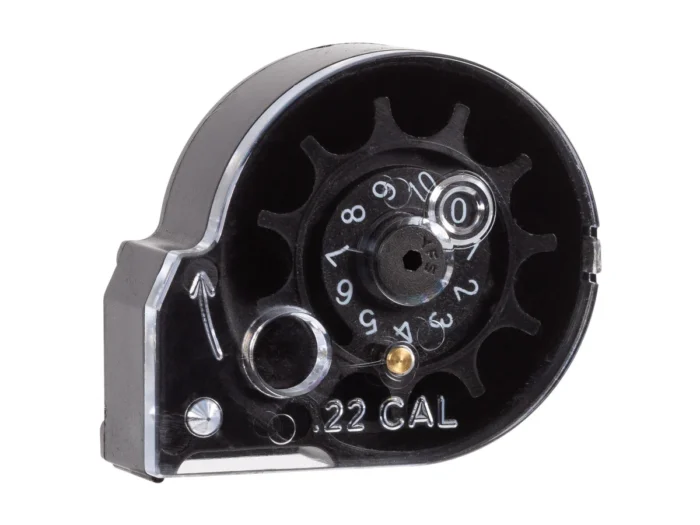
- 10-shot repeater with auto-indexing feature (.25 cal is an 8-shot repeater)
- Uses compressed air: 2,000 to 3,000 psi (make adjustments as shown in the owner’s manual)
- Can be adjusted for different velocities
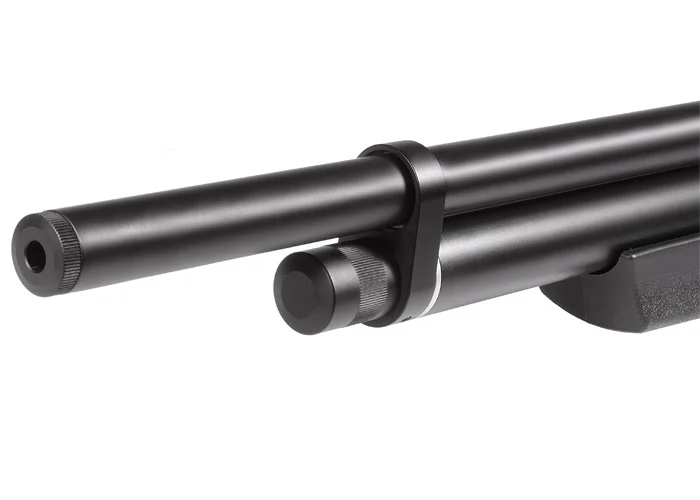
- Internal shroud makes this a VERY quiet gun
- Choked barrel delivers superior accuracy
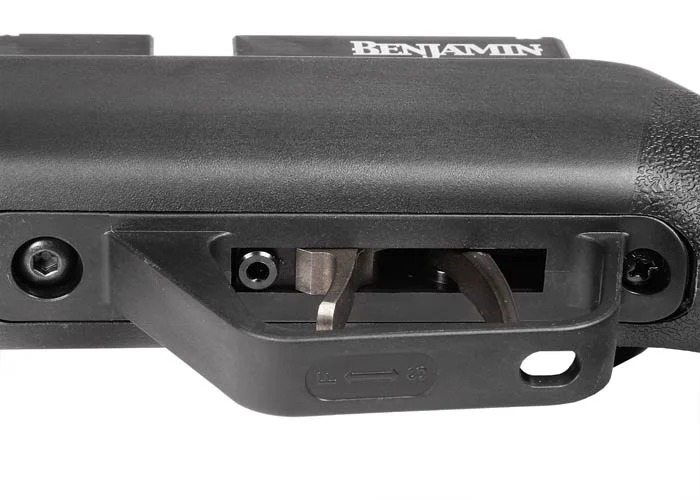
- 2-stage adjustable match trigger…and the trigger is metal!
- Raised aluminum breech for easier loading of circular magazine
- 11mm dovetail on original/ Lothar Walther Barrels include a Weaver/Picatinny Rail
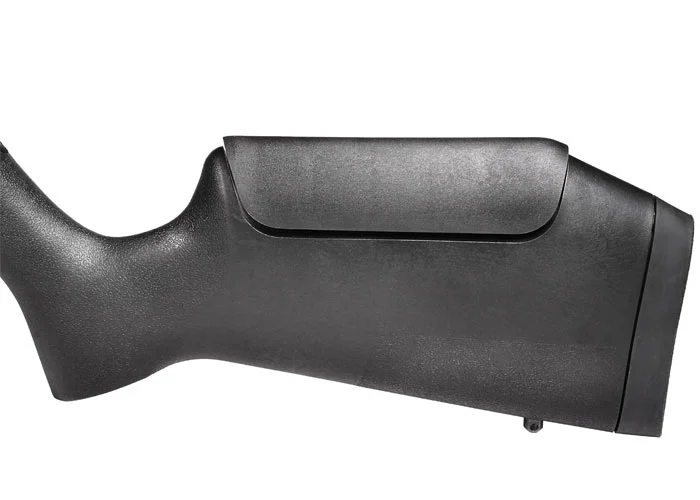
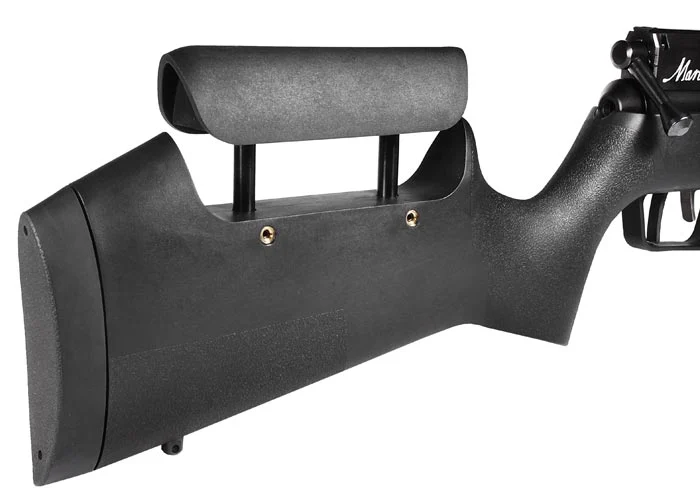
- Ambidextrous synthetic stock with vertically adjustable comb (almost a full pound lighter than the wood-stocked rifle!)
- Reversible bolt — switch from right to left side (with our special service)
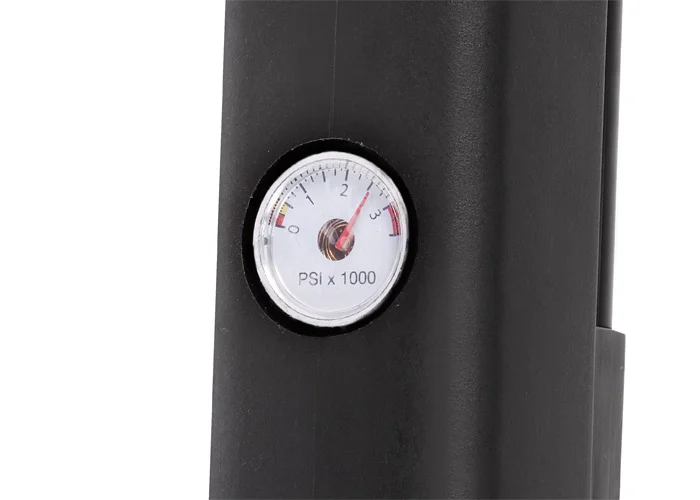
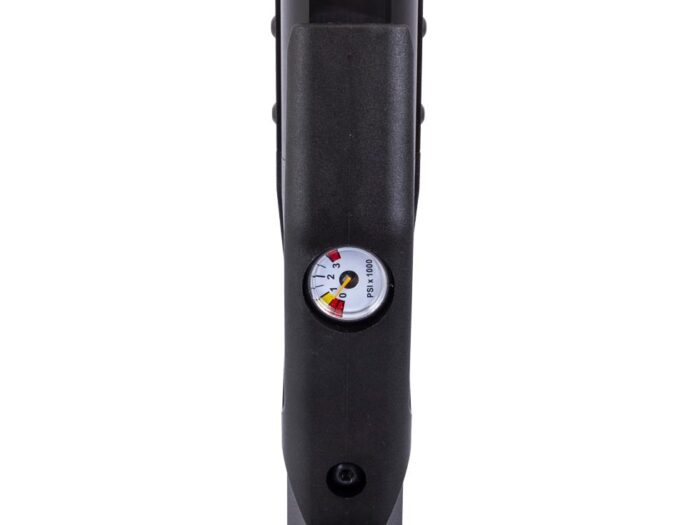
- Built-in air pressure gauge (manometer)
- 215cc air reservoir
- 7.30 lbs.*
- 42.8″ long*
- Air reservoir ends with a male quick-disconnect Foster fitting for fast refills (requires a female Foster quick-disconnect adapter to fill from a scuba tank or hand pump)
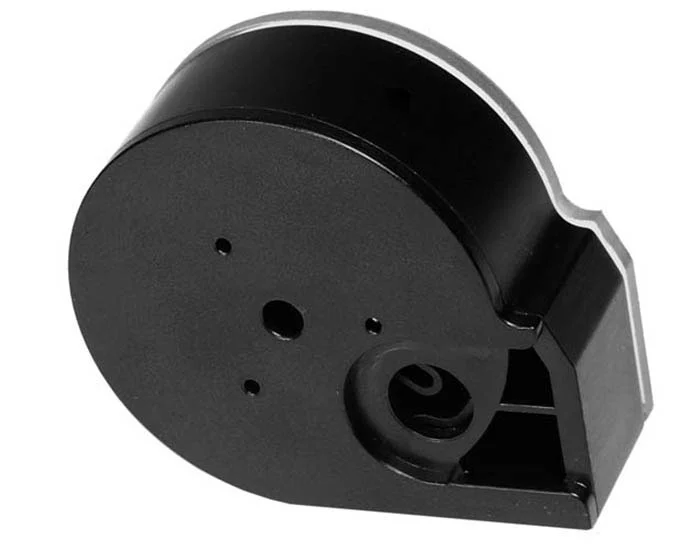
- Includes one magazine and sling swivel studs
- Upgrades from the original version of the gun: Factory-installed depinger changes the sharp “ping” to a dull thud. Improved valve (increases the number of shots: .177/.22=32 shots, .25=16 shots). Trigger moved back for better hand position. Optional reversible bolt for left- or right-handed shooters. Simplified breech design for assembly, service and to provide a more stable platform for larger scopes.
Specifications
BrandCaliber.22 (5.5mm)Max Velocity1000 fpsSuggested forSmall game hunting/target practicePowerplantPre-charged pneumaticLoudness2-Low-MediumNoise Level91.02 dB Weight7.3 lbsFunctionRepeaterMax Shots per Fill32Cylinder Size215 ccActionBolt-actionFixed/adj. powerMultiple settingsScopeableYesFront SightsnoneRear SightsnoneSafetyManualTriggerTwo-stage adjustableTrigger Pull1.5 lbsBarrelRifledBarrel Length20.0″Overall Length42.8″Capacity10 round(s)Body TypeRifleStockSyntheticButtplateSoft rubber recoil padColorBlackOperating Pressure3000 PSI / 206 BARGrip OrientationAmbidextrousRegulatedNoIs Safe To Dry FireYesUpgradesCrosman Barrel
Benjamin Marauder PCP Air Rifle, Synthetic Stock – Precision, Power, and All-Weather Performance
Why Choose the Benjamin Marauder PCP?
Accuracy remains one of the strongest reasons to choose the benjamin marauder pcp. A rifled steel barrel guides each pellet through a consistent rotational path, while the shrouded barrel incorporates sound suppression. Therefore, the rifle provides a quieter and more controlled shooting experience than many conventional high-powered airguns.
The synthetic stock also supports demanding outdoor use. Moisture, changing temperatures, and ordinary field handling can be tolerated more easily than with a stock requiring frequent cosmetic care. Moreover, the raised comb cheekpiece can be adjusted to improve eye alignment with a mounted scope. A reversible bolt handle accommodates right-handed and left-handed operation, making the rifle accessible to a wider range of users.
Although shoppers may compare it with the Benjamin Bulldog Magnum Series Bullpup, benjamin bulldog, benjamin bulldog 457, or benjamin marauder air rifle bulldog 357, the Marauder occupies a different category. The Bulldog models are compact big-bore hunting rifles, whereas the Marauder is optimized for pellet-based precision, small-game applications, target work, and manageable everyday field use. The current Bulldog M357, for example, is a .357-caliber PCP bullpup rated by Benjamin at up to 300 foot-pounds of energy, so it should not be treated as a direct substitute for the Marauder.
How the PCP System Improves Precision
When the reservoir has been filled correctly, the benjamin marauder pcp air rifle delivers multiple shots without requiring the barrel to be broken open after every discharge. This design eliminates the repeated barrel movement associated with a benjamin break, brake barrel bb gun, or benjamin air rifle 22 break barrel. As a result, the relationship between the barrel, receiver, and optic remains fixed.
A predictable bolt-action mechanism loads pellets from the rotary magazine. The shooter can therefore concentrate on breathing, trigger control, range estimation, and follow-through. Compared with co2 pellet guns, PCP performance is also generally less dependent on a disposable CO2 cartridge, although temperature and reservoir pressure can still influence results.
The Marauder should be filled only with appropriate high-pressure equipment and operated according to the manufacturer’s manual. Repairs involving the pressurized action should be completed by qualified personnel or an authorized benjamin air rifle repair service.
Where and When Should the Marauder Be Used?
The Marauder can be used at authorized airgun ranges, private target areas with secure backstops, and lawful hunting locations. Before it is used for air guns for hunting, local caliber, energy, licensing, land-access, and game regulations must be confirmed.
The cal .177 pellets version is especially suitable for economical target practice and precision-oriented shooting. A 177 pellet gun often produces a flatter short-range trajectory, although wind can affect lighter ammunition more noticeably.
The benjamin 22 air rifle configuration offers a practical balance between pellet weight, energy, trajectory, and magazine capacity. Buyers searching for a benjamin pellet gun 22 cal frequently select .22 for pest control and small-game applications where legally permitted.
Meanwhile, the benjamin marauder .25 delivers a heavier projectile and increased downrange authority. It may be preferred when the intended lawful application demands more retained energy, although pellet availability, air consumption, range, and shot placement must be considered.
Benjamin Airgun Options and Related Search Terms
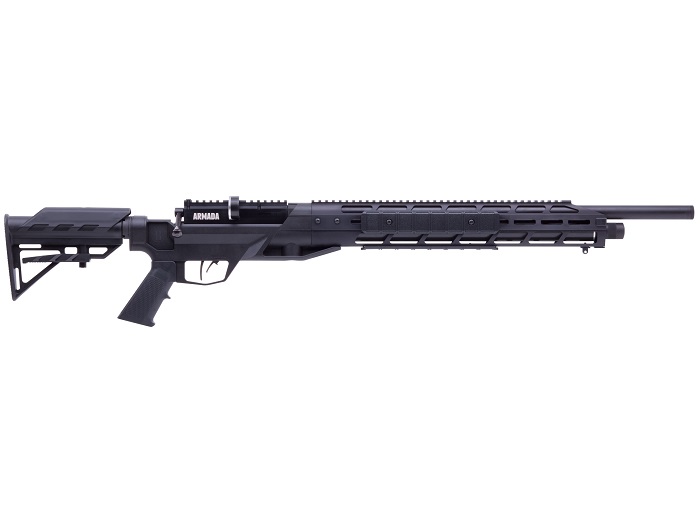
The wider family of benjamin air rifles includes several platforms for different applications. The benjamin armada provides a modular tactical-style PCP configuration, while the benjamin prowler uses a Nitro Piston break-barrel system. The benjamin vaporizer is another synthetic-stock break-barrel option and is available in .177 and .22 calibers.
Customers researching a benjamin pellet gun, benjamin pellet, benjamin air pistol, or combined air rifle and air pistol collection may also encounter the benjamin marauder pistol. That compact .22-caliber PCP model uses an eight-shot rotary magazine and can be configured with a shoulder stock.
However, a pellet rifle 1500 fps claim should never be treated as the only measure of quality. Consistency, appropriate pellet selection, accuracy, energy, trigger control, barrel quality, and safe usability are often more important than advertised velocity alone.
Other searches, including pneumatic gun bb gun rifle, benjamibenjamin nitro piston 22 air rifle for hunting, and pcp benjamin marauder, may describe very different powerplants or buyer intentions. The Marauder is a pellet-firing PCP rifle rather than a conventional BB repeater or Nitro Piston break barrel.
Airbow and Big-Bore Alternatives
The benjamin airbow, benjamin air bow, benjamin bow, benjamin airbow m600, and benjamin pioneer airbow use compressed air to launch arrows. Consequently, they differ substantially from a pellet rifle. Search phrases such as air bows pellet rifle or arrow gun for deer hunting may group these products together, but ammunition, intended quarry, range limitations, and legal requirements are not interchangeable.
Similarly, terms such as benjamin bulldog 457 20 joules can be misleading because product configuration and jurisdictional restrictions may affect advertised output. The current benjamin bulldog 457 is presented by Benjamin as a large-bore bullpup with a 36-inch overall length, reversible side lever, rifled steel barrel, and velocity up to 760 fps.
Ultimately, the benjamin marauder stands out because it brings together a fixed barrel, multi-shot operation, adjustable ergonomics, weather-resistant construction, reduced report, and proven PCP functionality. For shooters seeking a balanced benjamin marauder air rifle rather than a big-bore Bulldog, Airbow, CO2 pistol, or break-barrel rifle, the synthetic-stock Marauder offers a highly capable foundation for responsible target shooting and lawful field use.
Engineering, Performance, and Real-World Shooting Experience
A Refined Pre-Charged Pneumatic Power System
This rifle uses a high-pressure compressed-air reservoir to generate consistent power without relying on spring tension or disposable gas cartridges. Before shooting, the reservoir is filled with a compatible hand pump, high-pressure compressor, or certified air cylinder. Once pressurized, the stored air supplies a series of controlled shots.
Because the powerplant contains no heavy spring moving forward during discharge, recoil remains extremely low. This calmer firing cycle helps the shooter maintain sight alignment and follow through correctly. It also reduces the movement that can disturb the rifle before the projectile leaves the barrel.
Consistency depends on several factors, including fill pressure, projectile weight, environmental temperature, internal adjustment, and the remaining air inside the reservoir. Therefore, shooters should observe the pressure gauge and refill the rifle before performance becomes noticeably inconsistent.
How the Magazine and Bolt System Work
A removable rotary magazine allows several projectiles to be loaded before a shooting session begins. After each shot, the bolt is cycled manually to chamber the next round. This arrangement provides faster follow-up shots than a single-shot loading system while still giving the shooter direct control over every loading cycle.
The bolt should always be operated smoothly rather than forced. Excessive pressure may damage the magazine, deform ammunition, or affect the breech seal. Before inserting a loaded magazine, the safety should remain engaged, and the muzzle must be pointed in a safe direction.
A single-shot tray may also be useful for precision testing. It allows each projectile to be placed directly into the breech, which can reduce magazine-related variables during accuracy evaluation. Shooters who compare several projectile designs may find this method particularly useful.
Adjustable Trigger Performance
A predictable trigger contributes significantly to accurate shooting. This platform includes an adjustable trigger system that can be configured to suit the shooter’s preferred pull characteristics. However, trigger adjustments should be completed carefully and according to the official operating instructions.
A clean trigger release helps prevent the rifle from being pulled away from the target at the moment of discharge. Nevertheless, an extremely light trigger is not automatically better. A safe, controlled, and repeatable setting should always be prioritized over the lowest possible pull weight.
During practice, the pad of the index finger should rest naturally on the trigger blade. Pressure should then be increased gradually until the shot breaks. Jerking or slapping the trigger can move the muzzle and enlarge the final group.
Shrouded Barrel and Reduced Shooting Noise
The barrel is enclosed within a sound-reducing shroud. This design helps moderate the report produced when compressed air is released. Consequently, the shooting experience is less disruptive than it would be with many unshrouded systems.
Reduced sound can improve concentration during extended target sessions. It may also make the platform more suitable for controlled environments where noise management is important. However, the rifle is not completely silent. The impact of the projectile, movement of the internal mechanism, and remaining air discharge can still be heard.
Hearing protection may still be appropriate, especially when shooting indoors or near reflective surfaces. Local regulations concerning sound moderators, enclosed barrels, and air-powered equipment should also be reviewed before purchase or use.
Synthetic Stock Durability
The synthetic stock has been developed for dependable use in changing weather conditions. Unlike traditional wood, the material is less likely to swell, shrink, or change shape when exposed to ordinary variations in moisture and temperature.
This durability makes the rifle practical for outdoor ranges, farms, woodland environments, and other lawful field locations. Furthermore, the stock can usually be cleaned with a soft cloth after exposure to dust, light rain, or fingerprints.
Although synthetic construction is robust, the rifle should not be stored while wet or dirty. After outdoor use, the exterior should be dried, and exposed metal components should be wiped with an appropriate protective cloth. Strong solvents should never be applied to the stock unless they have been confirmed as safe for the material.
Ergonomics and Shooter Comfort
A well-designed stock supports stable shooting from standing, kneeling, seated, and rested positions. The raised cheek area helps position the shooter’s eye behind a mounted optic, while the pistol grip encourages a natural wrist angle.
Correct scope height remains important. When the optic is installed too high or too low, the shooter may struggle to achieve a repeatable cheek position. Appropriate mounts should therefore be selected according to the scope tube, objective size, and preferred head position.
The rifle’s weight can also support stability by reducing small movements during aiming. However, carrying comfort should be considered by anyone planning long field sessions. A suitable sling may help distribute the load, provided it is attached securely and used without obstructing the controls.
Practical Accuracy Expectations
Mechanical accuracy does not depend on velocity alone. Projectile quality, barrel compatibility, air-pressure consistency, optic installation, shooting technique, wind, and target distance all influence the final result.
For the best outcome, several projectile weights and head sizes should be tested. Once a suitable option has been identified, shooters should purchase ammunition from the same production batch whenever possible. Consistent ammunition can reduce unexplained changes in group size and point of impact.
Accuracy testing should begin at a controlled distance from a stable benchrest. Groups of five or ten shots can then be compared. The most reliable combination should produce tight groups repeatedly rather than delivering only one exceptional result.
When This Rifle Performs Best
This platform performs especially well during deliberate target shooting, precision practice, pest-management work, and lawful small-game hunting. Its quiet firing cycle, multi-shot loading system, adjustable controls, and weather-resistant construction support both recreational and practical applications.
Nevertheless, responsible use remains essential. A secure backstop must always be present, and the shooter must identify what lies beyond the target. The rifle should be stored unloaded, depressurized according to the manufacturer’s recommendations, and secured away from unauthorized users.
When it is operated correctly and maintained consistently, this platform provides a balanced combination of accuracy, control, durability, and shooting comfort.
Maintenance, Care, Long-Term Reliability, and Ownership Guide
Proper Maintenance Extends Service Life
Regular maintenance is one of the most important factors in preserving accuracy, reliability, and consistent performance. Although modern pneumatic rifles are designed to operate for thousands of shots, neglecting routine care can gradually reduce efficiency and eventually lead to unnecessary repairs.
After every shooting session, the exterior should be wiped with a clean microfiber cloth to remove fingerprints, dust, moisture, and other contaminants. Metal components benefit from a light protective coating designed specifically for firearms or air-powered equipment. Excess lubricant should always be removed because it attracts dirt and debris.
The barrel should only be cleaned when accuracy begins to decline or when changing to a significantly different projectile material. Excessive barrel cleaning can sometimes reduce consistency rather than improve it. Therefore, cleaning should be performed only when necessary and with suitable equipment.
Caring for the Air Reservoir
The air reservoir operates under extremely high pressure and deserves careful attention throughout the rifle’s lifetime. Before every filling session, the fill connection should be inspected for dirt, moisture, damaged seals, or foreign particles that could enter the system.
Only clean, dry breathing-quality compressed air should be used during filling. Moisture inside the reservoir may contribute to internal corrosion over time and can reduce the overall lifespan of internal components. Using properly maintained compressors or certified air cylinders helps minimize this risk.
The reservoir should never be overfilled beyond the manufacturer’s specified maximum pressure. Filling slowly also helps protect internal seals while allowing pressure to stabilize naturally.
If the rifle will remain unused for an extended period, a moderate amount of air pressure is generally recommended inside the reservoir instead of completely emptying it. This practice helps maintain seal integrity while reducing unnecessary stress on internal components.
Understanding Seal Wear
Every pneumatic system relies on multiple seals to contain compressed air safely. These seals naturally wear over time through normal use, repeated pressure cycles, and environmental exposure.
Small air leaks may eventually develop as components age. Common symptoms include gradual pressure loss during storage, reduced shot consistency, or audible escaping air. Addressing these issues promptly prevents minor problems from becoming major repairs.
Replacement seals should always meet manufacturer specifications. Installing incorrect components may reduce efficiency or compromise safety. Whenever complex internal work is required, qualified service technicians should perform the repairs.
Protecting Accuracy Over Time
Consistent accuracy develops from proper shooting habits as much as from mechanical quality. A stable shooting position, consistent breathing, smooth trigger control, and proper follow-through all contribute to repeatable results.
Environmental conditions should also be considered. Wind, temperature, humidity, and lighting affect projectile flight differently at various distances. Learning how these conditions influence point of impact helps shooters make appropriate corrections during outdoor sessions.
Recording shooting data in a notebook or digital log can also improve long-term performance. Information such as projectile type, distance, pressure level, weather conditions, and group size allows patterns to become easier to identify over time.
Selecting Suitable Optics
An appropriate optic greatly enhances the overall shooting experience. Magnification should match the intended application rather than simply being as high as possible.
Lower magnification often provides a wider field of view and faster target acquisition, making it suitable for moving targets or shorter distances. Higher magnification allows more precise aiming during target shooting but may reduce the visible field and exaggerate natural body movement.
The optic should be securely mounted using quality rings that are properly tightened according to manufacturer torque recommendations. Loose mounts frequently cause unexplained shifts in point of impact that may mistakenly be attributed to the rifle itself.
After installation, the optic should be zeroed carefully before evaluating overall accuracy.
Improving Consistency Through Practice
Developing consistent shooting skills requires structured practice rather than simply increasing the number of shots fired.
Beginning each session with slower, deliberate shooting allows proper fundamentals to become routine. As confidence improves, additional positions, distances, and target sizes can gradually be introduced.
Dry practice using proper safety procedures can also reinforce trigger control and sight alignment without consuming ammunition or compressed air. Combined with live-fire training, this approach often accelerates skill development.
Reviewing targets after each session provides valuable feedback. Instead of focusing only on the size of the group, shooters should identify recurring patterns that may indicate issues with grip, breathing, trigger control, or body position.
Safe Storage Practices
Safe storage protects both the equipment and those around it. Whenever the rifle is not being used, it should remain unloaded and secured in a locked cabinet or dedicated storage case inaccessible to unauthorized individuals.
A cool, dry environment helps prevent corrosion and protects seals from unnecessary deterioration. Excessive humidity, direct sunlight, and extreme temperature fluctuations should be avoided whenever possible.
Accessories such as magazines, optics, filling equipment, and maintenance supplies should also be organized carefully. Proper storage reduces the likelihood of accidental damage and makes future maintenance easier.
Before transporting the rifle, local transportation regulations should always be reviewed. Many jurisdictions require secure storage during transport even for air-powered equipment.
Long-Term Value for Owners
A well-maintained pneumatic rifle can provide years of dependable service with relatively modest maintenance requirements. Durable construction, thoughtful engineering, and responsible ownership combine to preserve both performance and reliability throughout its service life.
Routine inspections, careful cleaning, proper filling procedures, quality ammunition, and disciplined shooting techniques all contribute to consistent long-term results. Rather than relying on a single feature, lasting performance is achieved through the interaction of every component working together as designed.
Owners who invest time in understanding their equipment often experience greater confidence, improved accuracy, lower maintenance costs, and a more rewarding shooting experience. With appropriate care and responsible operation, the rifle remains a dependable tool for recreational target shooting, precision practice, and other lawful applications for many years.
Choosing the Right Ammunition, Maximizing Performance, and Practical Field Applications
The Importance of Ammunition Selection
The performance of any precision air rifle depends greatly on the ammunition chosen. Even a well-engineered platform may produce different results when paired with different projectile designs, weights, or manufacturing tolerances. For this reason, selecting the right ammunition is one of the most effective ways to improve consistency.
Every barrel has unique characteristics that influence how a projectile travels after leaving the muzzle. Some barrels perform exceptionally well with lightweight options, while others produce tighter groups using medium or heavier projectiles. Testing several high-quality varieties helps determine which option provides the most repeatable accuracy.
Consistency should always take priority over advertised velocity. A projectile that repeatedly produces tight groups will usually outperform one that delivers higher speed but inconsistent placement.
Understanding Projectile Weight
Projectile weight affects nearly every aspect of performance, including trajectory, retained energy, wind resistance, and effective shooting distance.
Lighter projectiles generally travel faster and produce flatter trajectories over shorter distances. However, they may become more susceptible to crosswinds, particularly in open environments.
Heavier projectiles usually retain energy more effectively and often provide improved stability during longer shots. Although their trajectory may be more curved, many experienced shooters appreciate the predictable behavior they offer under varying weather conditions.
Choosing the proper weight ultimately depends on the intended application, environmental conditions, and the specific preferences of the individual shooter.
Factors That Influence Accuracy
Excellent accuracy is achieved through a combination of mechanical quality, proper setup, and disciplined shooting technique.
Several factors contribute to consistent results, including:
- Proper optic alignment
- Stable shooting position
- Consistent trigger control
- Correct breathing technique
- High-quality ammunition
- Stable environmental conditions
- Appropriate air pressure
- Clean barrel condition
- Secure mounting hardware
- Regular equipment inspection
Ignoring any one of these variables can affect overall performance, even when every other aspect has been optimized.
Reading Wind Conditions
Wind is one of the greatest challenges faced by precision shooters. Even light crosswinds can alter projectile flight, especially at extended distances.
Observing vegetation, grass movement, suspended dust, and lightweight wind indicators can help estimate wind direction and intensity before taking a shot.
Rather than making large corrections after every shot, experienced shooters often wait for consistent wind conditions before firing again. This approach produces more reliable data during both practice and field use.
Learning to recognize subtle wind changes requires patience, but the skill becomes increasingly valuable with experience.
Establishing an Effective Zero
A properly established zero allows the projectile to strike the intended point of impact at a chosen distance.
Before beginning the process, the optic should be mounted securely and checked for proper alignment. Initial adjustments are often easier at shorter distances before moving progressively farther away.
Once a satisfactory zero has been achieved, the adjustment settings should be recorded for future reference. Keeping written records simplifies maintenance after transportation, optic replacement, or accidental adjustment.
Whenever significant changes are made to ammunition, environmental conditions, or accessories, the zero should be verified again before serious shooting begins.
Shooting Positions for Better Stability
Different situations require different shooting positions. Developing proficiency in several positions improves versatility and confidence.
The standing position offers maximum mobility but generally provides the least stability.
The kneeling position creates a lower center of gravity while remaining relatively quick to assume.
The seated position provides additional stability, particularly when natural support is available.
The prone position usually offers the greatest stability because much of the body’s movement is supported by the ground.
Benchrest shooting remains the preferred method for evaluating equipment because it minimizes human movement and allows mechanical accuracy to be assessed more effectively.
Practical Applications
This style of rifle serves a wide variety of legitimate shooting purposes when used responsibly and in accordance with applicable laws.
Common applications include recreational target shooting, precision marksmanship training, competitive practice, pest management where legally authorized, and lawful small-game hunting.
Each application places different demands on both the equipment and the shooter. Recreational practice may prioritize comfort and affordability, while hunting emphasizes ethical shot placement, environmental awareness, and reliable field performance.
Regardless of the intended use, safe handling practices must remain the highest priority.
Developing Better Shooting Skills
Skill improvement comes from deliberate practice rather than simply increasing the number of shots fired.
Setting specific goals for each session encourages measurable progress. One practice session may focus entirely on breathing control, while another concentrates on trigger discipline or shooting from unsupported positions.
Evaluating targets objectively also contributes to improvement. Instead of becoming discouraged by occasional mistakes, successful shooters analyze each group to identify patterns and determine which adjustments should be made.
Regular practice with realistic expectations builds confidence gradually while reinforcing proper habits benjamin airbow airgun.
Weather Considerations
Environmental conditions influence performance more than many new shooters initially realize.
Temperature changes may alter air density, affecting projectile flight characteristics over longer distances.
Humidity can influence visibility and comfort during extended shooting sessions.
Bright sunlight may create glare through optics, while overcast conditions often produce softer lighting that makes target details easier to observe.
Rain, dust, and excessive wind may reduce both visibility and accuracy, making it sensible to postpone precision shooting until conditions improve.
Planning sessions around favorable weather often produces more productive results and a more enjoyable experience.
Building Confidence Through Experience
Confidence develops through familiarity with both the equipment and the shooting process. As experience grows, operating procedures become more natural, allowing greater attention to be focused on accuracy and safety.
Learning from every practice session, maintaining equipment carefully, recording performance, and continually refining technique all contribute to long-term success benjamibenjamin nitro piston 22 air rifle for hunting.
Rather than seeking immediate perfection, consistent improvement should remain the objective. Over time, disciplined practice, careful preparation, and responsible ownership create a rewarding shooting experience that continues to improve with every session.
Be the first to review “Benjamin Marauder PCP Air Rifle, Synthetic Stock”
Related products
Benjamin
Benjamin
Benjamin
Benjamin
Benjamin
Benjamin
Reviews
There are no reviews yet.