



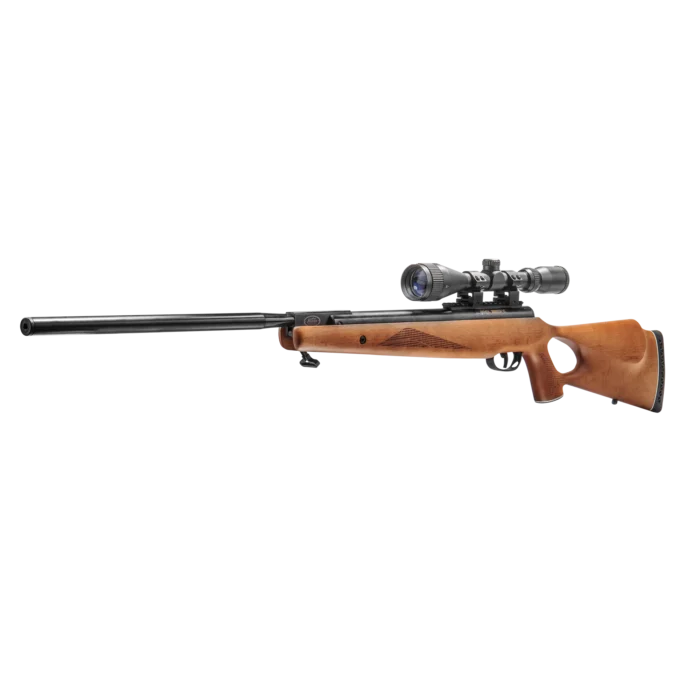
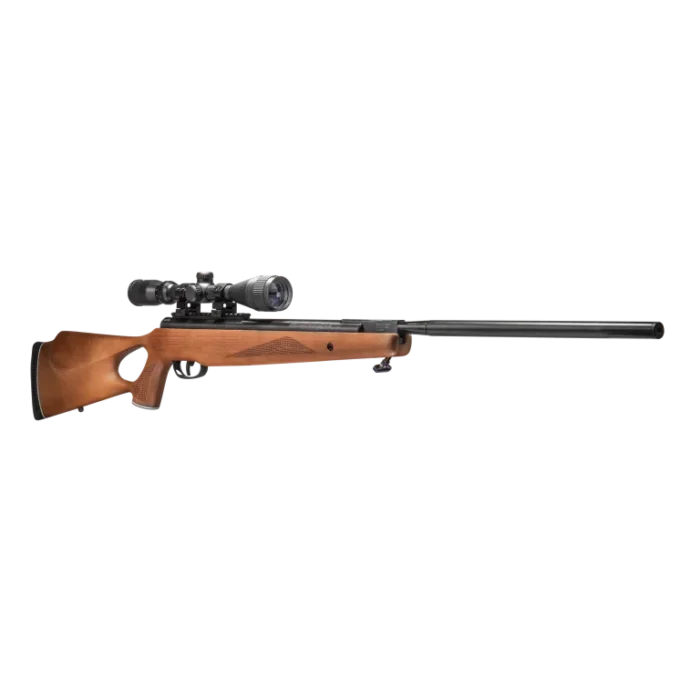
Benjamin Trail XL Magnum
€200.00
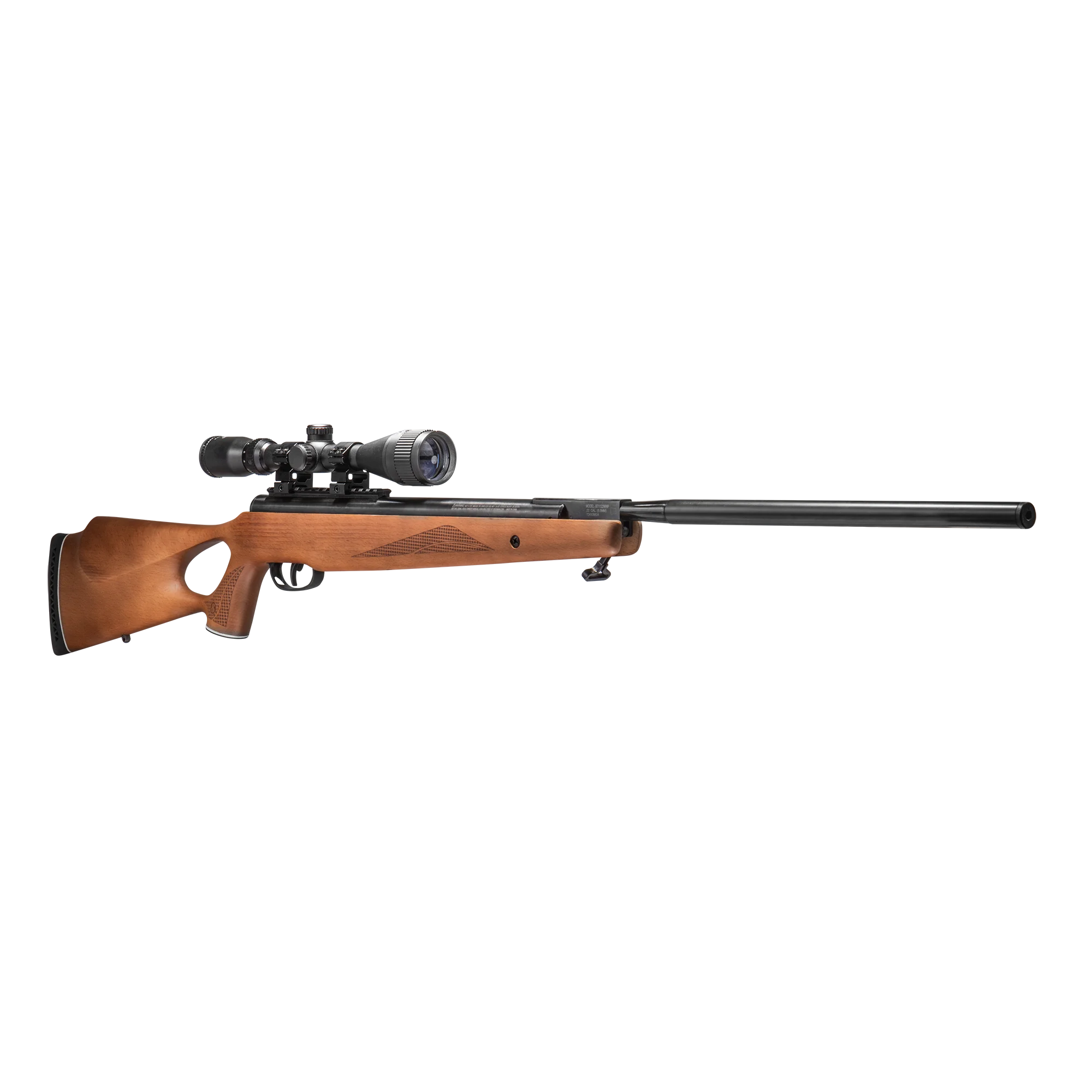
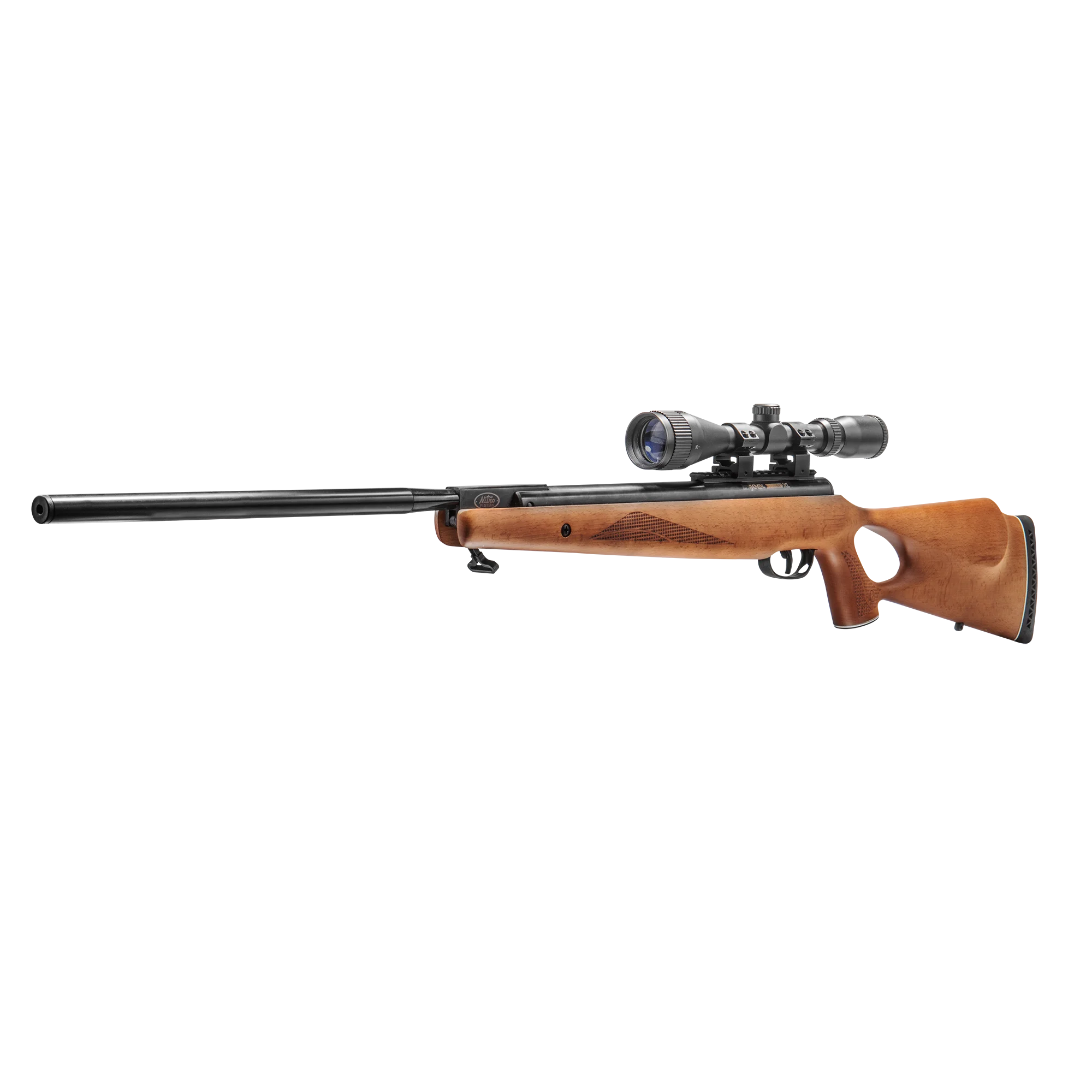
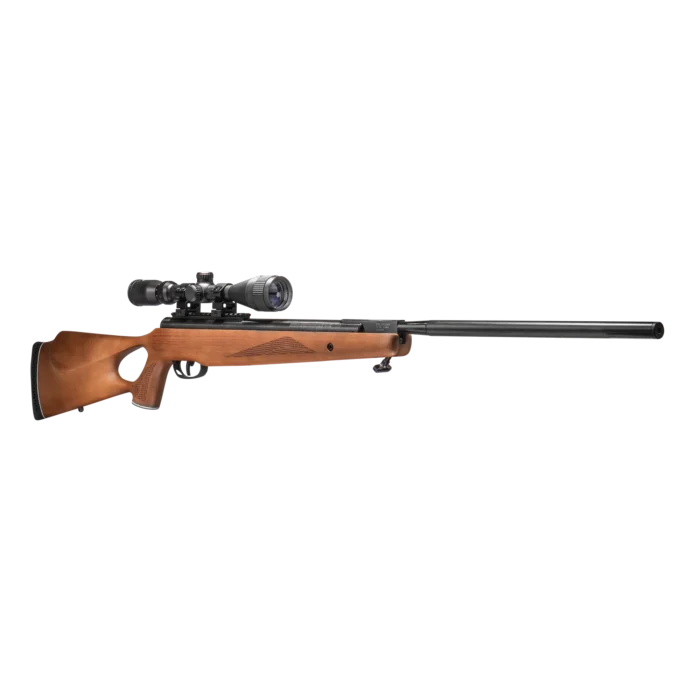
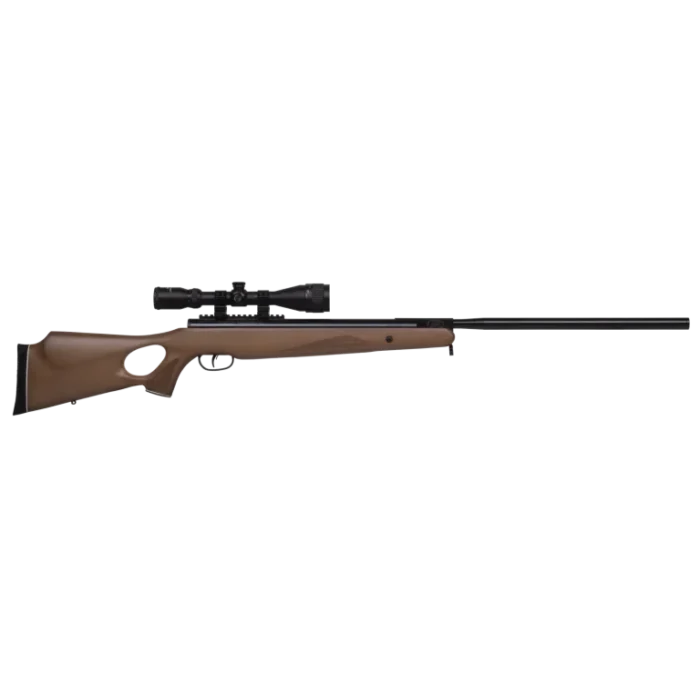
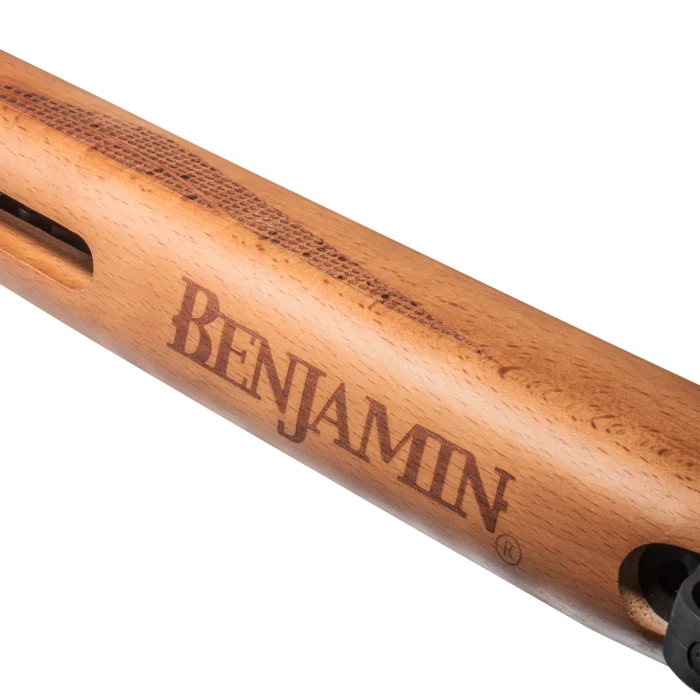
The Benjamin Trail XL boasts a checkered, hardwood stock that looks and feels superb. With its staggering velocities of up to 1500 fps (.177), 1100 fps (.22), and 900 fps (.25), the Benjamin Trail NP XL will have no problem handling small game. Our nitro piston-powered break barrels are 70% quieter compared to spring-powered air guns.
With less noise, less recoil, and a smooth, simple cocking motion that allows for rapid follow-up shots, this air rifle is ready to impress on your next hunting adventure. All Benjamin Trail NP Break Barrels include a 3-9×40 mm CenterPoint precision scope with an adjustable objective and range estimating reticle. The Benjamin Trail XL also comes with a rifled barrel, sling mounts (installed), a ventilated rubber recoil pad, and a Picatinny mounting rail system for your accessories.
Features:
- Nitro piston-powered, break barrel air rifle
- Crisp two-stage trigger is adjustable
- Rifled steel barrel
- 1500 fps air rifle (.177-caliber)
- 1100 fps air rifle (.22-caliber)
- 900 fps air rifle (.25-caliber)
- 3-9x40mm Adjustable Objective CenterPoint scope and a Picatinny rail system
- Premium hardwood stock
This handsome air rifle is a worthy addition to our legacy, and yours. Our air guns are famously customizable and modifiable, so browse our top-quality air gun accessories to make it your own. While you’re at it, you can never own too much air gun ammo, and we make it easy to stock up. The Benjamin Trail XL 1500 is an heirloom-quality air rifle that’s hand-assembled to last a lifetime and stay in the family for generations. Own a true original, make it yours, and enjoy the rugged craftsmanship you can only get from a Benjamin.
Additional information
| Caliber: | .177, .22, .25 |
|---|---|
| Powerplant: | Nitro Piston |
| Lead Pellet Velocity: | Up to 1500 fps with .177 caliber Up to 1100 fps with .22 caliber Up to 900 fps with .25 caliber |
| Alloy Pellet Velocity: | Up to 1500 fps |
| Action: | Break Barrel |
| Length: | 49.00 in |
| Product Weight: | 8.50 lbs |
| Barrel Material: | Steel |
| Barrel Type: | Rifled |
| Front Sight: | None |
| Rear Sight: | N/A |
| Material: | Wood |
| Magazine: | N/A |
| Mounting Rail: | Picatinny |
| Trigger: | Two Stage |
| Stock Style: | Thumbhole |
| Stock Material: | Wood |
| Safety: | Lever |
| Caliber | .177, .22, .25 |
|---|
Benjamin Trail XL Magnum: High-Powered Nitro Piston Precision for Hunting and Target Shooting
Why Choose the Benjamin Trail XL Magnum?
This benjamin air rifle is designed for buyers who want magnum-level performance without the additional equipment required by a pre-charged pneumatic system. Because the powerplant is charged manually, every shot can be prepared wherever lawful shooting is permitted.
Compared with many conventional spring-powered benjamin air rifles, the gas-piston system creates a smoother firing cycle and avoids the vibration produced by a coiled mainspring. Consequently, improved shot control may be achieved when the rifle is held consistently.
The manufacturer also equips the platform with a checkered hardwood stock, rifled steel barrel, sound-reducing muzzle device, rubber recoil pad, and included optic. These features make the rifle suitable for serious target practice and lawful pest or small-game management.
How the Nitro Piston Powerplant Works
To prepare the rifle, the barrel is moved downward until the internal gas piston is compressed. A single projectile is then inserted directly into the breech before the barrel is returned to its firing position.
When the trigger is pulled, the compressed gas drives the piston forward. Air is forced behind the projectile, and the resulting pressure sends it through the rifled barrel.
This operating method differs from a benjamin marauder pcp, benjamin marauder pcp air rifle, or pcp benjamin marauder, all of which store compressed air inside a refillable reservoir. It also differs from co2 pellet guns, which depend on disposable or refillable carbon-dioxide cylinders.
Searches for benjamin break, brake barrel bb gun, benjamin air rifle 22 break barrel, or benjamibenjamin nitro piston 22 air rifle for hunting generally refer to this manually cocked category. However, this model fires pellets rather than conventional steel BBs.
How Accurate and Powerful Is It?
The rifled barrel provides the rotational stability required for accurate shooting. However, precision depends on much more than velocity. Projectile weight, head diameter, optic alignment, trigger control, hold consistency, wind, distance, and barrel condition all influence the point of impact.
The .177 version closely matches the expectations of buyers searching for a pellet rifle 1500 fps, cal .177 pellets, or a powerful 177 pellet gun. Because lighter projectiles travel faster, this caliber may provide a comparatively flat trajectory during target practice.
The .22 version offers a useful balance between velocity, projectile weight, and retained energy. As a result, shoppers comparing a benjamin pellet gun 22 cal or benjamin 22 air rifle may prefer this configuration for lawful small-game applications.
Meanwhile, the .25-caliber model launches a heavier projectile at a lower velocity. Although the trajectory is more curved, greater energy can be delivered at appropriate distances when suitable ammunition and precise shot placement are used.
Where and When Should It Be Used?
This rifle is best used at an authorized range, on private land where shooting is permitted, or in a lawful pest-management or hunting environment. A reliable backstop must always be installed behind the target.
For air guns for hunting, caliber, projectile energy, quarry restrictions, licensing rules, and local regulations should be confirmed before use. Ethical field performance also depends on accurate range estimation and responsible shot placement.
Because the rifle does not require an external air supply, it is particularly practical for extended outdoor sessions. Nevertheless, the long barrel, magnum cocking effort, and substantial construction should be considered by smaller or less-experienced users.
Comparing Other Benjamin Platforms
The wider product family includes several distinct operating systems. The benjamin prowler and benjamin vaporizer are also break-barrel models, although their specifications and power levels differ.
By contrast, the benjamin marauder, benjamin marauder .25, and benjamin marauder pistol use refillable pneumatic reservoirs. Likewise, the tactical benjamin armada is based on a multi-shot PCP action rather than a manually cocked barrel.
Customers exploring a benjamin pellet gun, benjamin pellet, benjamin air pistol, or an air rifle and air pistol collection should therefore compare powerplant type, caliber, ammunition cost, weight, shot capacity, and intended purpose instead of relying on appearance alone.
The phrase pneumatic gun bb gun rifle may be used broadly in online searches, but not every pneumatic platform accepts BB ammunition. Only the ammunition identified by the manufacturer should be loaded.
Big-Bore Bullpup Alternatives
The Benjamin Bulldog Magnum Series Bullpup, benjamin bulldog, benjamin bulldog 457, benjamin bulldog 457 20 joules, and benjamin marauder air rifle bulldog 357 belong to a substantially different category.
These models use compressed-air reservoirs and fire large-diameter projectiles. Therefore, they should not be confused with a conventional break-barrel pellet rifle. They are generally designed for specialized hunting applications where their use is lawful.
Although the Trail XL Magnum produces significant energy within its category, it should never be marketed as a direct replacement for a big-bore platform. Projectile diameter, operating pressure, energy output, effective range, ammunition, and intended quarry differ considerably.
Airbow Systems and Arrow Launchers
The benjamin airbow airgun, benjamin air bow, benjamin bow, benjamin airbow m600, and benjamin pioneer airbow launch arrows using compressed air rather than firing pellets from a rifled barrel.
Consequently, phrases such as air bows pellet rifle and arrow gun for deer hunting may combine separate product categories that operate differently. Arrow-launching systems require dedicated ammunition, specialized handling, and jurisdiction-specific legal consideration.
The Trail XL Magnum remains a conventional pellet-firing platform. It does not launch arrows and should never be modified to accept incompatible ammunition.
Maintenance, Repairs, and Ownership Considerations
Routine exterior cleaning helps protect the hardwood stock and exposed metal surfaces. After outdoor use, moisture should be removed before the rifle is stored in a secure, dry location.
Complex internal servicing should be completed through an authorized benjamin air rifle repair provider. Attempting to dismantle a pressurized or spring-loaded powerplant without the correct equipment can damage components and create serious safety risks.
Ultimately, the Benjamin Trail XL Magnum offers a strong combination of self-contained operation, hardwood construction, magnum energy, multiple caliber choices, sound management, and field-ready dependability. It is particularly well suited to responsible shooters who want substantial break-barrel performance without purchasing external filling equipment.
Engineering Excellence, Shooting Performance, and Practical Advantages
Advanced Gas Piston Technology
This rifle is powered by a modern gas piston system that delivers smooth, repeatable performance with every shot. Instead of relying on a traditional coiled spring, compressed gas stores the energy required to propel the projectile once the trigger is pulled. This design reduces internal vibration while producing a more refined shooting cycle.
One of the primary advantages of this system is its ability to remain cocked for longer periods without causing the fatigue that may affect conventional spring mechanisms. As a result, shooters can prepare for a shot without feeling pressured to fire immediately.
The reduced vibration also contributes to improved comfort during extended shooting sessions and allows the shooter to maintain better control throughout the firing process.
Reliable Break-Barrel Operation
The break-barrel mechanism provides a simple and dependable operating system that requires no external filling equipment or disposable gas cartridges.
Before each shot, the barrel is lowered until the action locks into the cocked position. A single projectile is then placed directly into the breech before the barrel is returned securely to its original position.
This straightforward loading process minimizes mechanical complexity while allowing the rifle to remain completely self-contained. Since there is no dependence on compressors or air cylinders, the rifle can be prepared almost anywhere that lawful shooting is permitted.
Its simple operating system also makes routine use convenient for shooters who value independence from additional equipment.
Consistent Power Delivery
Consistent power is one of the most important characteristics of a quality hunting and target rifle.
The gas piston system releases stored energy in a controlled manner, helping maintain repeatable performance from shot to shot. Stable power output improves projectile consistency and makes sight adjustments more predictable during practice.
Although every shot requires manual cocking, this process also ensures that the same amount of energy is stored before each firing cycle, contributing to dependable field performance.
When combined with quality ammunition and proper shooting technique, consistent power becomes a major factor in achieving reliable accuracy.
Precision Barrel Design
The barrel has been manufactured to guide each projectile with stability throughout its entire travel.
Internal rifling imparts controlled rotation that helps stabilize the projectile during flight. This rotational stability contributes to improved accuracy while reducing unwanted movement after the projectile leaves the muzzle.
Protective external components surrounding the muzzle also assist in reducing perceived shooting noise while providing additional protection during transportation and field use.
Proper barrel maintenance supports long-term consistency, although unnecessary cleaning should be avoided. Excessive cleaning may temporarily reduce accuracy until the internal surface naturally conditions itself again.
Comfortable Shooting Experience
Despite its powerful performance, the rifle has been designed to remain comfortable during extended use.
The stock provides a secure shoulder position while promoting natural hand placement and stable aiming. Textured gripping surfaces improve control under varying weather conditions and help maintain confidence during long practice sessions.
A well-balanced design distributes weight evenly across the rifle, reducing fatigue during prolonged carrying or repeated shooting.
The recoil pad also helps absorb some of the rearward movement generated during firing, making the overall shooting experience more comfortable.
Enhanced Optical Performance
Accurate shooting depends not only on the rifle itself but also on the quality of the sighting system.
Proper optic installation allows the shooter to maintain consistent eye alignment while improving target identification at different distances.
Once the optic has been securely mounted, careful zeroing should be completed before serious shooting begins.
Periodic inspection of mounting hardware helps ensure that vibration does not gradually loosen fasteners over time. A stable optic allows adjustments to remain consistent and reduces unnecessary point-of-impact changes.
Real-World Field Performance
Outdoor shooting environments present constantly changing conditions that challenge both equipment and technique.
Temperature, humidity, lighting, wind direction, and terrain all influence practical accuracy.
The durable construction of this rifle allows it to perform reliably under a wide variety of environmental conditions when properly maintained.
Whether used during recreational shooting sessions or lawful hunting activities, dependable operation provides confidence throughout the day.
Regular inspections before each outing help ensure that all components continue functioning correctly.
Developing Better Accuracy
True precision develops through disciplined practice rather than relying solely on equipment specifications.
Maintaining a consistent shooting position, applying smooth trigger pressure, controlling breathing, and following through after each shot all contribute to improved accuracy.
Testing several ammunition types also helps determine which option performs most consistently in the individual barrel.
Keeping detailed notes regarding projectile selection, shooting distance, weather conditions, and group size provides valuable information for future practice sessions.
Over time, these records become an excellent reference for identifying the most effective combinations.
Practical Advantages for Owners
A self-contained operating system offers several long-term benefits.
Since no external charging equipment is required, transportation becomes simpler and preparation time before shooting is significantly reduced.
Routine maintenance remains straightforward because fewer specialized components require attention.
The durable construction also supports years of regular use when proper cleaning, lubrication, and storage procedures are followed.
Owners who appreciate dependable performance, mechanical simplicity, and reliable field capability often value this design because it combines practical operation with consistent accuracy in a package suitable for a wide variety of shooting applications.
Designed for Long-Term Dependability
Reliability is achieved through careful engineering, quality materials, and responsible ownership.
Routine inspections, proper storage, careful handling, and scheduled maintenance help preserve performance throughout the rifle’s service life.
As experience grows, shooters become more familiar with the rifle’s handling characteristics, resulting in greater confidence, faster target acquisition, and improved consistency.
With regular practice and proper care, this platform continues to provide dependable performance for recreational shooting, precision training, and lawful field use over many years.
Maintenance, Care, and Long-Term Performance
Regular Maintenance Ensures Reliable Operation
Proper maintenance is essential for preserving accuracy, extending service life, and maintaining dependable performance. Every shooting session exposes the rifle to dust, moisture, fingerprints, and environmental debris that should be removed before storage.
After use, the exterior should be cleaned with a soft microfiber cloth to eliminate surface contaminants. Metal components should receive a thin layer of protective oil designed for air-powered sporting equipment. Excess lubricant should always be removed because it can attract dirt and unnecessary residue.
Routine inspection allows potential problems to be identified early, reducing the likelihood of costly repairs while keeping the rifle operating efficiently.
Proper Barrel Maintenance
The barrel is one of the most important components influencing long-term accuracy. Unlike powder-burning firearms, air-powered rifles generally produce very little fouling, meaning frequent cleaning is unnecessary.
Cleaning should only be performed when accuracy begins to decline or after an extended period of regular use. Excessive cleaning may temporarily reduce precision because a lightly seasoned bore often delivers the most consistent results.
Only non-abrasive cleaning materials specifically intended for air rifles should be used. Aggressive brushes, harsh chemicals, or unsuitable cleaning tools may damage the rifling and negatively affect future performance.
After cleaning, several practice shots are often beneficial before evaluating accuracy again.
Caring for the Powerplant
The gas piston system has been engineered to provide dependable performance with relatively low maintenance requirements.
Unlike traditional spring-powered mechanisms, this design contains no large coiled spring that may fatigue over time. Nevertheless, internal components should never be disassembled without the proper tools and technical knowledge.
If unusual noises, inconsistent power, or mechanical resistance become noticeable during operation, professional inspection is recommended before further use.
Routine external care remains sufficient for most owners, while internal servicing should be reserved for qualified technicians.
Protecting the Stock and Metal Components
Both the stock and exposed metal surfaces benefit from routine care.
Wooden components should be protected from prolonged exposure to excessive moisture, direct sunlight, or extreme temperature fluctuations. These environmental conditions may gradually affect appearance and dimensional stability.
Metal surfaces should be inspected regularly for signs of corrosion, scratches, or accumulated dirt. A light protective coating helps preserve the finish while reducing the possibility of rust developing during storage.
After use in wet conditions, every surface should be dried thoroughly before the rifle is returned to its storage location.
Storage Best Practices
Proper storage plays a significant role in maintaining long-term reliability.
The rifle should always be stored unloaded in a secure location that is inaccessible to unauthorized individuals.
A cool, dry environment with stable temperatures provides the best protection against corrosion and material deterioration.
Protective cases, lockable cabinets, or dedicated safes help minimize accidental damage during transportation and long-term storage.
Avoid placing heavy objects on top of the rifle or storing it in locations where excessive humidity may accumulate.
Periodic inspection during long-term storage helps ensure that all components remain in excellent condition.
Maintaining Consistent Accuracy
Mechanical precision depends not only on manufacturing quality but also on consistent maintenance and shooting habits.
Using quality ammunition from the same production batch can help minimize variations in projectile performance.
Optics should remain securely mounted, and all fasteners should be inspected periodically to confirm proper tightness.
Environmental conditions such as wind, lighting, and temperature should also be considered whenever accuracy testing is performed.
Keeping a shooting log that records ammunition, distance, weather conditions, and group sizes provides valuable information for future practice sessions and equipment evaluation.
Safe Handling During Maintenance
Safety procedures should always be followed before beginning any maintenance work.
The rifle should be unloaded completely before cleaning or inspection begins.
The muzzle must remain pointed in a safe direction throughout the process.
Moving components should never be forced beyond their normal operating range.
Protective eyewear is recommended whenever maintenance involves springs, pins, or mechanical assemblies that may contain stored energy.
Careful attention to these procedures helps prevent accidental injury while protecting the equipment from unnecessary damage.
Improving Skills Through Practice
Consistent practice remains one of the most effective ways to improve shooting performance.
Rather than simply increasing the number of shots fired, each practice session should focus on specific objectives such as breathing control, trigger discipline, sight alignment, or shooting from different positions.
Benchrest practice provides an excellent opportunity to evaluate mechanical accuracy while minimizing shooter movement.
Field practice develops confidence under realistic conditions by introducing varying distances, lighting, and environmental factors.
Reviewing targets after each session helps identify recurring errors and allows gradual improvements to be made over time.
Long-Term Reliability
Durability is achieved through the combination of quality engineering and responsible ownership.
Routine cleaning, proper storage, periodic inspections, and careful handling all contribute to preserving dependable performance throughout the rifle’s service life.
Owners who follow recommended maintenance practices often experience fewer mechanical issues, improved accuracy, and greater confidence during every shooting session.
With appropriate care, the rifle continues to deliver reliable operation for recreational target shooting, precision training, and lawful hunting applications while maintaining the consistent performance expected from a well-built air-powered platform.
Maximizing Accuracy, Field Performance, and Overall Shooting Experience
Achieving the Best Possible Accuracy
Accuracy is influenced by far more than the mechanical quality of the rifle. The shooter’s technique, environmental conditions, ammunition selection, and equipment setup all work together to determine the final point of impact.
Before every shooting session, the optic should be verified to ensure it remains securely mounted and correctly zeroed. Even slight movement in the mounting system can produce noticeable changes in accuracy.
A consistent cheek weld, proper shoulder placement, and relaxed grip also contribute to repeatable results. Maintaining the same shooting position for every shot helps eliminate unnecessary variables and improves overall precision.
Choosing the Right Ammunition
Every barrel performs differently depending on the ammunition used. For this reason, testing several high-quality projectile designs is highly recommended.
Differences in weight, head diameter, shape, and manufacturing consistency can significantly influence accuracy. Instead of selecting ammunition based solely on velocity, shooters should evaluate group size, consistency, and overall performance.
Once the most accurate option has been identified, using ammunition from the same production batch can help maintain repeatable results over time.
Proper storage also protects ammunition from moisture, dirt, and physical damage that may affect performance.
Understanding Effective Shooting Distances
Different shooting activities require different engagement distances.
Short-range practice allows new shooters to build confidence while refining basic shooting techniques.
Intermediate distances introduce greater emphasis on trajectory management and consistency.
Longer distances require careful attention to environmental conditions, projectile behavior, and precise range estimation.
Gradually increasing shooting distance allows skills to develop naturally while avoiding unnecessary frustration during training.
Reading Environmental Conditions
Outdoor shooting requires continuous observation of changing environmental conditions.
Wind remains one of the most significant influences on projectile flight. Even gentle crosswinds may shift the point of impact, particularly at extended distances.
Lighting conditions also affect target visibility. Bright sunlight can create glare through optics, while cloudy conditions often provide softer, more comfortable viewing.
Temperature, humidity, and atmospheric pressure may produce subtle changes in projectile performance, making regular observation an important part of successful shooting.
Experienced shooters learn to evaluate these conditions before every shot rather than relying solely on equipment adjustments.
Improving Shooting Technique
Developing excellent marksmanship requires patience and structured practice.
Each shot should begin with a stable body position and relaxed posture.
Breathing should remain controlled throughout the aiming process. Many shooters find that gently squeezing the trigger during a natural pause between breaths minimizes body movement.
Trigger pressure should increase gradually without disturbing the sight picture.
After the shot breaks, maintaining the aiming position briefly helps complete proper follow-through and reduces unnecessary movement before the projectile reaches the target.
These habits become increasingly natural through consistent repetition.
Practical Field Applications
A reliable air rifle serves many legitimate purposes when used responsibly.
Target shooting allows owners to improve marksmanship while enjoying recreational practice.
Precision shooting develops concentration, consistency, and technical shooting skills.
Where permitted by local regulations, pest management and lawful small-game hunting require accurate shot placement, careful range estimation, and responsible decision-making.
Regardless of the intended application, safety must always remain the highest priority.
Every target should have a secure backstop, and the surrounding area should be examined carefully before shooting begins.
Routine Equipment Inspection
Regular inspections help maintain dependable performance throughout the rifle’s service life.
Before each outing, several components should be checked carefully:
- Verify that all visible fasteners remain secure.
- Confirm that the optic has not shifted.
- Inspect the barrel for visible obstructions.
- Ensure all moving components operate smoothly.
- Examine the stock for signs of damage or looseness.
- Check the trigger and safety for proper operation.
- Confirm that the rifle is clean and ready for use.
Completing this inspection requires only a few minutes but helps prevent unexpected problems during shooting sessions.
Building Long-Term Confidence
Confidence develops gradually through experience rather than equipment alone.
Consistent practice allows shooters to understand the rifle’s characteristics under different environmental conditions and shooting positions.
Keeping a detailed shooting journal provides valuable information for future improvement. Recording shooting distances, group sizes, weather conditions, ammunition used, and personal observations makes it easier to identify patterns and refine technique over time.
Small improvements accumulated through regular practice often produce greater long-term results than frequent equipment changes.
Responsible Ownership
Owning precision shooting equipment carries important responsibilities.
Safe storage, careful transportation, routine maintenance, and respect for local laws help protect both the owner and the surrounding community.
New shooters should become familiar with all operating procedures before using the rifle, while experienced owners should continue reviewing safe handling practices throughout the rifle’s lifetime.
Responsible ownership also includes maintaining equipment in good condition, using appropriate safety gear, and continually improving shooting knowledge through practice and education.
A Dependable Long-Term Investment
A quality air rifle represents more than a single purchase; it is an investment in years of recreational enjoyment, precision shooting, and practical field use.
With proper maintenance, disciplined shooting habits, and careful handling, dependable performance can be maintained for many years. Consistent accuracy, durable construction, and straightforward operation allow the rifle to remain a trusted companion for target practice, skill development, and lawful outdoor activities.
As experience grows, owners often discover that the greatest advantage comes not from raw power alone but from the confidence that develops through familiarity, responsible ownership, and continuous improvement.
Be the first to review “Benjamin Trail XL Magnum”
Related products
Benjamin


Benjamin

Benjamin
Benjamin
Benjamin
Benjamin
Reviews
There are no reviews yet.